The short version
Aster is a feature-rich perpetuals DEX with low posted fees, hidden orders, stock perps and a one-click mode that reaches 1001x. It is not a real Hyperliquid rival on depth: by June 2026 its open interest was roughly a fifth of Hyperliquid's, and DefiLlama once delisted its perp volume over a near-perfect match with Binance. Treat headline volume with suspicion, and avoid the top leverage settings entirely.
Best for: Experienced perp traders who want features and low fees
Our score: 6.2 out of 10
Pros and cons
What works
- Posted fees are low: 0% maker and 0.04% taker on USDT perps
- Hidden orders and a Shield privacy mode that rivals lack
- Runs across BNB Chain, Arbitrum, Ethereum and Solana
- Broad menu: crypto, stock and pre-IPO perps, plus spot
- Docs publish audit reports and liquidation rules in plain text
What does not
- Open interest is far thinner than Hyperliquid's, so big orders slip
- Volume was questioned after DefiLlama saw it track Binance closely
- The 1001x mode blocks adding margin from 500x upward
- The US, UK, Canada and several other regions are barred
- Heavy token-incentive history makes activity hard to read
A perpetuals exchange lives on two numbers: how much it will let you trade, and how much you can trade before the price moves against you. Aster is strong on the first and unproven on the second, so we start there.
We read Aster's homepage and documentation, then checked them against Coin Bureau's side-by-side with Hyperliquid, DefiLlama's dashboard and press coverage of the volume dispute. We did not place leveraged trades for this review, so the fee and liquidity figures below come from those sources and are labelled.
The numbers that matter first
On 16 June 2026, Coin Bureau recorded about $1.75 billion of reported 24-hour volume on Aster against $8.16 billion on Hyperliquid. Open interest told the same story, roughly $1.91 billion versus $9.61 billion. Open interest is the harder figure to fake, because positions have to stay open and carry funding costs.
That gap is the answer to the "real rival" question, at least on depth. Aster is a smaller venue with a loud marketing footprint.
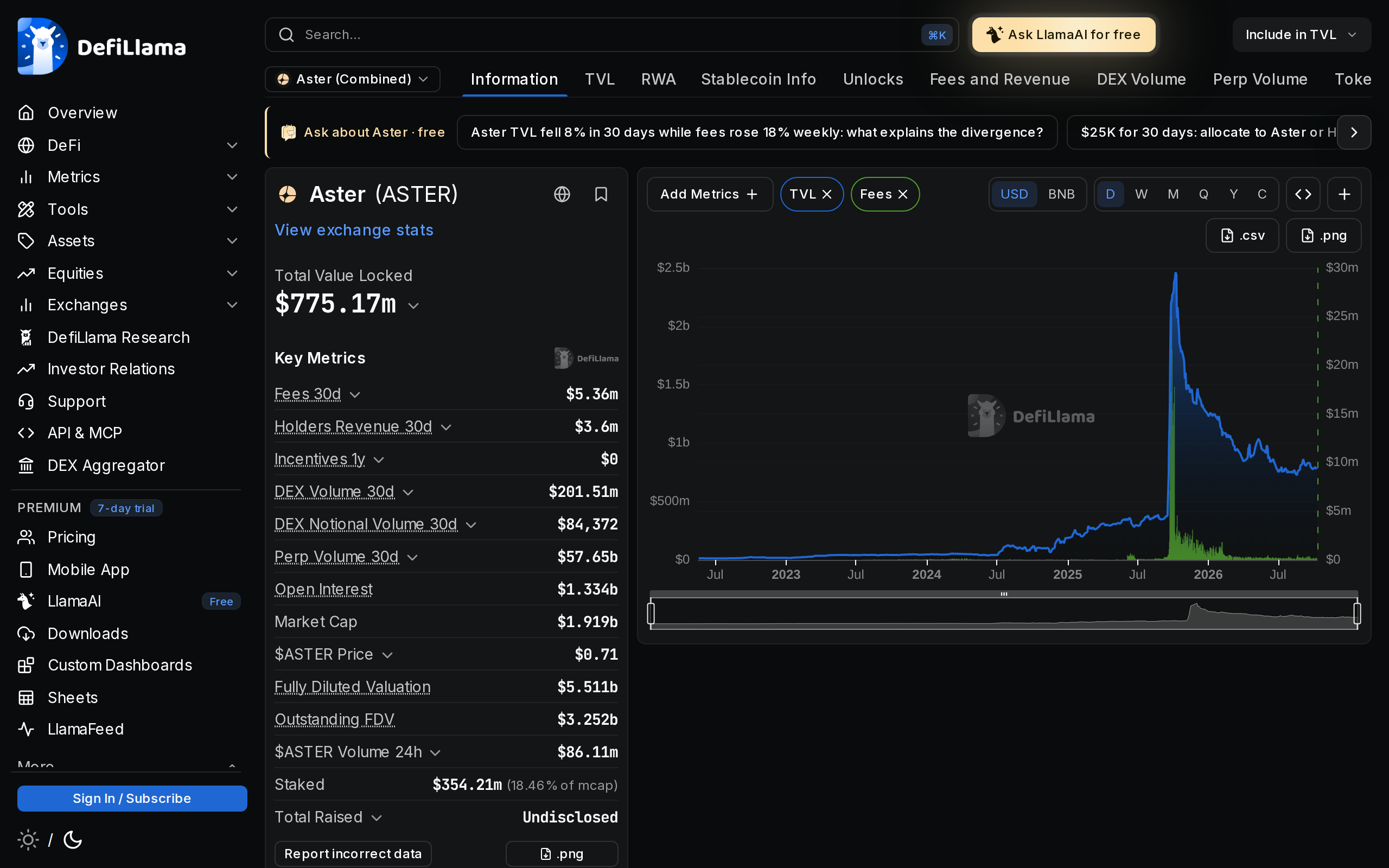
The same page shows a fully diluted valuation near $5.5 billion for the ASTER token, with about 18% of market cap staked. A valuation that size against open interest under $2 billion is a reminder that the token and the exchange are separate bets. Fees paid in ASTER earn a discount, which ties your trading costs to a volatile asset you may not want to hold.
Why the volume is argued over
In October 2025, DefiLlama removed Aster's perpetuals volume from its rankings. Cointelegraph reported that the series tracked Binance volume almost perfectly. DefiLlama later relisted it with a warning that the numbers could not be verified independently. Aster's chief executive replied that the pattern came from airdrop farmers hedging on Binance, not from manipulation.
We cannot settle that from outside. What we can say is that a venue paying out token rewards will draw hedged, low-risk volume, and that such volume says little about whether real traders find fills there. Read any "Aster beats every DEX" headline with that in mind.
What you can actually trade
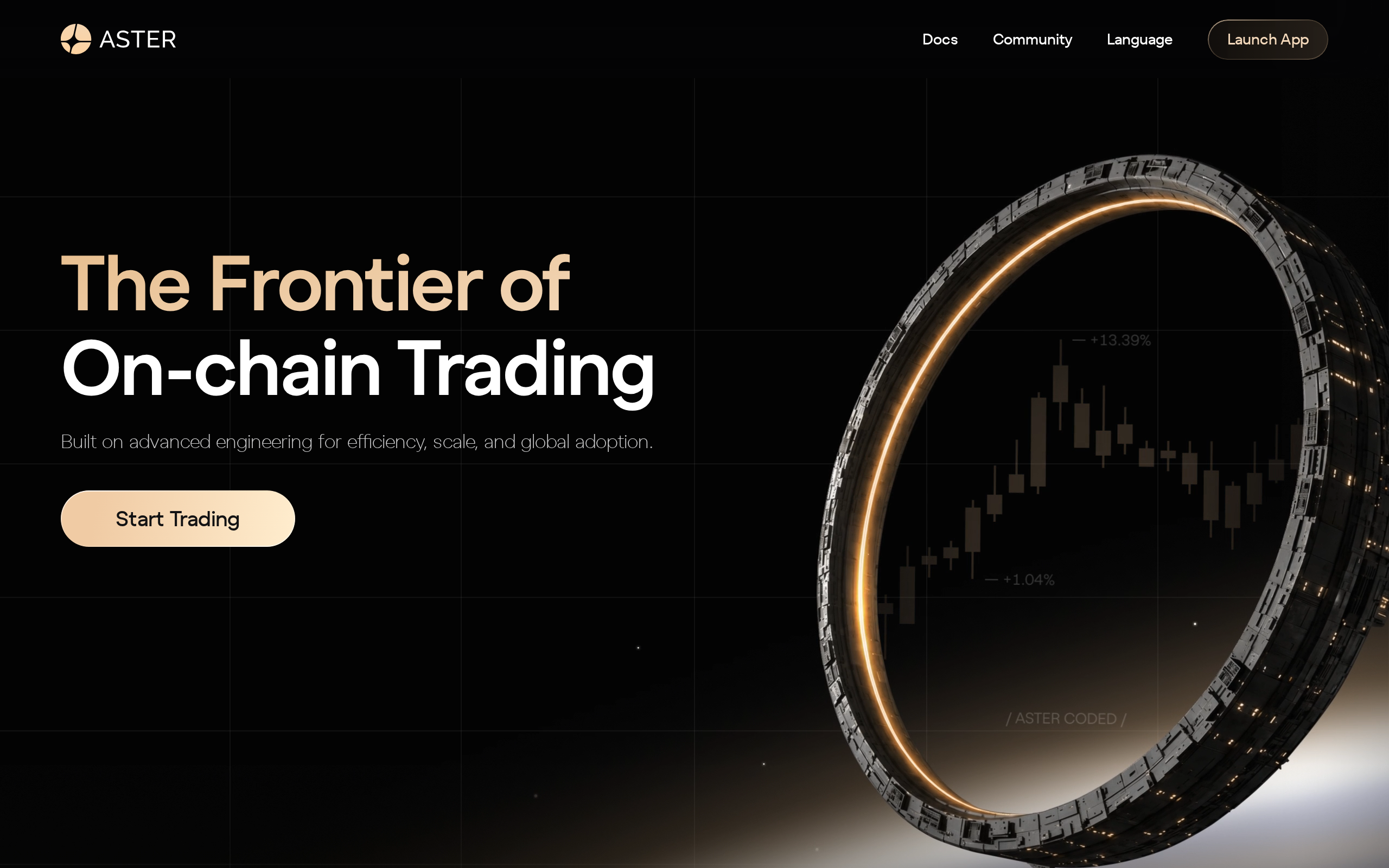
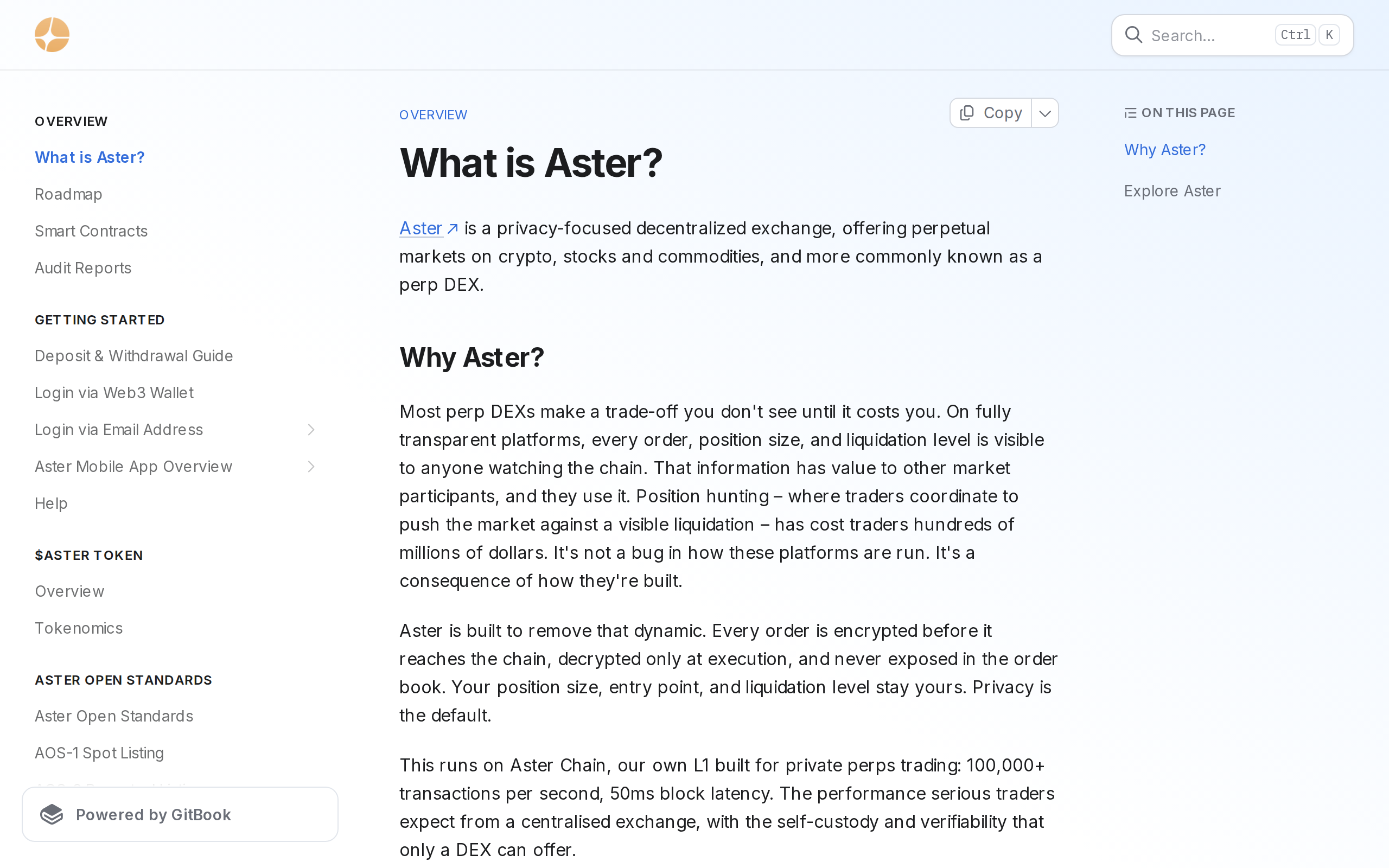
Aster's documentation lists four modes: a Pro order book for perpetuals, Shield Mode (AMM-style, with privacy), a one-click 1001x mode and spot. Orders are described as encrypted until execution, which is the privacy pitch, and the team has also built its own chain for it. Trading is spread across BNB Chain, Arbitrum, Ethereum and Solana.
The menu goes beyond crypto pairs. The docs sidebar lists stock perpetuals, pre-IPO contracts, grid trading, hedge mode and sub-accounts. If you value breadth, that is a real edge over Hyperliquid, which Coin Bureau credits with the better liquidity.
Fees: low on paper
Coin Bureau reports 0% maker and 0.04% taker on USDT perpetuals, and 0% maker with 0.005% taker on USD1-margined perps, plus a 5% discount for paying fees in ASTER. Hyperliquid's base rates are 0.015% maker and 0.045% taker. So Aster is cheaper per trade at the base tier.
Posted fees are not total cost. On a thin book, slippage on a large order can dwarf a few hundredths of a percent, and funding costs run in the background. Check the fee page for your margin asset before sizing anything, since rates differ between modes.
1001x is a hazard, not a feature
Up to 1001x leverage is available on BTC in the one-click mode. At that level a move of roughly a tenth of a percent can end the position. Coin Bureau also notes that you cannot add margin to positions at 500x and above, which removes the one defence a trader normally has.
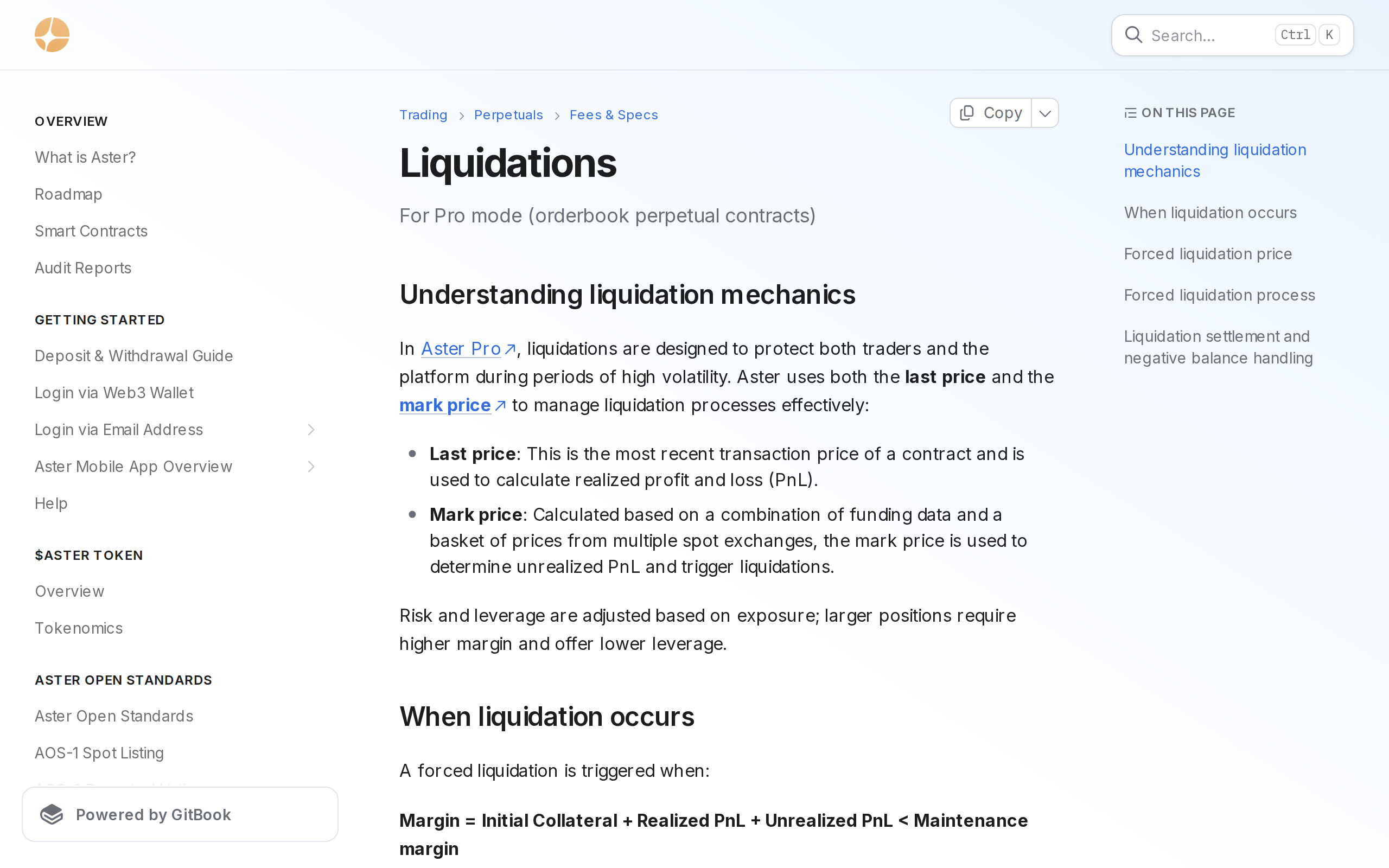
Aster's own docs advise keeping the margin ratio below 80% to stay clear of liquidation. We would go further: leave the extreme settings alone unless you can afford to lose the whole stake every time.
Access and trust
Aster restricts users in the US, Canada, the UK, China and several sanctioned jurisdictions. Its docs list audit reports for the vault and token products, but audits do not protect you from an unfavourable liquidation, from a depegging collateral asset or from unlock-driven token swings.
Who should use it
Use Aster if you are an experienced trader, you want hidden orders or stock perps, and you will size positions as if liquidity were thinner than the dashboards say. Skip it if you are new to leverage, if you plan to trade large size, or if deep, verifiable markets matter more than a long feature list. This review is not trading advice. Perpetual futures can lose more than they look like they risk.
Specifications
- Type
- Perpetuals DEX with spot trading
- Chains
- BNB Chain, Arbitrum, Ethereum, Solana, plus Aster Chain
- Trading modes
- Pro order book, Shield, 1001x one-click, Spot
- Max leverage
- Up to 1001x on BTC in the one-click mode
- Fees (USDT perps)
- 0% maker, 0.04% taker, per Coin Bureau
- Fees (USD1 perps)
- 0% maker, 0.005% taker, per Coin Bureau
- Fee discount
- 5% when paying fees in the ASTER token
- Open interest
- About $1.91B on 16 June 2026, versus $9.61B for Hyperliquid
- Restricted regions
- US, Canada, UK, China and others