The short version
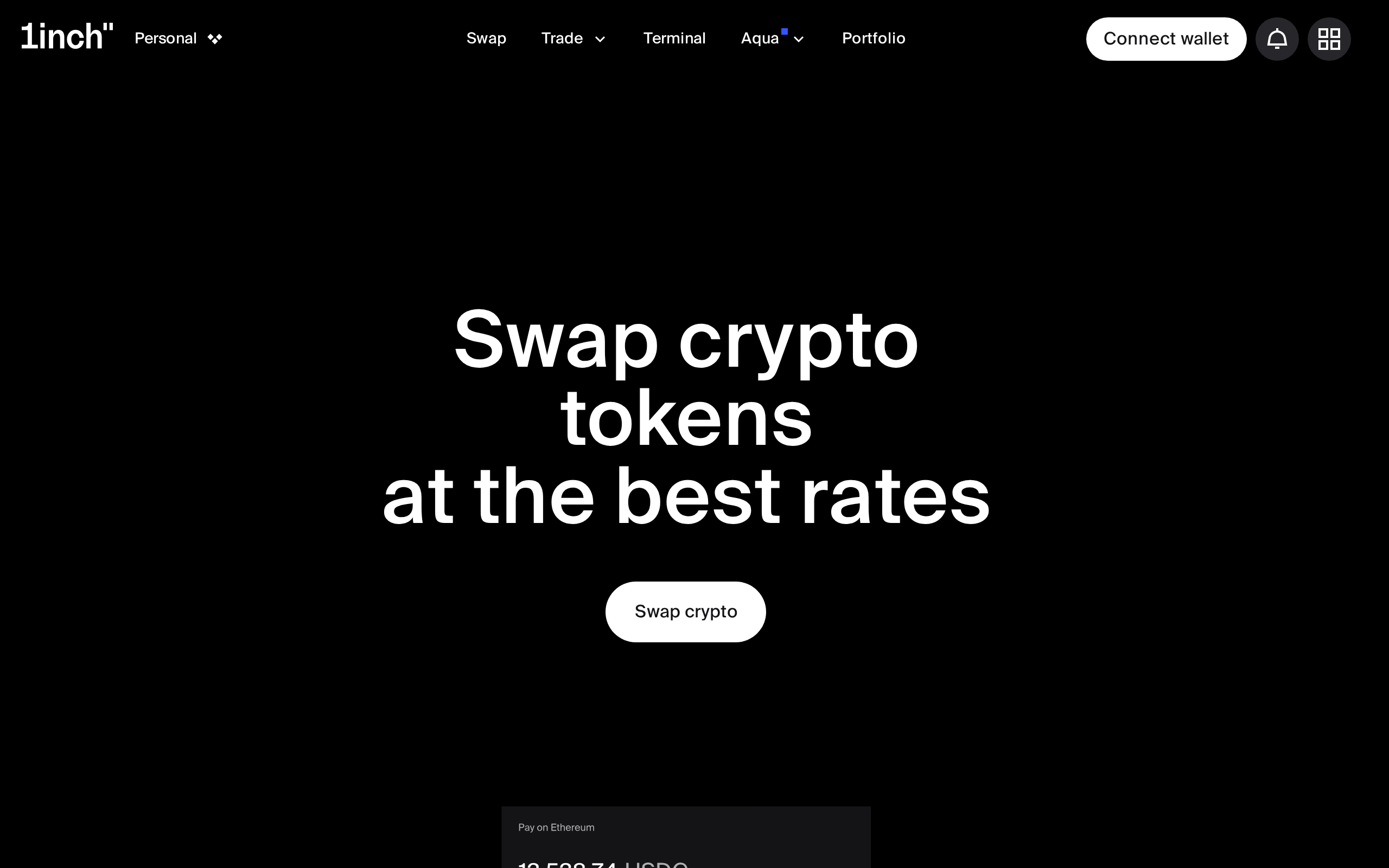
1inch earns its place when a trade is large, the token is thinly traded or the route spans several pools, because splitting the order usually beats one pool by more than the extra gas costs. On a small swap of a deep pair it adds little. Skip it if you will not read approvals or compare the quote with a direct DEX.
Best for: Larger or thin-liquidity swaps on EVM chains
Our score: 7.8 out of 10
Pros and cons
What works
- Splits one order across 500+ liquidity sources to cut price impact
- Simple mode quotes swaps with no gas paid by the user
- Non-custodial: no account, no KYC, no deposit step
- Covers 18+ networks from one interface plus a mobile wallet
- Maker says the aggregation contracts passed 15+ outside audits
What does not
- On small trades of deep pairs the saving rarely beats a direct DEX
- Fusion fills rely on resolvers, which have been exploited before
- Token approvals stay your job and can be left open by mistake
- No live support: help is docs, Discord and a help center
- Gas on Ethereum mainnet can still erase a small win
Most swap venues are a single pool with a price. 1inch is a broker that checks the pools for you, so the real question is whether the checking pays for itself once gas is counted. We went through the interface, the maker's documentation and the independent reviews to see where the aggregator earns its keep and where it only adds steps.
What the router actually does
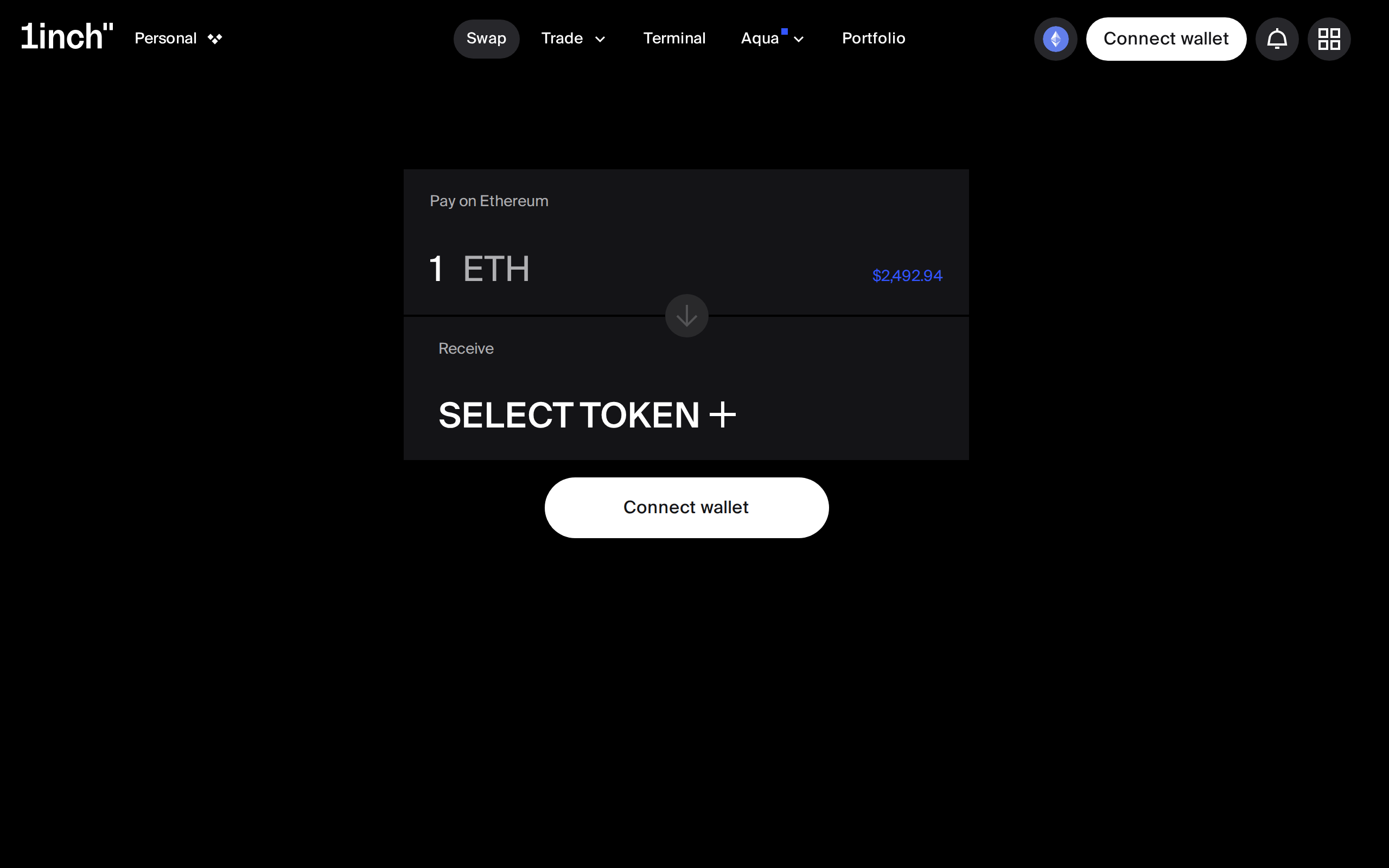
Ask for a swap and the 1inch pathfinder looks across hundreds of pools and venues, then cuts your order into pieces if that yields a better average price. Coin Bureau's review puts the source count at 500+, and the interface itself charges nothing at protocol level. You pay the pool fees underneath (roughly 0.05% to 0.3% by pool), the slippage, and network gas.
That last item is the catch. A split route touches more contracts, so it costs more gas than a single hop, unless the router is efficient. 1inch publishes its own numbers: its gas comparison post claims 10.3% less gas than Uniswap for an ETH to DAI swap. That is the maker testing itself, so treat it as a ceiling, not a promise.
Where it should win, and where it should not
The mechanics point one way. On a deep pair such as ETH and USDC, one pool already has tight pricing, so a split route can only recover a few basis points, and on mainnet an extra contract call can cost more than that. On a mid-cap token spread over three or four pools, splitting the order cuts price impact in a way no single pool can match. The larger the order relative to the pool, the more the aggregator matters.
So the rule we would give a reader is simple: compare the quote with the direct DEX when the trade is a meaningful fraction of the pool, and ignore the aggregator when it is not. Nobody should expect routing to rescue a $200 swap of a major pair, and we did not place live trades to claim otherwise. The quote screen shows the route and the estimated gas, so checking costs you ten seconds.
The cheaper venues are not always on Ethereum either. Layer-2 networks and BNB Chain make gas small enough that the routing saving dominates, and that is where an aggregator is easiest to justify.
Simple mode and the gasless claim
The newer default is Simple, an intent-based mode. You sign what you want, and professional resolvers compete to fill it, so the swap page says you pay no gas. That is true in the narrow sense: the resolver covers the transaction and prices it into the rate. The same page pitches MEV protection, since the order never sits in the public mempool for a sandwich bot to see.
Classic, the older route-it-yourself mode, now sits behind the Pro interface. It suits users who want to see the exact path and set the slippage tolerance by hand.
The resolver risk nobody mentions in the headline
Intent systems move risk rather than remove it. Coin Bureau's write-up notes resolver-layer exploits in 2024 and 2025 that hit the resolvers, not user funds. We think that is the correct outcome, but it shows Fusion fills depend on a small set of well-funded operators. If liquidity from resolvers thins out, a gasless quote can fail or fall back.
The router contracts themselves have a long audit record, which the maker and Coin Bureau put at more than 15 reviews by firms including OpenZeppelin and ConsenSys. Audits are not a guarantee, and approvals remain your problem: every token you let the router spend stays approved until you revoke it.
The wallet and the help center
1inch also ships a mobile wallet, and the wallet page pitches swapping from a phone with built-in scam checks.
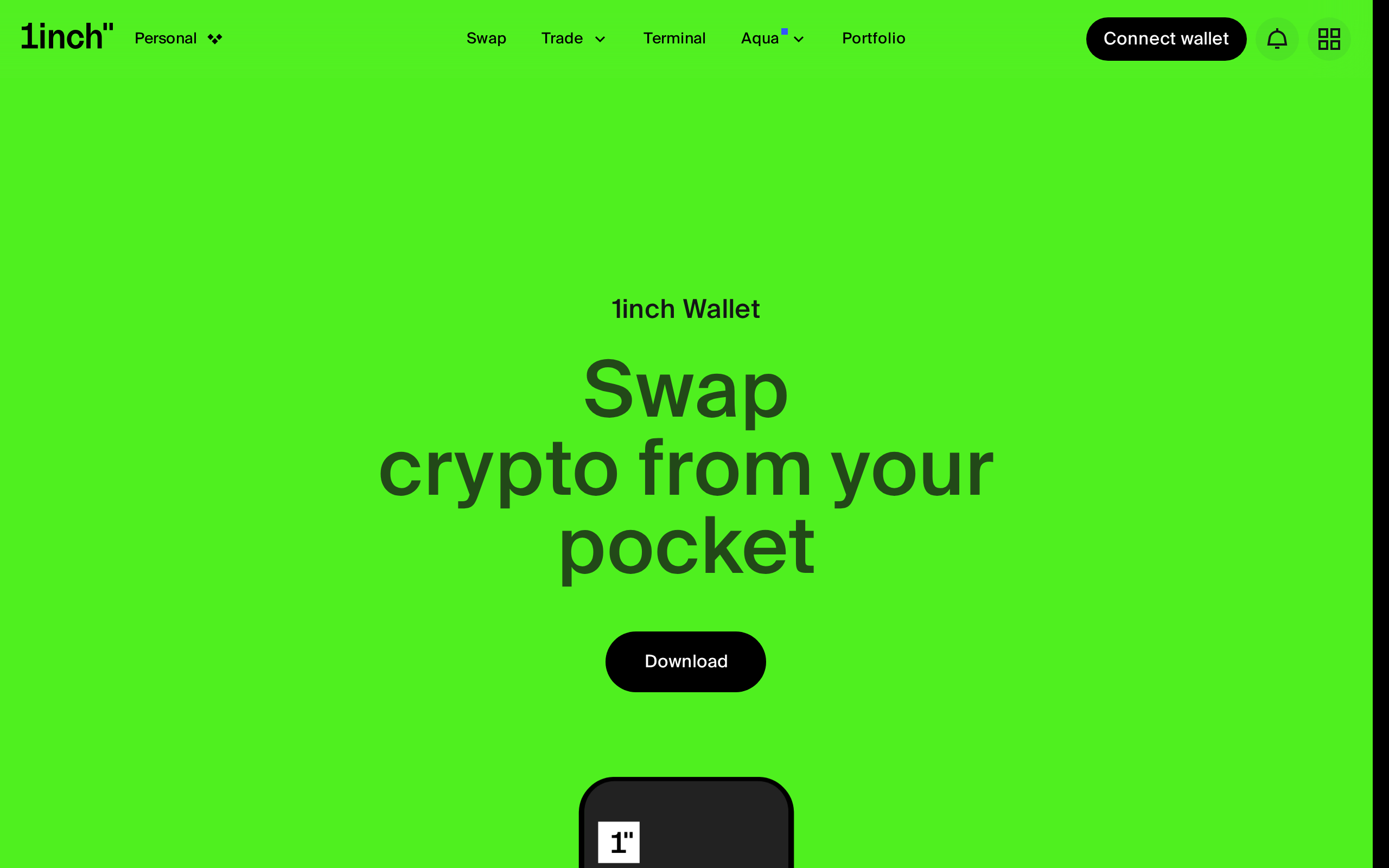
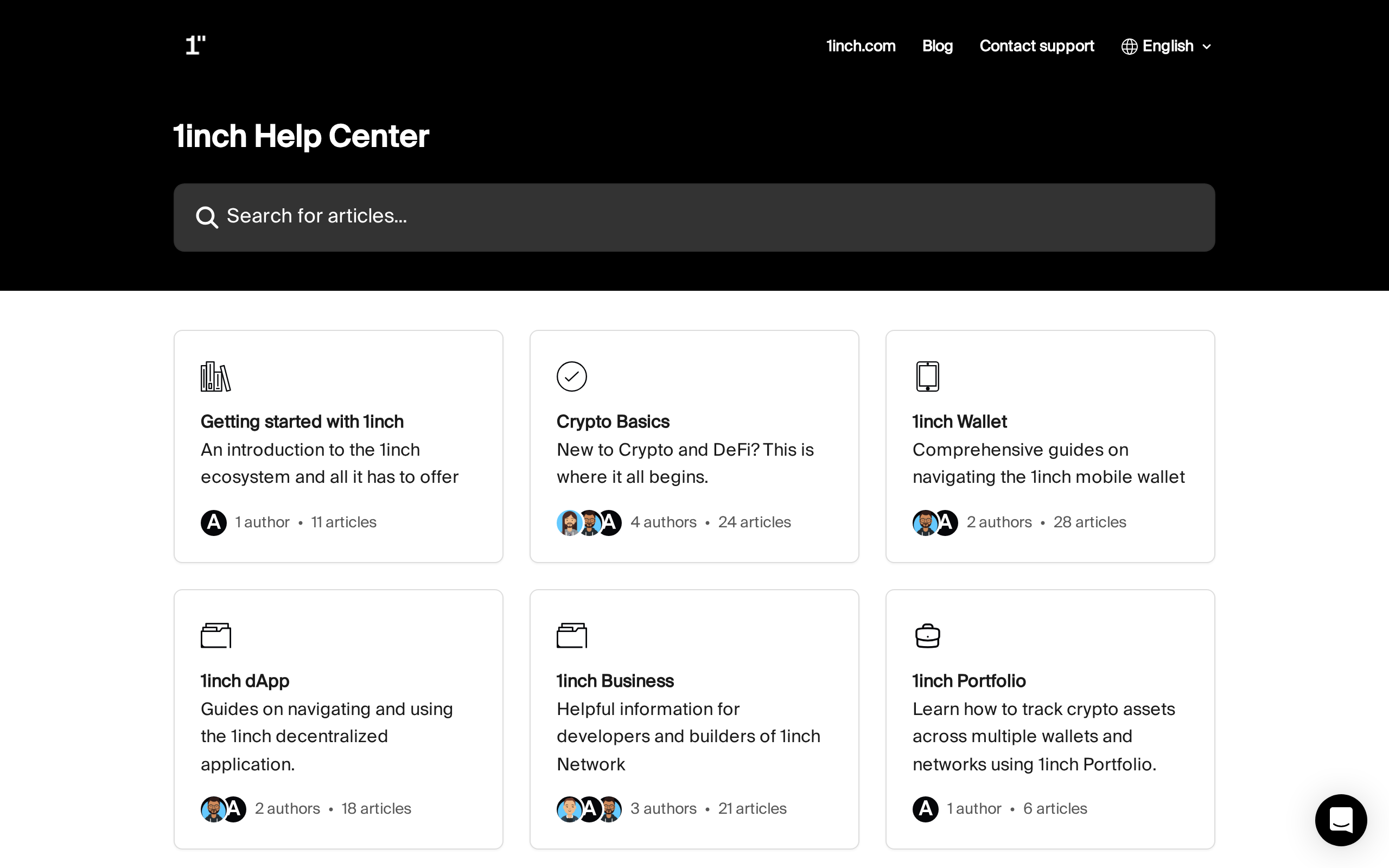
It is a reasonable extra, not a reason to switch. Support is thin by exchange standards: there is no live chat, only a help center, Discord and docs.
Who should use it
Use 1inch if you trade on EVM chains, move size, or hunt tokens that live in several small pools. It is also a sensible check against a direct DEX price before a large order. Avoid it if you only swap small amounts of majors, if you are new to approvals, or if you want a human to answer when a swap goes wrong. This is a tool review, not advice about what to trade.
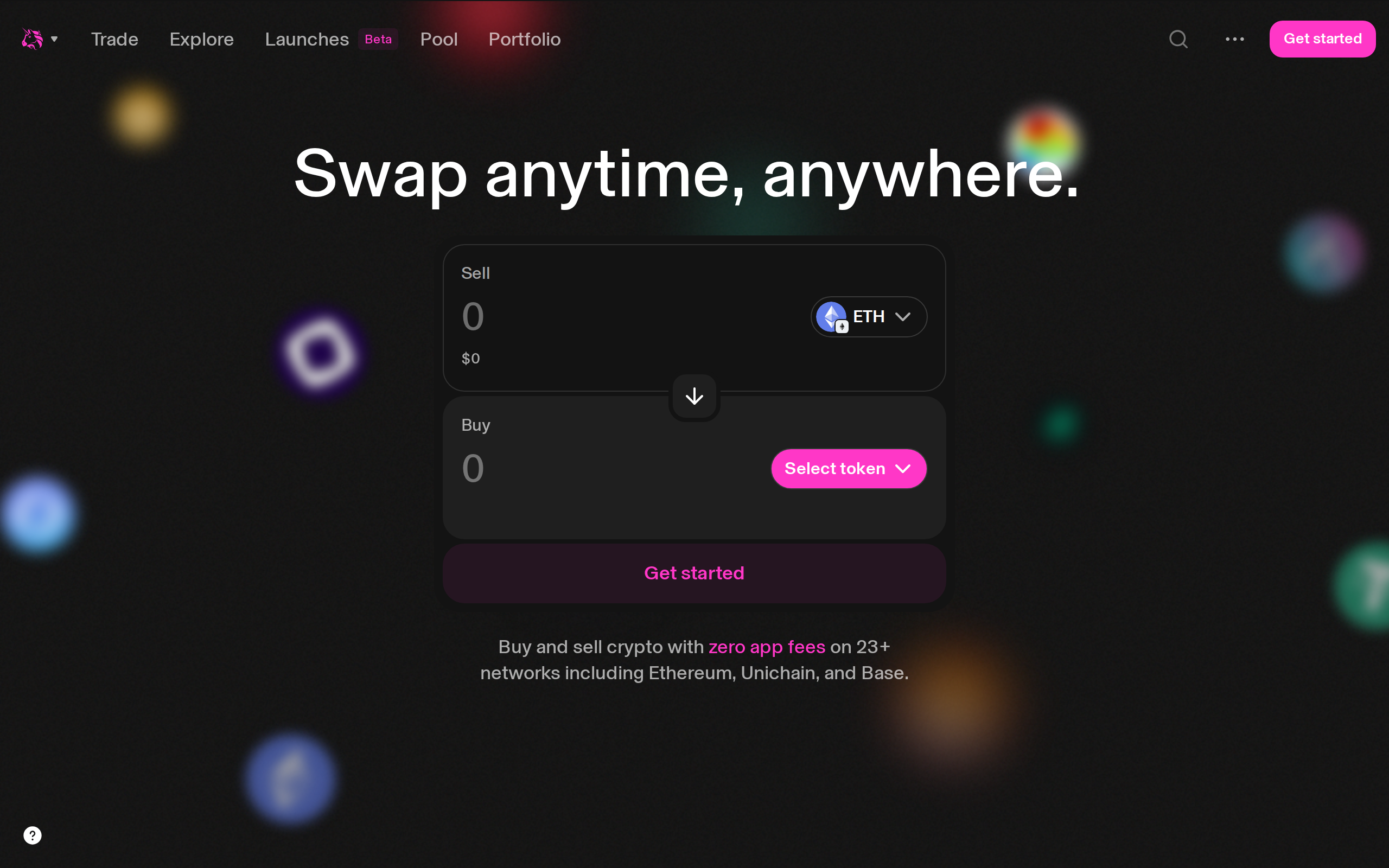
For a plain single-venue alternative, our Uniswap review covers the other side of the comparison.
Specifications
- Price
- Free; pool fees and network gas apply
- Custody
- Non-custodial, wallet connection only
- Networks
- 18+ per the swap page
- Swap modes
- Simple (intent-based), Classic (Pro)
- Liquidity sources
- 500+ pools and venues via Pathfinder
- Order types
- Market, limit and TWAP-style
- Own wallet
- 1inch Wallet, iOS and Android
- KYC
- None for the interface