
Steelcase Leap Review: The Aeron Alternative for People Who Fidget
The Leap costs about what an Aeron does but swaps mesh for foam, adds a seat-depth slider and a back that flexes with you. We sort out which body and which sitting style suits which chair.
Best for: Fidgeters and people whose legs do not match their height
The Leap is the better chair than the Aeron for people who shift around, have short or long legs for their height, or like a padded seat. It is the worse one for hot rooms, and some units develop a backrest creak. Buy it if you want deep adjustment and a 12-year warranty. Skip it if you run warm or sit upright and still.
From about $1,400 depending on configurationfrom Steelcasesteelcase.com
Choosing between the Leap and the Aeron is mostly a question about your body and your habits, not about which chair is "better". Both sit around the $1,400 to $1,750 mark, both carry a 12-year warranty, and both are what facilities managers buy when the budget is real. They get there by opposite routes.
Foam and a flexing back against tensioned mesh
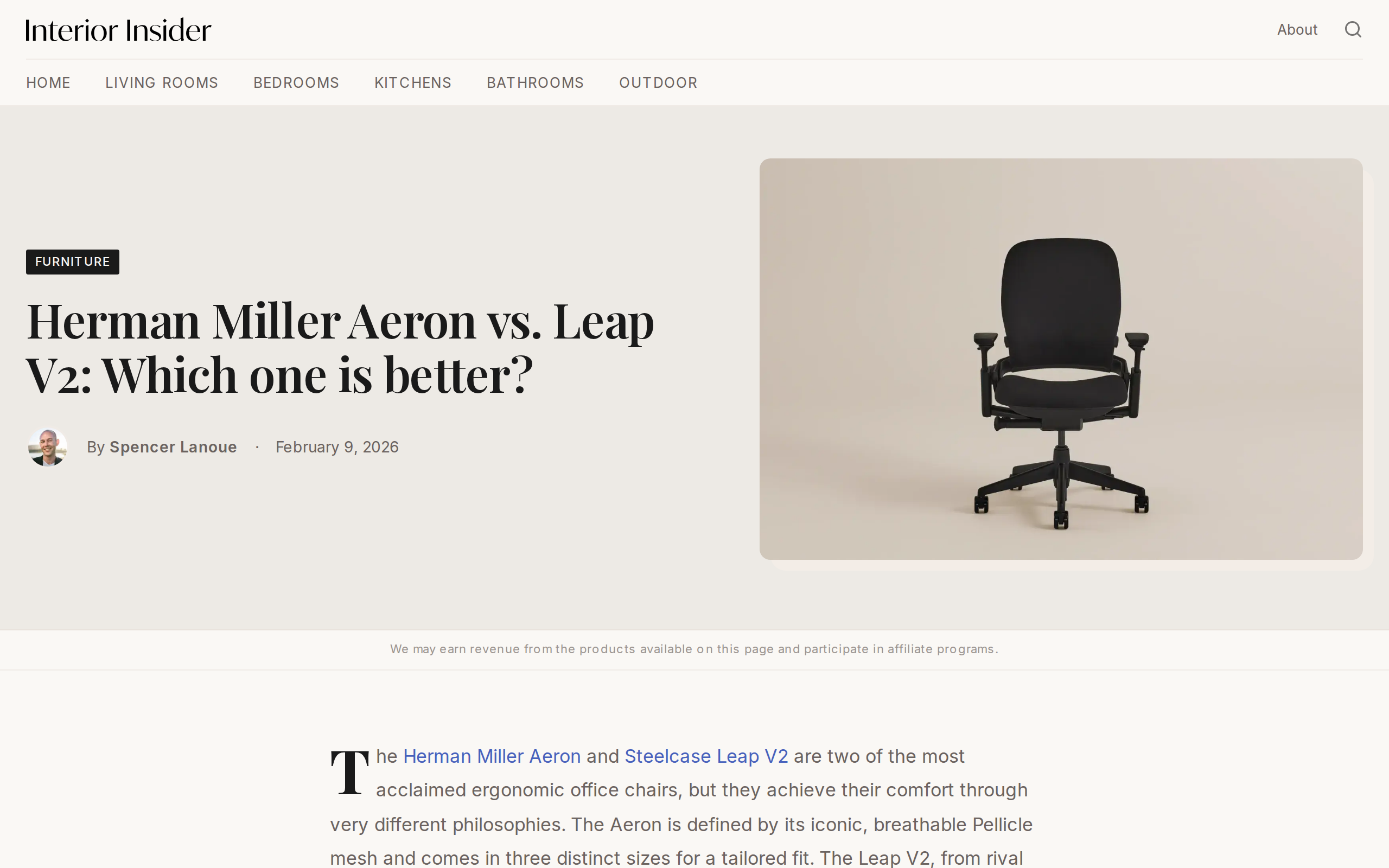
The Aeron holds you up with stretched mesh and asks you to sit in one well-supported position. The Leap uses a padded seat and what Steelcase calls LiveBack: a flexible shell that bends with your spine as you lean, twist and recline. Interior Insider's comparison puts it neatly: the Aeron provides a static, perfect posture, while the Leap moves with you.
If you spend a day alternating between typing, a call with one leg tucked under you and a long lean back to read, that moving back is the point. If you sit upright and still, you are paying for motion you will not use.
The seat depth slider is the real reason to pick it
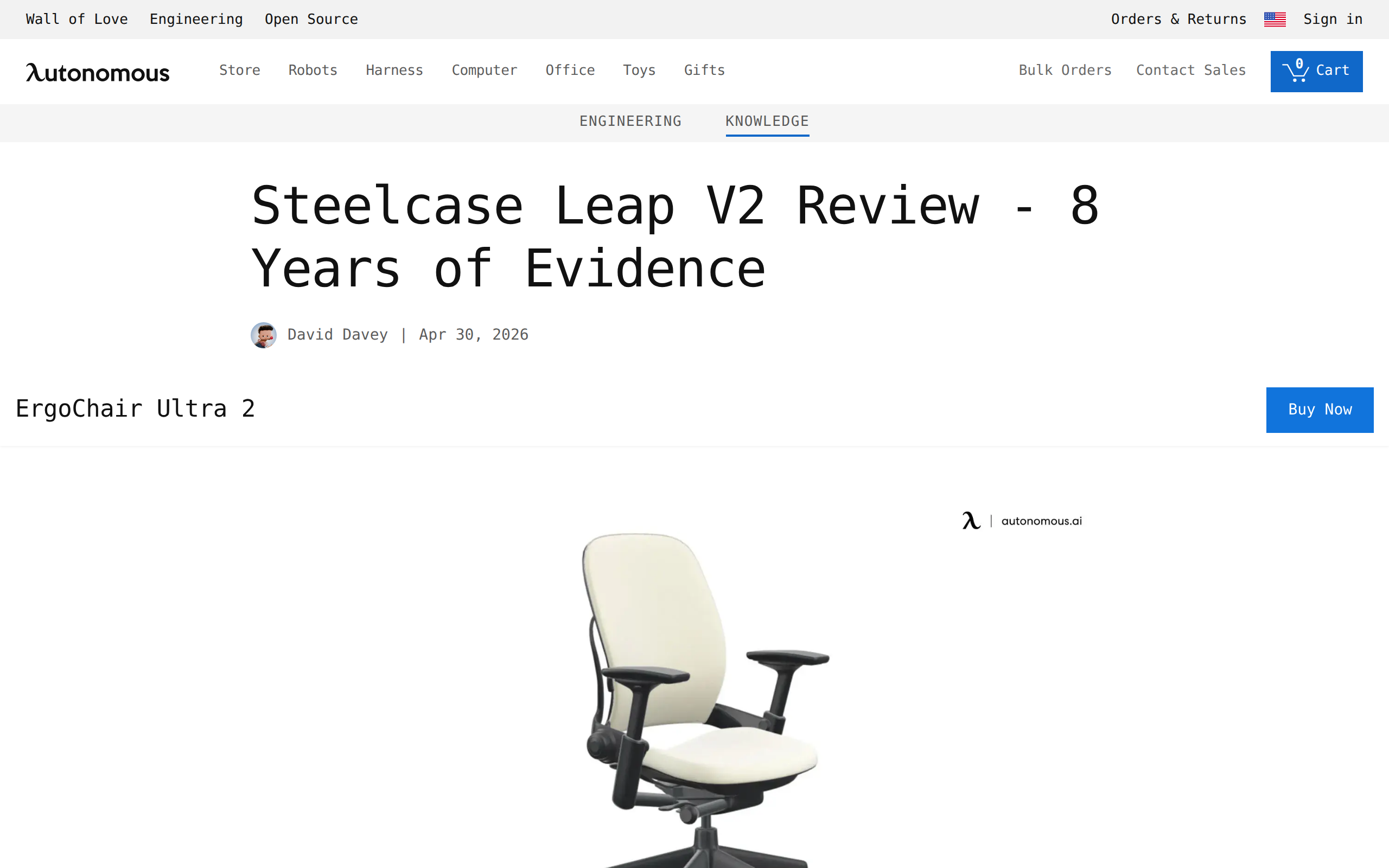
Here is the Leap's most practical advantage. The seat slides to roughly 15.7 to 18.5 inches deep, according to the Autonomous long-term write-up, which also reports the Aeron has no seat depth adjustment at all, with each size fixed. That matters more than it sounds. Someone five foot four with long thighs, or six foot two with a short femur, ends up with either a seat edge digging into the knees or a gap that leaves the thighs unsupported.
The rest of the adjustment list is generous too. On Steelcase's own page the chair has lumbar that moves up and down, plus a dial for lower-back firmness, and arms that move in height, width, depth and pivot. Seat height runs from about 15.5 to 20.5 inches, and Steelcase says the chair fits roughly 5 ft 2 in to 6 ft 6 in.
Where it falls behind
Heat is the clear weak spot. Foam holds warmth. The Autonomous piece says the seat retains heat once a room passes about 77 F, and it calls the mesh Aeron the clear winner for hot offices and warm climates. A fair caution: Autonomous sells rival chairs, so treat its numbers as a lead, not gospel, and note that the heat point is also the one every independent comparison repeats.
Two further complaints are worth knowing. The same source says the foam is thin, and that after eight-hour sessions it can feel hard. It also reports a backrest noise in roughly one in three new units. That figure is a single outlet's claim and we could not confirm it from an independent test, but if your chair creaks inside the return window, send it back instead of living with it. The optional headrest runs about $180 and gets mixed reports, so skip it unless you know you need one.
What the money and the warranty look like
Steelcase backs the chair for 12 years, multi-shift, 24/7 use, and the company states that the warranty is among the strongest in the industry. The weight rating is 400 lb, and the Leap Plus extends it to 500 lb. A recommended configuration lands near $1,400, with fabric, finish and headrest options moving it up.

Spread across twelve years, that is about $117 a year for a chair you sit in for most of your waking work life. If a refurbished one turns up for far less, as Autonomous mentions at about $640, the maths gets even kinder, though a used chair may lose the full coverage.
Who should buy it, who should skip it
Buy the Leap if you:
shift position often and want the back to follow you
have legs that are long or short for your height
prefer a cushioned seat to a firm mesh one
sit in a cool or air-conditioned room
Skip it if you:
run hot, or work somewhere warm
sit upright and still, where the Aeron's firm support does the job
have a budget under about $600, where a cheaper ergonomic chair is the better trade
Our advice if you cannot decide: sit in both for 20 minutes in a showroom, and pay particular attention to the back of your knees and your shirt after half an hour. Those two spots decide the Leap against the Aeron more reliably than any spec sheet.
Our rating
We give the Leap 8.4. The fit range, the seat depth slider and the warranty are as good as seating gets. The heat, the thin foam and the reports of backrest noise keep it below the best mesh chairs for people who run warm.