
Peak Design Travel Backpack 45L Review: One Bag, One Week
Peak Design's 45L pack expands from a 35L day bag and claims to replace a carry-on suitcase. We check the size limits, the weight and the price against cheaper one-bag travel packs.
Best for: Frequent one-bag travellers who want structure and easy access
The best-organised one-bag pack we know of, and it really does fit a week of clothes plus a laptop. It is heavy for a backpack, gets tight at carry-on limits when fully expanded, and costs $299.95. Buy it if you travel often and value access and structure. Everyone else can pay half for a lighter bag.
$299.95from Peak Designpeakdesign.com
Most one-bag travel packs fail the same way: you stuff them, then dig for your charger at the bottom of a deep hole. Peak Design built the Travel Backpack 45L to avoid exactly that, and it is the reason the bag costs what it does.
The pitch, in numbers
The 45L is really two bags. Collapsed it holds 35 litres and measures 22 x 13 x 9.5 inches. Unzip the expansion and it grows to 45 litres at 22 x 13 x 11 inches. It weighs 4 lb 8 oz empty, per the figures in REI's listing. Peak Design sells it at $299.95, and the 20L and 30L versions sit below it for lighter trips.
The carry-on promise rests on that depth number. Peak Design says it meets the size limits of most airlines, which usually cap a bag at 45 linear inches (length plus width plus height). Add 22, 13 and 11 and you land on exactly 46, so fully expanded it is a hair over on paper. Collapsed, at 44.5 inches, it clears. Airlines vary, and budget carriers are stricter about personal items, so check yours before you commit to the bigger setting.
Why access matters more than litres
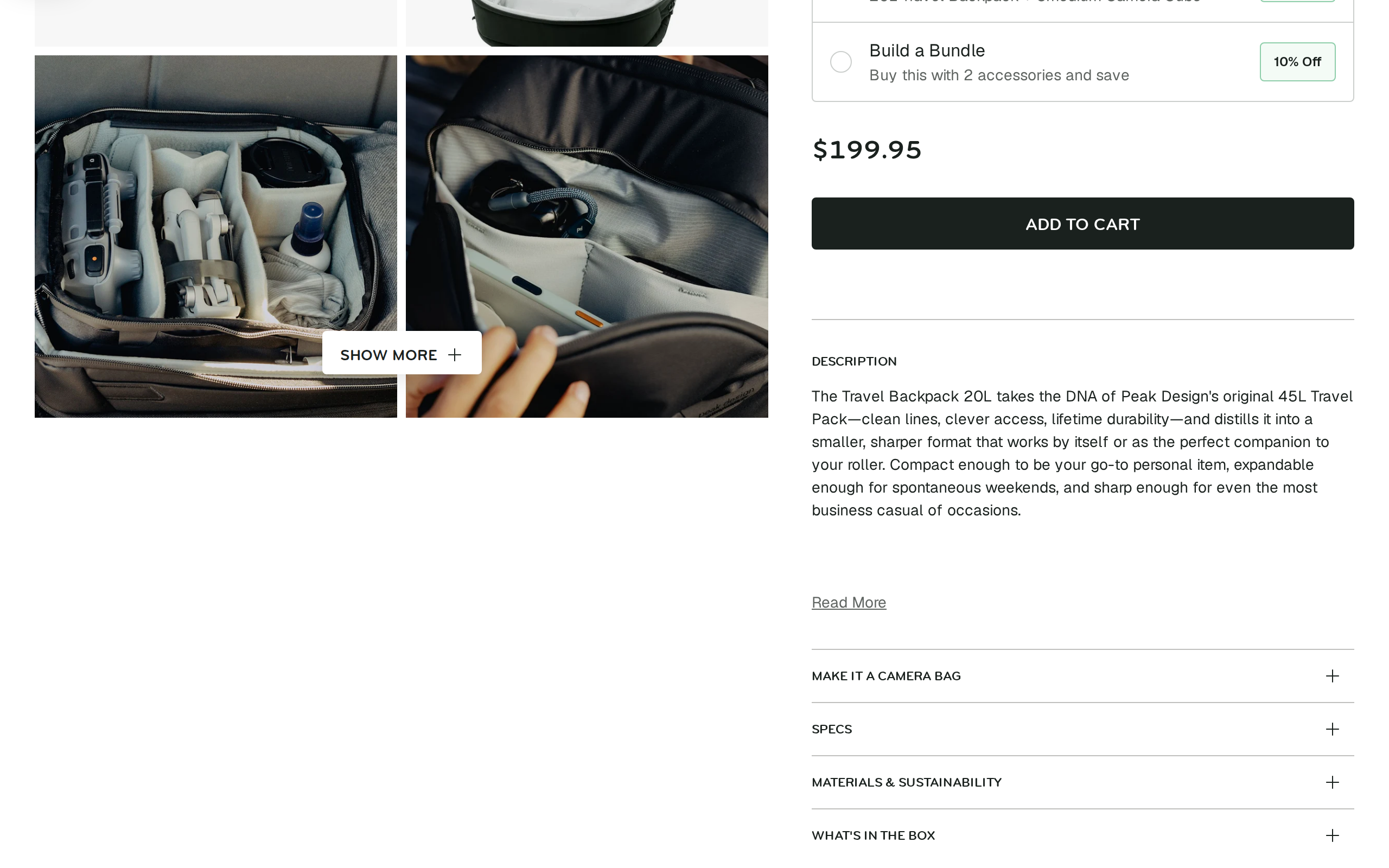
Capacity is easy to claim. Layout is what you live with. The Travel Backpack opens like a clamshell from the back panel, with side zippers on both flanks, so you can reach into it without unpacking everything. Dividers and a camera-friendly interior make it feel closer to a luggage system than a sack.
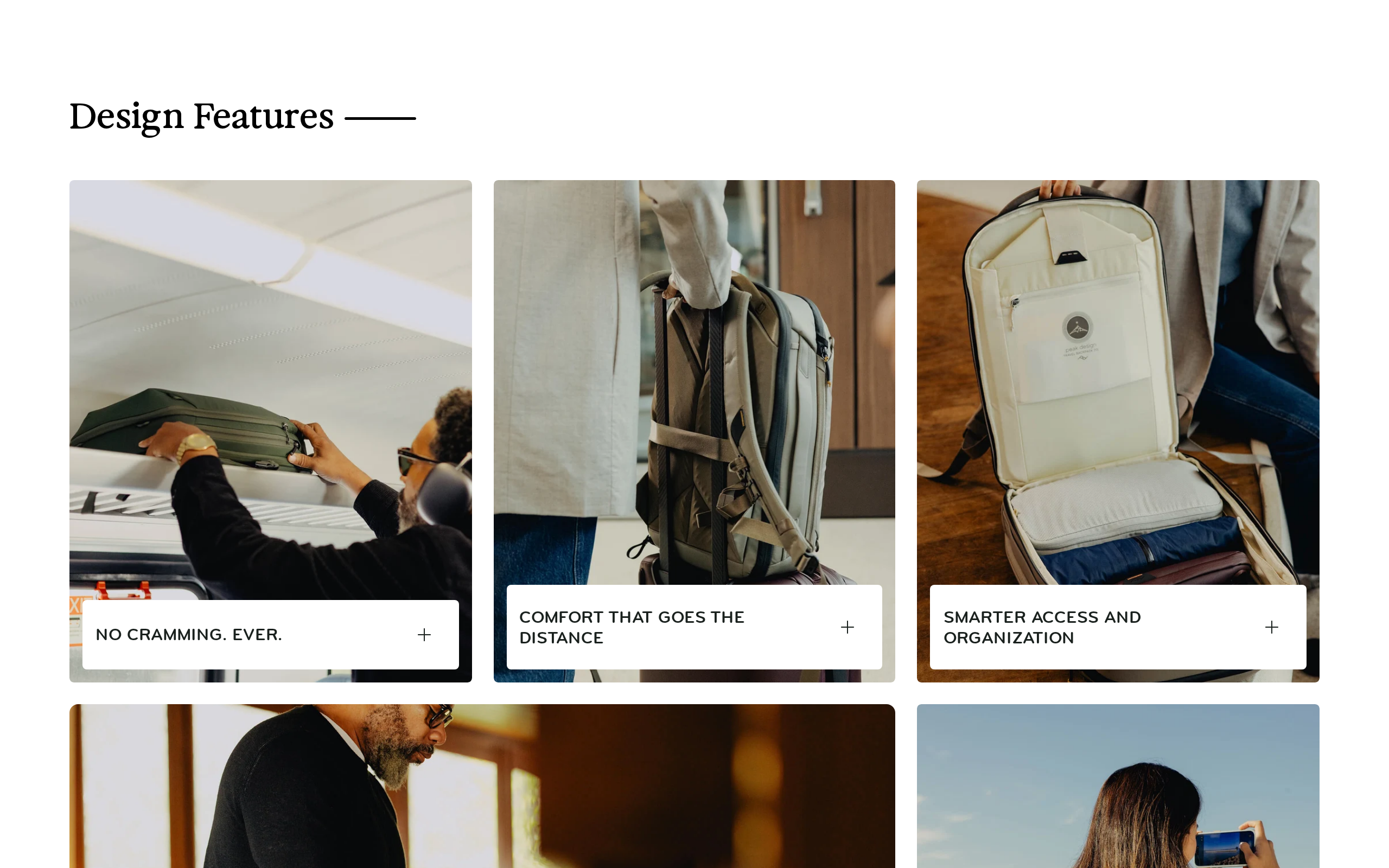
T3's review calls it the most organised carry-on bag the reviewer has tested, and that matches how the bag is designed. The front pitch on the product page is about three ideas: no cramming, comfort over distance, and smarter access and organisation.
Comfort and weight, the honest trade-off
This is where the bag gives ground. At roughly 4.4 lb empty, you start a trip with a heavy pack, and a full 45L load pushes that well past what a small traveller wants on their back for hours. Reviewers who like the bag still call it heavy, and some say the shoulder straps are firm rather than plush.
The structure that makes the bag tidy is the same structure that adds weight. A soft sack-style pack with no frame can weigh half as much. If you walk long distances between train stations or airports, that difference will matter more than any divider.
Does it replace a carry-on suitcase?
For a week, yes, if you pack with discipline. Seven days of clothes rolled into cubes, a laptop, a washbag and a jacket fit in 45 litres. What you lose compared with a roller bag is easy rolling and a hard shell. What you gain is two free hands on stairs, cobbles and crowded trains, plus a bag that stays tucked under a seat when the overhead bin is full.
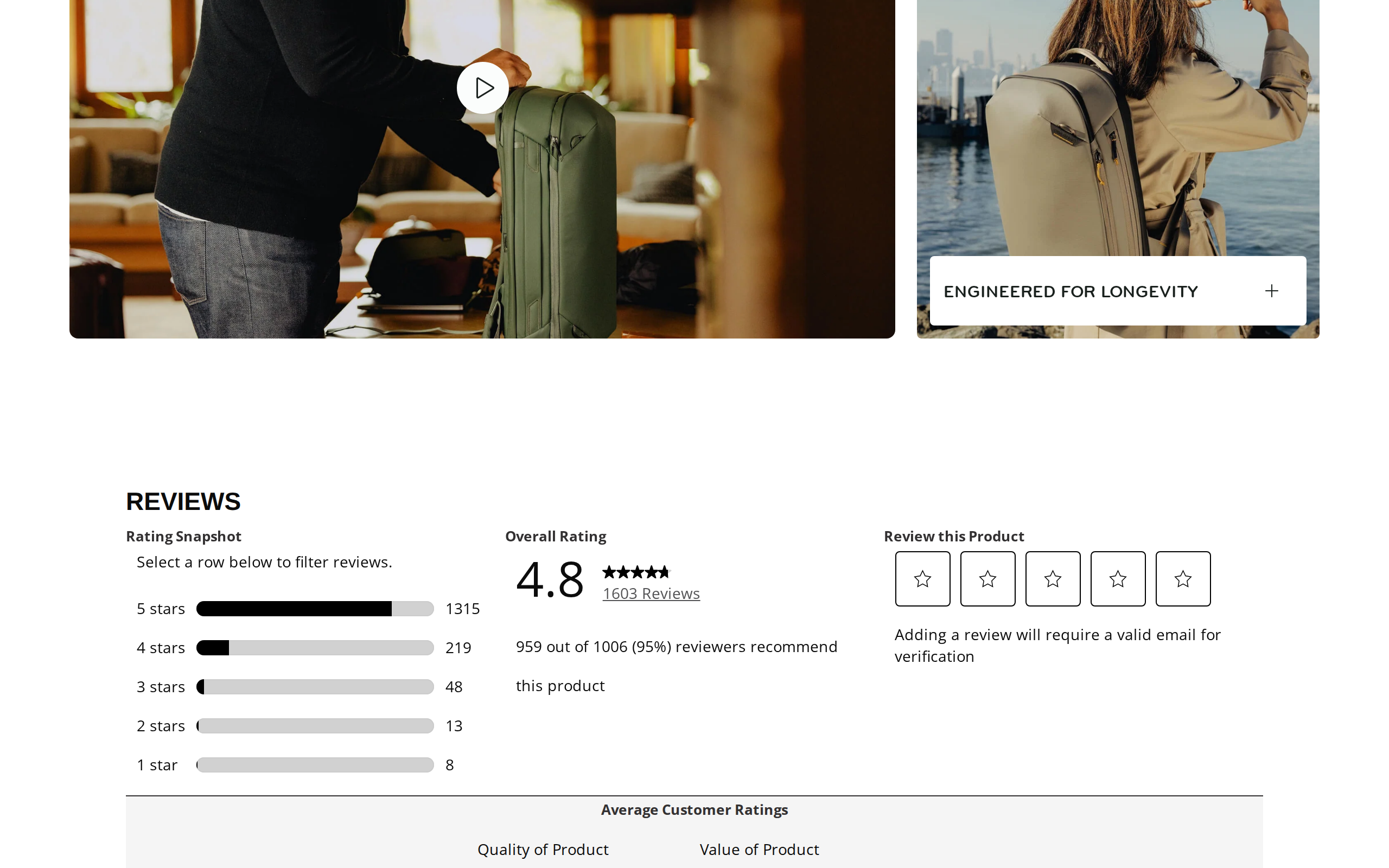
Peak Design's lifetime warranty is part of the value argument at this price, and 4.8 out of 5 stars across more than a thousand reviews on its own site suggests few buyers regret it.
Cheaper ways to do the same job
Honest alternatives exist. Osprey and similar makers sell 40-litre travel packs that cost noticeably less, often with lighter harnesses and lower weight, though with less clever access. Check current prices, because they move around. If you take a flight or two a year, one of those is the smarter buy.
There is also the 30L Peak Design if you pack light. It sits lower in price and sidesteps the carry-on arithmetic altogether, since it will clear any airline's limit with room to spare. The catch is that a week of clothes gets tight, so it suits a long weekend better than a full seven days.
What to check before you order
Three checks save regret. First, measure your usual airline's carry-on limit and compare it with the 46 inches the fully expanded bag adds up to. Second, pack the bag with your real gear at the collapsed setting and see whether you need the expansion at all, since many people never unzip it. Third, think about how you carry: a short walk from taxi to gate is a different job from a day of hauling the pack between hostels.
Who should buy it
Buy the Peak Design if you travel often, you carry camera gear or a laptop, and you hate unpacking at every stop. The structure will save you real time and the warranty protects the money.
Skip it if you are weight-conscious, you fly on strict budget airlines, or you simply need a bag for two trips a year. Pay less, pack lighter and accept a messier interior.