
Oura Ring 5 Review: Better Sleep Data Than a Watch, for a Price
Oura's fifth ring is smaller and lasts about a week per charge, but the useful features sit behind a $5.99 monthly membership. We weigh it against a smartwatch and the Galaxy Ring.
Best for: People who want sleep and recovery data without wearing a watch to bed
The best smart ring for people who mainly want to understand their sleep and recovery, and a better overnight tracker than most watches because you will actually wear it to bed. It is not a sports watch, it has no screen, and the real cost is closer to $470 in year one. Buy it if sleep is the goal. Skip it if you want workout detail or hate subscriptions, and look at the Galaxy Ring on Android or a Garmin for training.
From $399 plus $5.99/mo membershipfrom Ouraouraring.com
The question with any smart ring is not whether it can count your steps. It is whether a thing on your finger gives you better answers about sleep than a watch on your wrist. For the Oura Ring 5, our answer is yes, with one condition: you have to be happy to pay every month for it.
What you are really buying
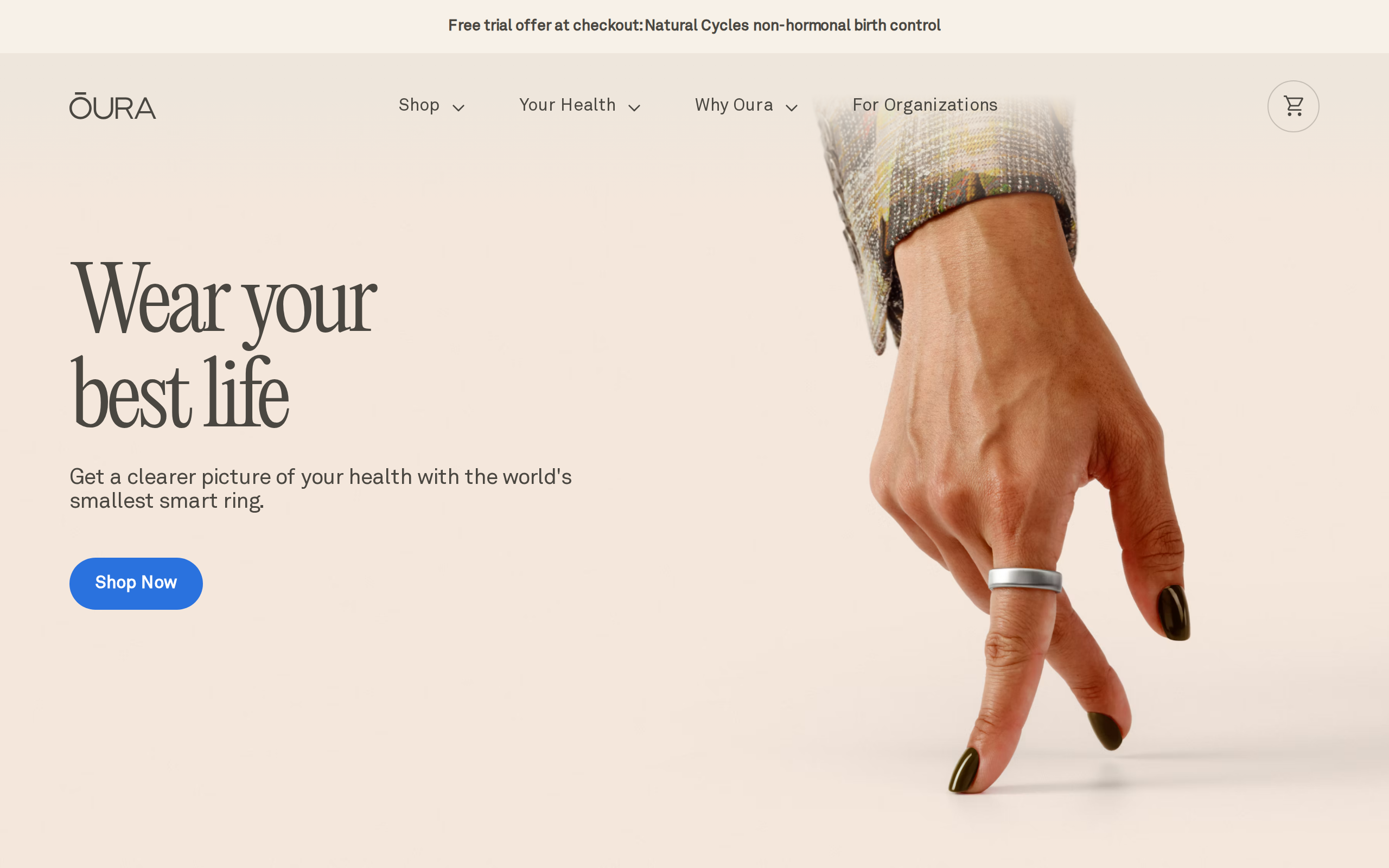
Start with the bill. The ring is $399 in Silver and $499 in Gold, Deep Rose, Stealth, Brushed Silver and Black, per Oura's product page. The membership is $5.99 a month or $69.99 a year in the US, according to Oura's membership page. Take the cheapest ring and the yearly plan and year one costs about $469.
Oura says new members get a free trial month. After that, without the subscription, you are limited to the current day's numbers. BGR calls the membership technically optional and practically essential, and we agree. Treat the real price as ring plus subscription, then decide.
Small enough that you forget it
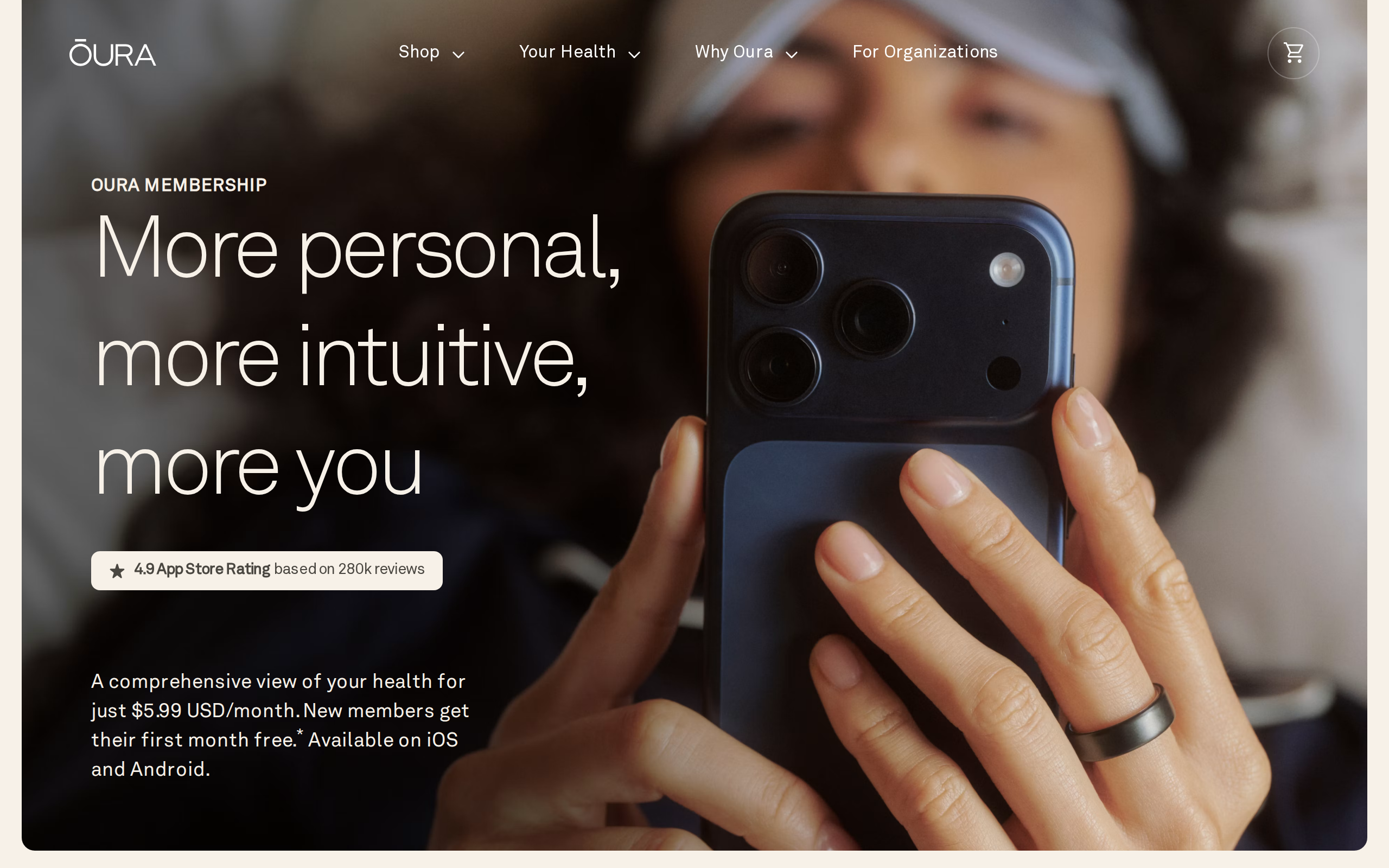
Oura lists the ring at 6.09mm wide and 2.28mm thick, made of titanium, from 2 grams depending on size. Those numbers matter more than any sensor claim. A tracker that irritates you at 3 a.m. gets taken off, and a ring that gets taken off tracks nothing.
Oura also rates it for 100 metres of water resistance, so showers and swims are fine. The ring comes in a range of finishes, and the pricier ones are cosmetic: the sensors are the same.
Sleep first, everything else second
Oura's pitch is sleep, readiness and recovery, and that is where the ring earns its rating. It reads heart rate, heart rate variability, respiration and skin temperature overnight, then turns them into a sleep score and a readiness score for the day.
Oura claims a 12% gain in overnight HRV accuracy and a 24% gain in workout heart-rate signal quality over the Ring 4. Those are the maker's figures, so treat them as marketing until others confirm them. The independent evidence is softer but encouraging: the BGR reviewer found readings consistent night to night with very few gaps, and workout heart rate that tracked close to an Apple Watch Ultra 2.
That is the honest summary. For a lot of people, a watch is more accurate in absolute terms during exercise, because it sits on a flat wrist with a larger sensor. But a watch you charge nightly and take off to sleep has a gap in the one data set Oura cares about. A ring that survives a week away from its charger does not.
Battery: a week, give or take
Oura rates the Ring 5 at 6 to 9 days depending on size and use, with a full charge in around 80 minutes. BGR saw about seven days in practice. That sits at the cautious end of the claim, which is typical: smaller sizes and heavy workout tracking land lower.
A seven-day battery changes behaviour. You charge it while you shower on a set day, and you are done. Compared with a smartwatch that wants power every night, it is the single best argument for the ring.
Where it falls short
There is no screen, so you check everything on your phone. There is no GPS. If you run or ride and want pace, route and lap data, a Garmin or an Apple Watch will do far more. BGR specifically points serious training toward Garmin.
Some headline features also deserve caution. The reviewer notes that the blood pressure signals and nighttime breathing readings lack independent validation. These are trends to watch, not diagnoses, and nothing here replaces a conversation with a doctor.
The app is dense too. Expect a week of poking around before the scores mean something.
What to buy instead
On Android with a Samsung phone, the Galaxy Ring starts at $299.99 before trade-in on Samsung's US page and carries no monthly fee, so the price gap is real. It does the same basic job, but only inside Samsung's ecosystem.
If you want workouts, buy a watch. If you want a cheap sleep check, a watch you already own may be enough. If your goal is learning how sleep, stress and training affect each other, and you can live with a subscription, the Oura Ring 5 is the one we would choose.
Verdict
Good ring, steep cost of ownership. We rate it highly because it does the one job it sets out to do better than the alternatives, and loses points for the membership wall and the missing workout depth.