
Bose QuietComfort Ultra Earbuds (2nd Gen) Review: Best Commuter Noise Blocking, Shorter Battery
At $299 these are the earbuds with the strongest noise cancelling we can recommend for trains, planes and open offices. We set them against AirPods Pro 3 and explain who should pay the extra $50.
Best for: Commuters and flyers who want the strongest in-ear noise cancelling
These are the earbuds to buy if the thing you hate most is engine drone, train rumble or office chatter, and you use an Android phone or a mixed set of devices. Noise cancelling is the best in the category and calls are clearer than on the first generation. Skip them if you live in the Apple ecosystem, where AirPods Pro 3 cost $50 less and last two hours longer.
$299from Bosebose.com
The question most people ask about these earbuds is a narrow one: do they shut out a commute better than the AirPods Pro 3 in their other pocket? Our answer, built from Bose's own numbers and the independent tests we trust, is yes, by a margin you will notice on a jet or a rattling train, and no by a margin you will care about in a quiet flat.
That is the whole shape of the decision, so we will keep the rest of this review to the places where the two earbuds actually part ways.
What $299 gets you
Bose sells the QuietComfort Ultra Earbuds (2nd Gen) at $299, the same sticker as the first generation. Inside the box you get the earbuds, a case that charges by USB-C or wirelessly, and three sizes each of silicone tips and stability bands. Bose counts nine tip and band combinations, and the fit test in its app tells you whether the seal is good.
Fit is the first thing to settle, because noise cancelling lives or dies on the seal. SoundGuys calls the buds "just as chunky as they ever were" and warns that small ears should look elsewhere. We agree with that warning. If you can wear a medium AirPods tip all day without thinking about it, try these in a shop before you buy.
Noise cancelling is the reason to pay
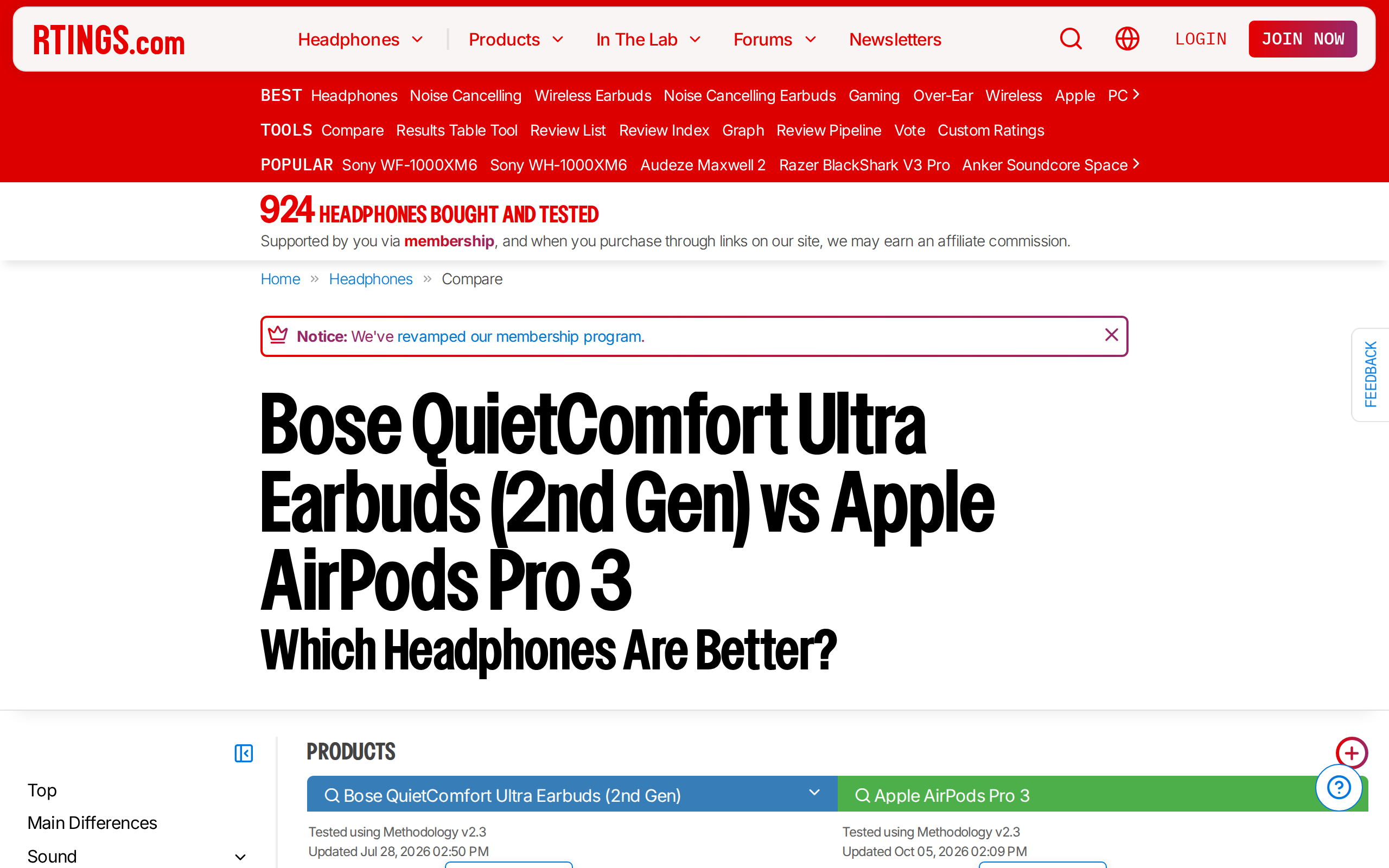
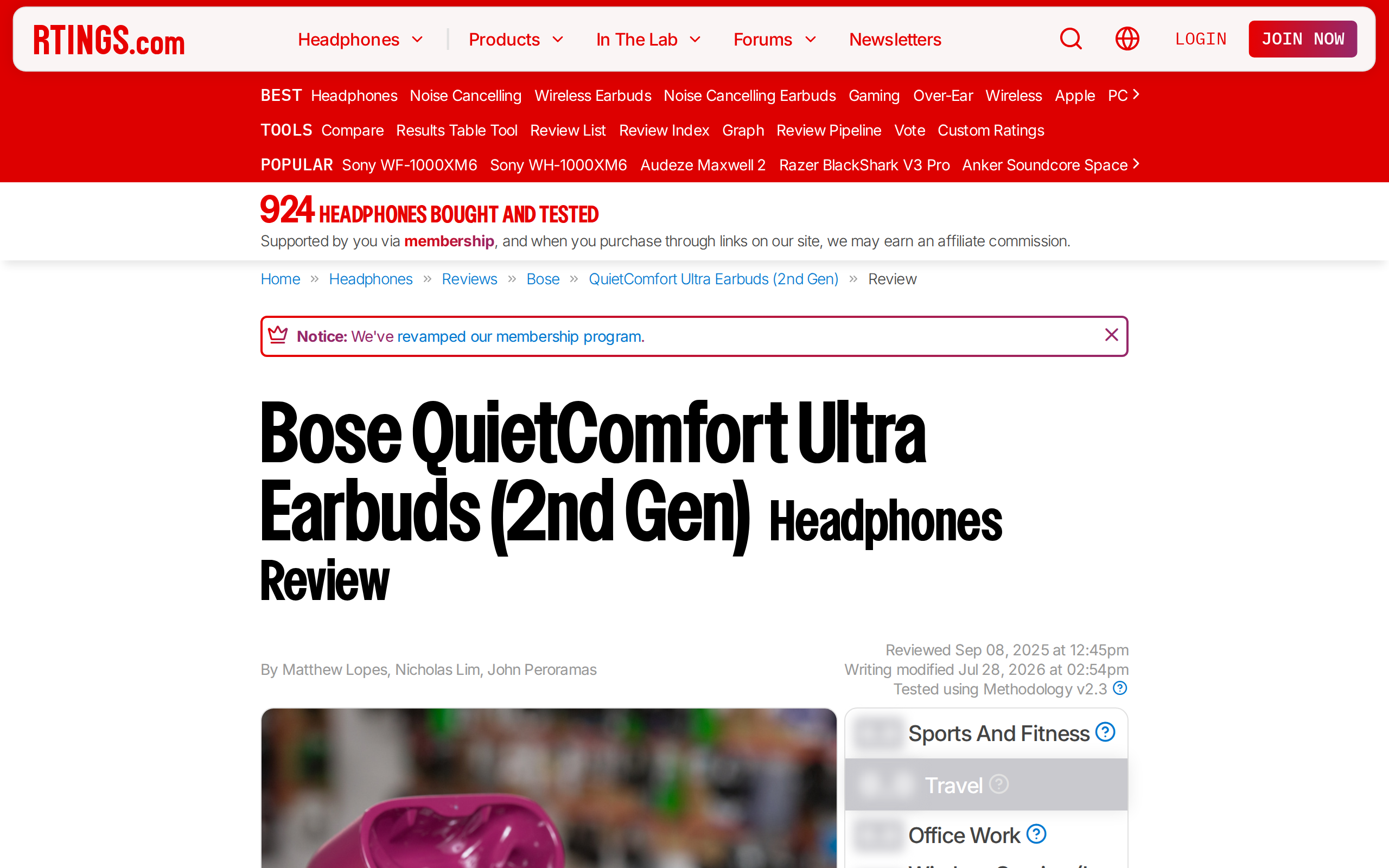
Across the reviews we read, the verdict on noise cancelling is consistent. What Hi-Fi lists "typically excellent noise cancelling" as the lead strength. A comparison write-up we found says the Bose pair hushed jet engines so well that they "virtually disappeared", while the AirPods Pro 3 reduced airplane and coffee shop noise to a "minor grumbling".
Both are very good. The gap is small but real, and it widens with low, steady sounds: engines, buses, air conditioning. If your day is built around those, the Bose earbuds earn the extra money.
Sound is closer. Reviewers describe Bose as the more balanced and consistent of the two, while the AirPods sound a touch more refined. Bose adds CustomTune, which measures your ear canal with a short tone and adjusts the output. It also has an Immersive Audio mode, and that is where the trouble starts.
The battery is the weak spot
Bose rates the buds at up to six hours per charge. Turn on Immersive Audio and the figure drops to about four. SoundGuys measured within roughly 7 percent of the claim, so the rating is honest, just short. The case adds three full charges, and a 20-minute top-up buys about two more hours according to 9to5Toys.
Set that against the AirPods Pro 3, which reviewers cite at eight hours per charge. For a day at a desk it hardly matters, since the case sits next to you. For a long-haul flight it does. Six hours with Quiet Mode on will not cover a transatlantic leg without a case break.
Android, iPhone and the switch from Apple
This is where the $50 price gap stops being the main story. The Bose buds use SBC, AAC and aptX Adaptive, and SoundGuys notes support for aptX Lossless on phones with a recent Snapdragon chip. They pair with two devices at once, so a laptop and a phone can share them.
The AirPods Pro 3, at $249, give an iPhone owner things Bose cannot match: instant pairing, automatic switching across Apple devices, and tight integration with the phone's settings. If your phone is an iPhone, that convenience is worth more than a small edge in noise blocking, and we would buy the AirPods.
If your phone is a Pixel, a Galaxy or anything else, the comparison flips. The AirPods lose most of what makes them special, and the Bose pair becomes the stronger earbud.
Who should skip them
Three groups. The first is anyone with small ears. The second is iPhone owners who commute short distances and value convenience. The third is runners, since IPX4 handles sweat and light rain but is a step below the sturdier ratings on sport-focused pairs.
SoundGuys' phrase for this generation is a "boring update", and that is fair. The changes are subtle: better call quality from AI noise suppression, tuning tweaks, and the same price. If you own the first generation, keep it.
Alternatives worth a look
Bose's own lineup includes open-ear models for people who do not want isolation, as the maker's earbuds page shows. If you want over-ear isolation instead, our review of the Sony WH-1000XM6 covers a pair that costs more but blocks more.
Our verdict
Buy the QuietComfort Ultra Earbuds (2nd Gen) if you travel often, you carry an Android phone or a mix of devices, and you want the quietest in-ear option sold today. Pay the $299 and expect to charge the case regularly.
Pick the AirPods Pro 3 if you own an iPhone, because the $50 you save and the extra two hours buy you more day-to-day comfort than Bose's lead in silence. We score the Bose pair 8.4 out of 10: the best at its job, held back by size, runtime and price.