Portfolio TrackersReview
Zerion Review: The Clearest View of DeFi Across Many Chains
We connected a multi-chain wallet to Zerion, checked its 66 mainnet support list, tested its automatic DeFi position tracking on lending and liquidity positions, and compared the free tracker against the $99 Premium tier before deciding who actually needs the paid fee discount.
Our verdict
Zerion finds lending positions, liquidity pairs and staking rewards across 66 mainnets without you telling it where to look, which is a harder problem than a plain balance tracker solves and the reason we keep coming back to it. The built-in wallet is genuinely usable day to day, and paying $99 a year only makes sense once your trade volume is high enough for the halved fees to outweigh the subscription.
Best for: Anyone holding DeFi positions across several EVM chains who wants them found automatically
- Price
- Free
- Made by
- Zerion
What we liked
- Automatically surfaces lending, liquidity and staking positions across 66 mainnets and 8 testnets without manual entry
- Self-custodial wallet generates the recovery phrase on-device; Zerion states it holds none of a user's keys
- Audited by four independent security firms, including Cure53 and SlowMist, with a public Immunefi bug bounty
- Transaction preview shows exact assets moving and the network fee before you approve, catching hidden instructions
What held it back
- Premium costs $99 a year for halved trading fees, a cost only active traders will recoup
- In-app swaps carry Zerion's own fee on top of network gas, so casual holders pay more than a direct DEX trade
- DeFi position values depend on price feeds Zerion pulls in, which can lag during volatile swings
- The wallet's own security cannot protect against a phishing site that a user approves outside Zerion's warnings
Tracking a single wallet balance is easy. Tracking what that wallet actually owes and earns across a dozen lending pools, liquidity pairs and staking contracts is the problem most portfolio trackers punt on, asking you to add each position by hand. We spent a week moving funds through DeFi positions on several chains with Zerion connected, to see whether it actually finds that mess on its own.
Finding positions nobody told it about
Zerion's DeFi tracking worked without configuration on every position we opened: a lending deposit, a liquidity pair and a staking contract all appeared in the wallet view within minutes, complete with current value and accrued rewards. That matters because manually logging a DeFi position means re-checking it every time the underlying pool rebalances, and most trackers we have used simply do not bother trying. Zerion's automatic detection removes that chore entirely, at the cost of trusting its price feeds during fast moves, which can lag the pool's real state for a few seconds during a sharp swing.
We also compared what Zerion showed against the numbers each protocol's own dashboard reported, checking a lending position and a liquidity pair side by side. The figures matched within rounding on both, which is a better outcome than a couple of trackers we have tested elsewhere that rounded staking rewards down to zero until a manual refresh.
Sixty-six mainnets is not a marketing round number
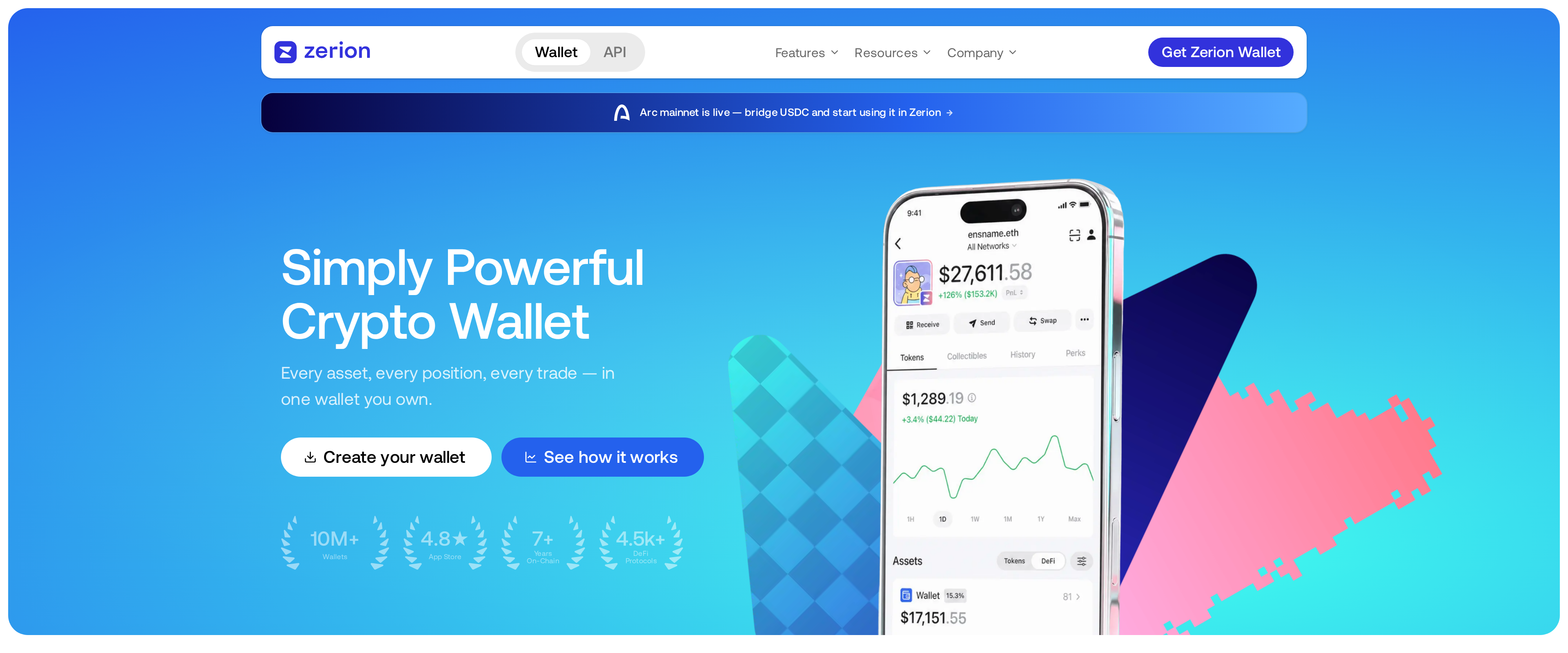
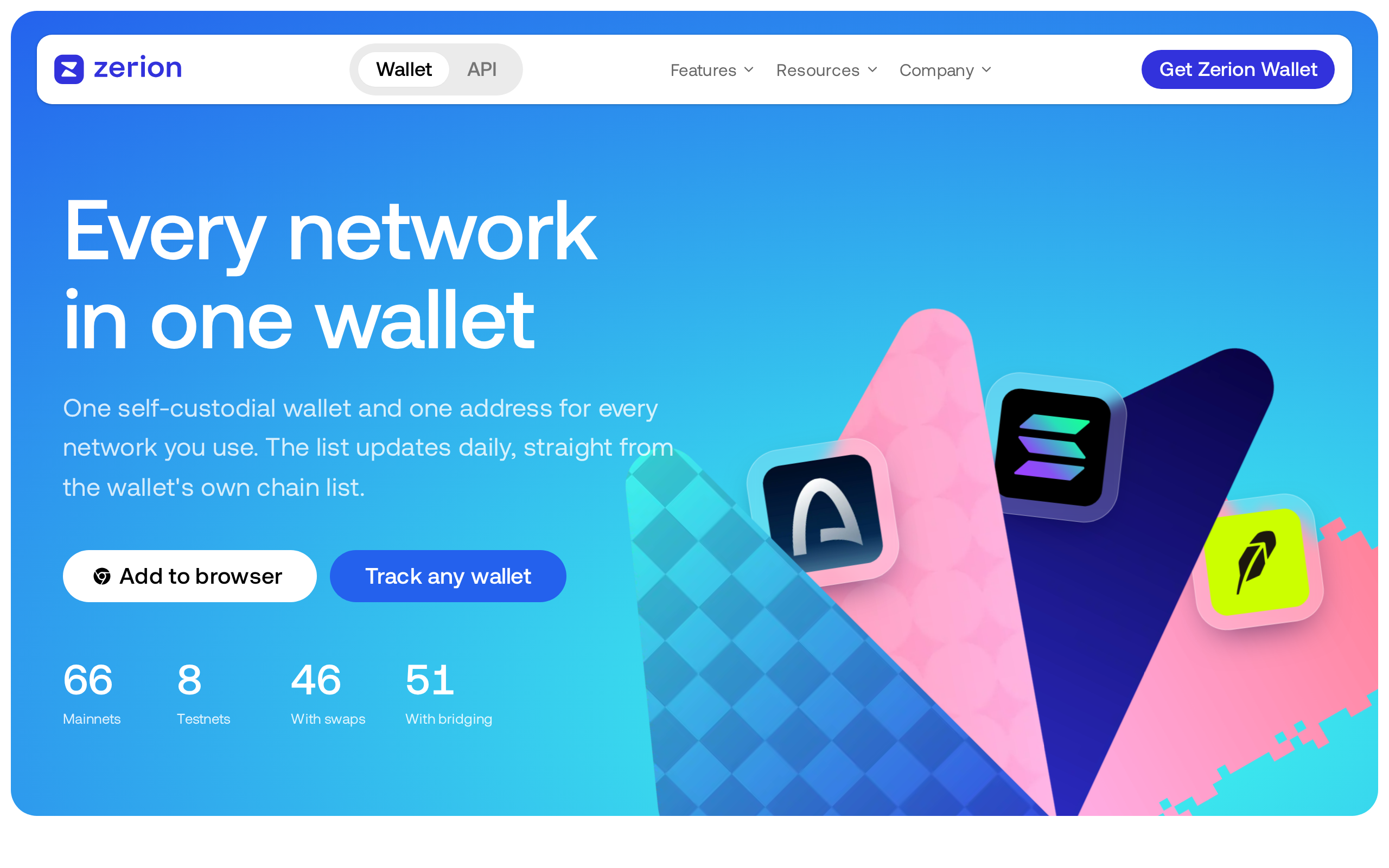
Zerion's own network page lists 66 mainnets and 8 testnets, refreshed daily from the wallet's live chain list rather than a static marketing claim (zerion.io/chains). We tested wallets on Ethereum, an Optimism rollup and a newer chain, and all three showed up under the same address without switching networks manually in the app. That range covers essentially every EVM chain worth holding assets on, and the daily refresh means a brand-new chain launch does not leave you waiting weeks for support.
What Premium actually buys you
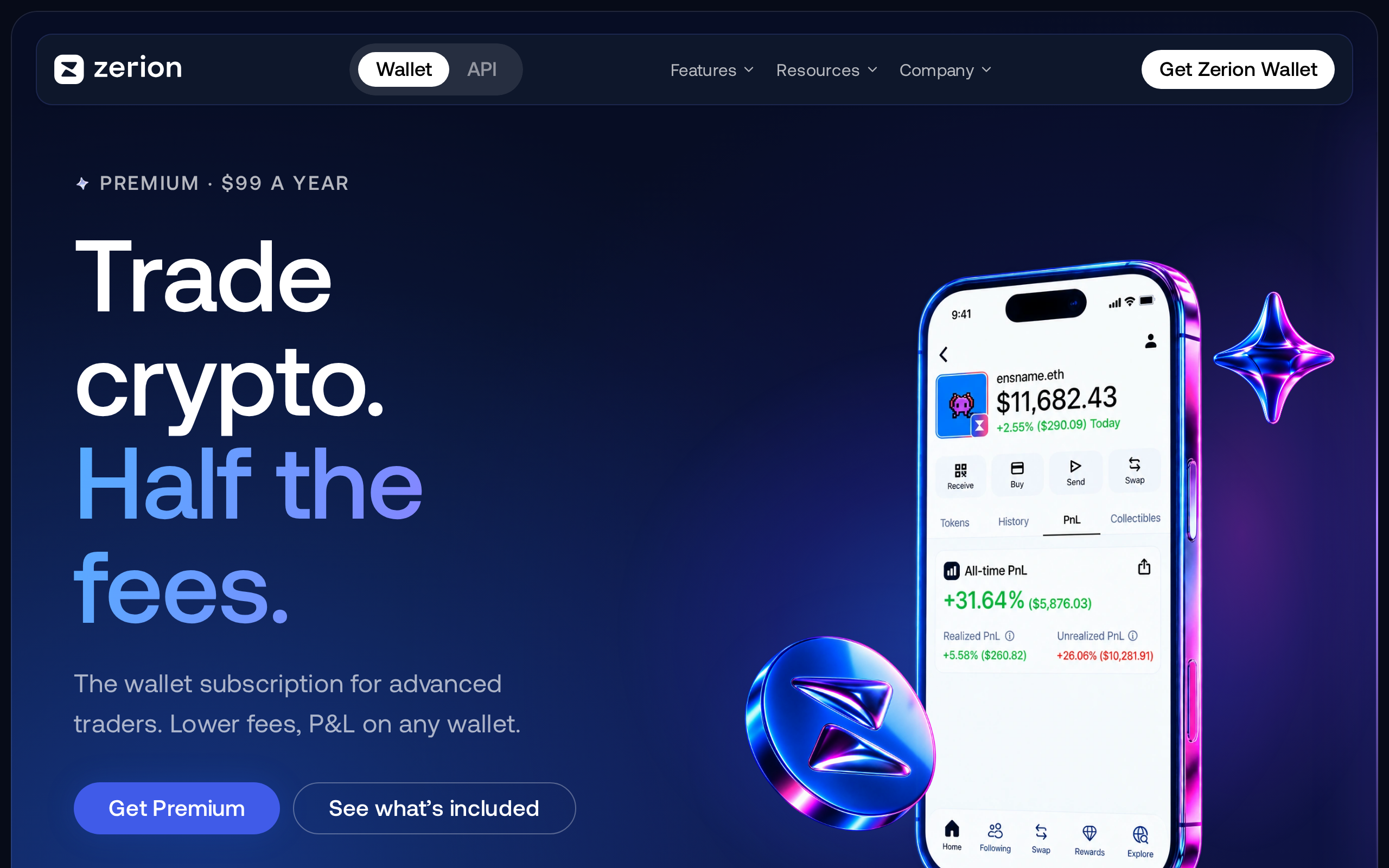
Zerion's core tracking and wallet functions cost nothing, but the Premium tier at $99 a year exists specifically to cut trading fees in half for anyone swapping inside the app (zerion.io/premium). That math only works in your favor if your swap volume is high enough that the fee savings clear $99 over the year; an occasional trader will spend more on the subscription than it saves. Someone who mostly holds and checks balances gets nothing from Premium and should stay on the free tier without a second thought.
Specifications
- Price
- Free; Premium at $99/year
- Networks supported
- 66 mainnets, 8 testnets
- Custody model
- Self-custodial, recovery phrase generated on-device
- Security audits
- Cure53, SlowMist, Zokyo, Secfault Security
- Bug bounty
- Active program on Immunefi
- Account required
- None; no KYC or signup
- Extension rating
- Available on Chrome Web Store
- Premium benefit
- Lower in-app swap fees, P&L on any wallet