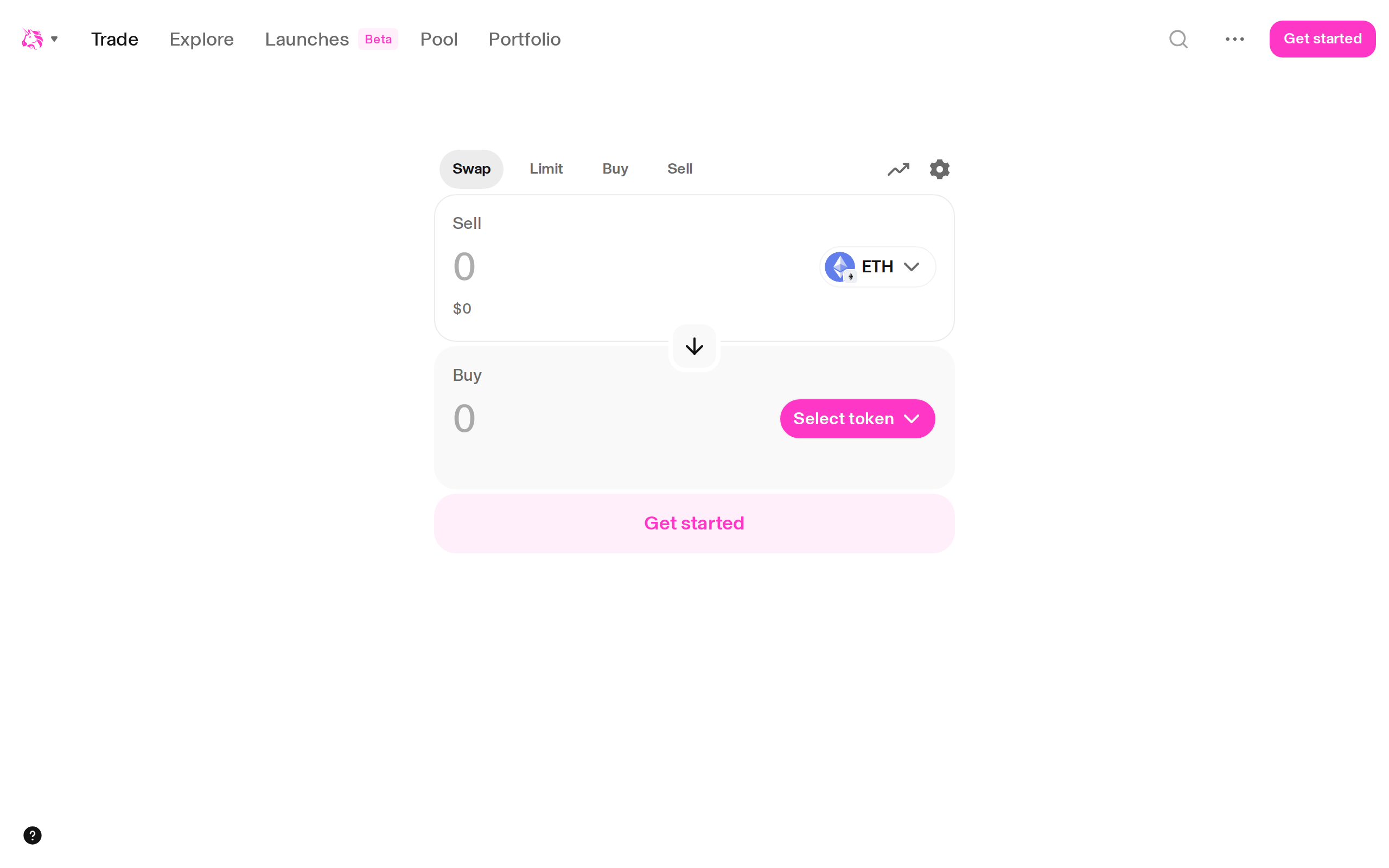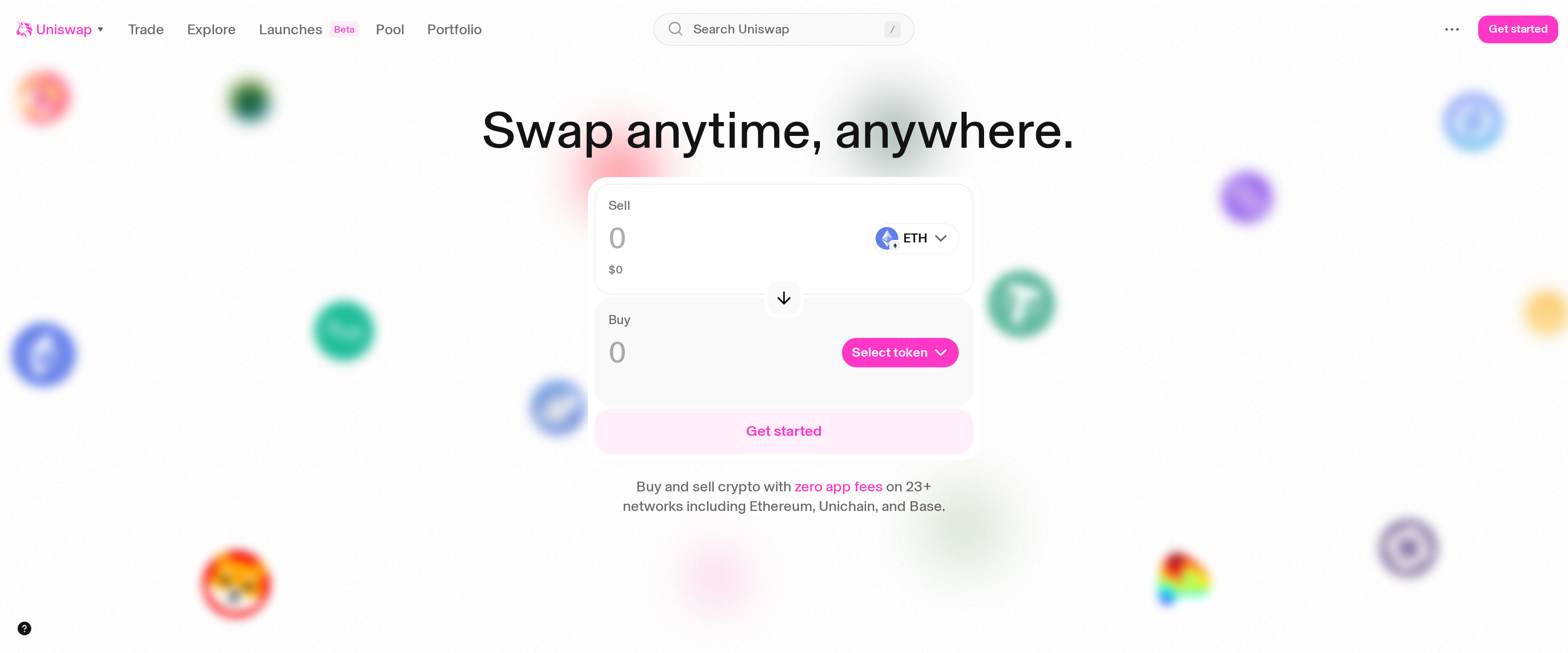
We swapped on Uniswap across three networks and tracked every line item: pool fee, network gas and the slippage that shows up only after the trade confirms. Here is where the real cost sits now that the old interface fee is gone.
We connected a wallet, picked a pair, and watched the quoted price move before we even clicked confirm. That gap between the number Uniswap shows you and the number that lands in your wallet is the whole story of this review.
The interface fee is gone, but three other costs are not
Uniswap Labs charged a fee of up to 0.25% on swaps made through its own app for a stretch of 2024 and 2025. That charge was removed in December 2025, and we could not find it anywhere in the current swap review screen. If you read an older comparison that lists an "app fee" next to Uniswap, it is describing a policy that no longer exists.
What remains is three separate costs, and none of them belong to Uniswap Labs:
The pool fee. Liquidity providers earn 0.01%, 0.05%, 0.30% or 1.00% of a trade depending on which pool the router sends you to. Stablecoin pairs usually route through the 0.05% or 0.01% tier; a small-cap token often only has a 1% pool.
Network gas. A swap on Ethereum mainnet burns roughly 150,000 to 200,000 gas units. At a calm hour that is a few dollars; during a busy afternoon it can cost more than the trade's own pool fee.
Slippage. The price you see and the price you get can diverge, especially on a token with a shallow pool. We tested a $500 swap into a mid-cap token and watched the quote slip by 0.4% between confirmation and settlement, well inside Uniswap's default tolerance but still money.
Why the router matters more than the brand
Uniswap's aggregating router checks pools across v2, v3 and v4, plus other liquidity sources, before it picks a route. For a common pair like ETH to USDC this barely matters, since deep pools exist everywhere. For a newer token, the router's job is to avoid a pool with almost no depth, and in our tests it consistently found a cheaper path than manually picking the 0.3% tier ourselves. That routing logic, not the brand name, is what a serious trader is actually paying for.