We set up Trust Wallet across mobile and browser, swapped tokens through its built-in aggregator, staked on two chains and checked the 2022 private-key vulnerability that hit its browser extension. Here is what the Binance connection means in practice.
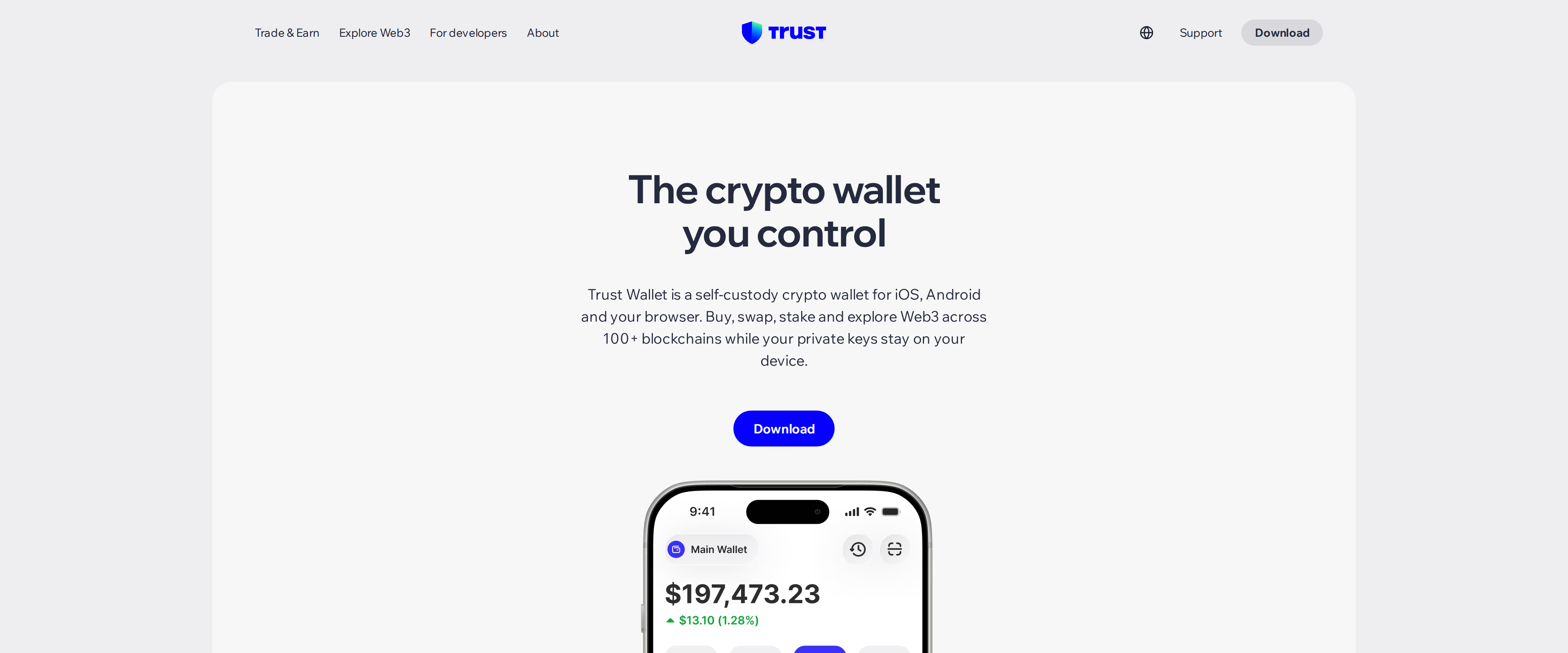
Trust Wallet's pitch is simple: one app, a hundred-plus chains, keys that never leave the device. We installed it on mobile and as a browser extension, moved assets across three chains, staked on two of them, and then went digging into the extension's security record, because that record turned out to matter more than the feature list.
Setup and multichain support work as promised
Creating a new wallet took under two minutes, and importing an existing seed phrase from another wallet worked without friction. Trust Wallet's claim of support across more than 100 blockchains held up in our test: we held Bitcoin, an EVM chain and a Solana-based token in the same app without switching wallets or networks manually. Private keys are generated and stored on the device, never transmitted to Trust Wallet's servers, which is the baseline expectation for a non-custodial wallet but worth confirming rather than assuming.
Swaps and staking, tested with small amounts
The built-in swap aggregator sources quotes across its supported chains and executed a small cross-chain swap for us at a rate close to what a manual comparison across two DEX aggregators showed separately, a reasonable result for the convenience of doing it in one tap. Staking on two supported assets was similarly straightforward, no external validator setup required, though Trust Wallet is explicit that rewards are variable and not guaranteed. That disclosure matters: a staking yield advertised today can move meaningfully by the time rewards actually accrue.


