Hardware WalletsReview
Tangem Wallet Review: A Screenless Card That Trusts Your Phone
We tapped a Tangem card to a phone, restored a wallet from a spare card in the set, and weighed its EAL6+ secure chip against the one trade-off a screenless design cannot avoid: blind signing, where the phone shows you the address and the card has to take its word for it.
Our verdict
Tangem is the easiest cold wallet we have set up: tap a card, scan a QR code, done, no seed phrase to copy onto paper. That ease comes from removing the one part every Ledger and Trezor owner takes for granted, a screen that shows what is actually being signed. Buy the three card set, keep one card somewhere else entirely, and treat the phone it pairs with as part of the security model, not just an accessory.
Best for: A first cold wallet for someone who wants offline key storage without learning to write down a seed phrase
- Price
- Set of 2 cards $59.90, set of 3 cards $69.90
- Made by
- Tangem
What we liked
- Setup is a tap and a QR scan, with no seed phrase to write down or store
- OPTIGA-based chip certified to EAL6+, the same class used in passports and bank cards
- Firmware and app were audited by Kudelski Security and Riscure
- Covers 14,100+ tokens across roughly 90 chains from one app
What held it back
- No screen means blind signing: the card cannot show the real address, only the phone can
- A compromised phone could in theory display one address while sending a different one to the card
- No multisig and no BIP39 passphrase support for a hidden wallet
- Firmware is fixed at manufacture, so a flaw is fixed by replacing cards, not patching them
Every hardware wallet we have tested before this one had a screen. That screen is what lets you check an address character by character before you approve a transaction, and it is the single biggest reason Ledger and Trezor owners trust their devices. Tangem has none. It is a plastic card the size of a credit card, and the moment you tap it to a phone, every bit of trust in what you are signing shifts onto that phone's display.
What tapping a card actually feels like
Setup took us under five minutes. Open the Tangem app, tap the card to the back of the phone, generate a key pair on the card itself, and repeat the tap with a second and third card so all three hold the same private key independently. There is no twelve or twenty four word phrase to copy onto paper, no risk of a typo turning a recovery attempt into a dead end. Sending a transaction is the same motion: build it in the app, tap the card again to authorize, wait for the NFC handshake to finish. It genuinely is the easiest cold storage setup we have used.
The card the set doesn't include
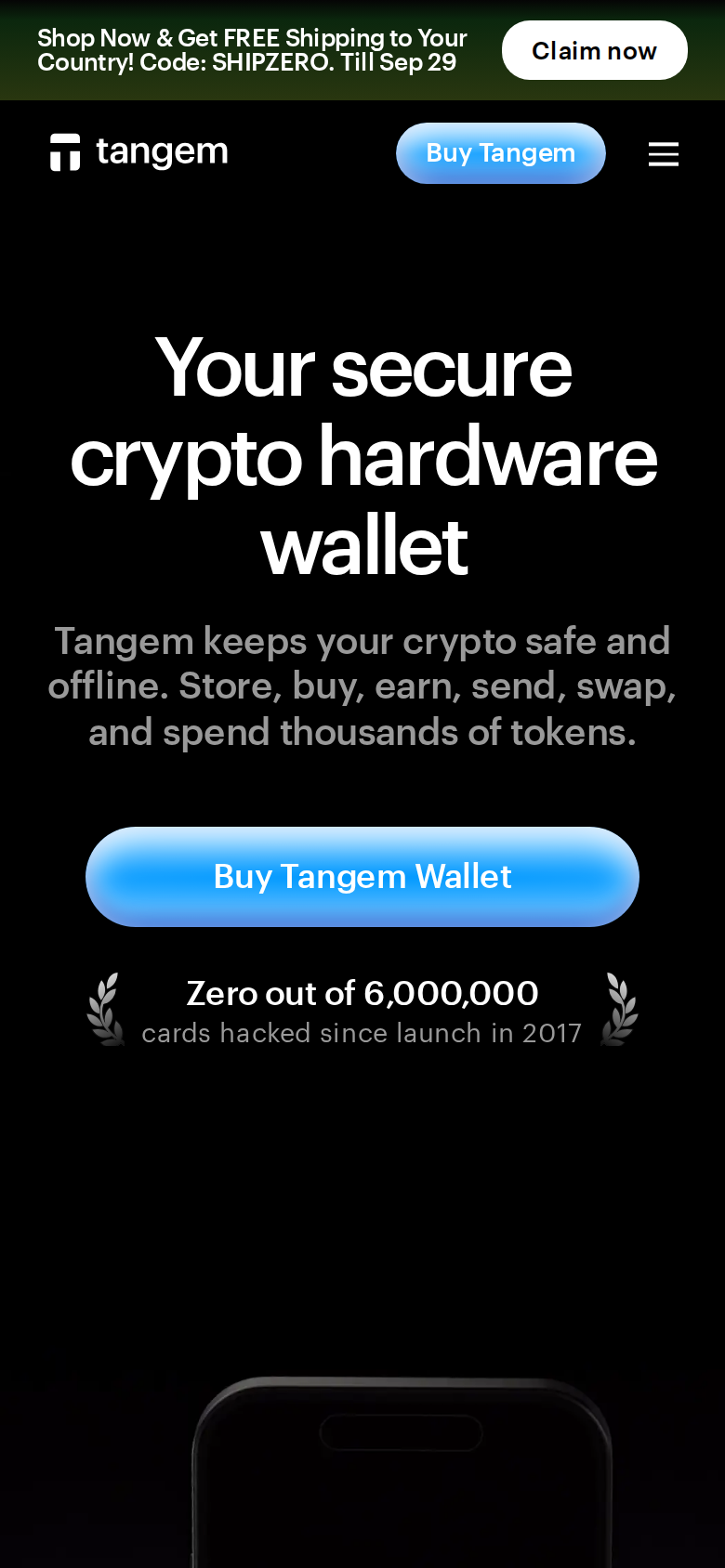
Tangem sells sets of two or three cards for $59.90 and $69.90, and the pricing page frames the extra ten dollars as backup insurance rather than an upsell.
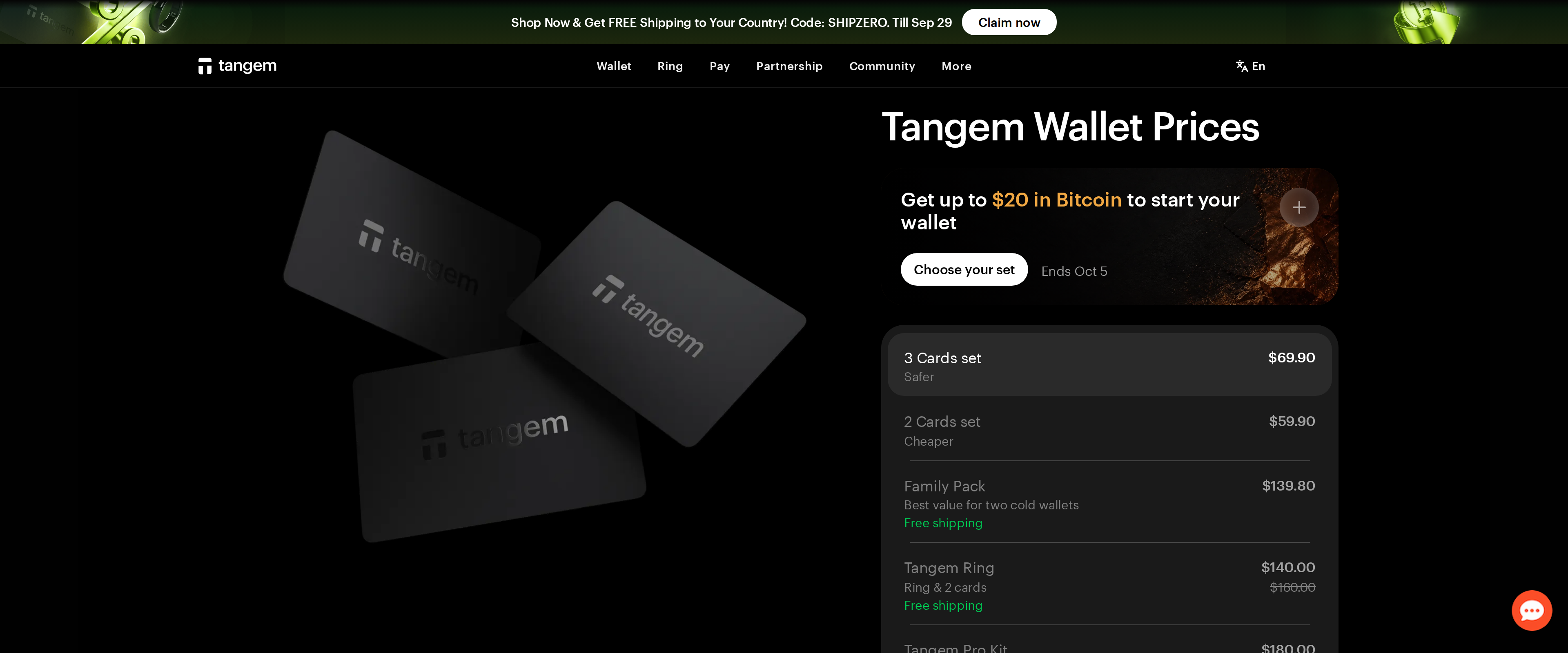
We would tell anyone buying one to spend the extra ten dollars. With two cards, losing or damaging either one before you have backed up a seed phrase leaves you with a single point of failure. With three, one card can live in a drawer at home, one in a bag you carry, and one somewhere else entirely, and losing any single card still leaves two that can restore full access.
Why the missing screen is the real question here
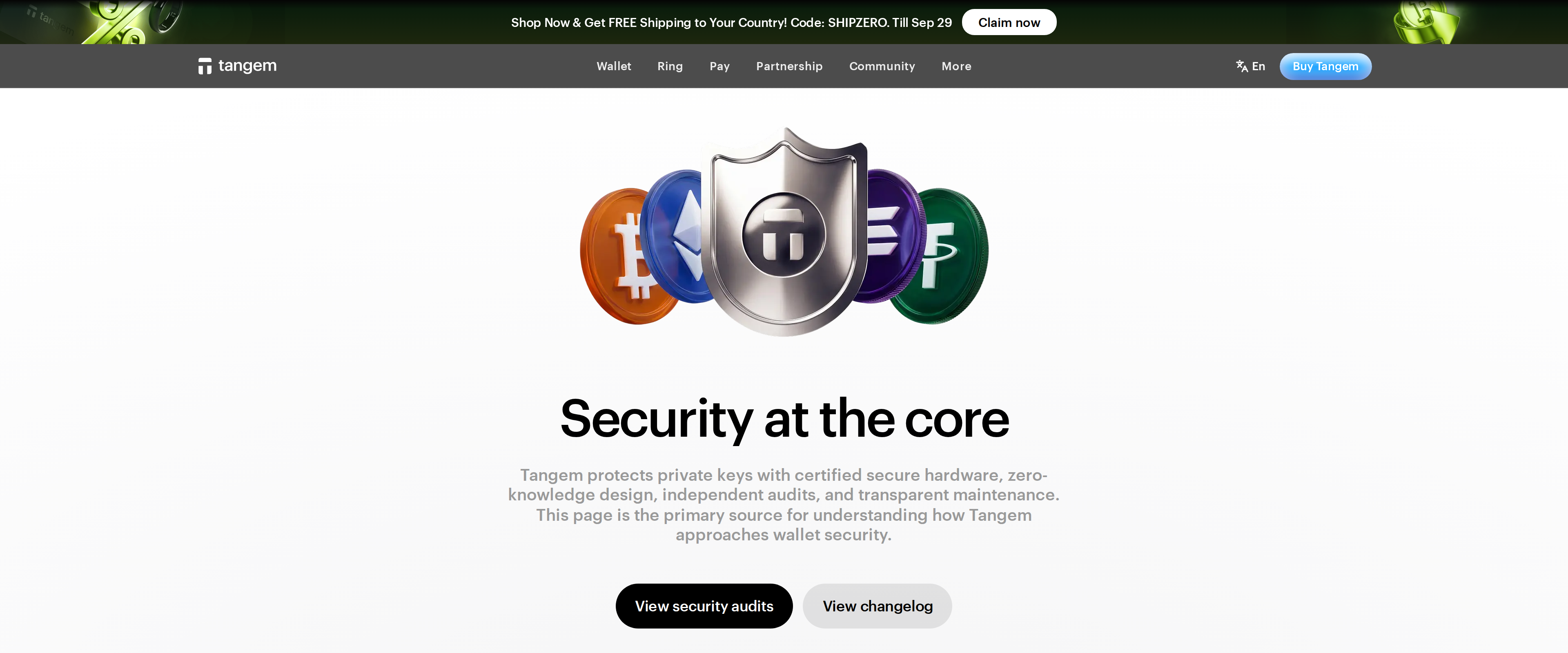
Tangem's card carries a secure chip certified to EAL6+, the assurance level used in passports and payment cards, and the firmware has been through independent audits by Kudelski Security and Riscure. On paper that is a strong security story, on par with what BitBox and Ledger advertise for their own secure elements.
What that page does not solve is blind signing. A screen-equipped wallet shows you the destination address on its own display, built from its own firmware, so even a fully compromised computer cannot trick you into approving a payment to the wrong address; you would see the mismatch. Tangem's card has no display of its own, so it cannot independently confirm anything. It signs whatever data the phone app hands it. If that phone were running malware sophisticated enough to intercept the Tangem app specifically, it could show a correct address on screen while quietly sending a different one to the card over NFC, and the card would have no way to notice. Independent security writeups have flagged exactly this gap, and Tangem does not claim otherwise; its own blog has published guidance on blind signing risk generally. We have not seen a documented case of this happening to a real user, and pulling it off requires malware built specifically around this wallet, but it is a real difference from a device with its own screen, not a theoretical one.
Specifications
- 2-card set
- $59.90
- 3-card set
- $69.90
- Secure chip
- EAL6+ certified (banking and passport grade)
- Independent audits
- Kudelski Security and Riscure
- Connection
- NFC tap, no cable, no battery
- Asset support
- 14,100+ tokens across about 90 blockchains
- Backup model
- Seedless by default; each card is a physical key, extra cards restore access
- Optional recovery
- Standard seed phrase import for users who want one
- Multisig
- Not supported