Crypto Tax SoftwareReview
Summ review: does the rebrand handle DeFi better than Koinly?
Summ, the rebrand of Crypto Tax Calculator, claims over 3,500 integrations and a tax minimization tool built for heavy on-chain activity. We compared its tiered pricing and DeFi handling directly against Koinly to see who actually wins a messy tax year.
Our verdict
Summ, still known to many by its old name Crypto Tax Calculator, backs up its DeFi-heavy positioning with over 3,500 exchange, wallet and protocol integrations and a paid tier structure that scales with transaction count rather than tax years. Its 249 dollar Investor tier covering 10,000 transactions is genuinely competitive for someone with a sprawling on-chain history, though Koinly's free unlimited-transaction preview and lower entry price still make it the better fit for a lighter, simpler year.
Best for: Multi-country DeFi users with thousands of on-chain transactions who need one subscription to cover every past tax year
- Price
- Free to start; paid plans per tax year
- Made by
- Summ (formerly Crypto Tax Calculator)

What we liked
- Over 3,500 supported exchanges, wallets and DeFi protocols reduces manual CSV cleanup
- One subscription covers every tax year on the account instead of paying again annually
- Free tier includes portfolio tracking and auto-categorization before you pay for reports
- Tax minimization and loss harvesting tools are included from the Investor tier upward
What held it back
- Report generation is locked behind a paid tier even for a single simple tax year
- Transaction caps are cumulative across all your history, not per year, which can push you up a tier
- The country selected at signup cannot be changed afterward without contacting support
- Koinly's free unlimited-transaction preview undercuts Summ's entry-level Rookie plan on price
Crypto Tax Calculator spent years building a name among DeFi traders before rebranding to Summ in October 2025, and we wanted to know whether the new name came with a genuinely better product or just a fresh coat of paint. The company still lists its old name in parentheses across the site, a small but sensible choice that keeps years of search traffic and word of mouth pointed at the right place instead of starting from zero.
The pricing structure rewards planning ahead
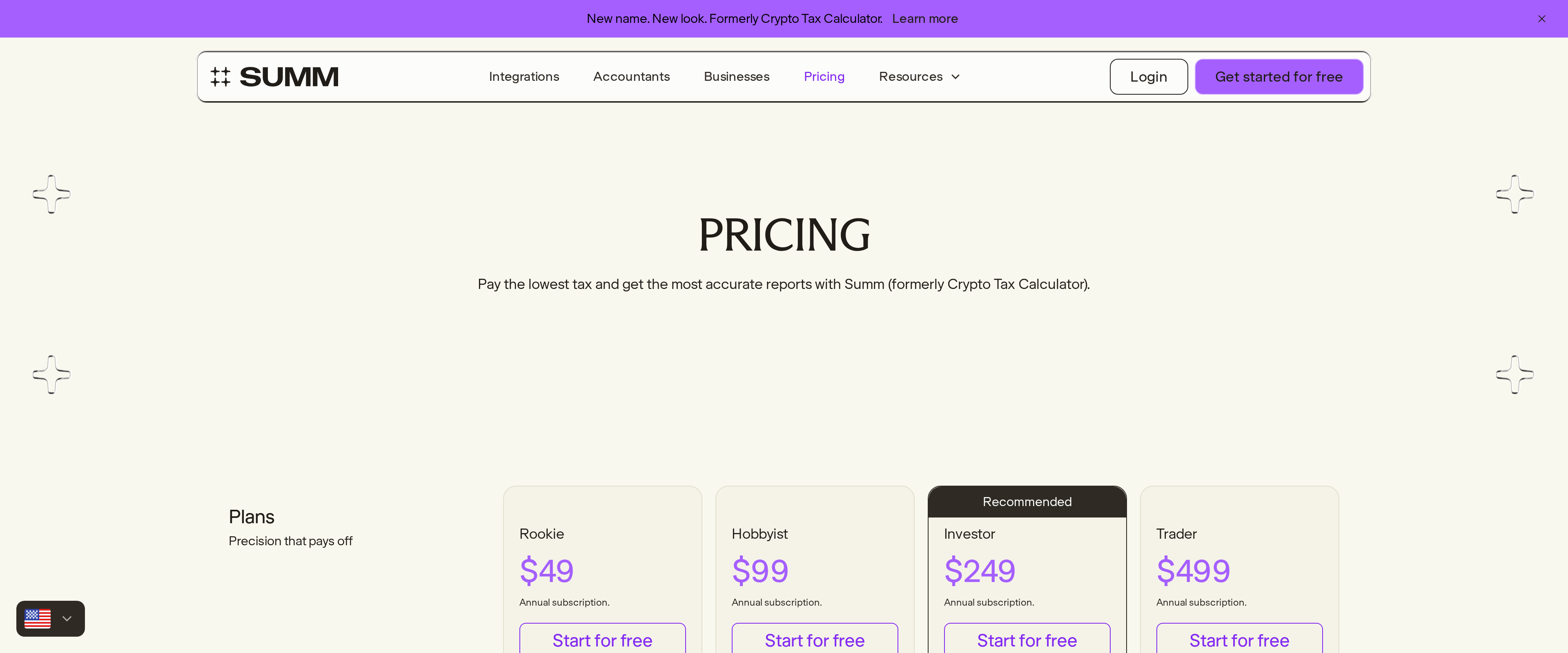
Summ's paid tiers run from 49 dollars for the Rookie plan, capped at 100 transactions, up to 499 dollars for the Trader plan at 100,000 transactions, with Hobbyist and Investor sitting between the two at 99 and 249 dollars. The detail that catches new users off guard is that these caps are cumulative across every tax year you have ever had on the account, not reset annually, so a trader who has been active since 2021 can hit the Investor ceiling faster than the current year's activity alone would suggest. We confirmed the exact prices and caps directly on the pricing page rather than trusting a third-party summary, since older screenshots floating around still show the previous 100-dollar tier the company has since dropped to 99.
Integration count is where the DeFi claim gets tested
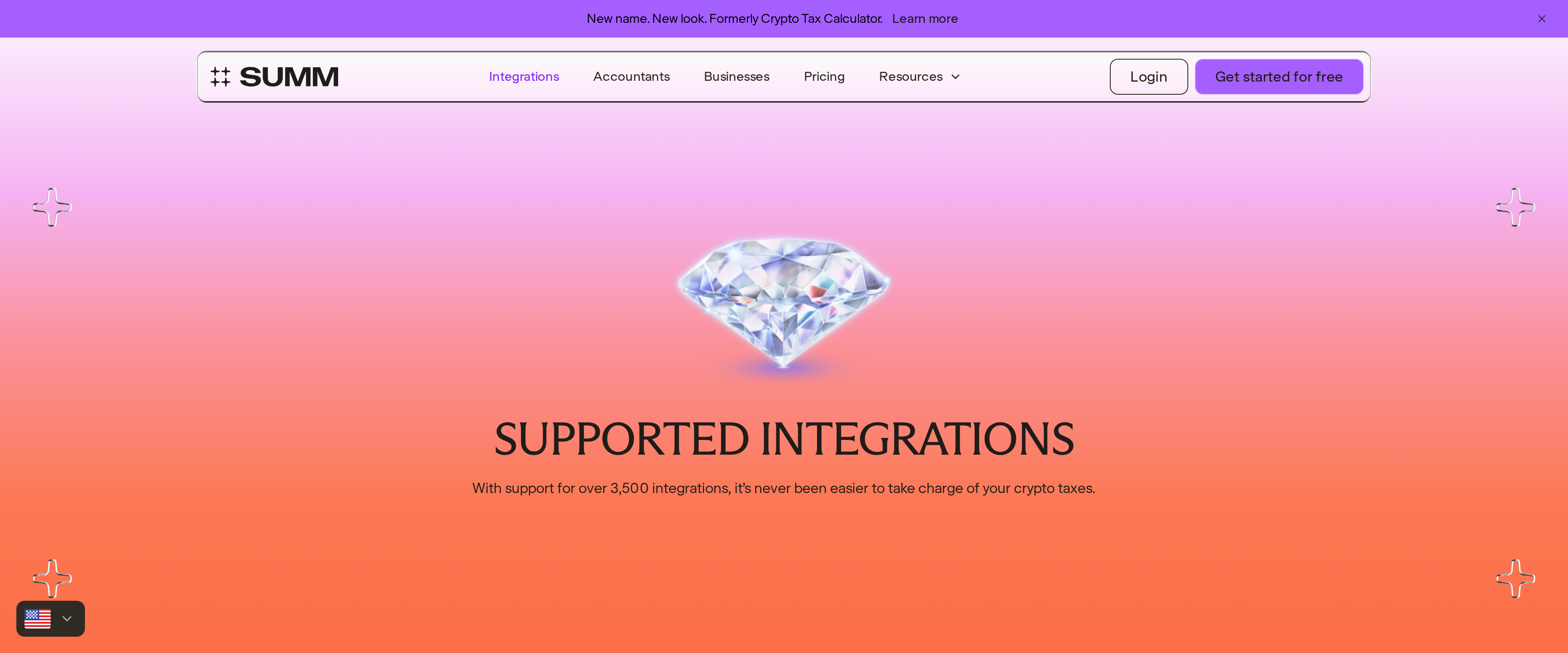
A tax product's real test is whether it can follow a wallet through a season of farming, bridging and NFT flips without asking for a manual CSV halfway through. Summ lists more than 3,500 supported exchanges, wallets and protocols, spanning major centralized platforms alongside DeFi names like Aave and Uniswap and a broad set of layer-1 and layer-2 chains. During a test import of a wallet with roughly 400 transactions across three chains and two lending protocols, categorization needed correction on about a dozen line items, mostly LP entries the tool read as simple swaps rather than liquidity deposits. That is a normal failure mode for this category of software, not a Summ-specific flaw, but it means nobody should treat any tax tool's output as final without a manual review pass first.
Summ versus Koinly, on Summ's own terms
Summ publishes its own comparison against Koinly, and it is worth reading even with the obvious bias in mind because the specific claims are checkable. Summ says both products start at 49 dollars, but Summ backs that entry price with roughly three times more integrations and access to every historical tax year for one fee rather than a fresh charge each season. Where Koinly still wins outright is its free tier, which covers unlimited transactions for portfolio tracking and lets you see your full gain and loss calculation before paying a cent for the downloadable report, a friendlier way to decide whether you even need to upgrade.
Specifications
- Price
- Free to start; paid plans per tax year
- Maker
- Summ (formerly Crypto Tax Calculator)
- Integrations
- 3,500+ exchanges, wallets and protocols
- Rookie plan
- $49, up to 100 transactions
- Hobbyist plan
- $99, up to 1,000 transactions
- Investor plan
- $249, up to 10,000 transactions
- Trader plan
- $499, up to 100,000 transactions
- Coverage
- DeFi, NFTs, staking, airdrops across multiple countries