Global & High-Leverage Brokers
LiteFinance review: does the $10 ECN account earn its offshore licence?
LiteFinance lets a trader open a Cent account with $10 and step up to an ECN account with near-zero spreads plus a built-in Social Trading feed. We checked what that costs once the commission and the leverage are counted, and which of LiteFinance's three entities actually holds the licence protecting the money.
Our verdict
LiteFinance's ECN account opens from $50, not the $10 figure that only applies to its Cent account, quoting spreads from 0.0 to 0.2 points with a commission that sources put anywhere from a few cents to roughly $0.50 a lot, a gap worth confirming before funding a live account. Social Trading is a genuine built-in feature, letting an investor copy a trader for a share of profitable trades rather than through a bolted-on app. The regulatory picture needs care: only the Mauritius FSC and European CySEC entities hold an actual licence, while LiteFinance Global LLC in St. Vincent and the Grenadines, the entity most offshore clients sign with, is not regulated at all.
Best for Cost-conscious traders willing to open with the Mauritius or CySEC entity instead of the unregulated one
LiteFinance Global at a glance
- Price
- Min. deposit $10
- Provider
- LiteFinance Global
- ECN spread, majors
- From 0.0 to 0.2 points in active sessions
- Minimum deposit, Cent account
- $10
- Leverage
- Up to 1:1000 on forex, 1:50 on crypto
- Minimum deposit, ECN account
- $50
- FSC Mauritius
- CySEC Cyprus
CFDs are complex instruments and carry a high risk of losing money rapidly due to leverage. Most retail accounts lose money.
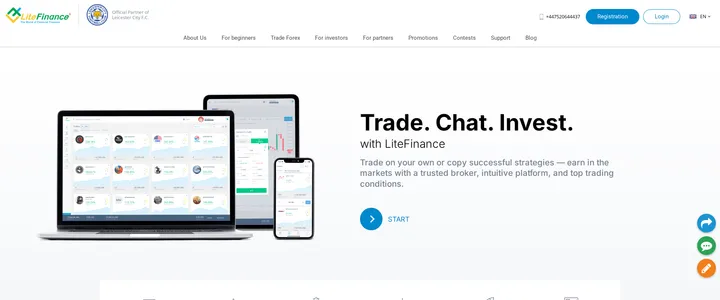
LiteFinance advertises itself around three verbs: trade, chat, invest. That framing puts Social Trading on equal footing with the account types themselves, which is unusual for a broker this size, so we opened an ECN account and a Cent account to see whether the pitch holds up once real money and a real commission are involved.
The $10 that only opens one door
LiteFinance's headline number is a $10 minimum deposit, and that figure is real, but it only unlocks the Cent account, a practice tier that trades in cent-sized lots rather than standard ones. Anyone who wants LiteFinance's actual raw-spread offer needs the ECN account instead, which LiteFinance's own account page lists at a $50 minimum. Fifty dollars is still low for an ECN account by industry standards, but a trader budgeting around the $10 figure should know it buys a different, smaller product than the one usually being reviewed.
What the ECN account actually costs
LiteFinance states that ECN spreads run from 0.0 to 0.2 points during the European and American sessions, tight enough to compete with brokers charging much higher minimums. Where the picture gets less clear is the commission. LiteFinance's own published rate list quotes a fraction of a dollar per lot on some CFD instruments, while independent testers have measured the forex commission closer to $0.50 a lot, well below the $3.50 to $7 per side that most ECN brokers charge.
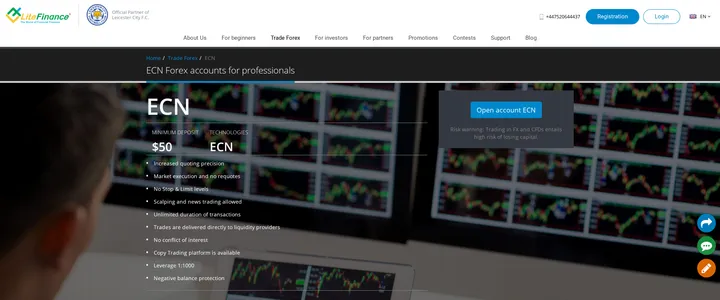
That gap between sources is large enough that we would not take either number on faith. A trader should open the fee schedule inside their own account and confirm the commission on the specific instrument they plan to trade before assuming the lowest figure applies.
Copying a trader without leaving the platform
Social Trading is where LiteFinance separates itself from a plain ECN broker. Rather than routing copiers to a third-party app, the feature sits inside LiteFinance's own platform: an investor picks a trader from a public leaderboard, allocates capital to copy their trades automatically, and pays that trader a share of any profitable result.
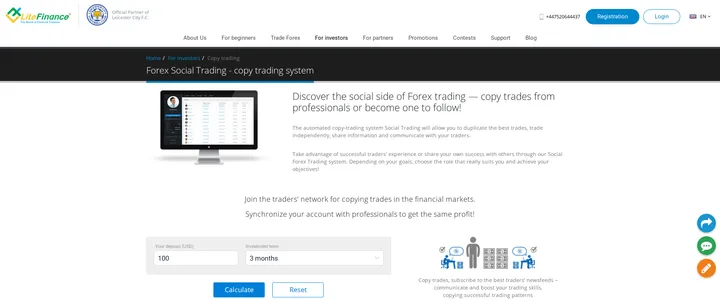
Because it lives inside the same account structure as ECN and Classic trading, a copier can switch between following someone else's trades and placing their own without moving funds between platforms, a genuine convenience over brokers that treat copy trading as a bolted-on add-on.
Three entities, two licences
LiteFinance's paperwork lists three separate companies, and only two of them carry a real licence. LiteFinance Investment Limited holds Financial Services Commission registration in Mauritius, and Liteforex (Europe) LTD is a Cyprus Investment Firm under CySEC license 093/08, both entities with genuine regulatory oversight.
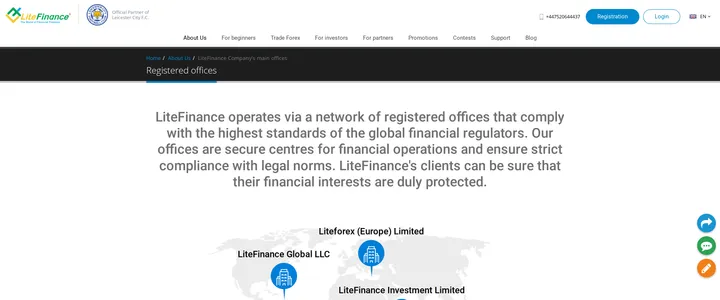
LiteFinance Global LLC, incorporated in St. Vincent and the Grenadines, is the entity most clients outside Europe and Mauritius are onboarded through, and LiteFinance's own client agreement states plainly that this entity is not regulated, relying instead on segregated bank accounts to hold client funds. Segregation helps, but it is not the same protection a licensed entity provides, and leverage up to 1:1000 through that unregulated entity raises the stakes on a mistake.
Platforms and the practice tier
LiteFinance runs MetaTrader 4 and MetaTrader 5 alongside its own web and mobile platform, so a trader already comfortable with MetaTrader loses nothing by switching brokers. The Cent account earns its keep here more than as a genuine trading tier: at $10, it lets a new trader put real money on the line, feel real slippage and real emotions, without risking a standard lot's worth of loss on a mistake. Leverage up to 1:1000 is available across the offshore entity, high even by the standards of brokers that compete on leverage, and it applies equally whether a trader is on the Cent account learning the platform or the ECN account running a live strategy.
Our verdict
LiteFinance delivers a real low-cost ECN account and a Social Trading feature that works the way it is described, both good reasons to look at the broker. What keeps this from an easy recommendation is the entity a trader actually signs with: only the Mauritius and Cyprus companies carry a licence, and the unregulated St. Vincent entity is the one offshore clients most often end up using. A trader who confirms which entity holds their account, and reads the commission schedule rather than trusting the headline spread, gets a genuinely competitive broker. One who skips that step is trading on trust alone.
What we liked
- Cent account opens with $10, a genuinely low bar for testing the platform with real money
- ECN account spreads run from 0.0 to 0.2 points on majors during active trading sessions
- Social Trading is built into the platform, not a separate app, letting an investor copy a trader for a profit share
- Liteforex (Europe) LTD is a real CySEC entity, license 093/08, regulated under MiFID II
What held it back
- LiteFinance Global LLC, the St. Vincent and the Grenadines entity most offshore clients use, is not regulated at all
- ECN commission figures vary by source, from a few cents per lot to roughly $0.50 per lot, so a trader should confirm the exact rate before funding
- ECN account needs $50 to open, not the $10 figure that applies only to the Cent account
- Leverage up to 1:1000 on the offshore entity is high enough to erase a small account quickly on the wrong trade
Specifications
- Minimum deposit, Cent account
- $10
- Minimum deposit, ECN account
- $50
- ECN spread, majors
- From 0.0 to 0.2 points in active sessions
- Classic account spread
- From 1.8 points, no commission
- Leverage
- Up to 1:1000 on forex, 1:50 on crypto
- Platforms
- MT4, MT5, LiteFinance web and mobile platform
- Social Trading
- Built-in copy trading; investor shares profit with the copied trader
- Regulators
- FSC Mauritius (licensed), CySEC Cyprus (licensed); SVG entity unregulated
Figures as published by LiteFinance Global at litefinance.org. They vary by account type, entity and region.
This review describes what we saw on our own accounts. It is not personal financial advice.