Libertex review: does zero spread beat a normal spread for beginners?
We funded a Libertex account with $10, watched the platform quote every instrument at zero spread with a flat commission on top, and compared that model against a standard-spread broker to see which one a first-time trader actually understands faster.
Our verdict
Libertex's pitch holds up on the point that matters most to a beginner: a fixed commission is easier to check against a statement than a spread that moves with liquidity. Our test trades confirmed the commission line stayed consistent. What undercuts the simplicity is everything around it: overnight fees, a 0.3% conversion charge on the Libertex platform, and a 10 EUR monthly inactivity fee after 180 quiet days, none of them visible on the front page. It suits someone opening small, trading short-term and reading the fee page first, and it is weaker for anyone planning to hold positions or leave the account dormant.
Best for Beginners making short-term trades who read the fees page and do not plan to leave the account dormant
Libertex Group at a glance
- Price
- Min. deposit $10
- Provider
- Libertex Group
- Minimum deposit
- $10 (varies by region, up to €100 in some markets)
- Leverage
- Up to 1:500 outside the EU/UK; 1:30 on majors under CySEC/EU rules
- Pricing model
- Zero spread, flat disclosed commission per trade
- Currency conversion fee
- Up to 0.3% (Libertex platform only)
- CySEC licence 164
CFDs are complex instruments and carry a high risk of losing money rapidly due to leverage. Most retail accounts lose money.

Ask a first-time trader to explain a spread and most will get it wrong on the first attempt. Ask them to read "$0.006 per lot" off a fee table and they generally get it right. That gap is the entire argument behind Libertex, and we opened a $10 account to see if the theory survives contact with a real statement.
The pricing model, checked against our own trades
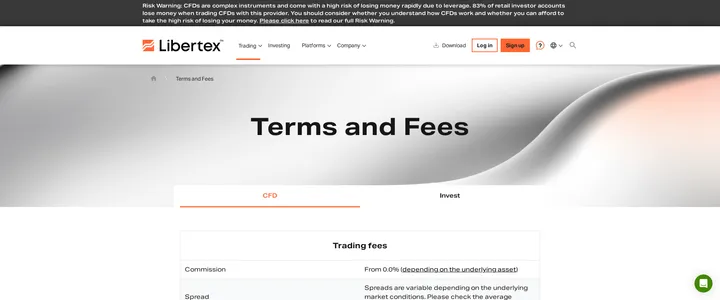
Libertex quotes every instrument at zero spread and adds a flat commission instead. In practice that meant our EUR/USD buy and sell orders both showed the same underlying price, with the cost appearing as a separate line rather than baked into the quote. For a beginner comparing two brokers, that is a genuinely easier number to check: a commission does not move between the moment you look at it and the moment you place the trade, the way a variable spread can.
What the front page does not put in front of you
The commission is the headline, but it is not the whole cost. We left a position open overnight during testing and picked up a financing charge, standard for CFD trading but easy to miss if a beginner only reads the marketing copy. The Libertex platform itself also carries a currency conversion fee of up to 0.3% on trades, a cost that a MetaTrader-only user checking the MT4 fee schedule elsewhere would not see quoted the same way. Leave the account alone for six months and a 10 EUR monthly inactivity fee starts, which is a real risk for a beginner who opens an account to learn, gets busy, and comes back later to find the balance quietly reduced.
Two platforms, two different experiences
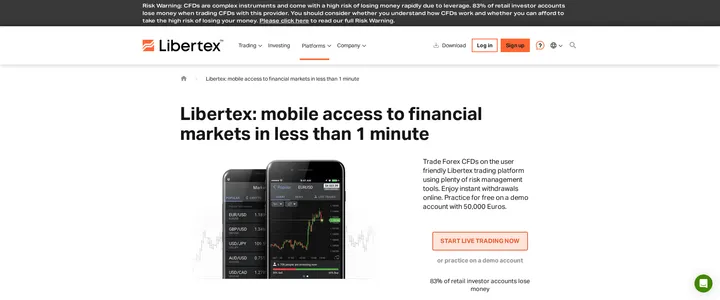
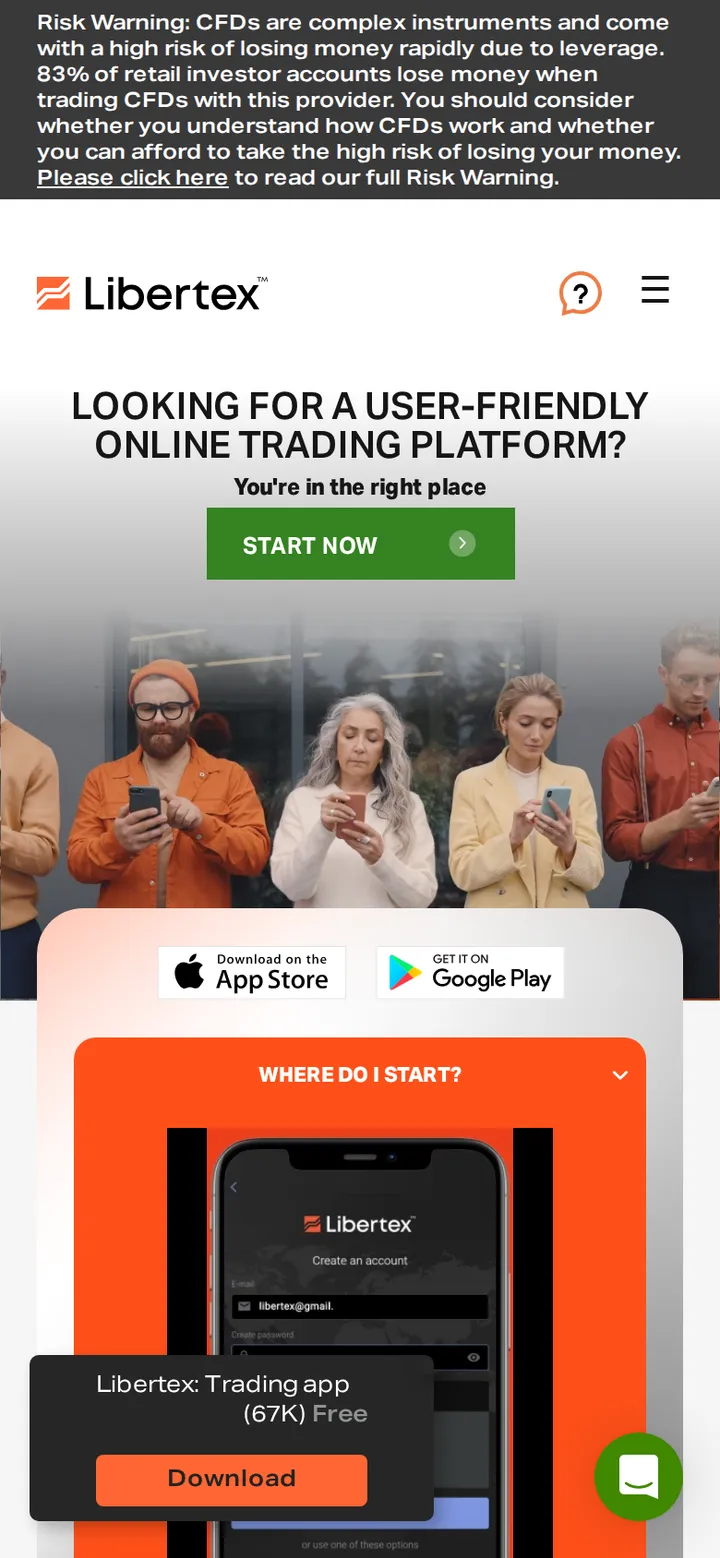
Libertex runs its own web and mobile apps alongside MetaTrader 4 and MetaTrader 5. We tested the proprietary app first, and it does what it promises: a clean order ticket, one-tap position sizing and a demo balance of 50,000 EUR to practise on before funding. Switching to MT4 afterward felt like a step backward in onboarding terms, though MT4 remains the platform most independent tools and signal services expect, so an ambitious beginner may end up there anyway once they outgrow the training wheels.
Regulation and leverage: read past the headline number
Libertex holds a CySEC licence (164/12), which puts it inside the EU's regulatory perimeter and requires segregated client funds. That also means the 1:500 leverage figure some pages mention does not apply to a retail account opened under EU or UK rules; majors are capped at 1:30 there, and only clients outside those jurisdictions see the higher number. A beginner reading the wrong page and expecting 1:500 on a first trade would be setting risk expectations that the regulator will not let the account actually reach.
What we would tell a first-time trader before funding
Set aside an afternoon to read the fees page before the account matters, because that is the only place all four charges live together: commission, conversion, overnight financing and inactivity. None of them are hidden in the sense of being undisclosed, but none of them sit next to the zero-spread headline either, and a beginner who only reads the homepage will form an incomplete picture of what a month of trading actually costs. We would also suggest starting on the proprietary app rather than MT4, since the smaller order ticket and built-in demo balance make the first few trades far less intimidating than a full MetaTrader terminal.
The $10 minimum deposit deserves a caveat too. It is genuinely one of the lowest entry points we have tested, low enough that a beginner can open an account purely to see how the platform behaves before committing real savings. Just budget for the inactivity fee if that first small deposit is going to sit untouched for half a year while you decide whether to continue.
Our verdict
Libertex's central claim is true: a flat, disclosed commission is easier for a beginner to verify than a floating spread, and our test trades bore that out. The problem is that the model does not cover the whole cost. Conversion fees, overnight financing and an inactivity charge sit outside the headline number, in places a first-time trader is unlikely to check before funding. Open this account if you plan to trade actively and read the fees page first. Skip it if you expect to hold positions for weeks or leave the account dormant between trades.
What we liked
- Zero spread with a flat, disclosed commission makes the entry cost easier to verify against a statement
- Minimum deposit as low as $10, one of the lowest entry points among brokers we tested
- MetaTrader 4 and MetaTrader 5 both supported alongside Libertex's own web and mobile apps
- CySEC licence (164/12) requires segregated client funds and EU-standard conduct rules
What held it back
- Currency conversion fee of up to 0.3% applies on the Libertex platform, on top of the stated commission
- Inactivity fee of 10 EUR a month kicks in after 180 days without a trade
- Overnight financing is charged for every night a position stays open, which adds up on longer holds
- EU leverage cap of 1:30 on major pairs limits the account for anyone expecting the marketed 1:500
Specifications
- Minimum deposit
- $10 (varies by region, up to €100 in some markets)
- Pricing model
- Zero spread, flat disclosed commission per trade
- Currency conversion fee
- Up to 0.3% (Libertex platform only)
- Inactivity fee
- 10 EUR per month after 180 days
- Leverage
- Up to 1:500 outside the EU/UK; 1:30 on majors under CySEC/EU rules
- Regulator
- CySEC licence 164/12
- Platforms
- MetaTrader 4, MetaTrader 5, proprietary Libertex web and mobile apps
- Markets
- Forex, crypto, commodities, indices, ETFs and stock CFDs
Figures as published by Libertex Group at libertex.com. They vary by account type, entity and region.
This review describes what we saw on our own accounts. It is not personal financial advice.