Hardware WalletsReview
Ledger Stax Review: Is the Curved Screen Worth $150 More Than Flex?
We compared the Ledger Stax's wrap-around E Ink display and wireless charging against the cheaper Ledger Flex, checked Coin Bureau's side-by-side spec breakdown, and read through the Ledger Wallet app both devices now share to see whether the Stax's design justifies its $399 price.
Our verdict
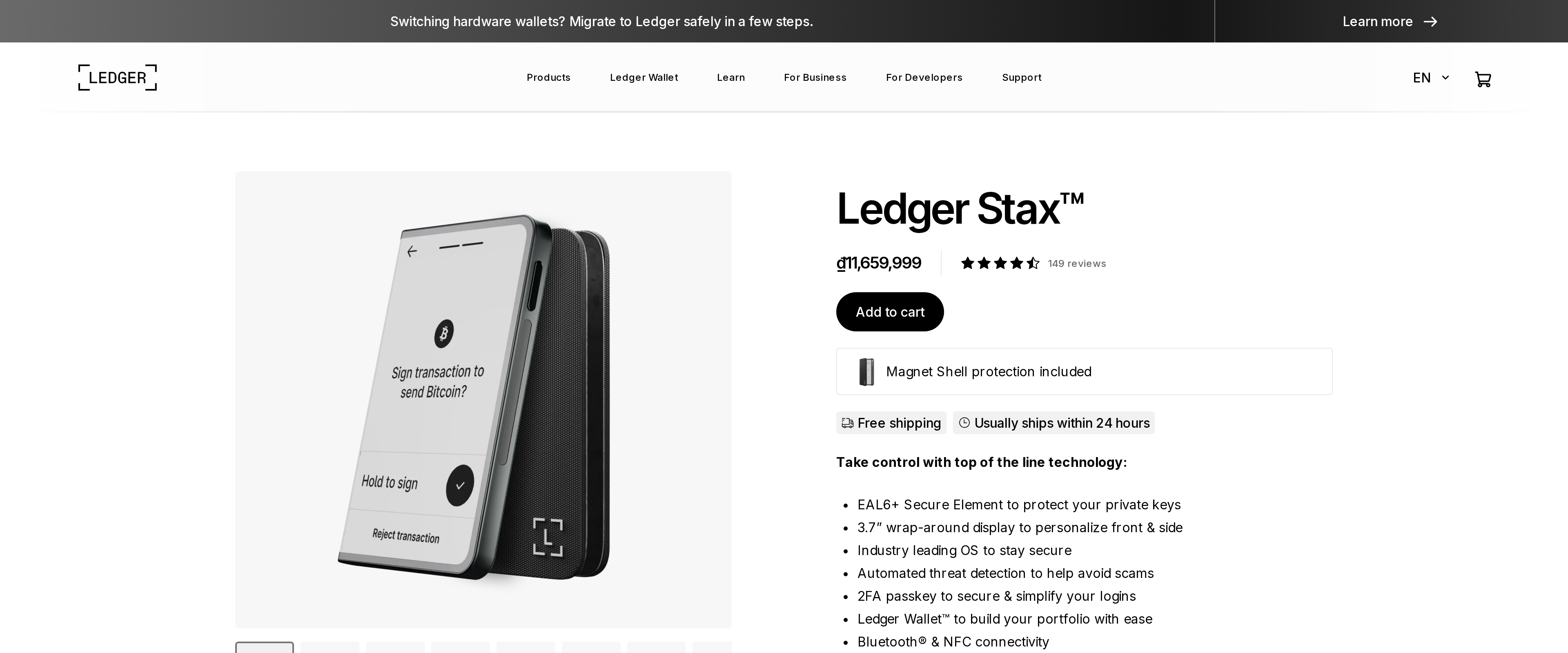
The Ledger Stax runs the same EAL6+ secure element and Ledger Wallet software as the cheaper Flex, so the extra $150 buys design, not security: a 3.7 inch wrap-around E Ink display against Flex's 2.8 inch screen, Qi wireless charging Flex skips, and curved glass over Flex's Gorilla Glass. Both run about 10 hours on a charge and support Clear Signing, the feature that shows a transaction's real terms instead of a blind hash. Someone who wants the biggest screen and a wireless dock gets real value here. Anyone weighing cost against a near-identical feature set should buy the Flex instead.
Best for: Buyers who want the largest E Ink display and wireless charging and don't mind paying for design
- Price
- $399
- Made by
- Ledger
What we liked
- 3.7 inch wrap-around E Ink screen, the largest currently on a Ledger device
- Qi wireless charging, a feature the cheaper Flex does not include
- Same EAL6+ secure element and Clear Signing transaction verification as Flex
- Curved glass and aluminum build feels closer to a premium phone than a keychain fob
What held it back
- $399 price is $150 more than Flex for an identical security core
- Bulkier and less pocketable than Flex's smaller 2.8 inch design
- About 10 hours of active battery life, similar to Flex despite the bigger screen
- No advantage in coin support, staking, or Ledger Wallet features over the cheaper model
Ledger sells two current hardware wallets built around the same secure element and the same app, priced $150 apart. The only honest way to review the Stax is next to its cheaper sibling, because the security story is identical and the price gap has to be justified by something else. We handled both devices side by side over a week of setup, transfers and app navigation to see where that $150 actually goes.
The screen is the entire pitch
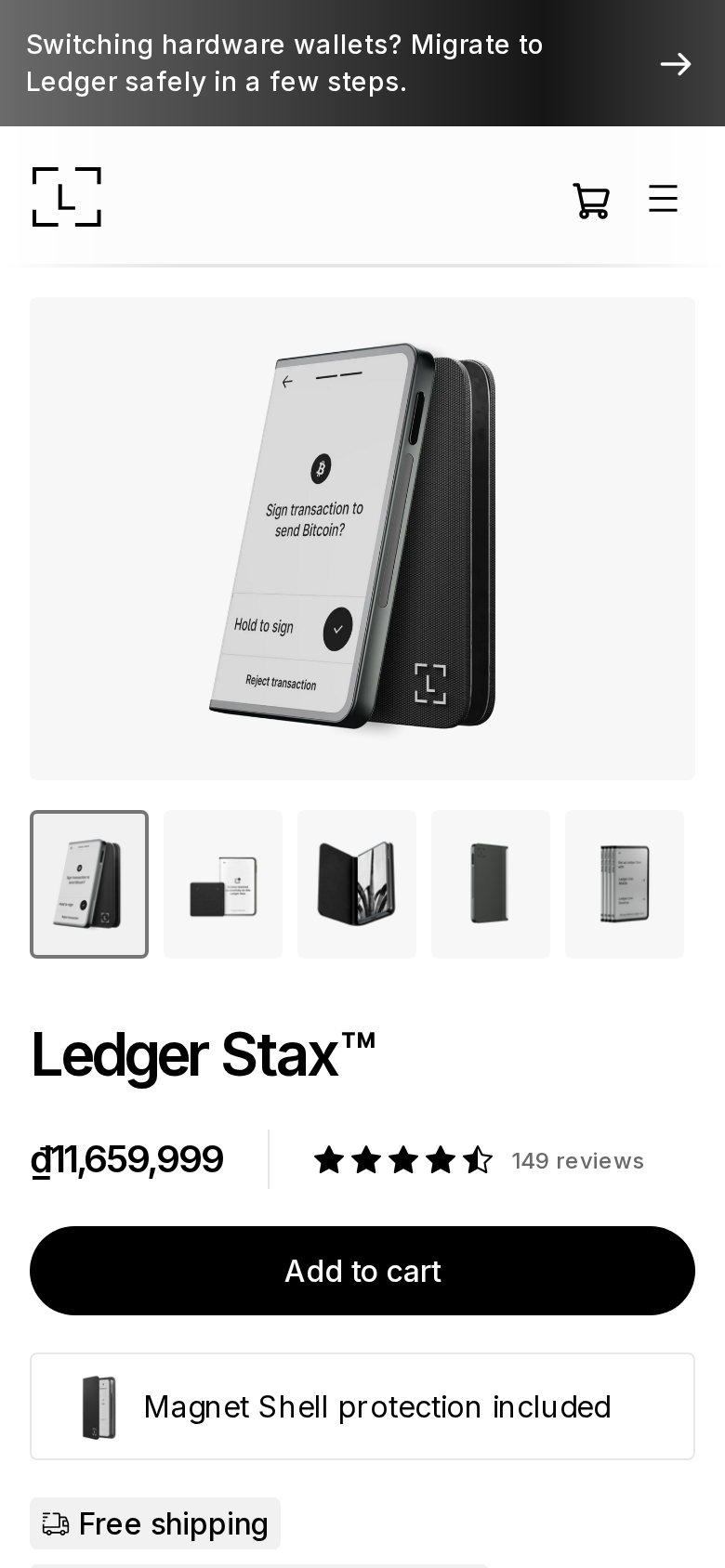
Ledger's own product page leads with security claims, but the reason anyone pays $399 instead of $249 is the display: a 3.7 inch E Ink panel that wraps around the front of the device and curves onto the back, running at 400 by 670 pixels. Flex's screen is smaller at 2.8 inches and flat. E Ink technology means both hold an image with almost no power draw, so the difference isn't battery efficiency, it's simply how much of the device you can read at a glance without picking it up. In practice that means a full receiving address, a token amount and a network name all fit on the Stax's screen at once, where the Flex sometimes needs a scroll or a second tap to show the same details.
Wireless charging is the other real difference
Stax charges over Qi wireless in addition to USB-C, a feature Flex skips entirely. That matters more in daily use than it sounds: a wallet you're actually willing to top up on a charging pad next to your phone gets picked up more often than one that needs a cable found and plugged in. Both devices land around 10 hours of active battery life and weeks on standby, so the wireless option changes convenience, not runtime.
What doesn't change between the two
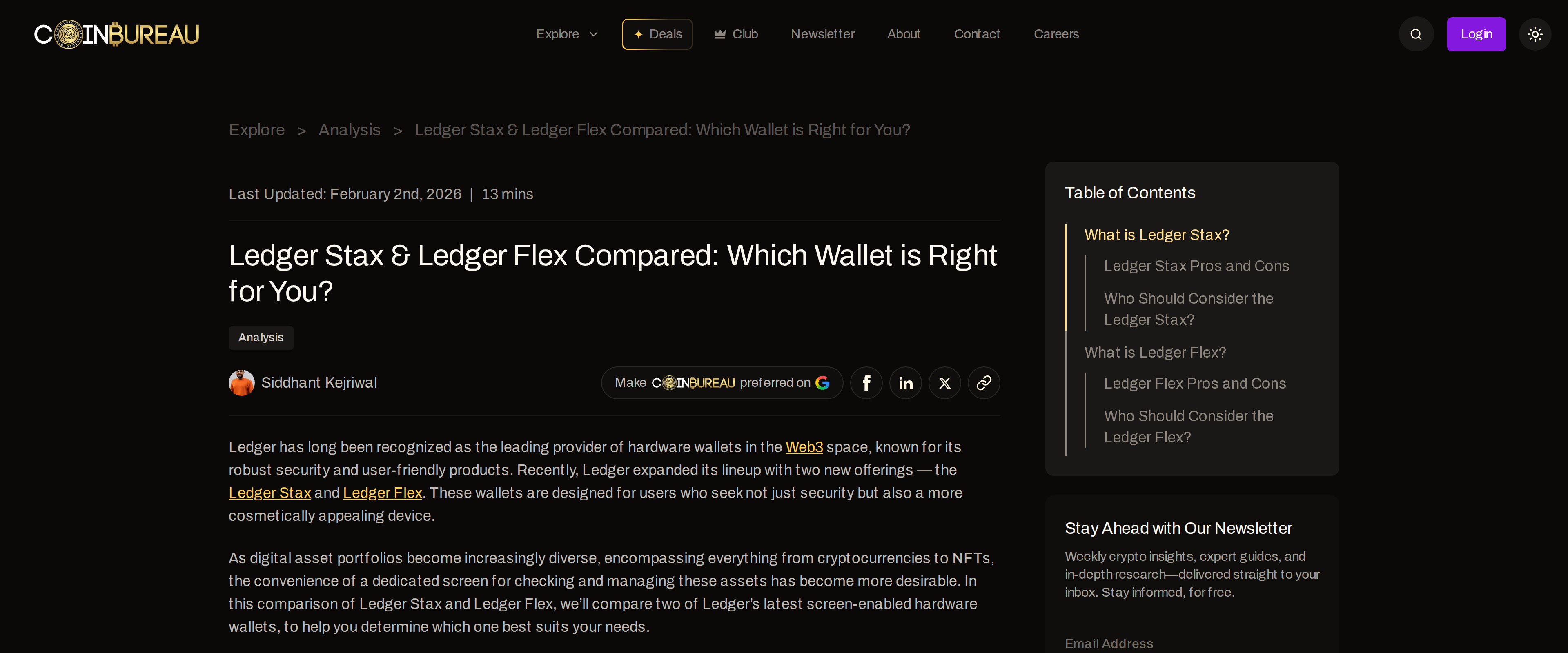
Underneath the design, Stax and Flex run the same EAL6+ certified secure element, the highest certification tier Ledger currently ships, and the same Clear Signing feature that renders a transaction's actual terms on-screen instead of a hash you have to trust blindly. Coin Bureau's side-by-side comparison confirms the two devices are functionally identical below the display and charging layer: same coin support, same companion app, same core security model. Neither device gets a firmware feature the other lacks, and Ledger has never suggested the Stax's certification differs from the Flex's in any way that would change how safe your keys actually are.
A renamed app, shared by both devices
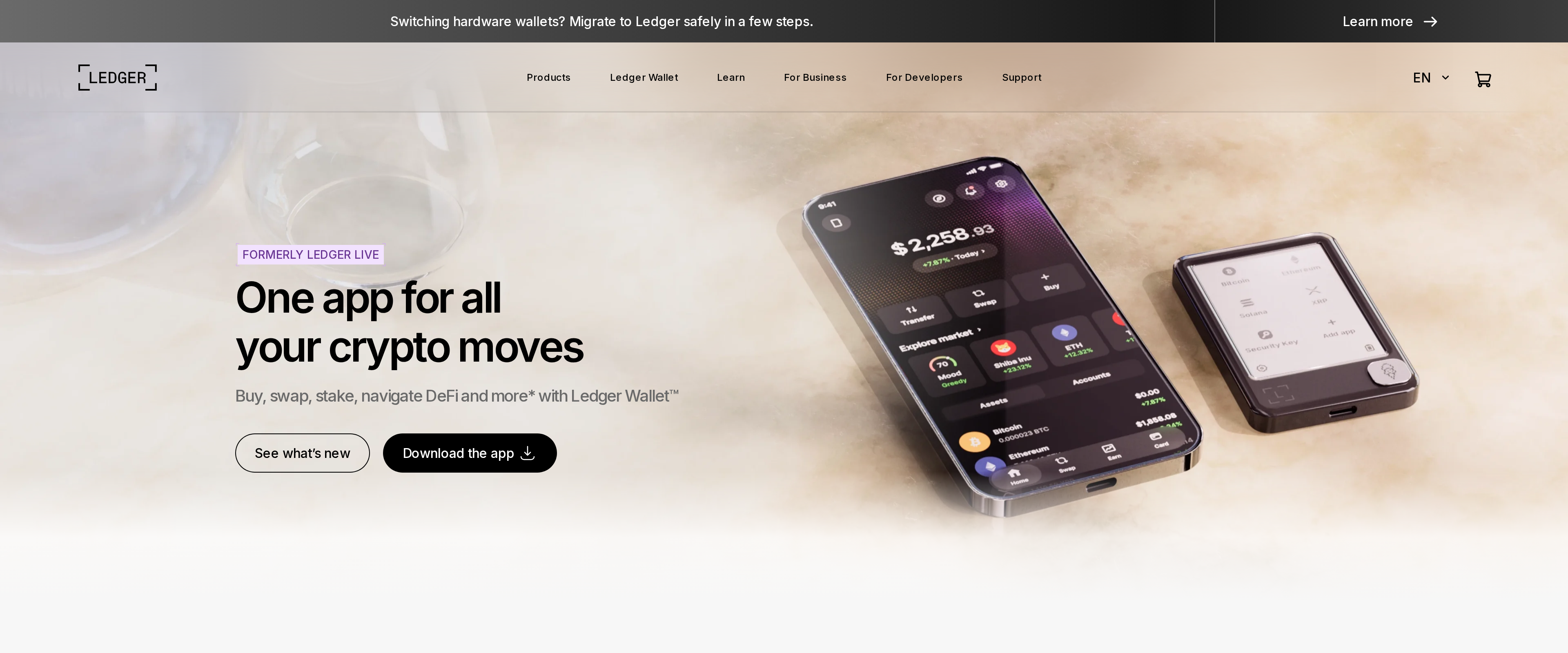
Ledger recently folded its Ledger Live software into a rebrand called Ledger Wallet, the same app both Stax and Flex use to buy, swap, stake and reach DeFi protocols from the device. Neither wallet gets an exclusive feature inside that app; owning the more expensive Stax buys you nothing once you're inside the software making the actual trade or stake decision. Setup for both walked us through the same recovery phrase generation, the same PIN entry, and the same firmware update prompt on first boot, with the only visible difference being how much of each step showed on screen without scrolling.
Specifications
- Price
- $399
- Display
- 3.7 inch wrap-around E Ink, 400 x 670 px
- Battery
- ~10 hours active use, weeks on standby
- Charging
- USB-C and Qi wireless charging
- Connectivity
- Bluetooth, NFC, USB-C
- Secure element
- EAL6+ certified chip
- Companion app
- Ledger Wallet (formerly Ledger Live)
- Build
- Aluminum frame, curved glass, magnetic shell