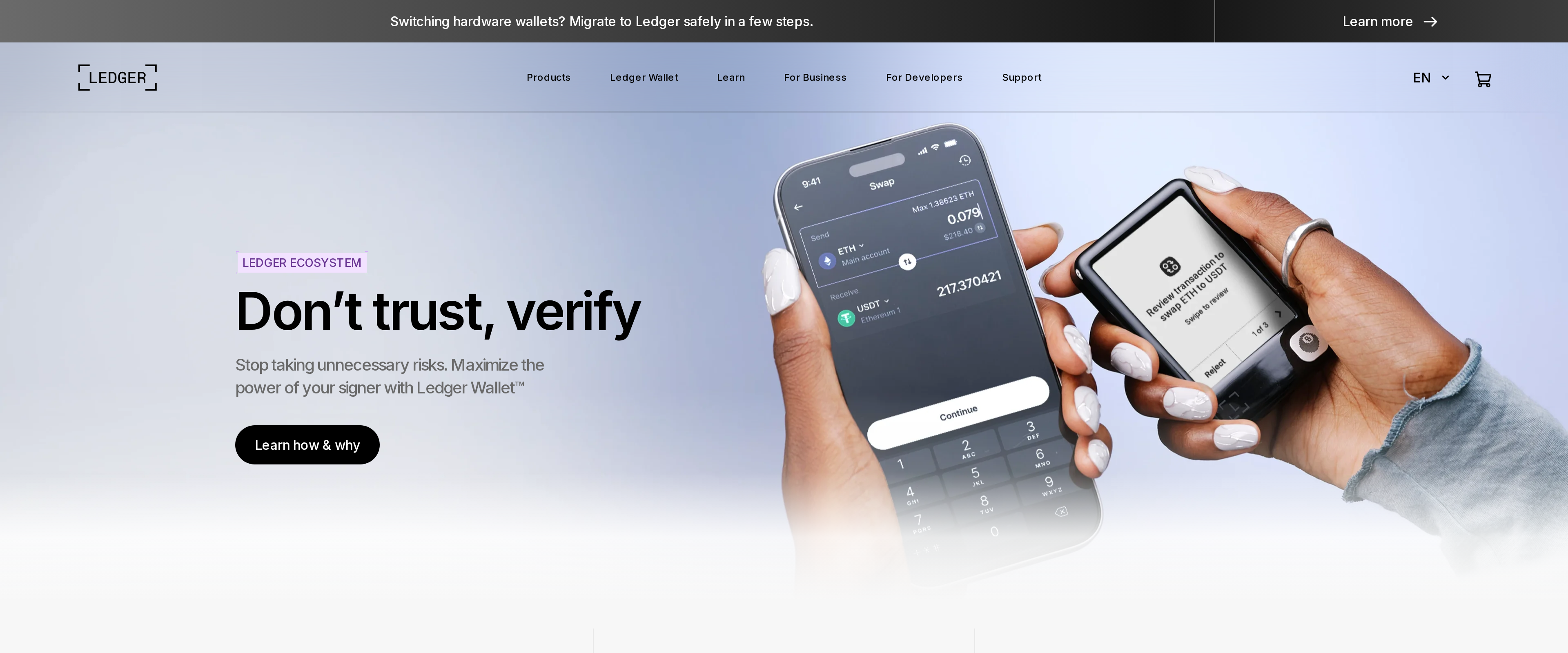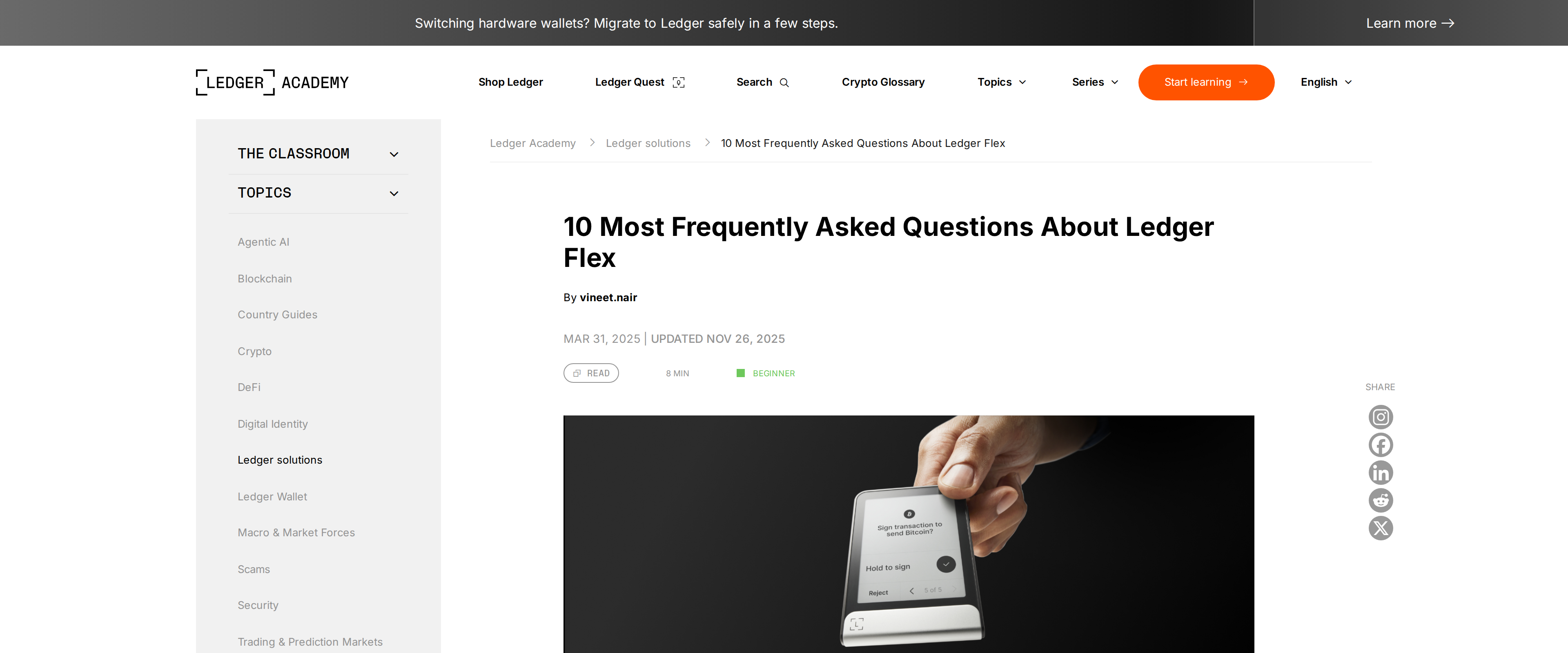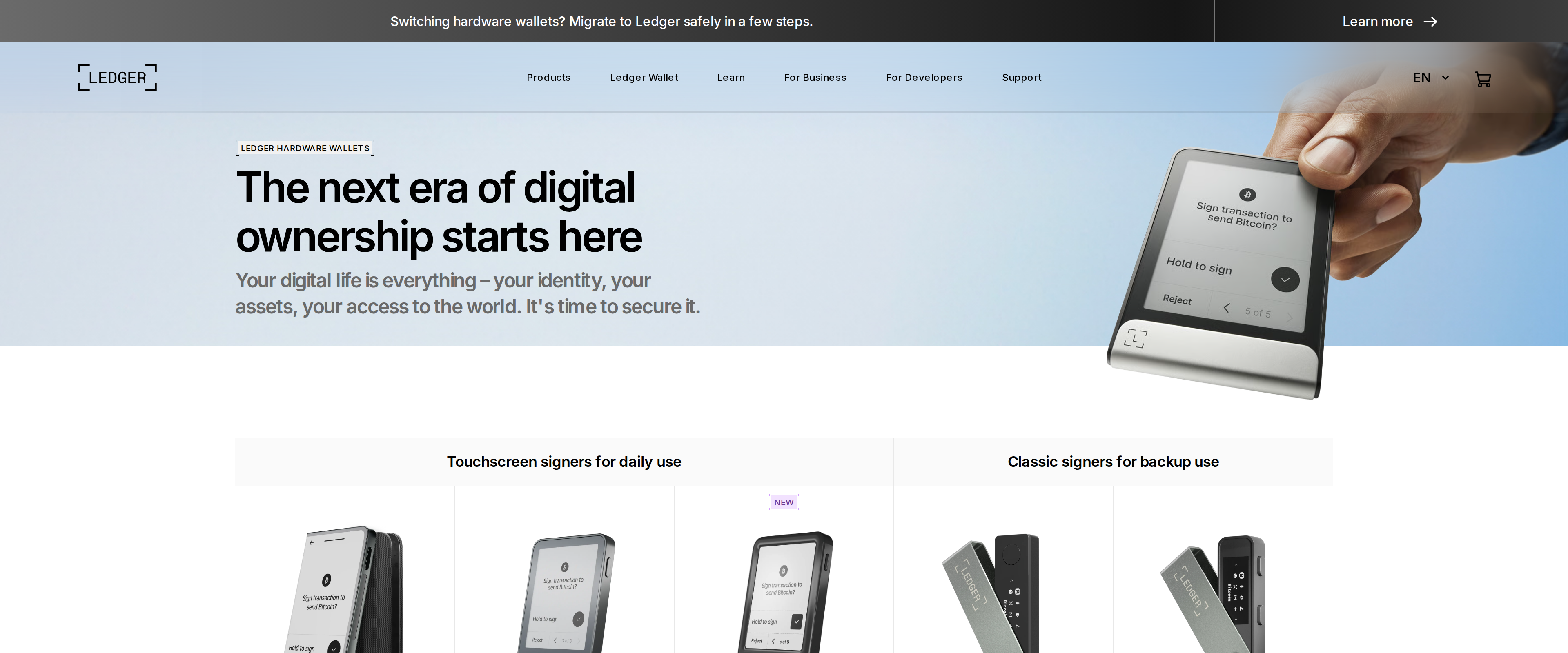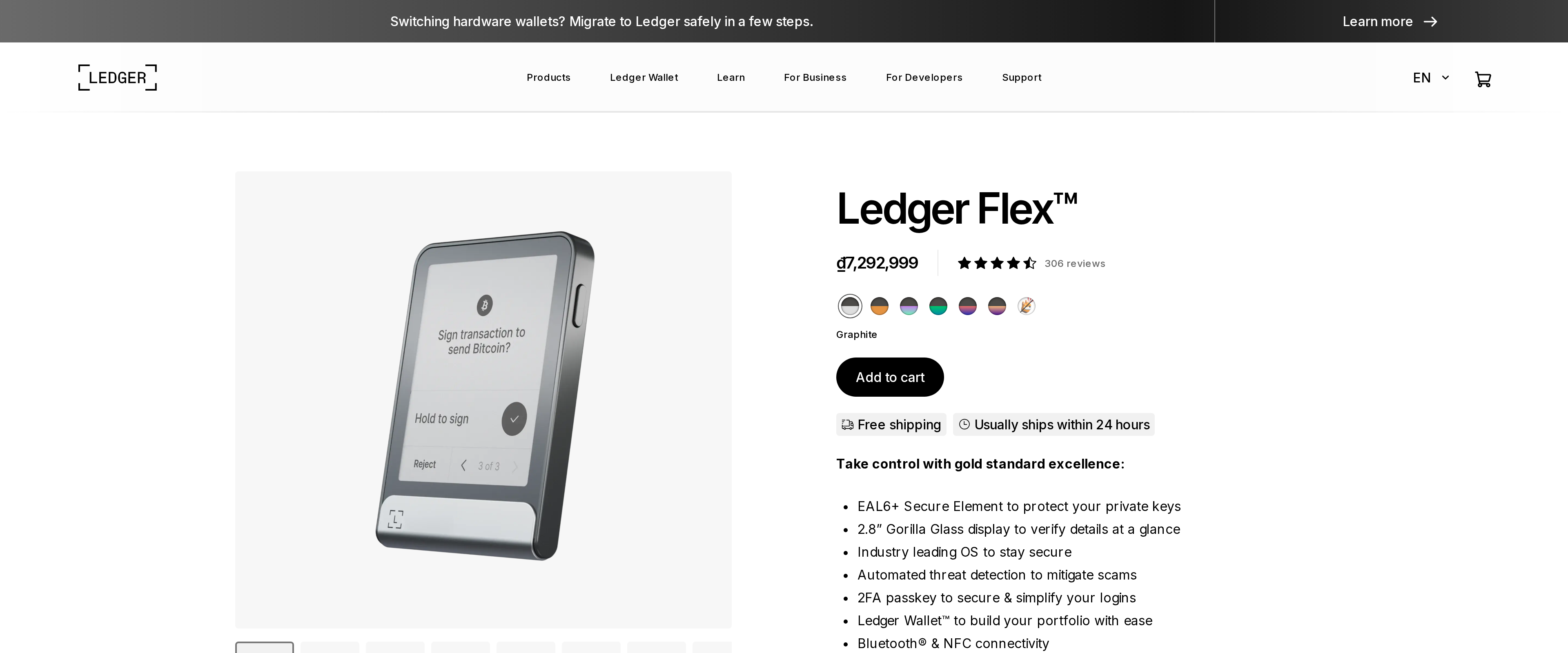
The Ledger Flex swaps the Nano X's tiny OLED for a 2.84-inch E Ink touchscreen built to show what a transaction does before you approve it. We checked its Clear Signing coverage against dApps that still fall back to blind signing, and priced it against the Nano X.
We already own a Nano X for the tickers-and-cold-storage crowd, so the question for the Flex was narrow: does its bigger screen change what happens the moment you approve a contract call, not just how the device looks on a desk. Ledger sells the Flex as a step up rather than a replacement, and set alongside the Nano X on a desk, the pitch is easy to test directly instead of taking on faith.
A screen built to be read, not glanced at
The Nano X packs its entire interface onto a screen barely wide enough for a wallet address, forcing long hex strings to scroll past a few characters at a time. The Flex's 2.84-inch E Ink touchscreen, 480x600 pixels across 16 shades of gray, has room to lay out a full transaction as separate lines instead of one long string to trust blindly. Ledger's shop page pitches this plainly, EAL6+ Secure Element protection paired with a screen meant for verification rather than decoration, and the physical difference between the two devices is obvious the first time a swap confirmation actually fits on screen.
Clear Signing is the feature that matters here
Ledger's Clear Signing standard, built on the ERC-7730 metadata format, translates a raw contract call into plain terms: which token, how much, to which address, instead of a string of hex a user is asked to trust. Ledger transferred stewardship of the standard to the Ethereum Foundation, a move meant to get more wallets and dApps building against the same format rather than Ledger's own closed spec. The Flex's larger screen is what makes that translated output legible; a Nano X can support Clear Signing in principle, but a screen a fraction of the size renders less of it at once.