Keystone 3 Pro Review: The Air-Gapped Signer Built for MetaMask
We paired a Keystone 3 Pro with MetaMask over QR codes, checked its three-chip secure element setup against Coin Bureau's teardown, weighed the $149 price against SD card and pouch bundles, and read through the open-source claims Keystone makes about its firmware.
By The Hashmere Test Desk3 min read
8.1/108.1/10
Our verdict
The Keystone 3 Pro is one of the few wallets that is genuinely air-gapped and still comfortable to use daily, dropping USB data transfer, Bluetooth and NFC and signing everything through a QR code on a 4-inch screen. Three secure elements hold your keys, and most of the firmware is open for audit, though the core MCU library stays closed. Set against Ledger, you lose native staking and Ledger Live's polish, but gain a MetaMask pairing that never touches a cable. Multichain MetaMask users get real value here; anyone wanting one-tap staking from a single app should look at Ledger instead.
Best for: MetaMask and multichain DeFi users who want a fully air-gapped signer with no cable or wireless link
No USB data path, Bluetooth or NFC; every signature crosses as a QR code
Three secure elements (ATECC608B, two Maxim chips) isolate keys and fingerprint data
4-inch touchscreen displays the full transaction, not just a hash, before you sign
Supports 5,500+ assets across 200+ chains and 45+ wallets including MetaMask
What held it back
Core MCU library and secure element firmware are not published, despite the open-source label
No native staking dashboard; you rely on whichever connected wallet supports it
Bulkier than a Ledger Nano or Trezor Safe in a pocket or travel bag
QR-only signing has a learning curve for a first-time hardware wallet buyer
A hardware wallet that talks to your phone over Bluetooth or plugs in over USB is convenient right up until that connection becomes the attack surface. Keystone built the 3 Pro around the opposite bet: strip every wireless and data cable out, and make the resulting inconvenience small enough that people actually use it.
Why the QR code matters more than the touchscreen
Most air-gapped wallets that claim "no internet connection" still accept data over USB, which some security researchers treat as an attack surface worth worrying about even when the wallet firmware is careful. The 3 Pro removes that path entirely: the charging port carries power only, there's no Bluetooth radio and no NFC chip, and every transaction crosses the gap as a QR code shown on its 4-inch touchscreen and read by your phone's camera. That single design choice is why Keystone gets called a genuine air-gapped wallet rather than a marketing one.
Three chips, not one
Coin Bureau's teardown names the exact parts: a Microchip ATECC608B alongside two Maxim chips, the DS28S60 and the MAX32520, working together to isolate your recovery phrase and fingerprint template from each other. Two of the three reportedly carry CC EAL5+ certification, the same tier used in passport chips and payment cards, which is a meaningfully higher bar than a single secure element design. If the device is opened, Keystone's anti-tamper circuitry is built to wipe stored data rather than let an attacker probe the chips directly.
Open source, with an asterisk
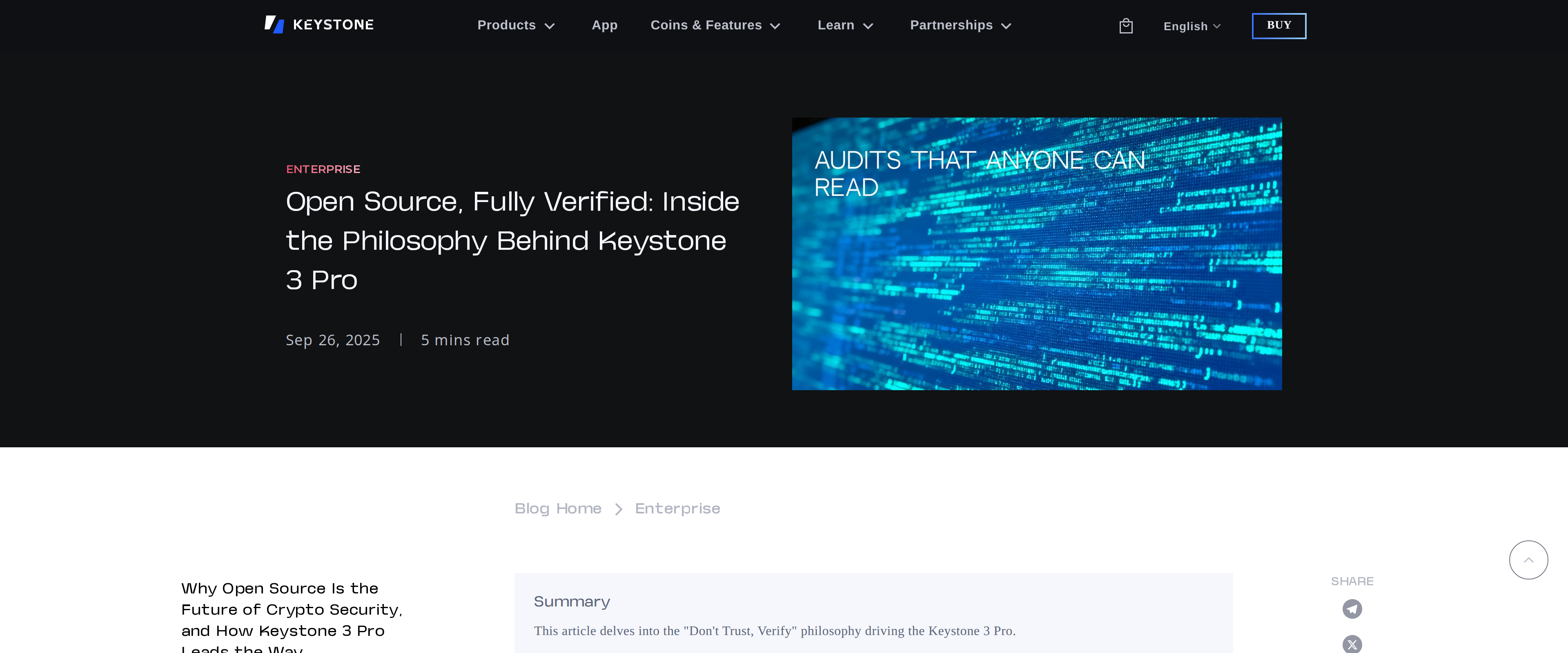
Keystone markets itself on transparency, and a lot of that claim holds up: the QR transmission protocol and much of the firmware sit on GitHub for anyone to read or fork. Read Keystone's own blog post on the subject, though, and the caveat is stated plainly: the core MCU library and the secure element firmware itself are not published. That's a common compromise among hardware wallet makers protecting anti-cloning logic, but it means "open source" here covers most of the stack, not literally every line running on the device.
Keystone's blog post on which parts of the 3 Pro's firmware are published and which are not
Pairing with MetaMask
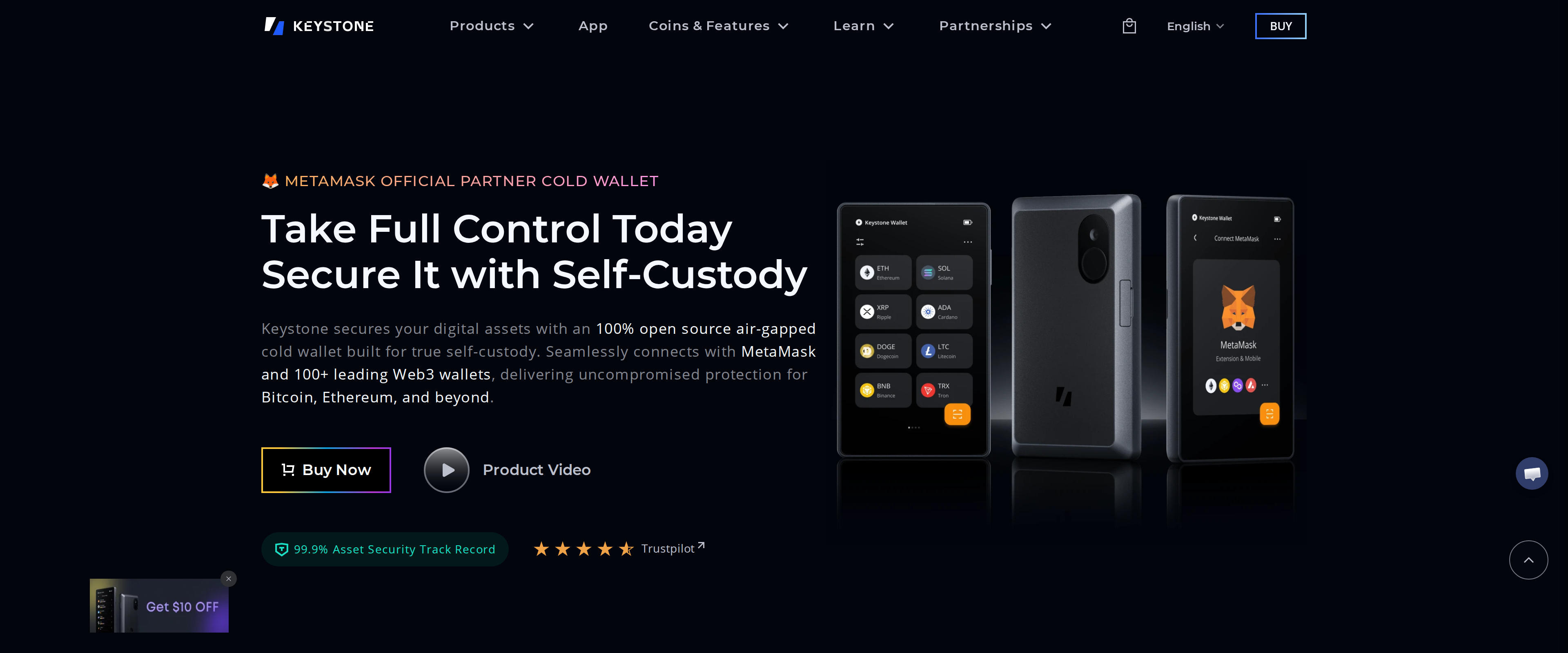
Keystone positions itself as MetaMask's official partner cold wallet, and the pairing flow backs that up: open MetaMask, choose "Connect Hardware Wallet," and scan the QR code the 3 Pro displays. From there, every transaction MetaMask wants signed shows up on the Keystone screen in full, not as a truncated hash, so you can actually read the contract call or the recipient address before approving it. With 45 or more supported wallets and coverage across more than 200 chains, the same flow extends to Solflare, Keplr and OKX Wallet for anyone spreading assets across ecosystems MetaMask doesn't reach.
Keystone's homepage, highlighting its MetaMask partnership and wallet compatibility
What you give up next to Ledger
Ledger Live bundles native staking, a portfolio dashboard and a smoother first-time setup that the Keystone app doesn't try to match, since Keystone leans on whichever software wallet you pair with rather than building its own asset manager. Anyone who wants to stake ETH or ATOM from the same screen where they check a balance will find Ledger's app more direct. The 3 Pro is also physically larger than a Ledger Nano or a Trezor Safe, closer to a small phone than a keychain fob, which matters if you're packing it for travel.
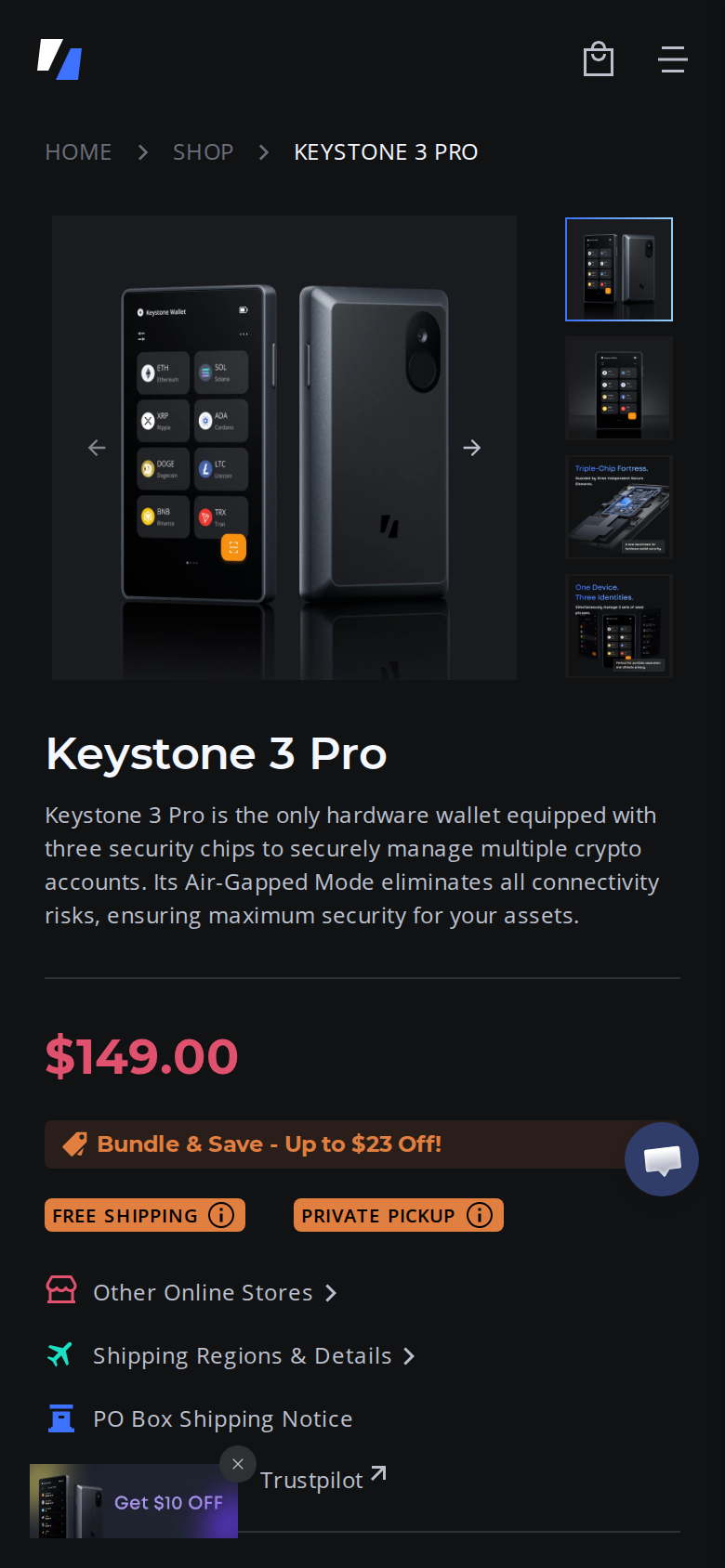
Keystone's product page on a phone-width screen
Pricing and what's in the box
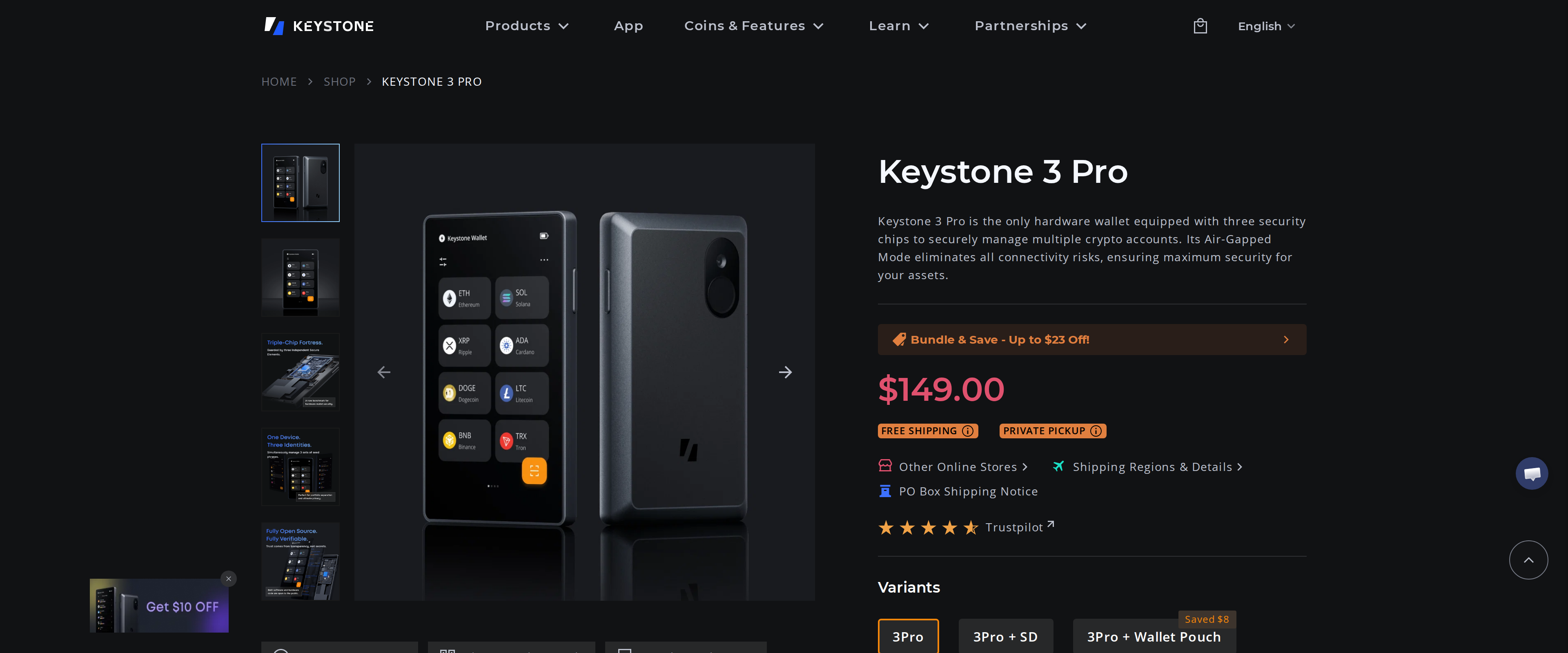
The base unit runs $149 with a manual, six seed sheets and a USB charging cable. Add a 32GB SD card and the price moves to $164, or pay $176 for a bundle that includes a carrying pouch. Existing Ledger owners get a stated 20% discount, a detail aimed squarely at buyers switching after a security scare rather than picking a first wallet.
Who should buy the 3 Pro
If you spend real time inside MetaMask or another dapp browser signing contract calls across several chains, the combination of a full QR air gap and a screen big enough to read the transaction is worth the $149 and the learning curve. If you mainly hold Bitcoin and Ethereum, stake through a native app, and want the smallest device possible, Ledger's ecosystem will feel faster to live in day to day. This review isn't investment advice, and no hardware wallet replaces writing your seed phrase down somewhere a fire or a flood can't reach it.
Specifications
Price
$149 base; $164 with 32GB SD card; $176 with pouch
Display
4-inch full color touchscreen
Connectivity
QR code and microSD only; no Bluetooth, NFC or USB data