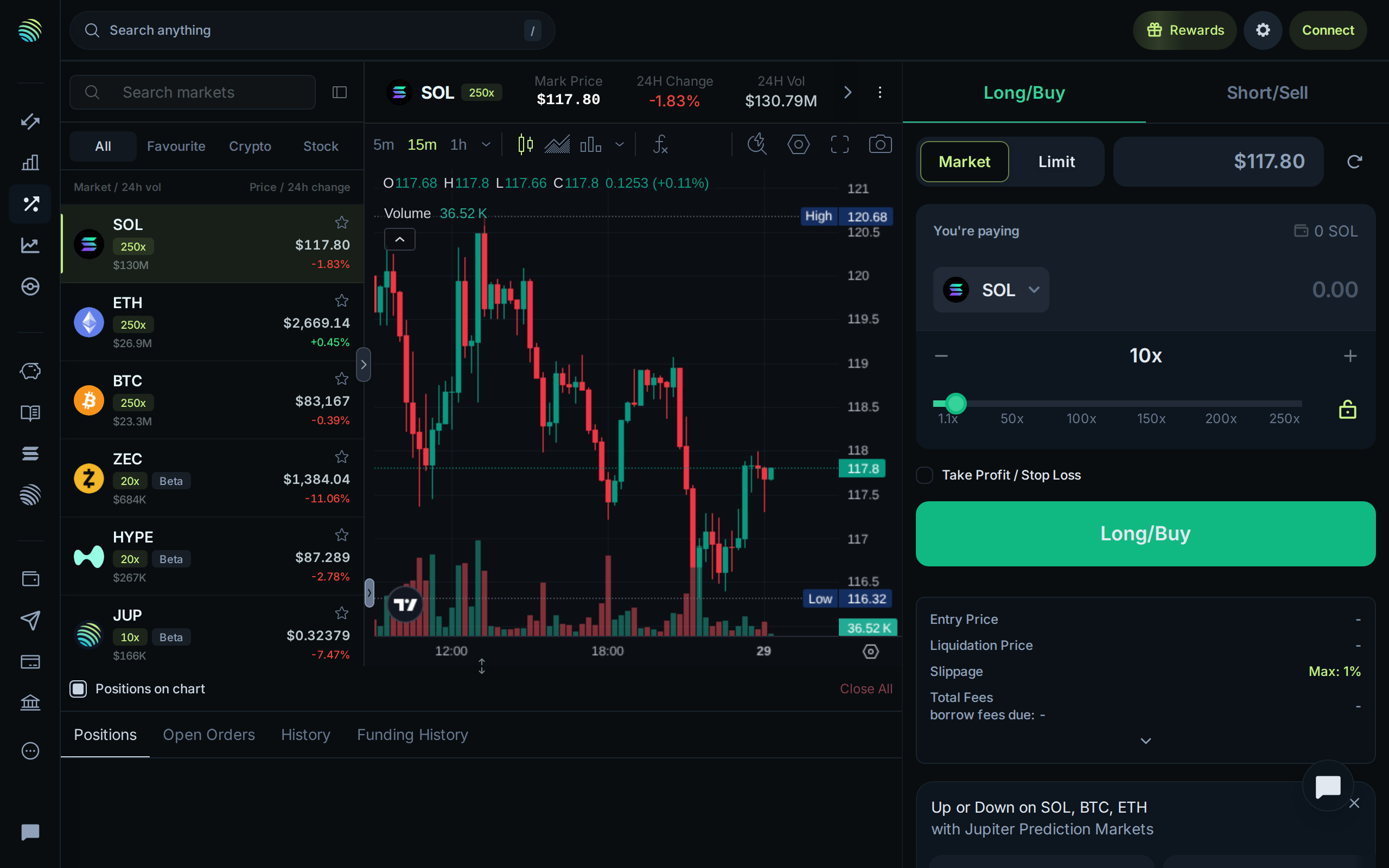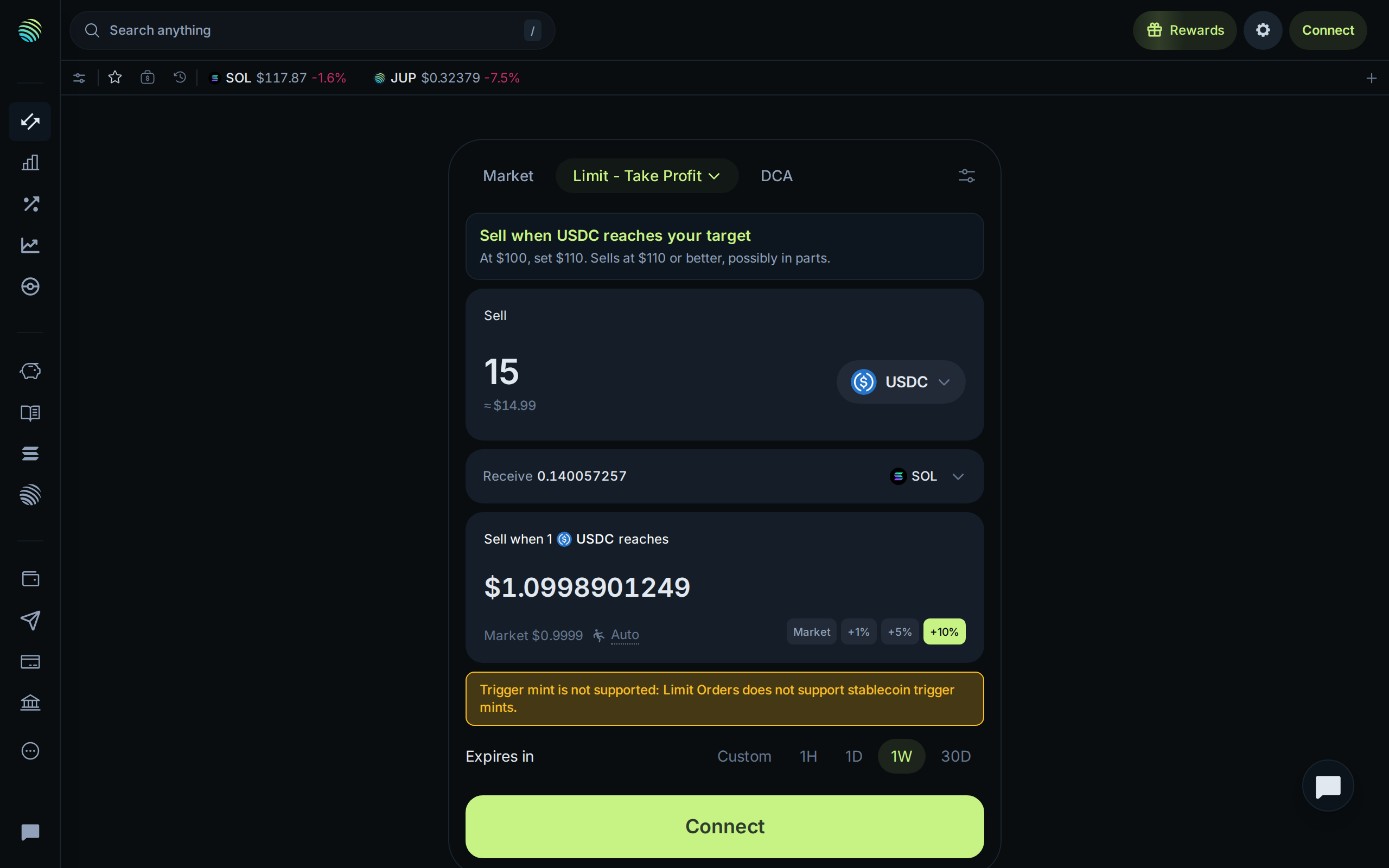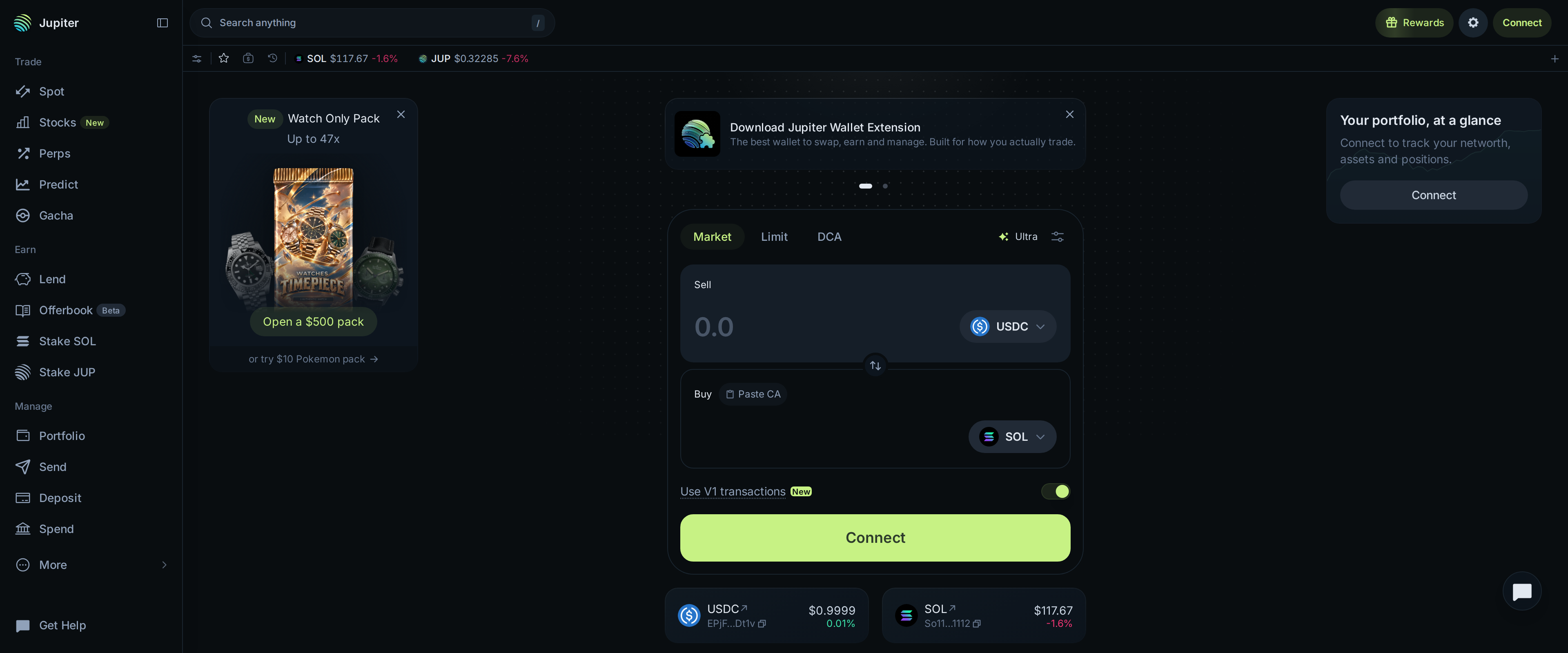
We routed trades through Jupiter's Manual and Ultra modes, opened a leveraged perp position, and set a limit order, then checked the router's price against trading on a single Solana DEX directly. Here is what each mode actually costs.
Jupiter does not build its own liquidity. It checks everyone else's, more than fifty Solana venues on a normal route, and hands you the best combination it can find. That single job, done well, is why the aggregator now clears roughly 95% of Solana's aggregator volume and more than half of the chain's total DEX trading. We spent two weeks routing swaps, opening a leveraged perp, setting a limit order and parking stablecoins in a lending vault to see whether the reputation holds up once you look past the router.
Manual Mode is genuinely free, Ultra Mode is not
Swap through Manual Mode and Jupiter's own fee is zero. You pay whatever the winning pool charges, typically 0.05% to 0.30%, plus a Solana network fee so small it barely registers on a receipt. That is the number worth remembering: on a plain swap, Jupiter makes nothing directly from you.
Ultra Mode changes the arithmetic. It adds MEV protection through a request-for-quote system and charges anywhere from 0% to 0.5% for it, and the app decides when a trade needs that protection rather than asking first. For a large or illiquid trade the protection can be worth more than it costs. For a routine swap of a liquid pair, it is a fee you did not necessarily choose to pay. Check which mode is active before confirming, because the difference compounds if you trade often.
Perps: a real product, not a second thought