LastPass Review 2026: Is It Still Worth Using After the Breach? | Cipherwell
LastPass Review: After the 2022 Breaches, the Case for Staying Is Thin
LastPass still has a free plan and Premium at $3 a month, but the 2022 breaches put customer vaults in criminal hands. We weigh the features and price against the trust that was lost.
5.6 out of 10
Best for Existing users with strong master passwords who are not ready to move
By The Cipherwell Test Desk
lastpass.com
The verdict
LastPass works: autofill, sharing, passkeys and dark web alerts are all there, and Premium is $3 a month billed annually. But attackers took encrypted vault backups in 2022, URLs were stored unencrypted, and the fallout has run for years. The free plan is also limited to one device type. We would pick Bitwarden or 1Password for a new vault.
What we liked
Premium costs $3 a month billed annually
Features include passkeys, dark web monitoring and emergency access
Families gives six accounts for about $1 more a month
Zero-knowledge design with AES-256 and PBKDF2 hashing
Holds ISO 27001, SOC 2 Type II and SOC 3 certifications
What held it back
Encrypted vault backups were stolen in the 2022 breaches
Website URLs in the stolen vaults were not encrypted
The UK ICO fined the UK arm £1,228,283 in November 2025
Free plan works on one device type only
Stronger, cheaper rivals exist, including a good free tier at Bitwarden
A password manager asks for the most trust you can give a piece of software: every login you own, in one place. LastPass lost a share of that trust in 2022 and has spent the time since trying to win it back.
Our position is plain. The product still works, and the price is low. But if you are choosing a manager today with nothing to migrate, we cannot see a reason to choose this one.
What happened in 2022
lastpass.com
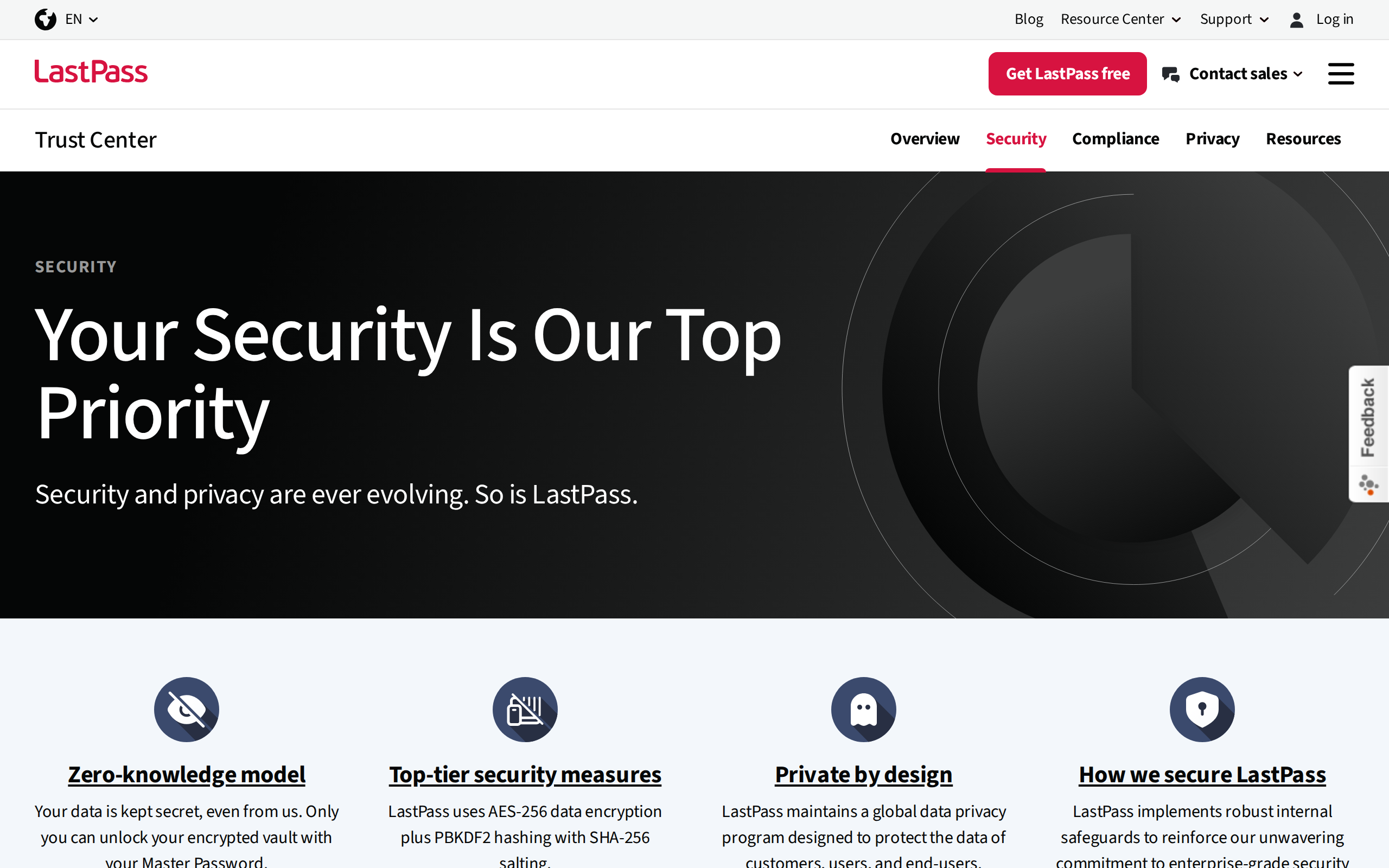
The security page describes a zero-knowledge model with AES-256 encryption and PBKDF2 hashing.
The security page says your vault is kept secret, even from the company, and that only your master password unlocks it. That design is sound. The failure was in the company's own systems.
According to LastPass's incident update, attackers got a copy of customer vault data. The company said everything sensitive was encrypted, other than URLs, file paths to installed software and certain email use cases. Wikipedia's summary of the breach adds that older accounts had used only 5,000 key-derivation iterations, which LastPass later raised to a minimum of 100,100.
Those details are the heart of it. A stolen vault can be attacked offline, with no rate limit and no company watching. A long, random master password holds. A short or reused one is a matter of time and money.
The consequences have lasted. The same source reports more than $35 million in crypto stolen from at least 150 victims who kept seed phrases in LastPass, a $150 million heist linked to the breach by federal investigators in March 2025, a £1,228,283 fine from the UK Information Commissioner on 20 November 2025 and a $24.5 million class action settlement. We have not checked those figures against court filings, so treat them as reported.
What you get for the money
lastpass.com
The personal plans page, which leads with Premium and Families.
Pricing on the personal plans page is low. Premium is $3.00 a month billed annually, with a 30-day trial. Families costs about $1 more and gives six Premium accounts and shared folders. A newer Plus plan is $7.00 a month and adds LastPass VPN, which is Windows only. The Free plan keeps unlimited passwords but works on one device type, either computer or phone, so most people will hit the wall in a week.
On the business side, the plans page lists Teams at $4.25 per user a month for up to 50 users, and Business at $7.00. Both are billed annually.
Compare that with Bitwarden, whose free tier syncs across every device, and the free plan looks stingy. A household of four would pay for Families here, but the question is still whether they should trust it with the keys.
The feature list
lastpass.com
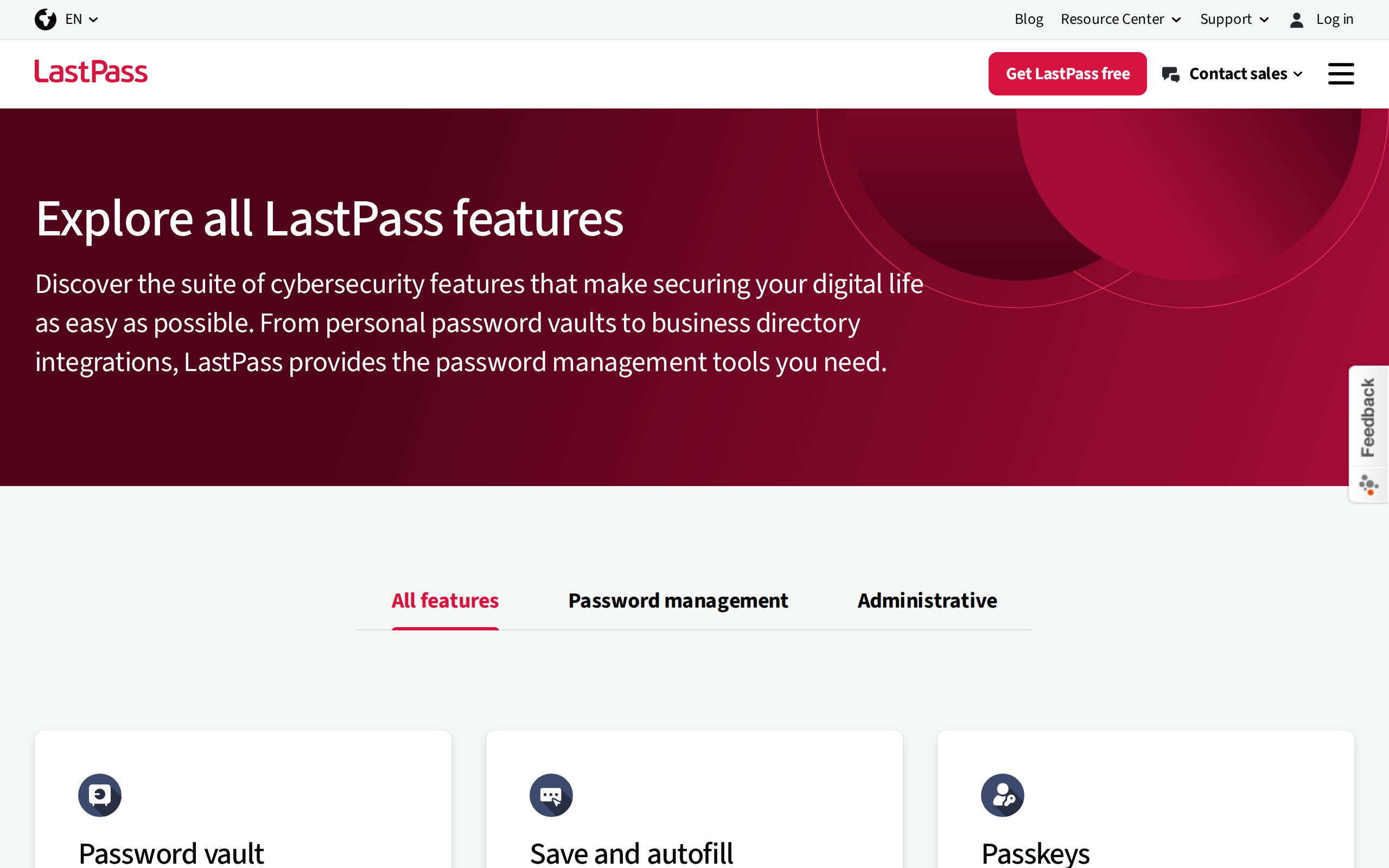
The features page covers vaults, sharing and monitoring.
Nothing is missing. You get autofill, a password generator, dark web monitoring, emergency access, a bundled authenticator and password health recommendations. The offline vault access, wearable support and passwordless login are all listed on the site.
lastpass.com
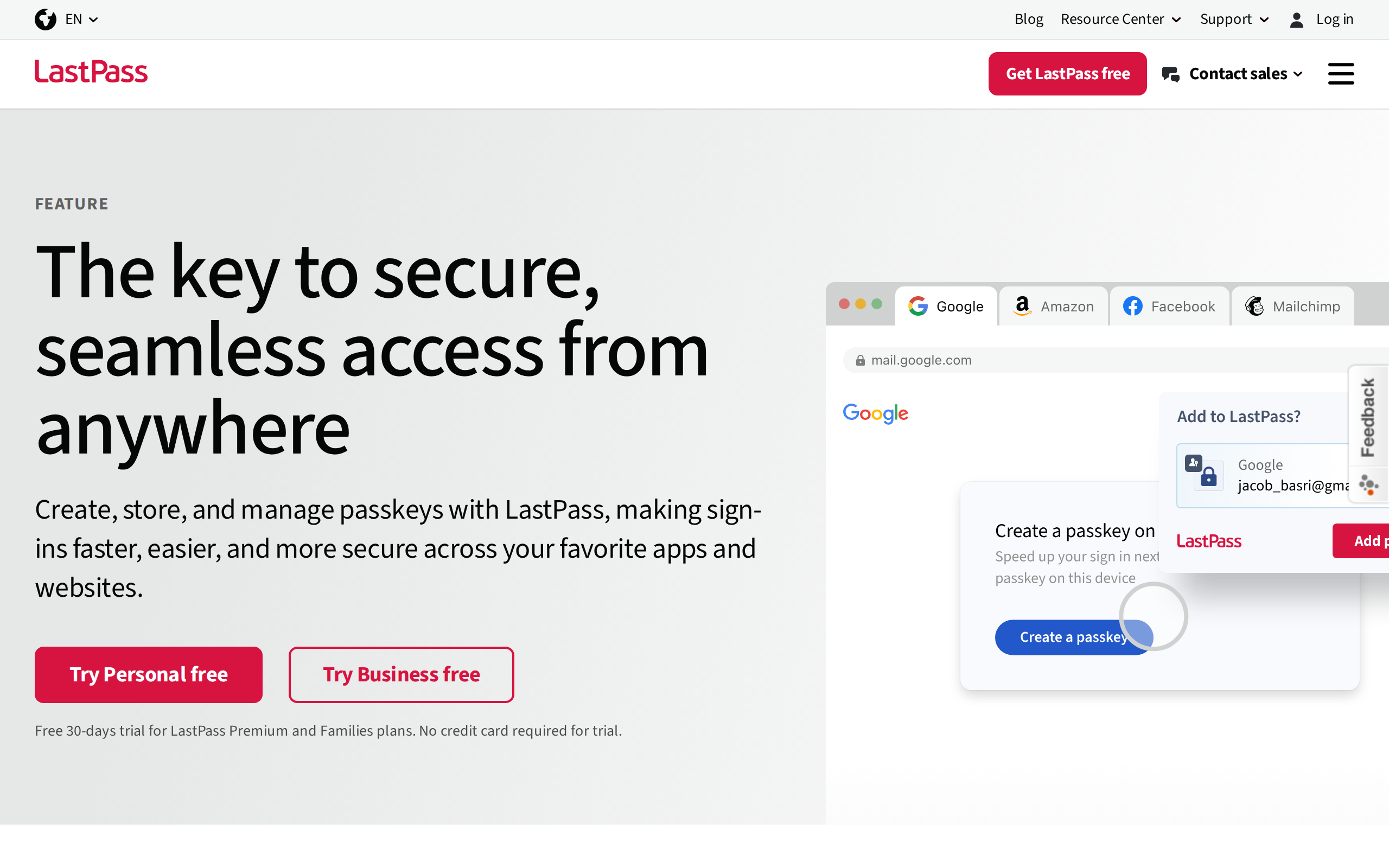
The passkeys page describes creating, storing and syncing passkeys across devices.
The passkey page says you can create, store and manage passkeys, and support for them is now expected of any serious manager.
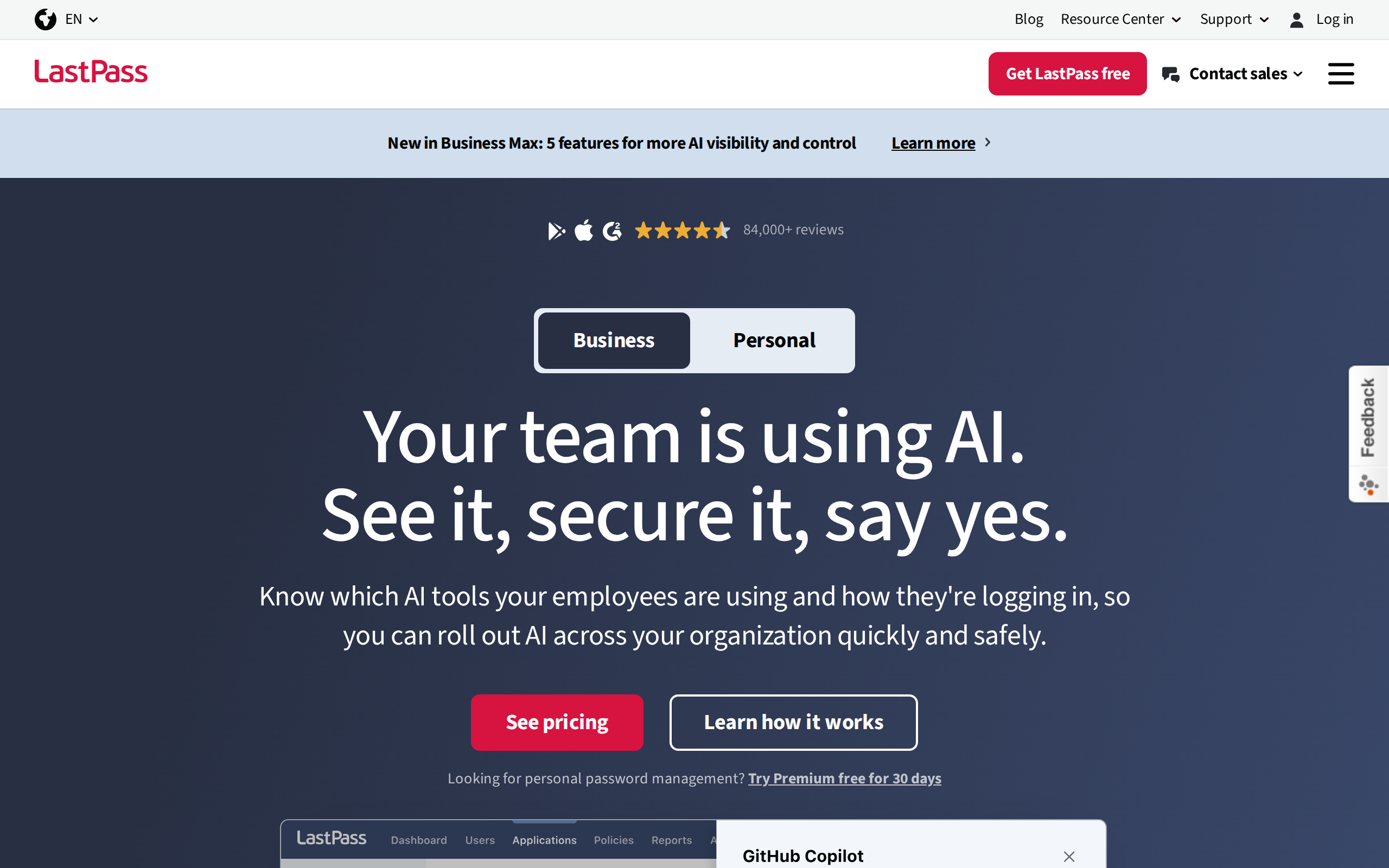
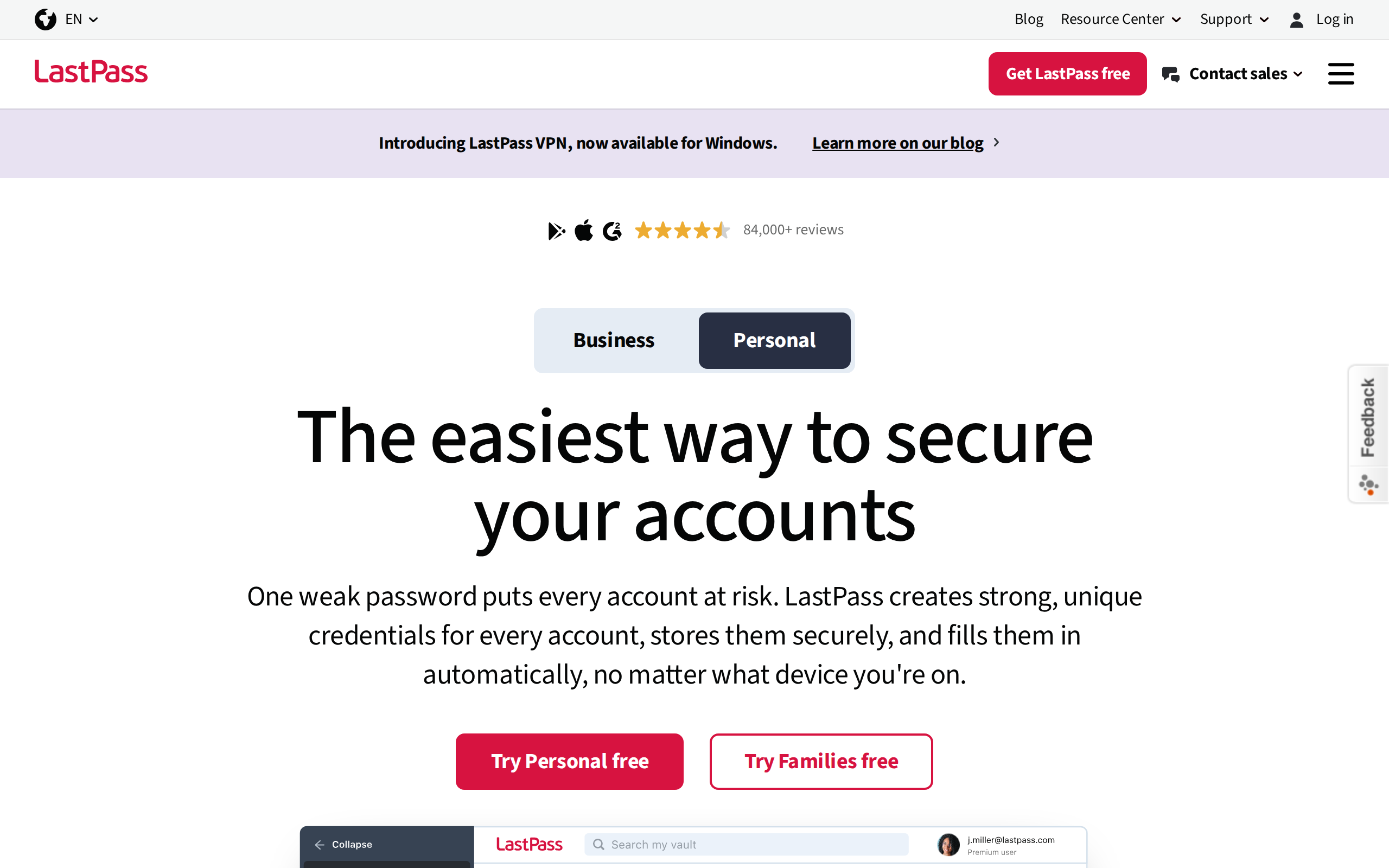
The company's push has moved toward business: the homepage we captured leads with AI governance and shadow IT, and individuals are told to look elsewhere on the page for Premium.
Credit where it is due
The company has changed things since. Its site says it has strengthened vault protections in recent years, including encrypting URL-related fields, improving group sharing and hardening account security for master passwords. It lists a bug bounty programme and routine third-party audits, plus ISO 27001, SOC 2 Type II and SOC 3 certificates.
Those are the right moves. They do not undo what was copied in 2022, because a stolen backup cannot be recalled. That is the uncomfortable part, and it is why we weigh history so heavily here: improvements apply to new data, while the old vaults remain in someone else's hands.
Who should still use it
If you already hold a LastPass vault, the sensible steps are: check that your master password is long and unique, confirm the iteration count in your settings, rotate high-value passwords and any crypto recovery phrases, and plan a move.
If you are starting fresh, pick a rival. Bitwarden is cheaper, 1Password is stronger on polish, and Proton Pass leans on aliases. All three have independent audit trails that read more cleanly.
LastPass scores 5.6 with us. The software is competent. The record is not, and for a vault, the record is the product.