IVPN Review: A Small, Audited VPN for People Who Care More About Logs Than Netflix
IVPN asks for no email, keeps no connection data by its own policy and publishes yearly audits. We read the plans and policy and weighed reviewer speed and streaming results against the higher price.
7.9 out of 10
Best for Privacy purists who accept a smaller network and a higher price
By The Cipherwell Test Desk
ivpn.net
The verdict
IVPN is a privacy tool first and a convenience product a distant second. The anonymous sign-up, the written no-logs policy and the repeated outside audits are stronger than what most big brands show. The cost is real: $60 a year with no long-plan discount, only five devices on the base tier, no port forwarding and no promise that streaming sites will work.
What we liked
No email or name needed to register, and cash, Monero and Bitcoin are accepted
Policy lists what is not logged: traffic, DNS requests, timestamps, bandwidth, customer IPs
The company says it has had eight security audits since 2019
Open-source apps, with multi-hop, obfuscation and a SOCKS5 proxy on the base plan
Simple flat pricing in three tiers and a 30-day refund window
What held it back
$6 a month or $60 a year is steep, and there is no cheap multi-year deal
Only 41 countries and 58 locations, far fewer than the mainstream brands
No port forwarding, and streaming is explicitly not guaranteed
Reviewers report mid-table speeds, and Netflix works for the US library only
Most VPN reviews end in a ranking of speed charts. IVPN does not win that chart, and it does not try to. What it sells is a short list of promises that a privacy-minded buyer can check: no email at sign-up, no activity logs, apps you can read on GitHub, and an outside firm that tests the lot every year. We went through the plans, the policy and the independent test results to see whether those promises justify a price that sits above the crowd.
What you give up before you pay
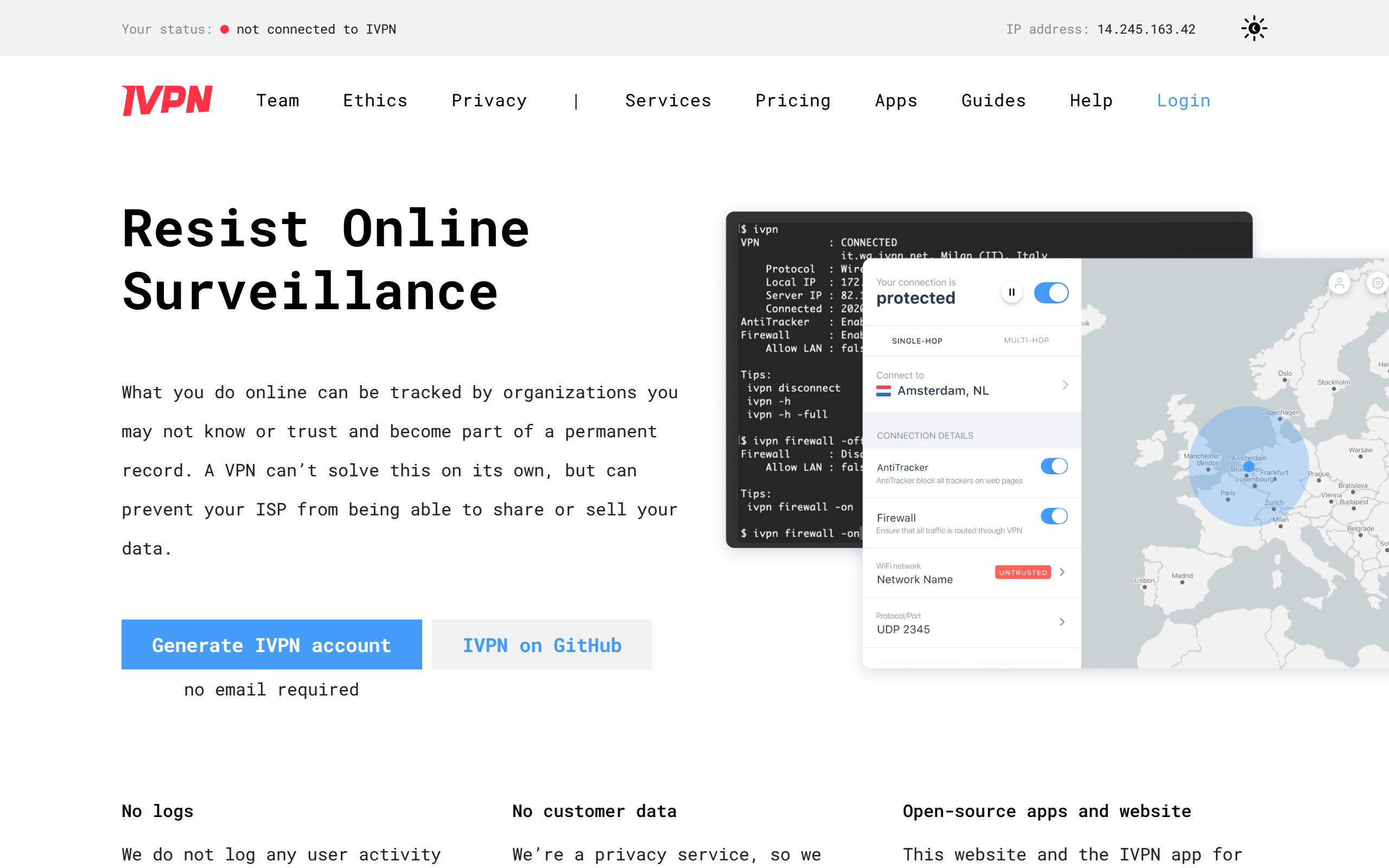
The sign-up flow is the first thing that feels different. You press one button, the site gives you an account ID, and that string is your login. No address, no name, no password reset by email. The policy page spells out the consequence: IVPN cannot contact you about downtime or account problems unless you add an email later, and it will not help you if you lose the ID.
That is a trade many buyers will not want. For the people it is designed for, it is the point. Payment can be cash in an envelope, Monero or Bitcoin, though card and PayPal also work.
The logging policy, read line by line
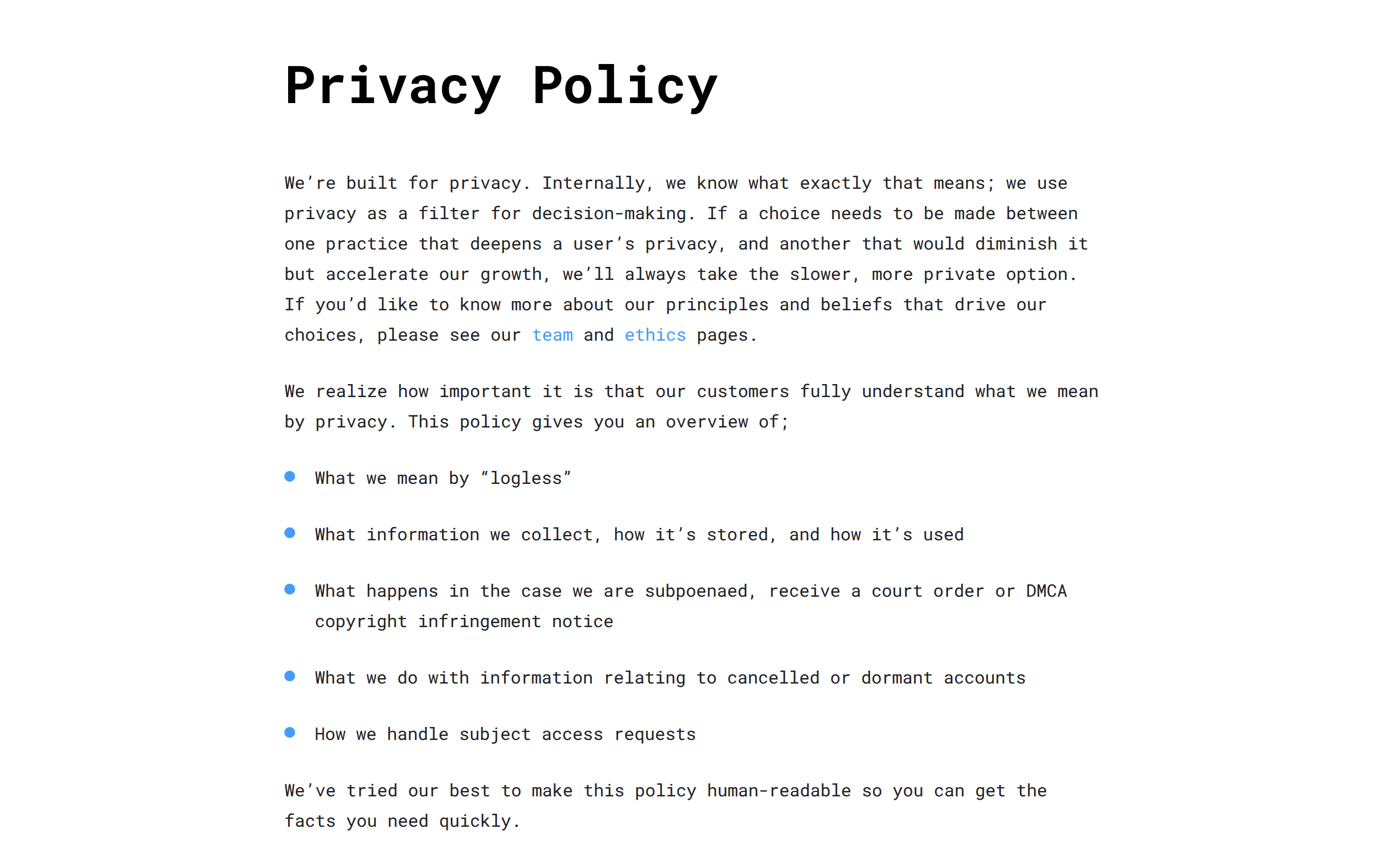
Marketing pages for VPNs all say "no logs". IVPN's policy page is more useful because it lists the categories. It says it keeps no traffic data, no connection timestamps or duration, no DNS requests, no bandwidth totals and no customer IP addresses. A statement this specific can be tested in court or by an auditor, and a vague one cannot.
The company also says it runs every server itself on dedicated bare-metal hardware, with no cloud storage and no virtual machines. Its pricing page claims eight security audits since 2019, and an older Cure53 audit of the apps and infrastructure was reported by independent reviewers at the time. We could not read each audit report for this review, so treat the count as the company's own claim until you open the reports yourself.
ivpn.net
The IVPN privacy policy opens with 'Zero user information is our goal' and defines what 'logless' means.
Three plans, and the one most people need
The pricing page shows three tiers and one billing choice that matters: there is no long-term discount. A year costs ten times the monthly price, so the best you can do is $60 on the base plan.
ivpn.net
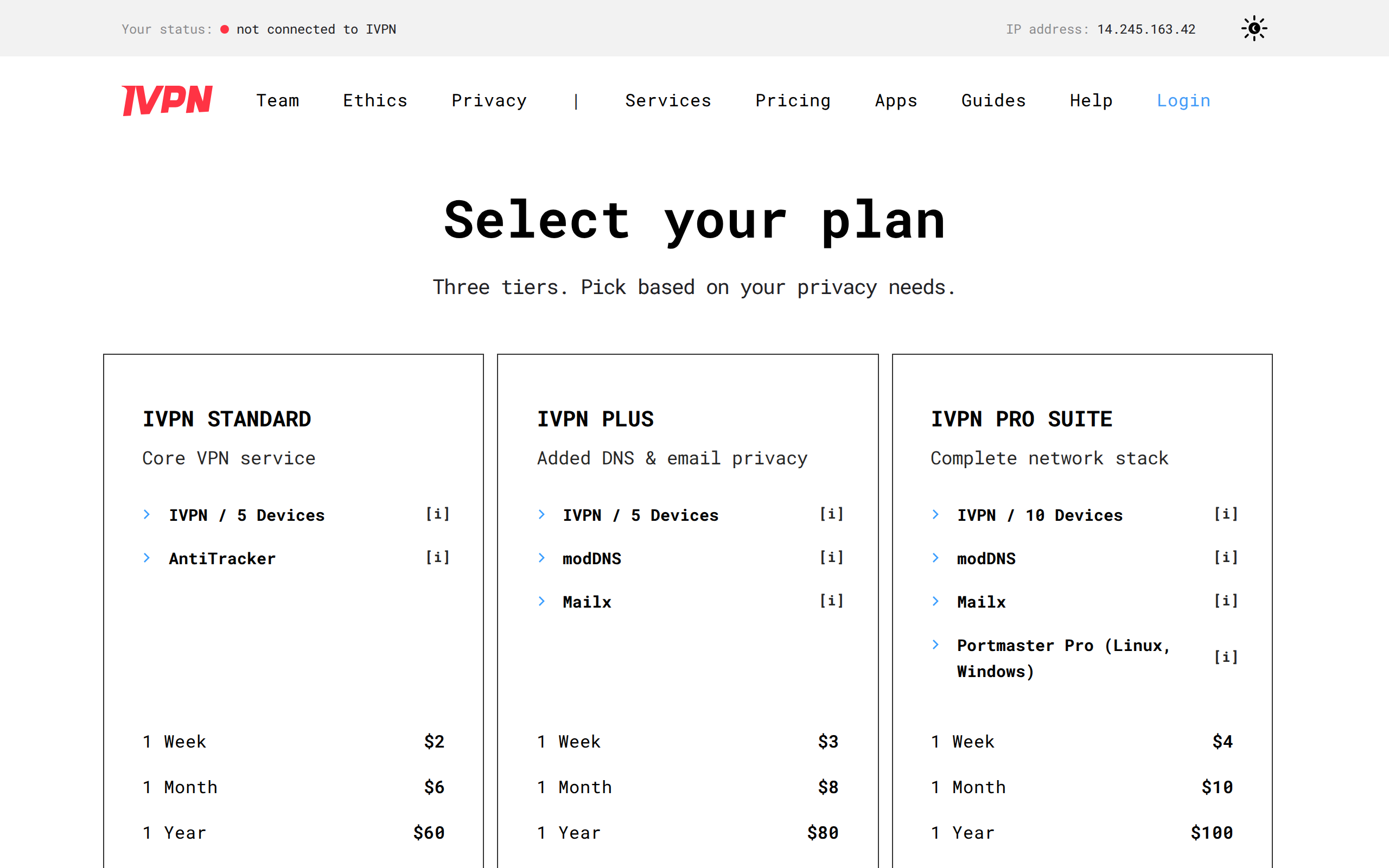
The pricing page lists Standard, Plus and Pro Suite, with the base tier at $2 a week, $6 a month and $60 a year.
Standard ($2 a week, $6 a month, $60 a year): five devices, multi-hop, obfuscation, a SOCKS5 proxy and the AntiTracker blocklist. This is the plan most readers should look at.
Plus ($3, $8, $80): adds modDNS, a configurable DNS service, and Mailx email aliases.
Pro Suite ($4, $10, $100): ten devices and Portmaster Pro, a firewall and network monitor available on Linux and Windows.
The one-week option is useful. At $2 it works as a cheap trial, and the 30-day refund window covers longer commitments. Compared with the big names that headline $2 to $3 a month on a two-year contract, IVPN costs two to three times as much over a year. You are paying for what it refuses to collect, not for a bigger catalogue.
Speed and streaming: what reviewers found
We did not run our own throughput campaign for this piece, so these are third-party numbers. VPN.com measured 520 Mbps and placed IVPN 19th of 22. TechRadar saw WireGuard average roughly 730 to 810 Mbps on US servers, while Expert Reviews reported about 353 Mbps to London. The range is wide, and it tells you speed depends on distance and server load more than on the brand. On the local-latency measure, one 2024 comparison put IVPN among the best of 65 services.
Streaming is the weak spot, and IVPN is honest about it. The pricing page lists "no streaming compatibility guarantee" under limitations. Reviewers got US Netflix working but not other Netflix libraries, BBC iPlayer, Disney+ or Prime Video. If your main reason to buy a VPN is a foreign catalogue, look elsewhere.
Apps, and where they run
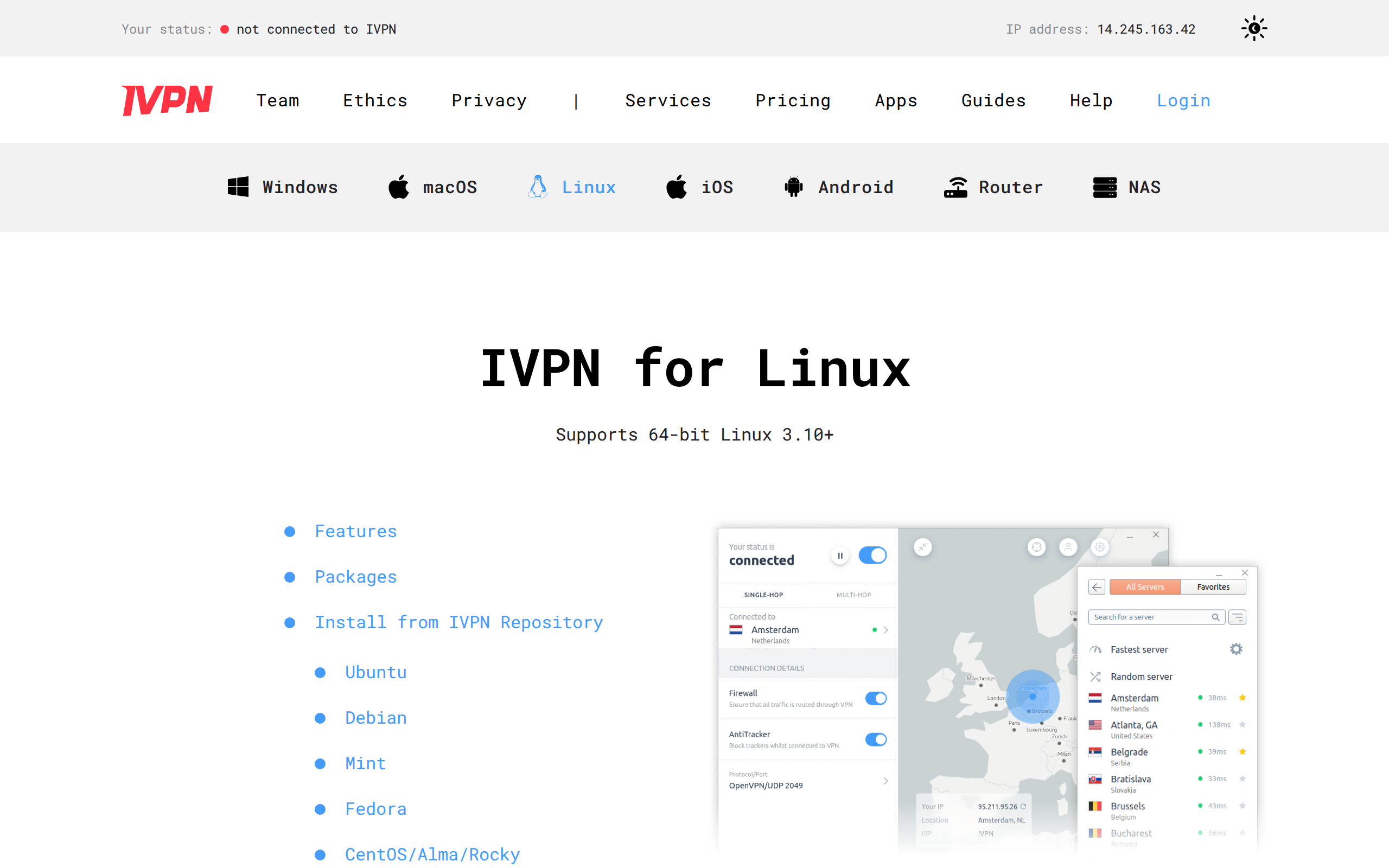
IVPN covers Windows, macOS, Linux, iOS and Android, and the Linux page offers repository installs for Ubuntu, Debian, Mint, Fedora, CentOS-family distributions and Arch. Routers and NAS devices are supported too. The apps are open source, so anyone can read what they do.
ivpn.net
The Linux page lists 64-bit support and repository installs for Ubuntu, Debian, Mint, Fedora, CentOS-family systems and Arch.
Who should buy it
Buy IVPN if you want to pay anonymously, you read privacy policies for fun, and you can live without port forwarding and guaranteed streaming. Journalists, activists and Linux users who prefer open-source tools fit that description. It is general information about a product, not advice for any individual's threat model.
Skip it if you want the cheapest long plan, a huge server list or a VPN that unblocks every catalogue. For that group, a mainstream service will cost less and work more often. For everyone else with a strong privacy brief, IVPN is one of the few services whose claims are specific enough to hold it to.
Specifications
Standard plan
$2 per week, $6 per month, $60 per year, 5 devices