IPVanish Review 2026: Value VPN for Torrents, With US Strings | Cipherwell
IPVanish Review: Cheap, Unlimited Devices and Torrent-Friendly, but US-Based
IPVanish sells unlimited connections at a low two-year price and has two outside no-logs audits. We weighed that against its US jurisdiction, its 2016 history with a logged user and a steep renewal price.
7.4 out of 10
Best for Large households and torrent users who want cheap, unlimited connections
By The Cipherwell Test Desk
ipvanish.com
The verdict
IPVanish is a good-value VPN for a big household or a heavy torrent user: unlimited simultaneous devices, P2P allowed everywhere and a nearby-server speed of 93.1 Mbps against a 94.6 Mbps baseline in security.org's test. Two audits back its no-logs claim. The catches are US jurisdiction, a 2016 case where it did hand over a user, and a renewal price of $89.99 a year.
What we liked
Unlimited simultaneous connections on every plan
Fast in security.org tests: 93.1 Mbps on a nearby server from a 94.6 Mbps baseline
No-logs claim audited by Leviathan in 2022 and Schellman in 2025
The two-year Essential plan works out at $2.19 a month
30-day money-back guarantee on the 1-year and 2-year terms
What held it back
US company in a Five Eyes country, so subject to US legal demands
In 2016 it gave a user's details to US Homeland Security under earlier owners
Essential renews at $89.99 a year, more than double the 2-year starting price
Month-to-month costs $12.99, which is poor value against rivals
Threat Protection Pro is reported as desktop only
If you have eight devices and a torrent client, most VPNs make you count. IPVanish does not: every plan allows unlimited simultaneous connections, and P2P traffic is welcome on every server. That is the whole pitch, and at $2.19 a month on the two-year plan it is a strong one. The weaknesses are on the paper side. IPVanish is a US company, it once handed a user to US investigators, and it renews at more than double that opening price.
Why unlimited connections are the real product
ipvanish.com
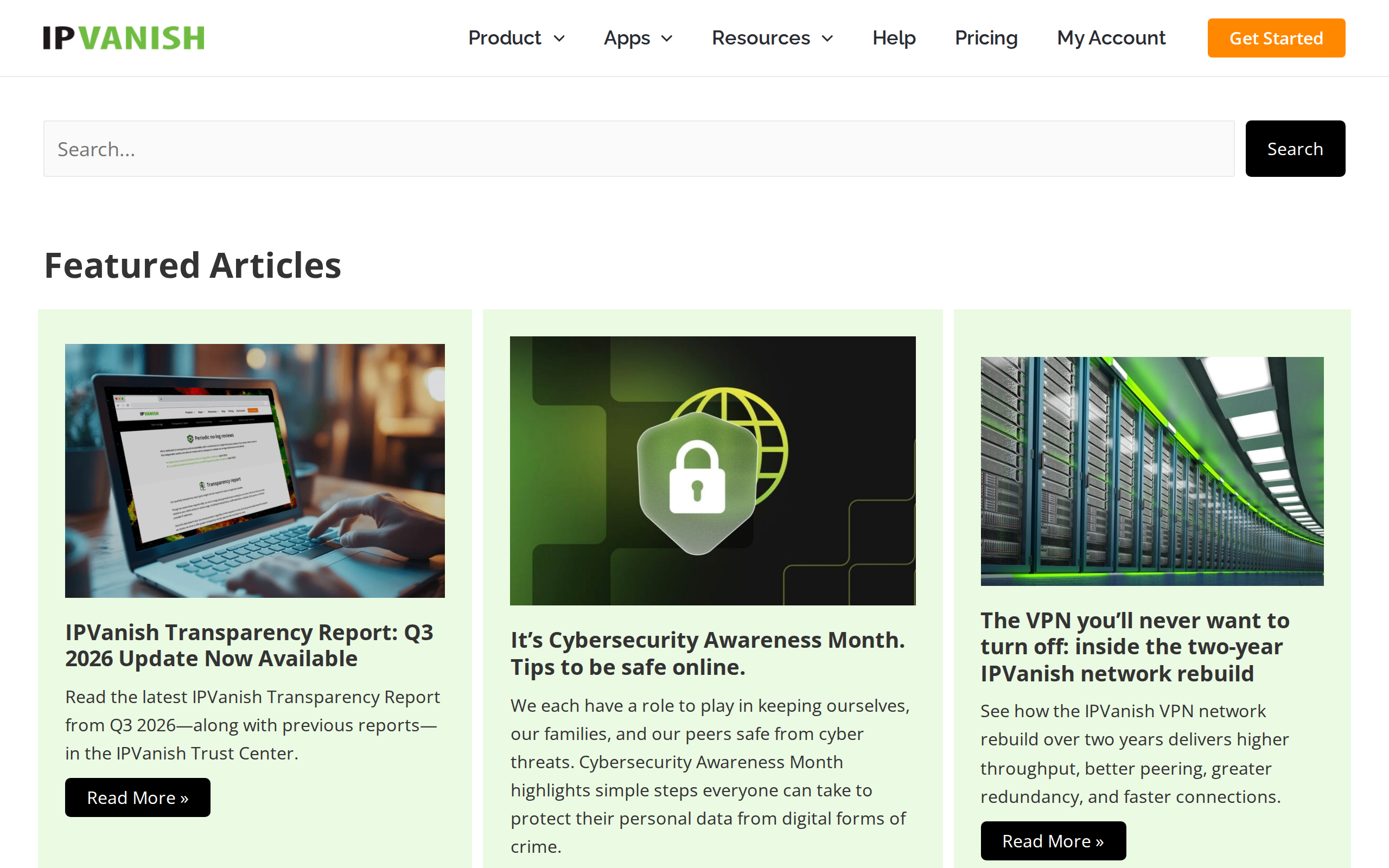
IPVanish now sells itself as a VPN plus antivirus platform and publishes quarterly transparency reports.
Most mainstream VPNs cap you at five to ten devices. A family with phones, tablets, a games console and two laptops runs into that limit quickly, and the workaround is a router install. IPVanish skips the problem. Security.org's review lists unlimited connections on every plan, and the same figure appears across the other reviews we read.
We could not load IPVanish's own pricing text with a plain request, because the site blocks scripted traffic, so the figures below come from security.org's review and match the plan names on IPVanish's page.
What it costs, and when the price turns
ipvanish.com
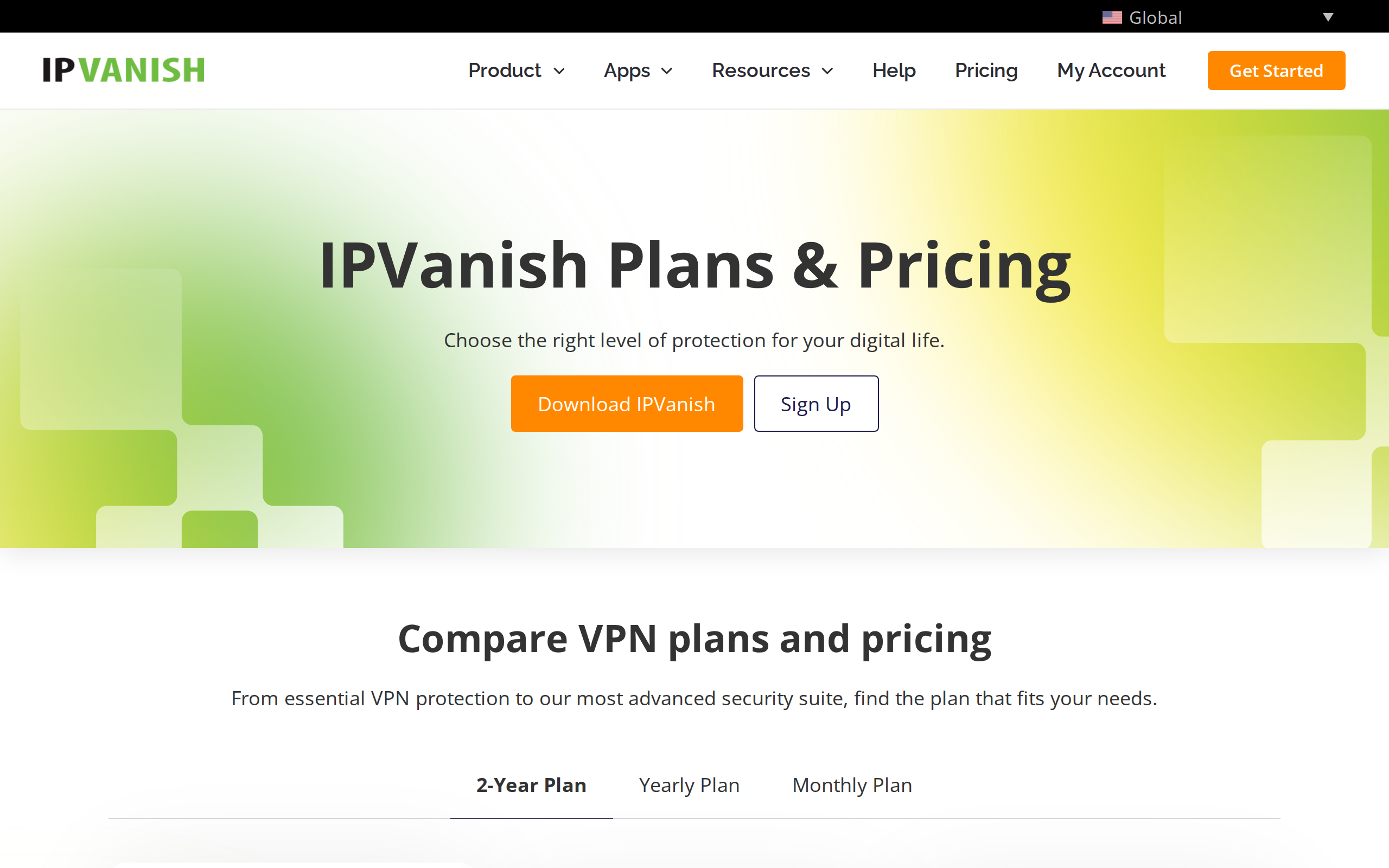
The IPVanish pricing page compares its VPN plans from basic protection to the full security suite.
There are two tiers. Essential is the VPN alone. Advanced adds more security tools. The prices security.org recorded were:
Essential, 2 years: $2.19 a month, $52.56 billed, renews at $89.99 a year.
Essential, 1 year: $3.33 a month, $39.99 billed, renews at $89.99 a year.
Advanced, 2 years: $3.29 a month, $78.96 billed, renews at $109.99 a year.
Monthly: $12.99 for Essential, $14.99 for Advanced.
Look at the renewals. After two years the Essential plan jumps from $26.28 a year to $89.99, about 3.4 times as much. A 30-day refund applies on the 1-year and 2-year terms, but nothing protects you from the renewal. Put the end date in a calendar, or plan to cancel and rejoin on a new promotion. The monthly price of $12.99 is not competitive, so treat the long plans as the only real offer.
Speed: little lost on a nearby server
Security.org measured a 94.6 Mbps baseline connection. Through IPVanish it saw 93.1 Mbps to a nearby US server, 91.5 Mbps to a mid-distance European one and 90.78 Mbps to Australia, with latency rising from 14 ms to 78 ms. A loss of about 4% even across the world is unusually small. It uses WireGuard, OpenVPN and IKEv2/IPSec, and WireGuard is the one to pick for speed.
These are one tester's numbers on a 95 Mbps line, so a faster home connection may show a larger gap. They do suggest the network is not the weak point.
The logging question, answered in two parts
ipvanish.com
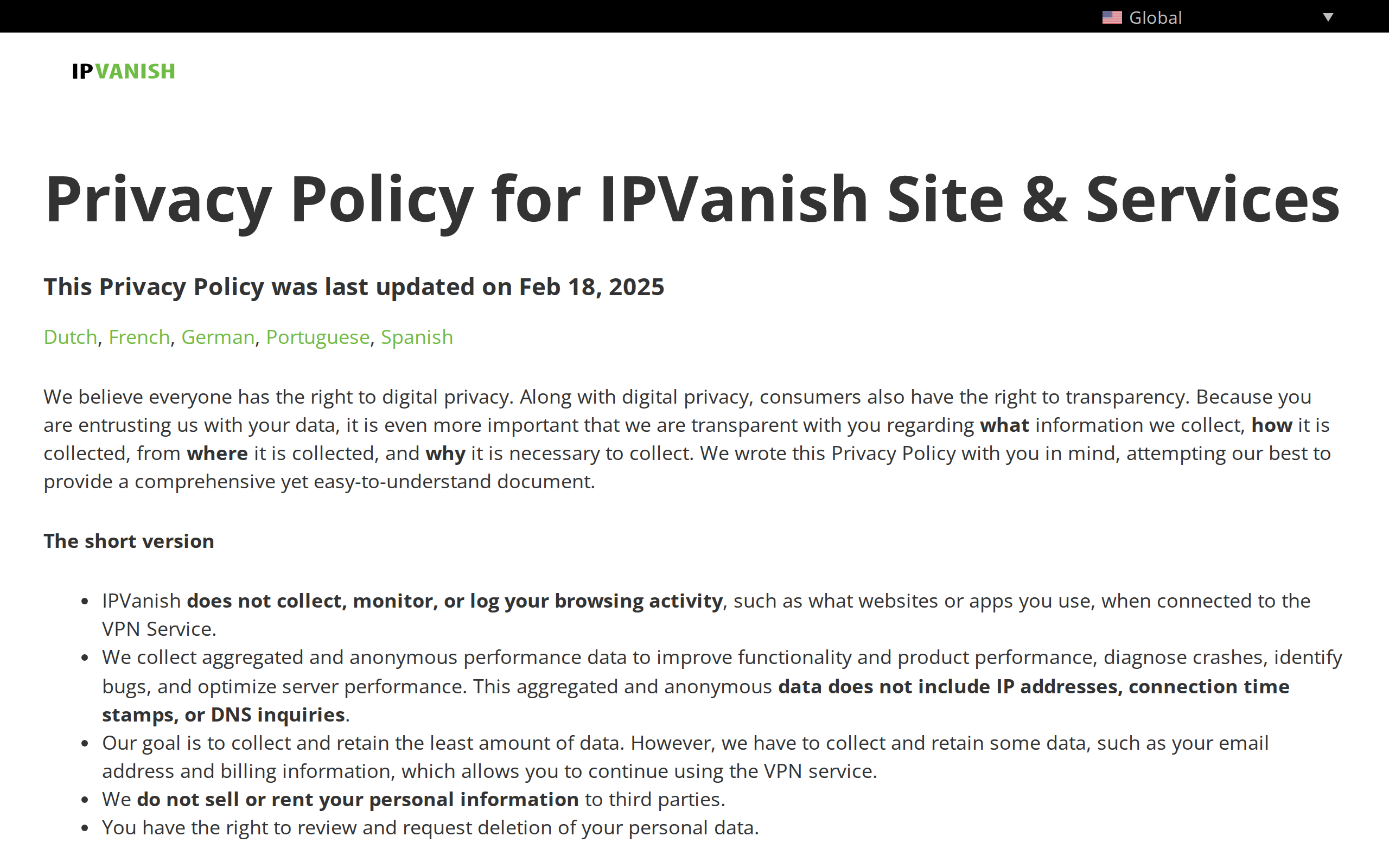
The policy states that IPVanish does not collect, monitor or log browsing activity.
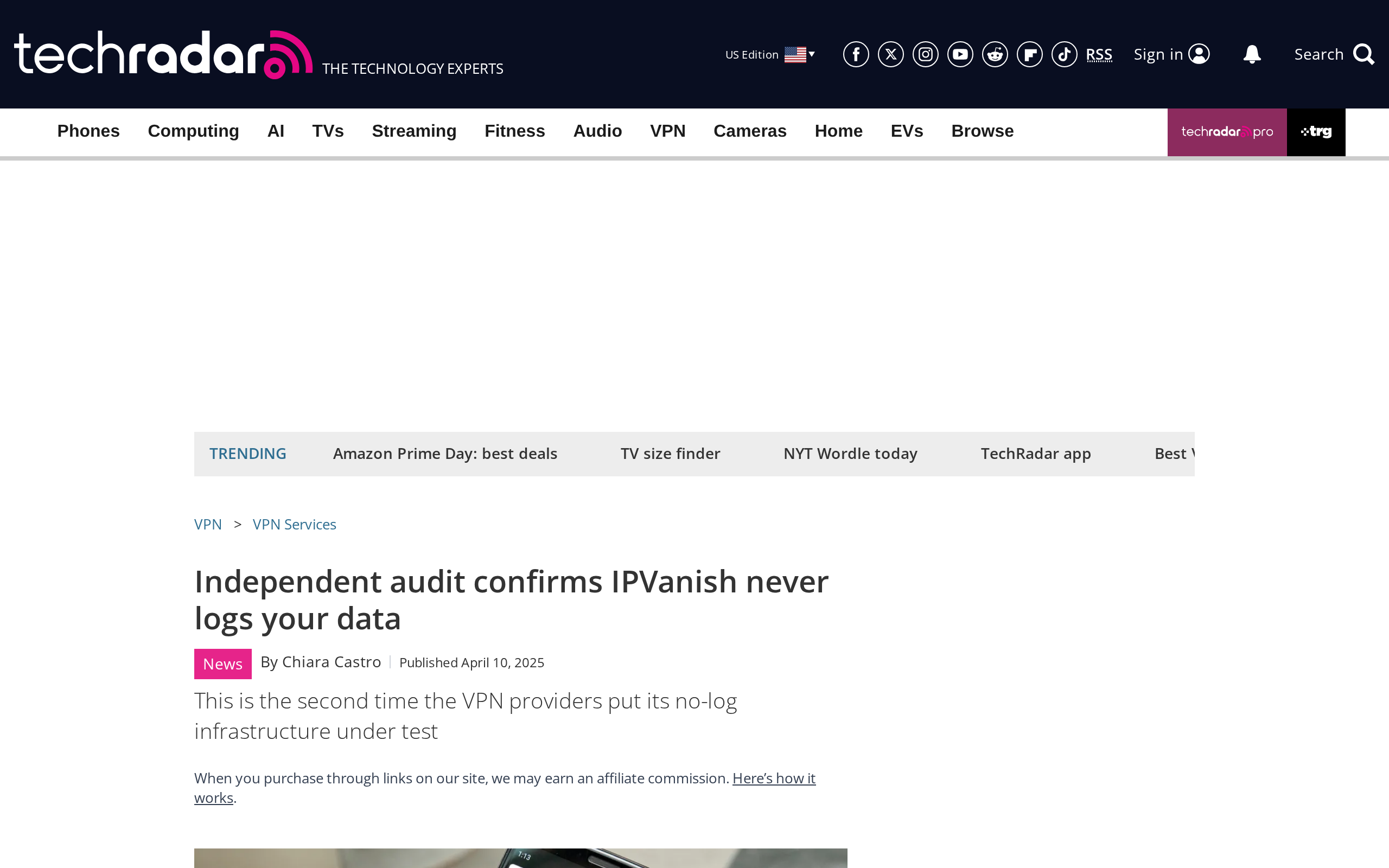
The current policy says IPVanish does not collect, monitor or log which sites or apps you use. Two outside firms back that up. Leviathan Security Group audited it in 2022, shortly after Ziff Davis took over, and Schellman Compliance finished a second audit on February 21, 2025, reported by TechRadar.
ipvanish.com
TechRadar's report on the second audit of IPVanish's no-log infrastructure.
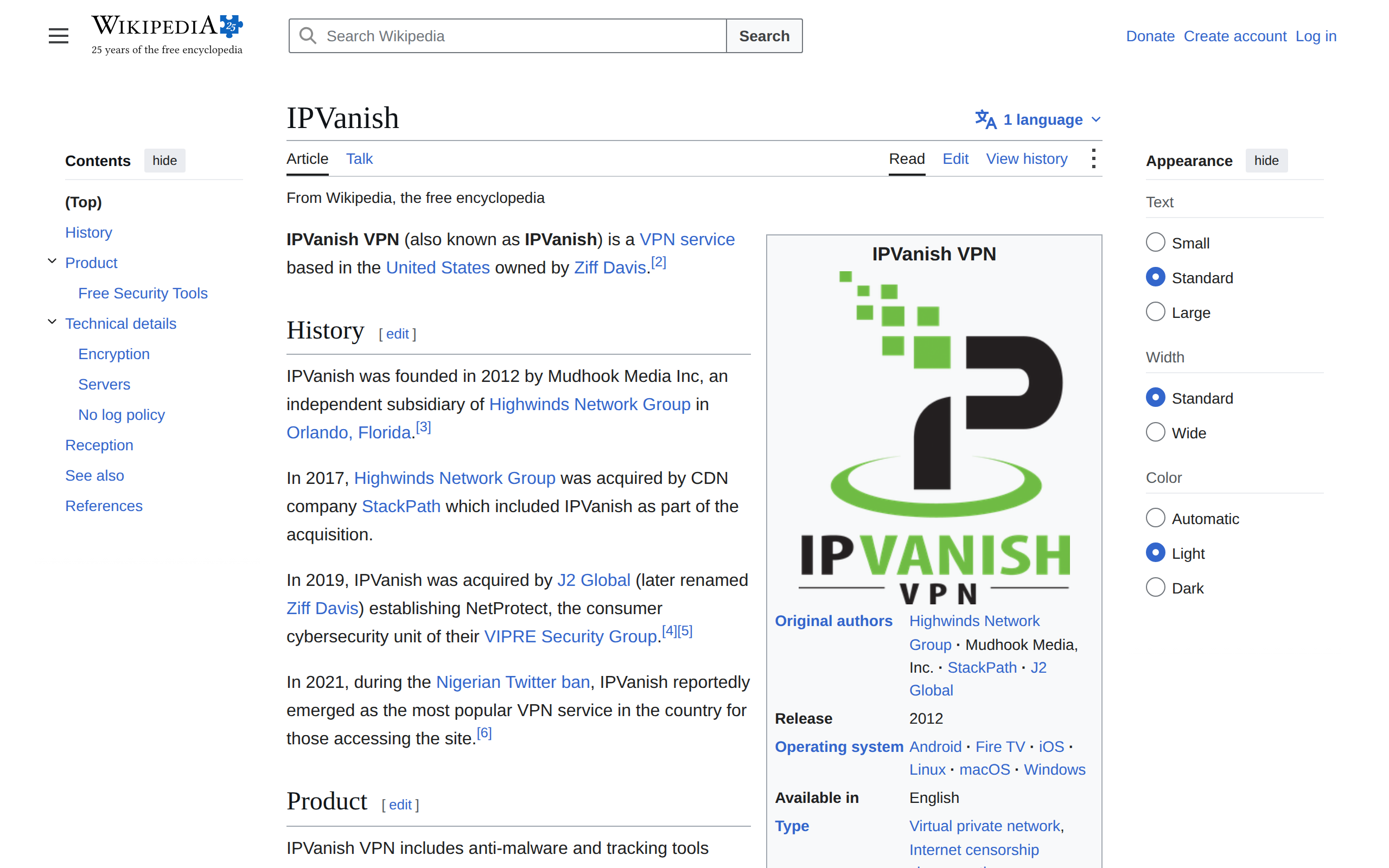
Now the history. IPVanish started in 2012 under Highwinds and passed to StackPath in 2017 and to J2 Global (now Ziff Davis) in 2019. In 2016, under the first owner, it gave the Department of Homeland Security details that identified a user, despite a public promise never to log. The founder later said no logs existed at the time of the sale. We cannot settle that dispute. What matters is that the current owner has been audited twice and the earlier incident predates both audits.
ipvanish.com
The Wikipedia entry lays out the ownership chain, the 2016 case and the audits.
The US problem is still there
An audit shows what a company records. It does not change which court can order it to act. IPVanish sits in the United States, a Five Eyes country, so a lawful demand is possible. With no logs the answer is meant to be that there is nothing to hand over, and that is exactly what the audits test. For torrenting and ordinary privacy that is acceptable. For someone facing a state-level threat it is not, and Mullvad or IVPN would be better choices.
Wikipedia also records that IPVanish pulled its servers from Russia, Hong Kong and India over regulatory conflicts and was blocked in Turkey in December 2023. Withdrawing rather than complying is a point in its favour.
Support and extras
ipvanish.com
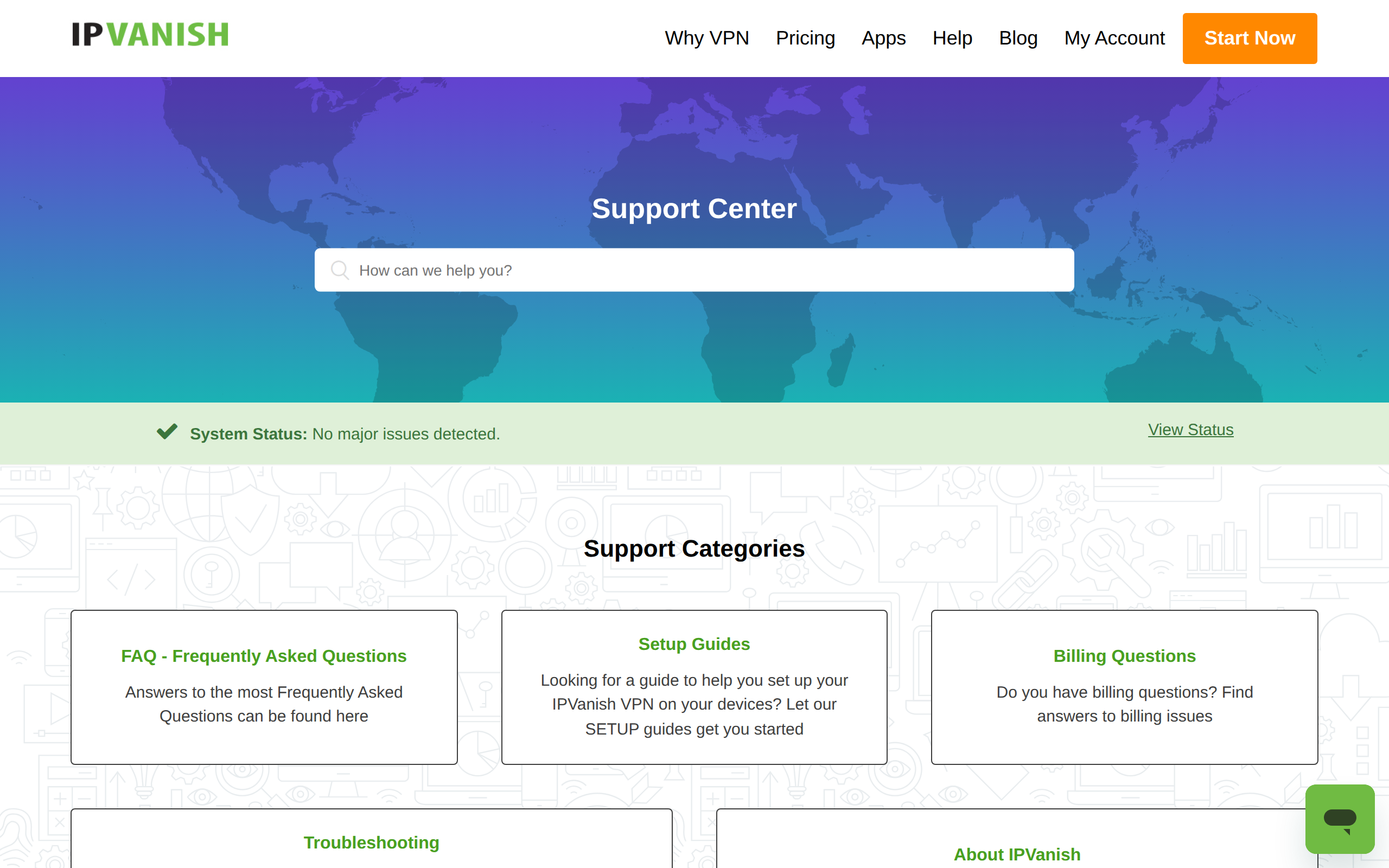
The Support Center covers FAQs and setup guides for each device.
The Support Center has setup guides and an FAQ. The blog above lists the company's Q3 2026 transparency report. Security.org reports that the Threat Protection Pro tool runs on desktop only, so check that before paying for extras in a phone-heavy household.
Who should buy it
Buy the two-year Essential plan if you torrent, share one account across a crowded home, or just want a quick VPN for the cost of a coffee a month. Expect to renegotiate or switch at the end of the term.
Skip it if your threat model includes legal pressure in the United States, or if you want a plain price that never moves. For that, a flat-rate provider is a better fit.
Specifications
Essential, 2 years
$2.19/mo ($52.56 billed), renews at $89.99/yr
Essential, 1 year
$3.33/mo ($39.99 billed), renews at $89.99/yr
Advanced, 2 years
$3.29/mo ($78.96 billed), renews at $109.99/yr
Monthly plans
$12.99 Essential, $14.99 Advanced
Simultaneous devices
Unlimited
Servers
3,400+ across 150 locations (security.org count)
Protocols
WireGuard, OpenVPN, IKEv2/IPSec
Audits
Leviathan Security Group (2022), Schellman Compliance (2025)