Incogni Review 2026: Speed, Coverage and Real Limits | Cipherwell
Incogni Review: Does It Really Get Your Data Off Broker Sites?
Incogni sends automated removal requests to 420+ data brokers for $7.99 a month. We read the pricing, the independent test timelines and the limits to see how fast it works and what it cannot touch.
7.6 out of 10
Best for People who want data brokers off their back without lifting a finger
By The Cipherwell Test Desk
incogni.com
The verdict
Incogni does what it claims: it files removal requests at 420+ data brokers and keeps refiling them. Results are slow, because brokers have 30 to 45 days to comply, and it cannot touch social media, news or court records. The Standard plan is a fair deal if you accept that it works in the background; the Unlimited upgrade is hard to justify for most people.
What we liked
Covers 420+ data brokers automatically with no manual forms
Independent testers saw about half of requests completed within two weeks
Rescans every 60 to 90 days and resends requests when profiles reappear
30-day money-back guarantee and a Deloitte-verified claim of no data resale
What held it back
Most brokers take 30 to 45 days to finish, so results arrive slowly
Cannot remove social media posts, news articles or public records
Standard plan has no custom removal requests; those need Unlimited at $14.99
Only available to residents of a limited list of regions, and no mobile app
Search your own name and, within seconds, sites you have never visited will offer your address, phone number and relatives' names. Data brokers collect that, sell it and, when asked politely, usually delete it. Incogni's pitch is that it asks on your behalf, again and again, so you never fill out another opt-out form.
We wanted to know how well that works and how long it takes, because the honest answer to the second question is "longer than you expect".
The free scan comes first
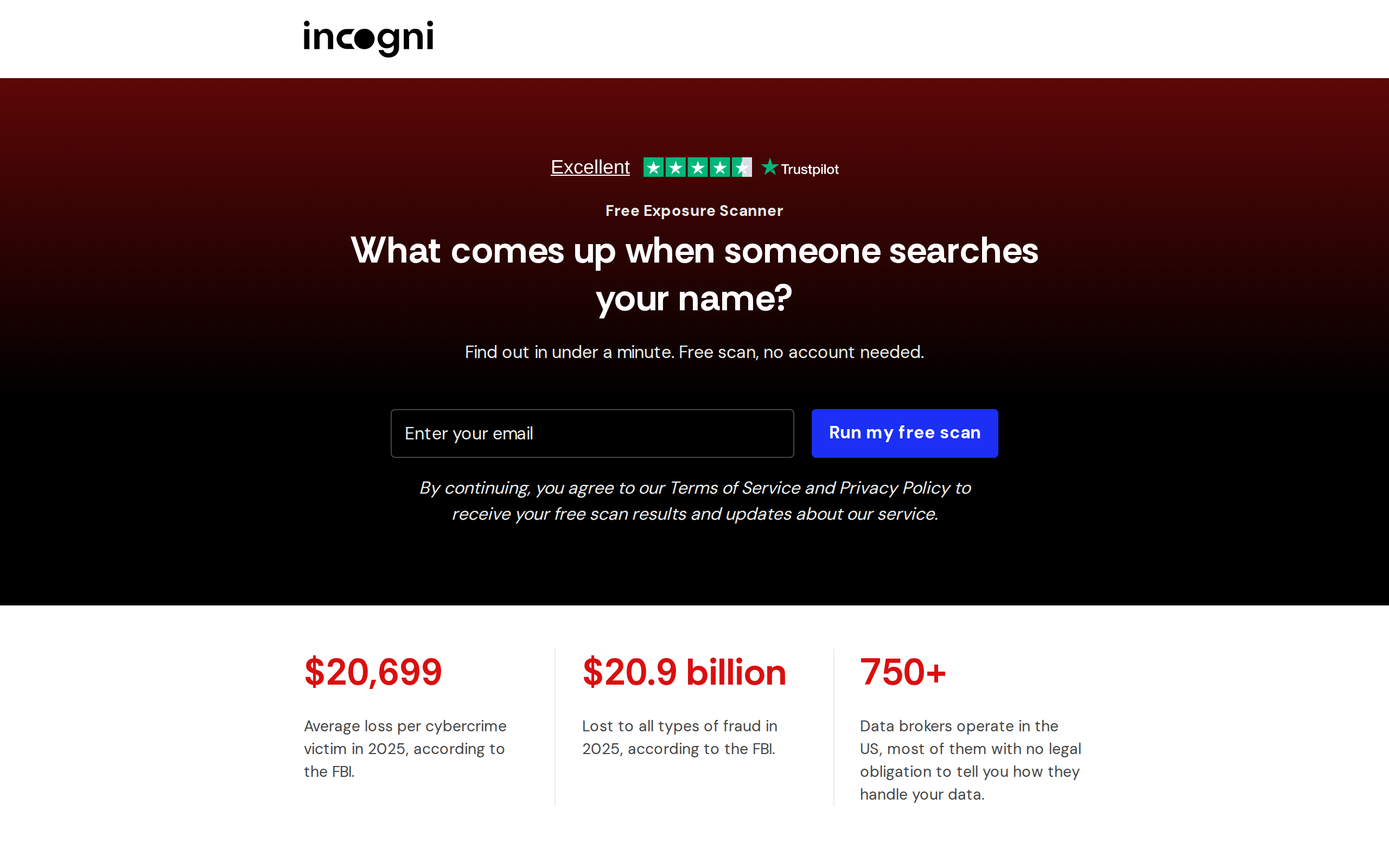
You do not need a card to see the size of the problem. Incogni's exposure page offers a free scan, no account needed, that shows what comes up when someone searches your name.
incogni.com
The free exposure scan page, which promises results in under a minute without an account.
Treat the scan as a sales funnel as well as a tool. It will always find something. Still, it is a useful baseline, and it costs nothing.
How fast removals really happen
Two independent testers published timelines we could compare.
Security.org saw 225 removal requests go out in the first week and 101 completed by the end of week two.
CyberInsider counted nearly 190 requests in week one, with roughly half marked completed or suppressed by day 7.
Those numbers agree on the shape: a quick burst, then a slow tail. Under privacy laws, brokers generally have 30 to 45 days to respond, so full results take four to six weeks. Custom removals on the higher plan took 7 to 30 days, and occasionally up to 60.
A dashboard lists each broker and its status. It does not hand you the legal paperwork behind each request, which CyberInsider flagged as a gap for people who like receipts.
What the plans cost
Pricing is two plans, billed annually.
incogni.com
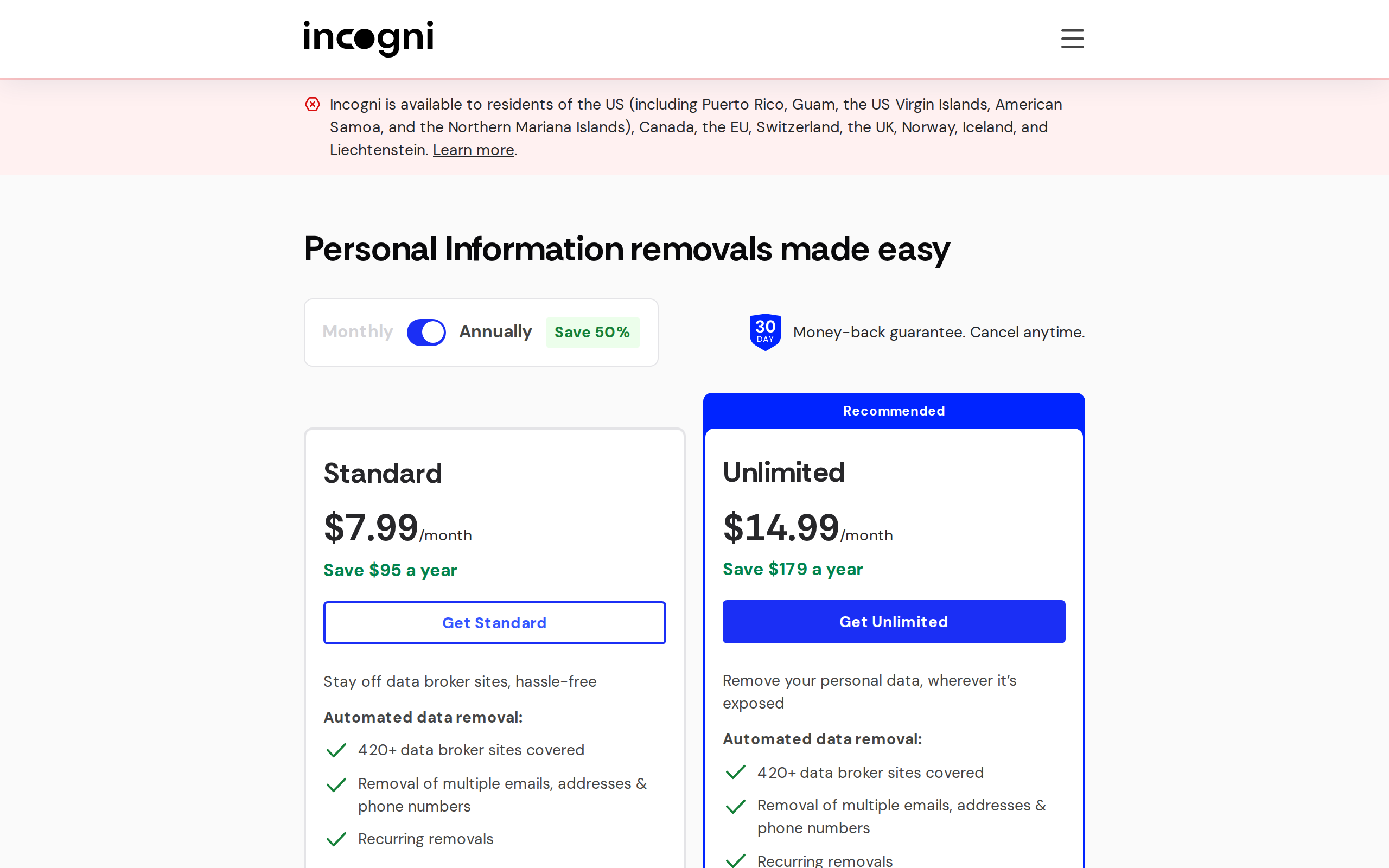
The pricing page: Standard and Unlimited, with coverage figures under each.
Standard: $7.99 a month billed annually, or $95.88 a year. Monthly billing runs about $15.98. It sends automated requests to the 420+ brokers.
Unlimited: $14.99 a month billed annually, or $179.88 a year. It adds unlimited custom removal requests for 3,000+ further sites, with specialist help and live phone support.
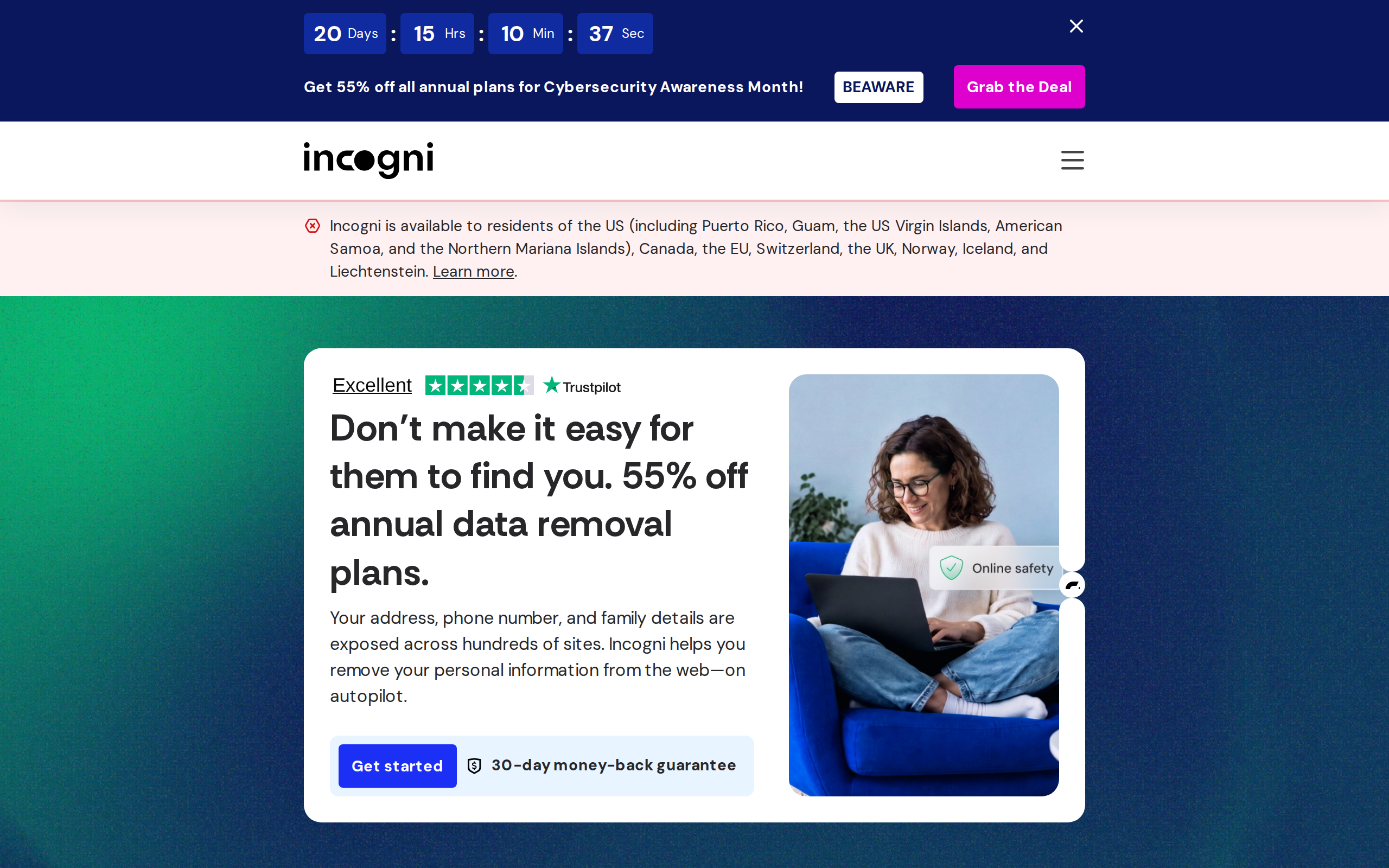
Both carry a 30-day refund and there is no free trial. Promotions, such as the 55% offer on the homepage when we visited, change the first-year price, so check the renewal figure. For most people, Standard is the right size. Unlimited makes sense if a stalker, a high-profile job or a harassment case means a particular site must go.
Coverage and the broker list
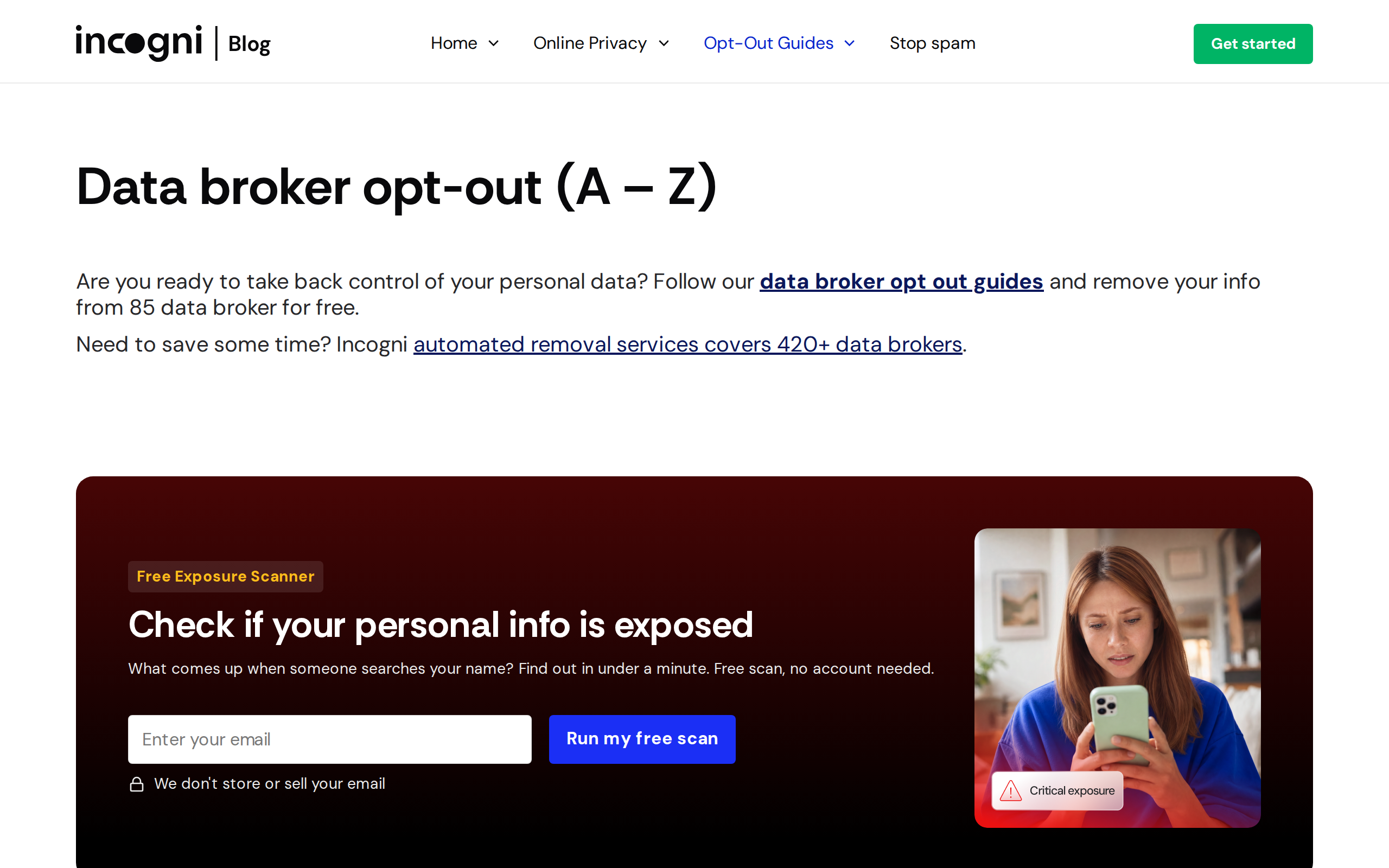
Incogni's own data-broker guide lists opt-out instructions for more than 85 brokers that you can follow for free. It says plainly that its automated service covers over 420.
incogni.com
The free opt-out guide, with a note that the paid service covers 420+ brokers.
That page matters to buyers. If you have a free weekend, you can do the top 85 yourself and keep the money. If your time is worth more than $96 a year, the subscription is cheap. And the rescans, every 60 to 90 days, are the part DIY rarely sustains, because profiles tend to reappear.
What it cannot do
Be clear about this before paying. Incogni does not remove social media posts, news articles, public court records or content on sites you control. It also does not cover every country: the pages say it is available to residents of the US and territories, Canada and a short list of other regions. CyberInsider noted that it has no dedicated mobile app.
Privacy and trust
You give a data-removal company your personal details so it can find them, which makes the privacy policy unusually important.
incogni.com
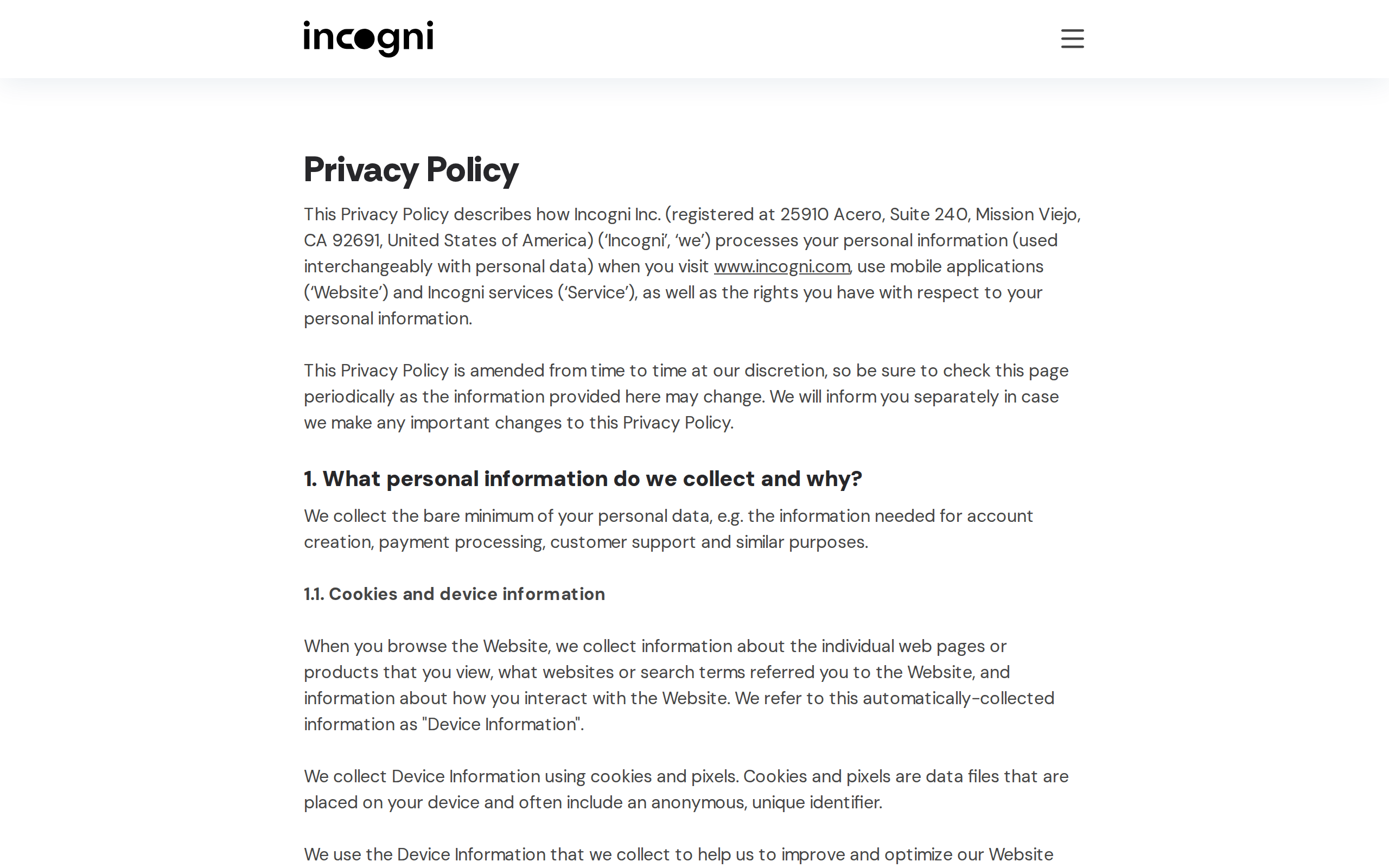
The Incogni privacy policy opens with what it collects and why.
Reviewers cite AES-256-GCM encryption, GDPR, CCPA and PIPEDA compliance, a 12-month purge after cancellation and a Deloitte verification that it does not resell data. These come from the maker and the testers who repeat it; read the policy yourself before you hand over a name and address.
Setting expectations
Expect to check the dashboard once a month, not once a day. The monthly progress reports tell you how many requests were sent and how many brokers have complied. A slow week does not mean the service is broken; it usually means a broker is working through its legal window. Judge Incogni at the three-month mark, after one full rescan cycle, not at day ten.
Verdict
Choose Standard if you want a steady, quiet way to shrink your exposure and do not mind waiting a month. Skip it if you expected a one-click scrub of the entire internet, or if you only need a handful of removals you could do yourself.