ExpressVPN Review: Three Tiers, Still the Priciest Mainstream VPN
ExpressVPN now sells Basic, Advanced and Pro plans, and the cheapest one is the only tier that makes sense for most people. We priced all three and checked the audits.
7.8 out of 10
Best for People who want a polished, audited VPN and accept paying more
By The Cipherwell Test Desk
expressvpn.com
The verdict
ExpressVPN is a fast, audited and polished VPN, but it charges more than rivals that do the same job. Only the Basic tier is worth buying for most people, because the extras in Advanced and Pro are bundled add-ons you may not want. The first-term price is good, and the renewal at $99.95 a year is where the premium shows.
What we liked
Servers in 113 countries, a wider footprint than most rivals
RAM-only TrustedServer design wipes server data on every reboot
Audits by PwC, Cure53 and KPMG, with reports published
Lightway, WireGuard and OpenVPN all available in the apps
30-day money-back guarantee on all three tiers
What held it back
Basic renews at $99.95 a year, far above the launch price
Advanced and Pro bundle extras many buyers will never use
Basic caps you at 10 simultaneous connections, not unlimited
Owned by Kape Technologies, which some privacy readers distrust
Most VPN reviews ask whether a service is good. With ExpressVPN the better question is narrower: is it good enough to pay roughly double what some rivals ask? Our answer is yes for the Basic plan, maybe for Advanced, and rarely for Pro.
What the new tiers actually change
ExpressVPN used to sell one product at one price. It now sells three, and the order page lays them out side by side.
expressvpn.com
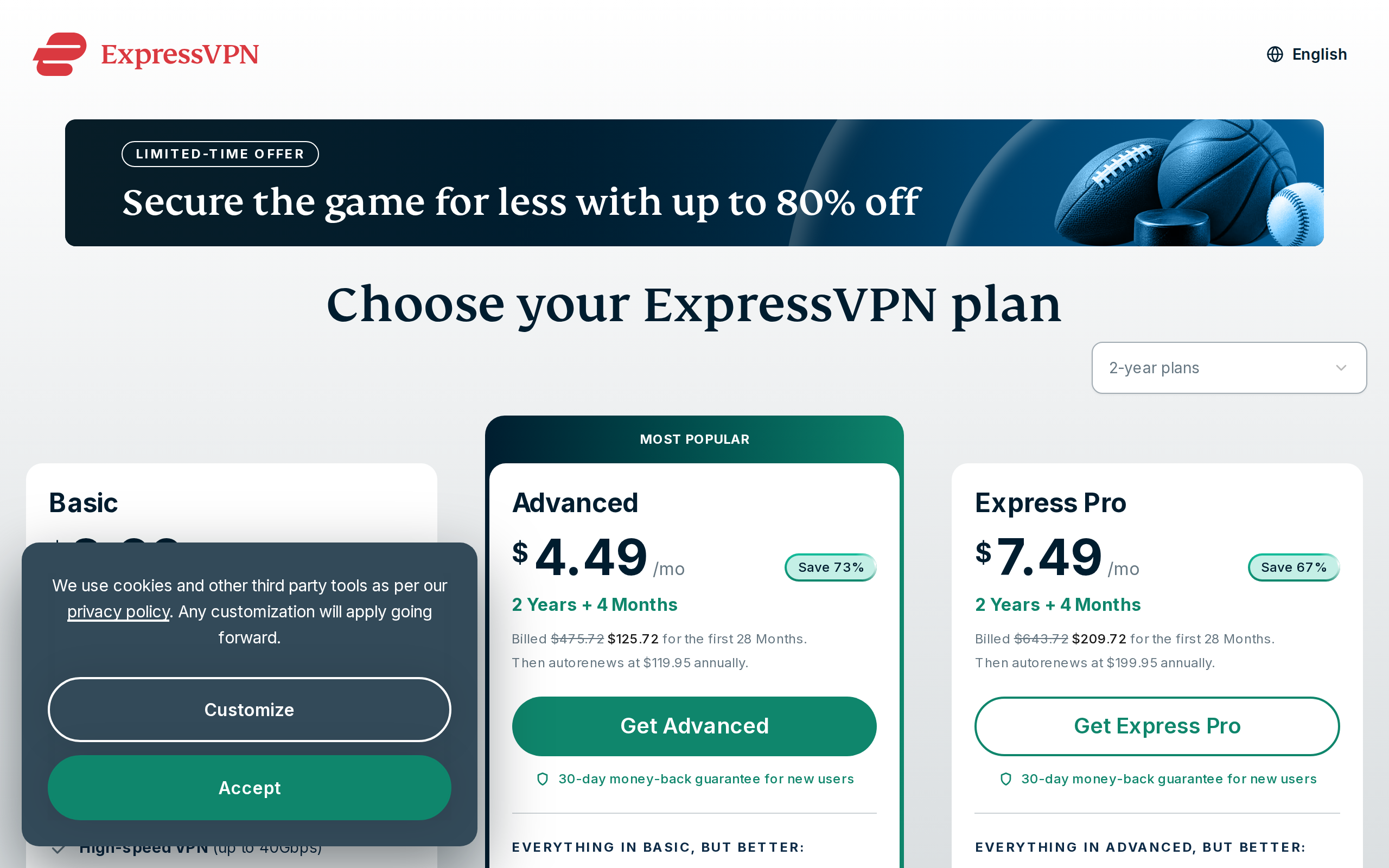
Basic, Advanced and Express Pro on the order page, with launch totals and the renewal line
Basic is the VPN itself: $2.99 a month billed as $83.72 for 28 months, 10 simultaneous connections, ad and malware blocking and a small 10 MB monthly email relay allowance. Advanced costs $4.49 a month ($125.72 for 28 months) and adds tracker blocking, a larger email relay, a bundled password manager with two-factor codes and a short eSIM data trial. Express Pro is $7.49 a month ($209.72) and includes a dedicated IP, unlimited email relay, custom domains and an AI assistant.
Here is our reading. The VPN is identical on every tier. You are choosing between add-ons, and each one competes with a product you can buy separately, often cheaper. A password manager that costs you $1.50 a month extra is not a bargain next to a free Bitwarden account. A dedicated IP is the only add-on with a clear VPN use, and only if you run something that needs a fixed address.
The renewal is the real price
The headline numbers apply to a 28-month first term. After that, the page states that Basic "autorenews at $99.95 annually", Advanced at $119.95 and Pro at $199.95. Basic works out to about $8.33 a month on renewal, almost three times the launch rate.
That is not unusual for the industry, and ExpressVPN does print the figure on the order page rather than hiding it. But it changes the maths. If you plan to keep a VPN for years, compare the renewal price, not the launch price. If you will switch every two years, the launch price is the number that matters, and the 30-day guarantee gives you a clean exit if the first month disappoints.
What you get for the premium
Money buys three things here, and they are real.
Footprint. The server page lists 113 countries. That is wider than most rivals, and it helps if you travel to places where VPN coverage is thin.
Server design.TrustedServer runs on RAM only, so data is wiped on every reboot and each restart loads freshly verified software.
Audit trail. ExpressVPN lists PwC, Cure53 and KPMG as auditors and says the reports are public. Few VPNs show that many names.
expressvpn.com
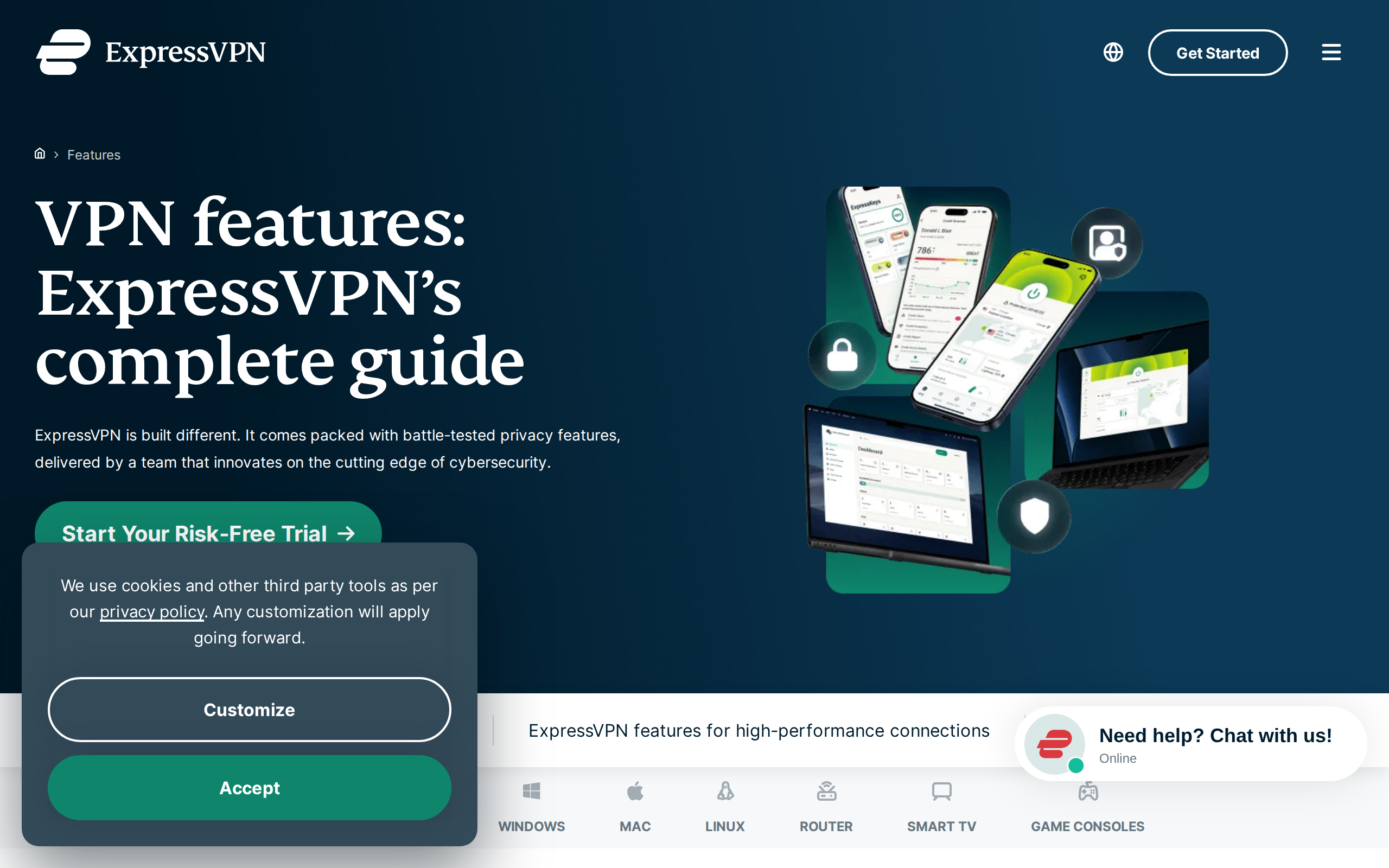
The features page covers protocols, split tunneling and device support in one guide
Speed is good. Independent reviewers such as Comparitech and Top10VPN report Lightway connecting in about two seconds and averaging roughly 150 Mbps in their tests, which is competitive rather than dominant. You can also choose WireGuard or OpenVPN if you prefer an open standard to ExpressVPN's own Lightway.
Where it stops being a bargain
The connection cap is 10 on Basic. Several rivals offer unlimited devices for less, which matters in a household with phones, tablets, a TV and a laptop each. ExpressVPN also belongs to Kape Technologies, a company with a history in ad-tech and security software. Audits address what the code does today, not who owns the company tomorrow, so the ownership remains a reason some readers pass.
expressvpn.com
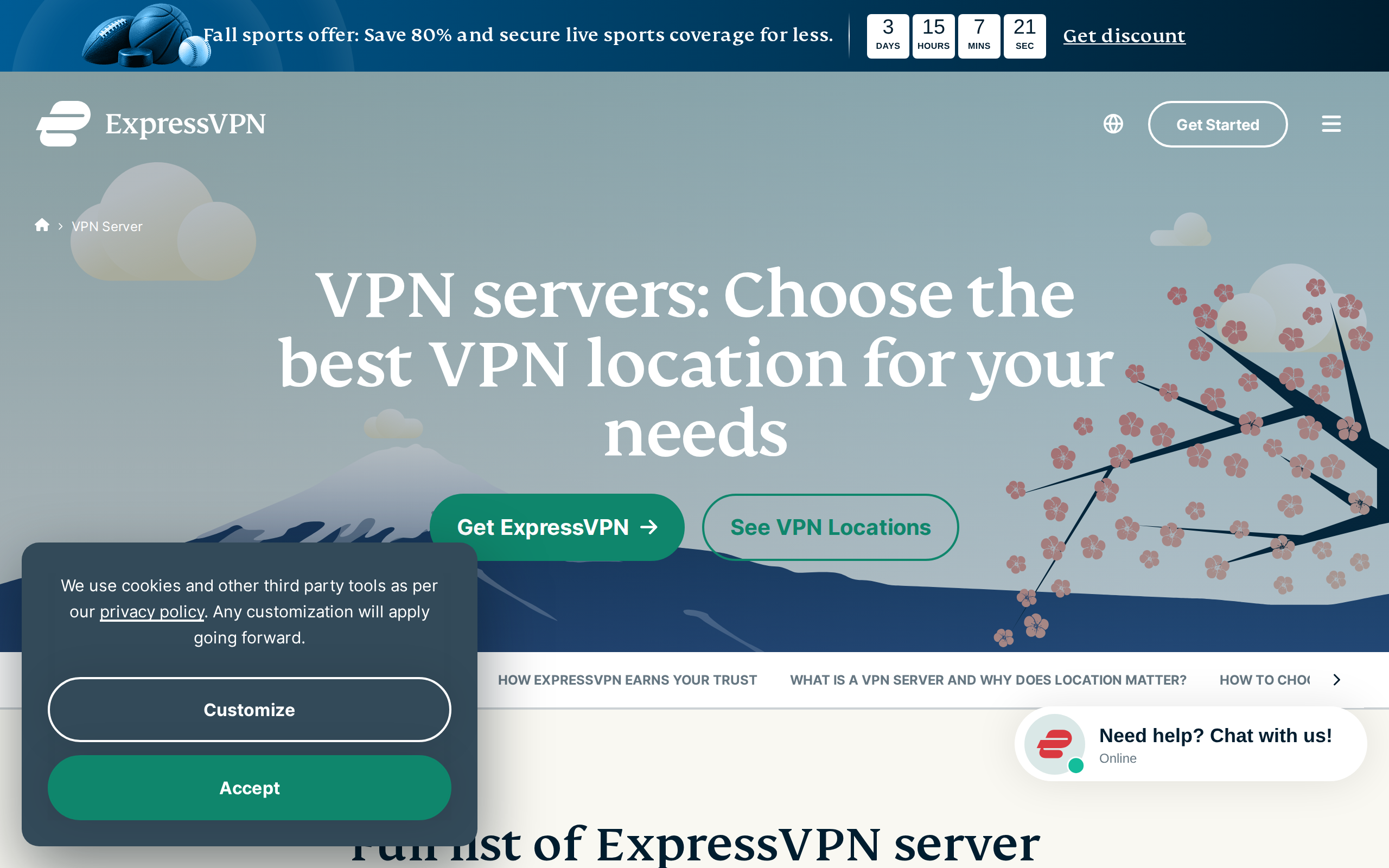
The server locations page headlines 113 countries and links to the full list
How it compares with the cheaper crowd
Put ExpressVPN next to NordVPN, Surfshark or Proton VPN and the gap is mostly about price and connection limits, not about whether the tunnel works. All of them offer WireGuard-class speeds and audited no-logs claims. ExpressVPN's argument is polish and reach: its apps are consistent across desktop, phone, TV boxes and routers, and its support has a reputation for answering quickly.
We would not call that argument weak. We would call it expensive. If you rarely travel and mostly want to stop your ISP profiling you or to watch a catalogue abroad, the extra $40 or so a year buys comfort rather than capability. If you do travel to restrictive countries, or you support family members who need things to just work, the comfort is worth money.
Who should buy it
Buy Basic if you want a VPN that works on routers, TVs and consoles without fuss, and you value the audit record. Skip Advanced unless you will really use the bundled password manager. Skip Pro unless you need a dedicated IP in the same plan. If your priority is the lowest long-term cost or unlimited devices, a cheaper rival will serve you better, and we say so plainly in the score.