Dewscope
Serums & Treatments3 min read
Differin Gel Review: How Rough Is the Purge, and When It Works
The only over-the-counter retinoid cleared for acne, adapalene 0.1%, from $15.99. It works slowly and irritates early, so we lay out the purge window, the 12-week test and the mistakes that make it worse.
Our verdict
Differin is the cheapest effective acne treatment you can buy without a prescription: a proven retinoid, FDA-approved for over-the-counter use in 2016, at a drugstore price. It is slow, dry and irritating for the first month, and it demands sunscreen and patience. Judge it at 12 weeks, not 12 days. Anyone with severe or cystic acne should see a doctor.
Best forMild to moderate acne and clogged pores, from age 12 up
What we liked
- Adapalene 0.1% is the first OTC retinoid approved for acne
- Costs a fraction of most prescription acne treatments
- One pea-sized amount covers the whole face once a day
- Also helps prevent new breakouts, not just treat existing ones
What held it back
- Dryness, redness, flaking and stinging are common in the first weeks
- Needs about 12 weeks before you can judge it fairly
- Daily sunscreen is essential and sun exposure should be limited
- Cannot be combined casually with acids or other drying products
Most acne products promise results by Friday. Differin tells you to give it twelve weeks, and the brand's own FAQ warns that your skin may look worse first. That honesty is the best thing about it. The second best thing is the chemistry: adapalene 0.1% is a retinoid that dermatologists prescribed for decades before it moved to the shelf.
We did not run a personal trial for this review. It rests on Differin's own pages, the FDA approval record as reported in the trade press, and independent guidance on how the first month goes.
What it is, and why it matters
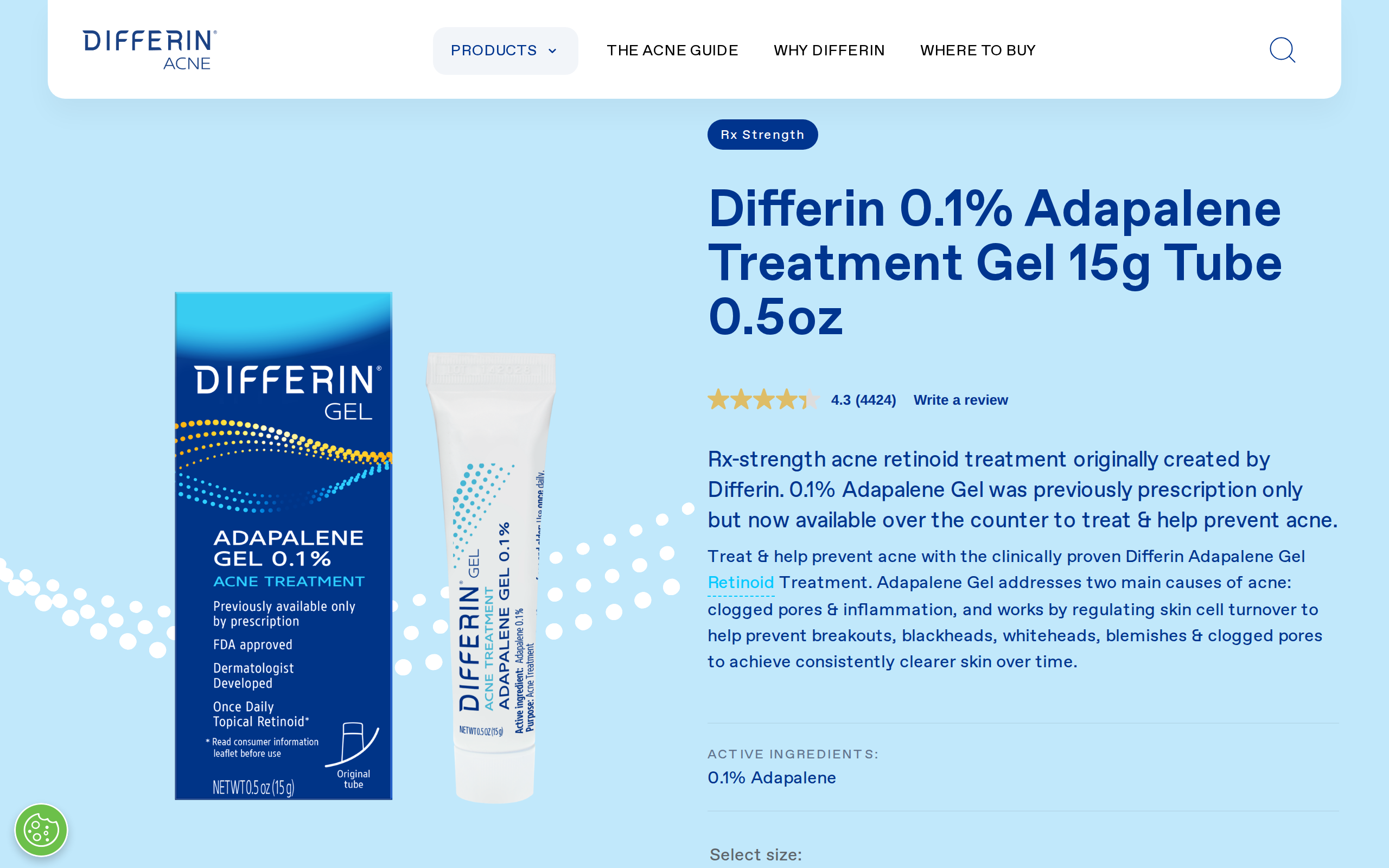
Differin Gel contains adapalene at 0.1%. The FDA approved it for over-the-counter acne treatment in July 2016 for people aged 12 and older, making it the first retinoid sold without a prescription for acne and the first new OTC acne active in decades. Approval was based on five clinical trials in people with mild to moderate acne, plus post-marketing safety data and a maximal-use trial.