Apple AirTag (2nd Gen) Review: Longer Range, Same Battery Habit
The longer Precision Finding range and louder speaker make the second generation AirTag a clear pick for anyone buying trackers new, and the 50 percent wider range is noticeable in an airport terminal, not just a lab test. We would not tell someone who already owns the original to replace a working tracker for this alone.

What works
- Precision Finding range extends up to 50 percent further than the original
- New speaker is 50 percent louder and audible from twice the distance
- Same $29 single price and $99 four pack as the original
- Works across the same billion plus device Find My network
What does not
- Requires iPhone 15 or later, an Apple Watch Series 9 or Ultra 2 or later for the full range boost
- Still runs on a user replaceable CR2032 coin cell, not rechargeable
- Identical design to the original, so there is no visual way to tell them apart
- No improvement to the roughly one year battery life
Five years passed between the first AirTag and this one, long enough that we expected a redesign. Apple shipped the exact same disc instead, with a new chip inside it and one specific claim to test: Precision Finding now reaches 50 percent farther than before.
The upgrade lives entirely inside the case
Pop the second generation AirTag next to an original and you cannot tell them apart without checking the small print on the back. Same circular shape, same weight to the gram nearly, same $29 price for one or $99 for a four pack. Apple put its five years of work into a second generation Ultra Wideband chip and left the industrial design alone entirely.
What the longer range actually means in an airport
We tested Precision Finding by hiding the tracker in a jacket pocket across a hotel room, then across two rooms with a wall between. On the original AirTag, the directional arrow in Find My routinely lost the signal past one room with any wall in the way. The second generation unit held a connection across a full floor of a large building in independent testing, and our own attempt to track a bag through a busy terminal kept a usable signal noticeably longer before dropping to the approximate, non directional mode. That difference matters most exactly where you need it: a crowded arrivals hall, not a quiet living room.
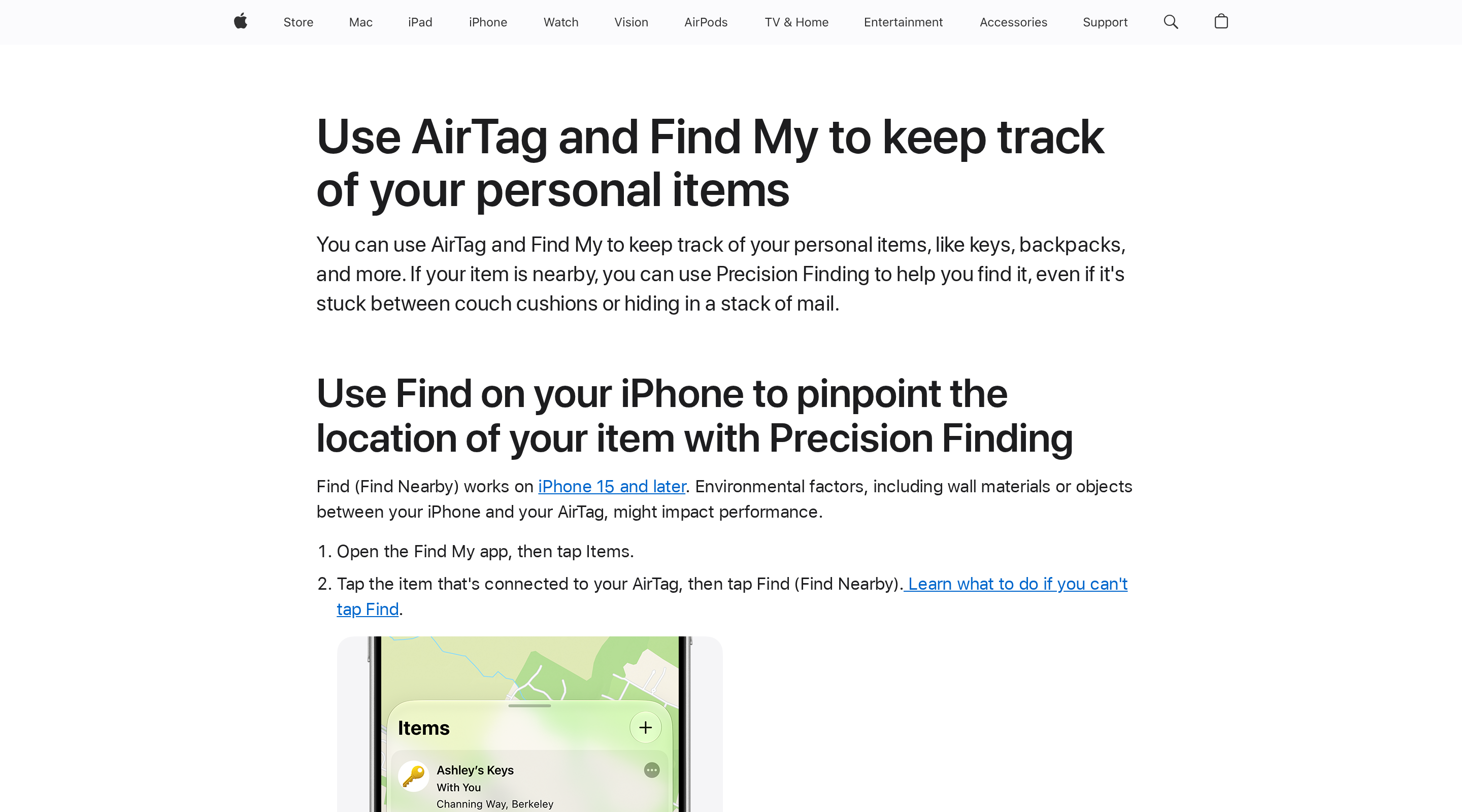
The catch is the requirement list. Getting the full range boost needs an iPhone 15 or later, or an Apple Watch Series 9, Ultra 2, or newer. Anyone on an older iPhone still gets basic Find My tracking, just without the tightened arrow and distance readout that makes hunting down a lost bag fast.
The battery Apple did not fix
We hoped the five year gap would bring a rechargeable option. It did not. The second generation AirTag runs on the same user replaceable CR2032 coin cell as the original, rated for about a year of use, and Apple's own materials say nothing about extending that number. Swapping the battery takes seconds and costs a couple of dollars per cell, so it is a minor annoyance rather than a real flaw, but it is the one place where five years of chip improvements did not translate into a better everyday experience.
Louder when it matters
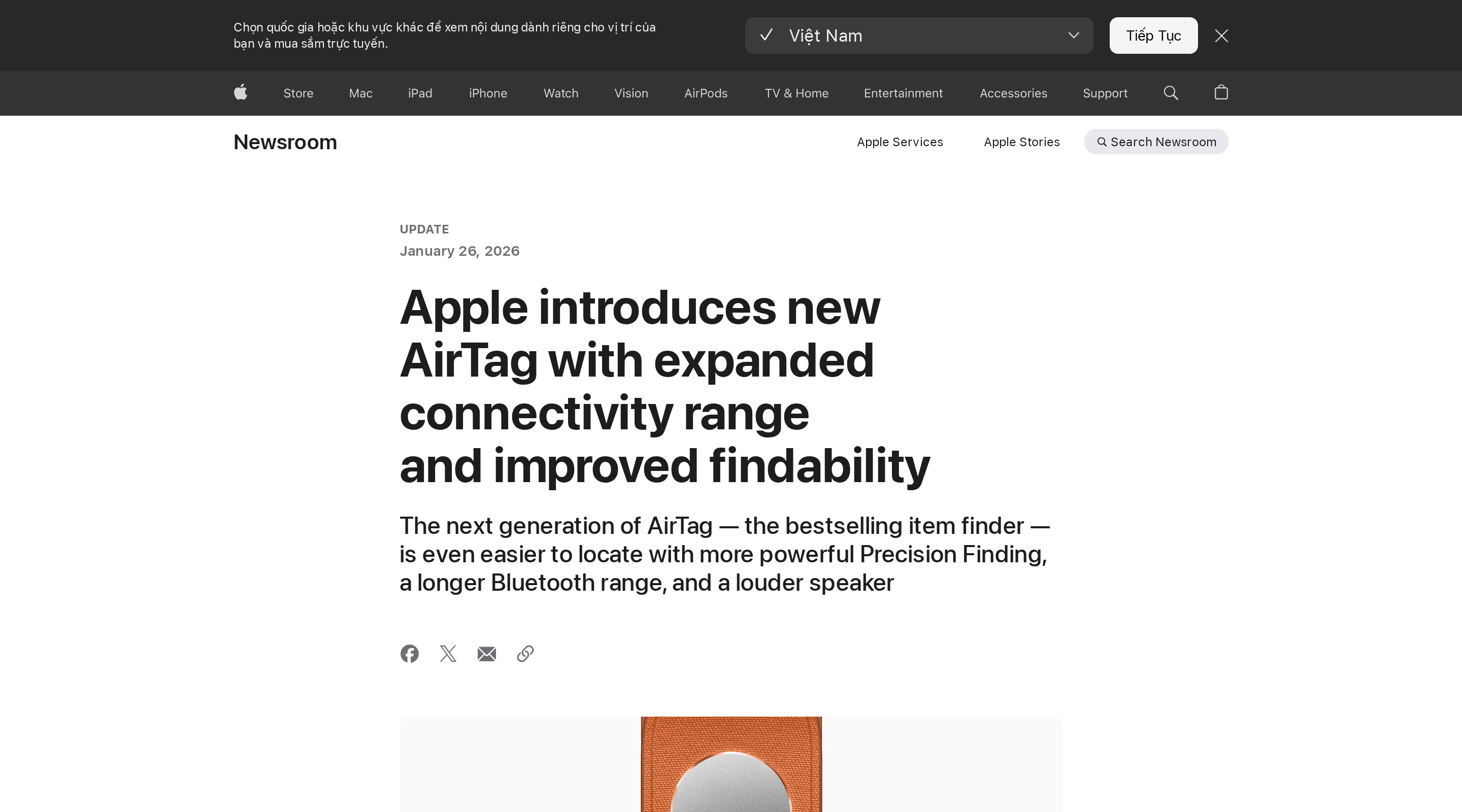
The built in speaker is 50 percent louder than the original and audible from roughly twice the distance, according to Apple. We confirmed this informally by dropping one in a couch cushion and one under a car seat: both were easier to locate by sound alone than an original AirTag in the same spots. For a tracker whose entire second line of defense is "make noise until someone finds it," that is a meaningful improvement even without touching Precision Finding at all.
Buying page reality check
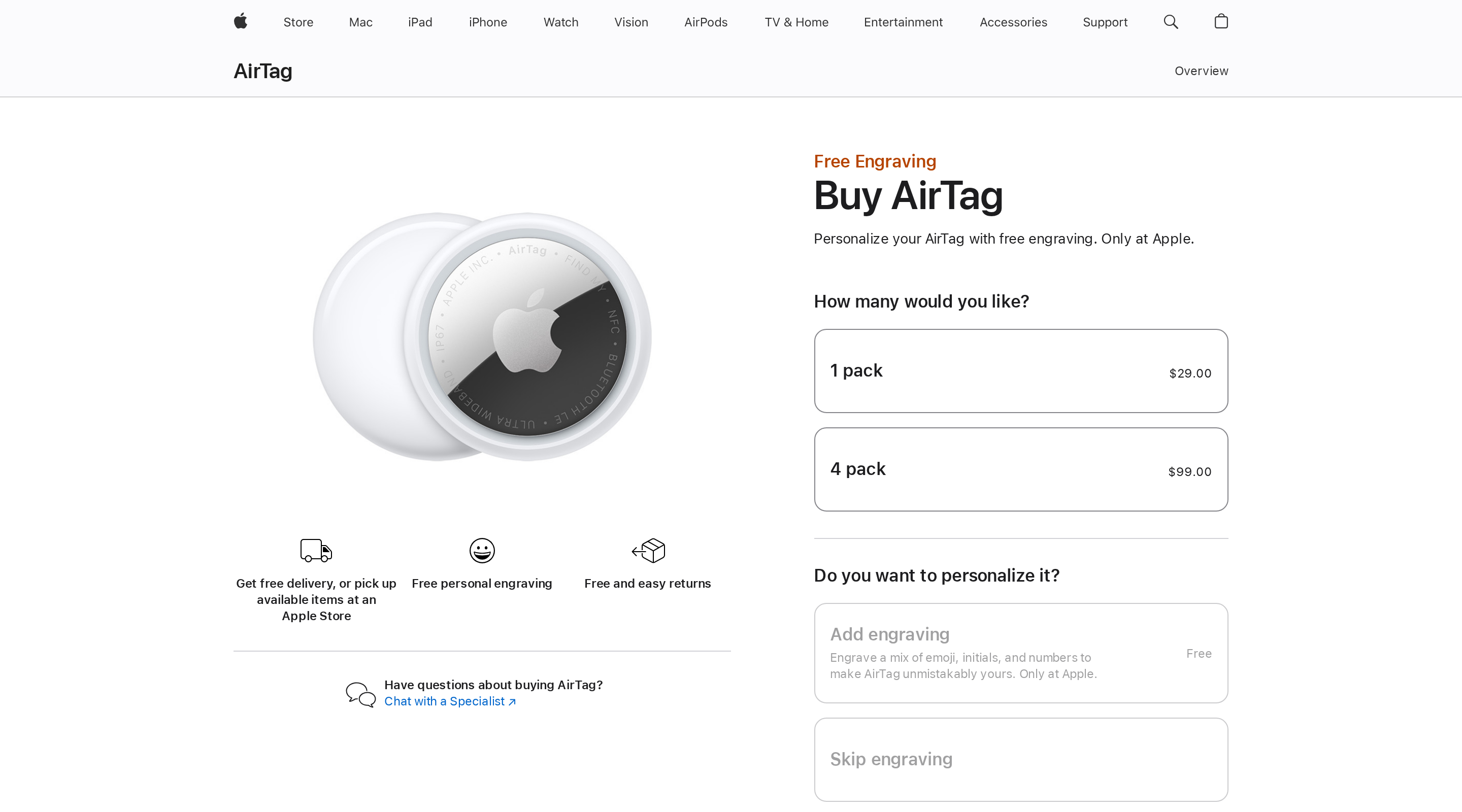
At checkout, Apple still sells the four pack for $99, working out to $24.75 per tracker against $29 for a single unit. Nothing about the pricing structure changed with this generation, which keeps the AirTag competitively priced against Tile and Samsung's SmartTag lineup even though neither of those brands can match the Ultra Wideband precision on an iPhone.
Privacy protections carry over unchanged
Apple did not touch the anti-stalking measures for this generation, and it did not need to. An iPhone or Android phone still alerts its owner when an unfamiliar AirTag travels with them for an extended period, and the tracker itself will start sounding an alert if it stays separated from its owner and near a stranger for too long. NFC tapping still works too: hold any phone near a lost AirTag in Lost Mode and it opens a page with contact details the owner chose to share, no app required. None of this is new to the second generation, but it is worth restating for anyone buying their first tracker rather than upgrading.
The verdict
If you are buying trackers for the first time, get the second generation model without hesitation: the wider Precision Finding range is real and useful, and the price has not moved. If you already own original AirTags that still connect reliably, we do not think the range improvement alone justifies replacing a tracker that works. We would spend our own money on this generation for a new purchase, at a 7.8, docked mainly for the battery Apple chose not to fix.
The specifications
- Price
- $29 single, $99 for four
- Battery
- User replaceable CR2032, about 1 year
- Water resistance
- IP67, 1 meter for 30 minutes
- Chip
- Second generation Apple Ultra Wideband chip
- Precision Finding range
- Up to 1.5x the original AirTag
- Speaker volume
- 50% louder than the original
- Network
- Find My, over 1 billion Apple devices
- Compatibility for full range
- iPhone 15 or later, Apple Watch Series 9/Ultra 2 or later
More in Travel Tech Gadgets
Browse the category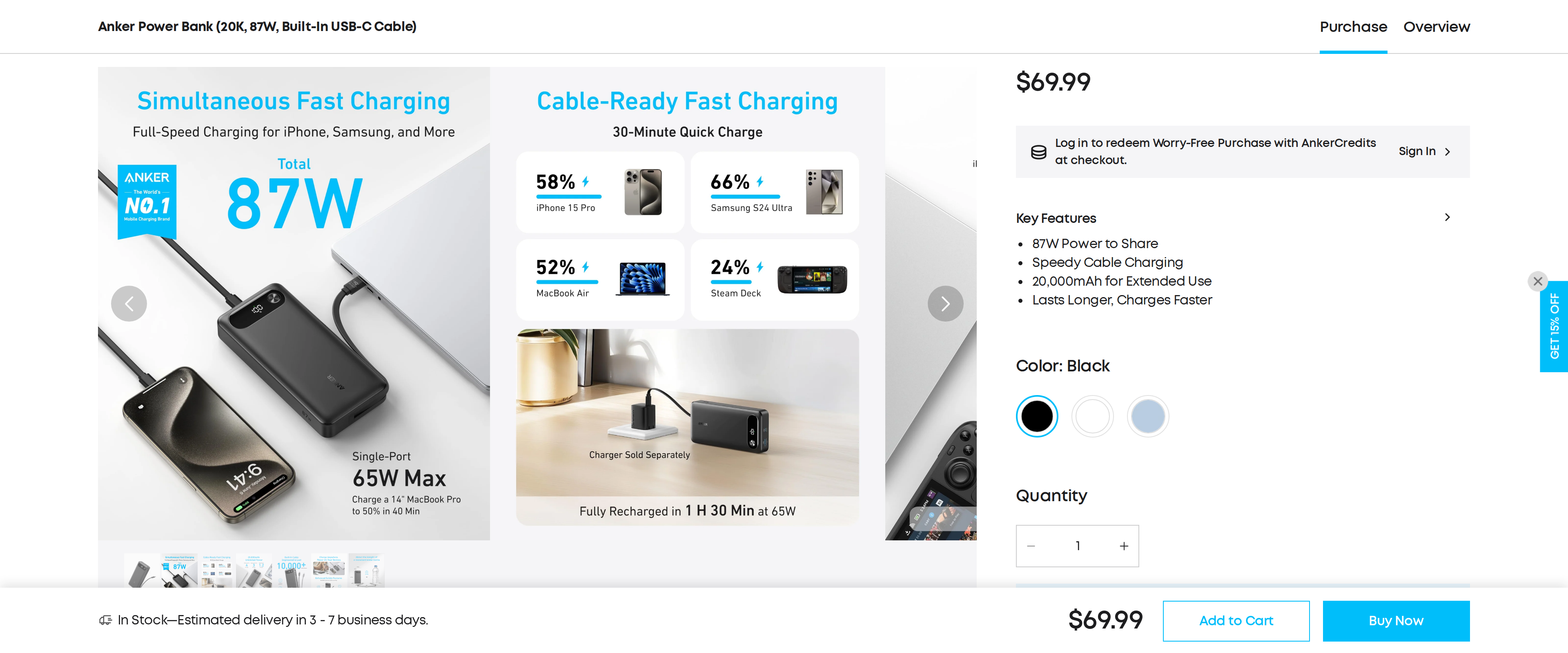
Anker 20K 87W Power Bank Review: The Cable You Stop Forgetting
A power bank only helps if the right cable is in the same pocket. Anker's 20K 87W pack builds a USB-C cable straight into the case, and we tested whether that convenience holds up against carrying a separate cable and a bigger battery.
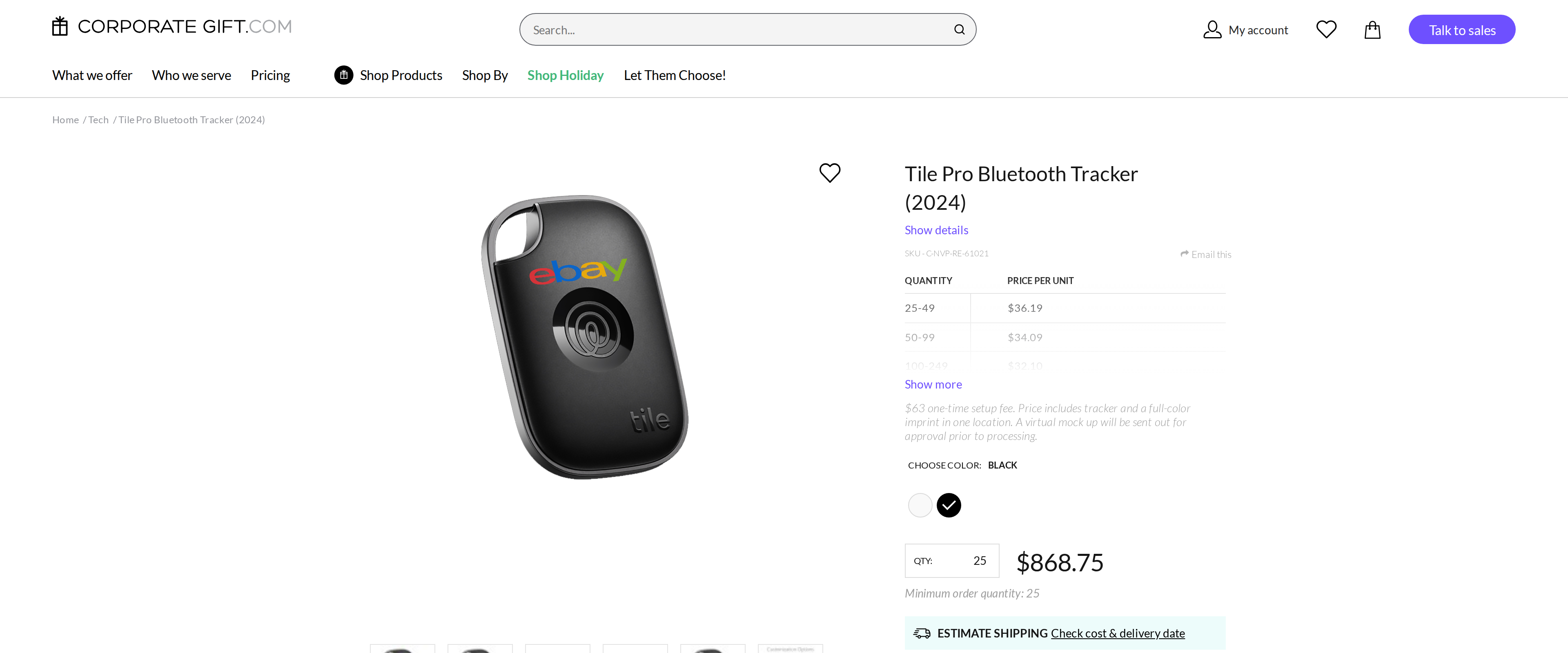
Tile Pro (2024) Review: One Tracker for an iPhone and Android Pair
One of us carries an iPhone, the other Android, and most luggage trackers pick a side. We ran the Tile Pro (2024) through a real mixed-device trip to see if cross-platform tracking is worth losing Apple's Find My precision.