Airbnb Review: Do the Fees Still Beat a Hotel for a Week?
Airbnb loses the math on a two-night city trip once the cleaning fee lands, but the same fee gets buried by night five or six and the platform pulls ahead of two hotel rooms by a real margin. We would book Airbnb for a week or longer with a group, and skip it for anything under four nights unless the listing waives the cleaning fee.
What works
- Per-night cost drops sharply as stay length grows since the flat cleaning fee gets spread thin
- Full kitchens cut meal costs on trips longer than a few days
- Multi-bedroom listings beat booking two hotel rooms by hundreds of dollars on a week-long family trip
- Price breakdown shows the service fee and taxes before you confirm, no surprise at checkout
What does not
- Guest service fee runs 14.1 to 16.5 percent of the booking subtotal, higher than most hotel booking fees
- Cleaning fees of $75 to $200 make a one or two night stay a bad deal almost every time
- Host cancellations remain a risk that a hotel brand simply does not carry
- Listing photos and amenities vary host to host, so quality is not standardized the way a hotel chain is
Every Airbnb booking starts the same way for us now: quote the nightly rate, then brace for what the price breakdown adds on the next screen. The question worth answering is not whether those fees exist. It is whether they still leave Airbnb cheaper than a hotel once a trip runs a full week.
The fee that changes everything
Airbnb charges guests a service fee of 14.1 to 16.5 percent of the booking subtotal, higher on international bookings paid in a different currency than the host's listing. On top of that sits a cleaning fee set by the host, commonly $75 to $200 per stay, charged once no matter how many nights you book.
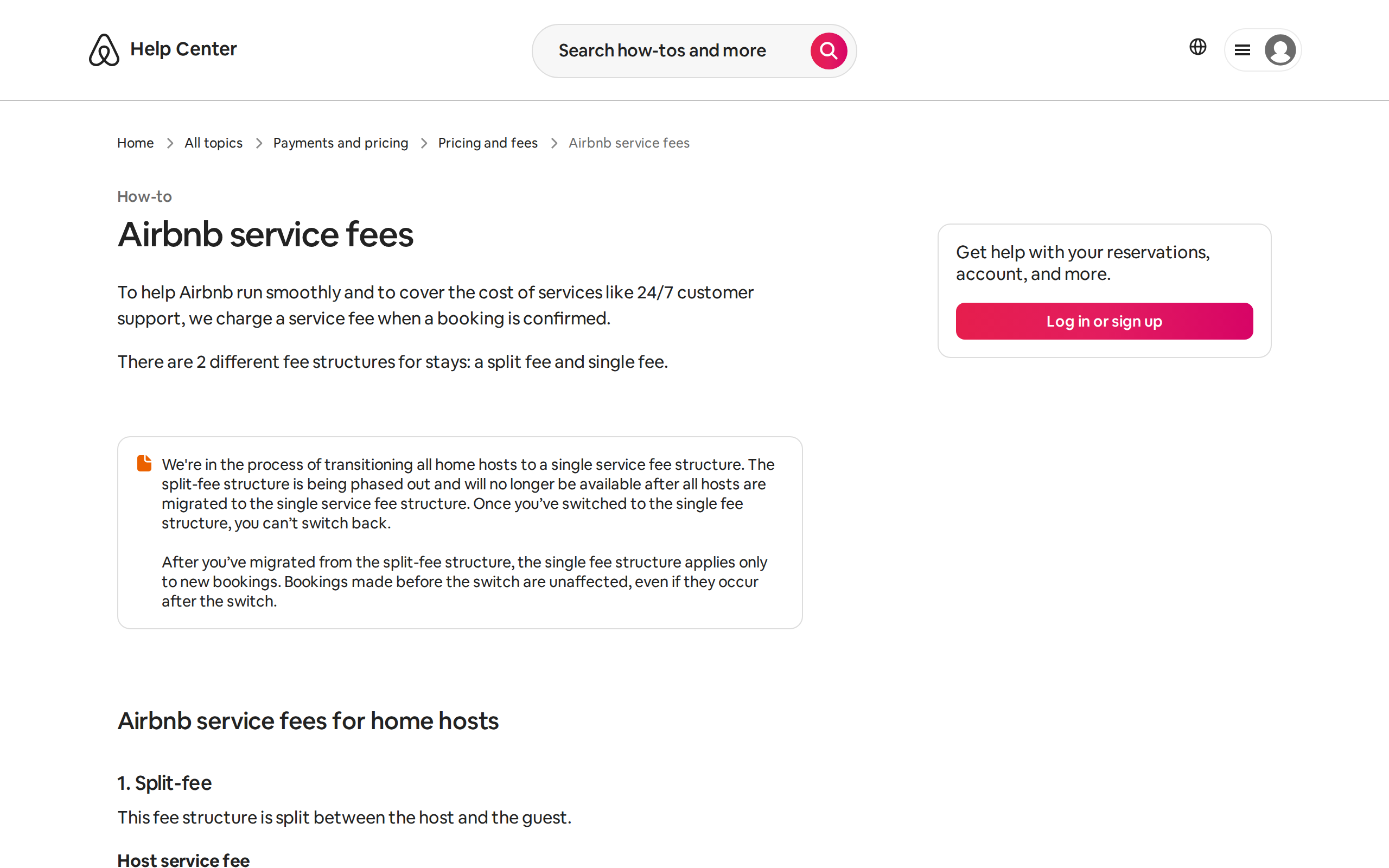
That flat cleaning fee is the whole story on a short trip. Book two nights and a $150 cleaning charge adds $75 a night to whatever the listing quotes, often wiping out any savings over a hotel room in the same neighborhood. Book seven nights and that same $150 becomes about $21 a night, a rounding error next to what you would pay for parking at most hotels.
Running the numbers on a week
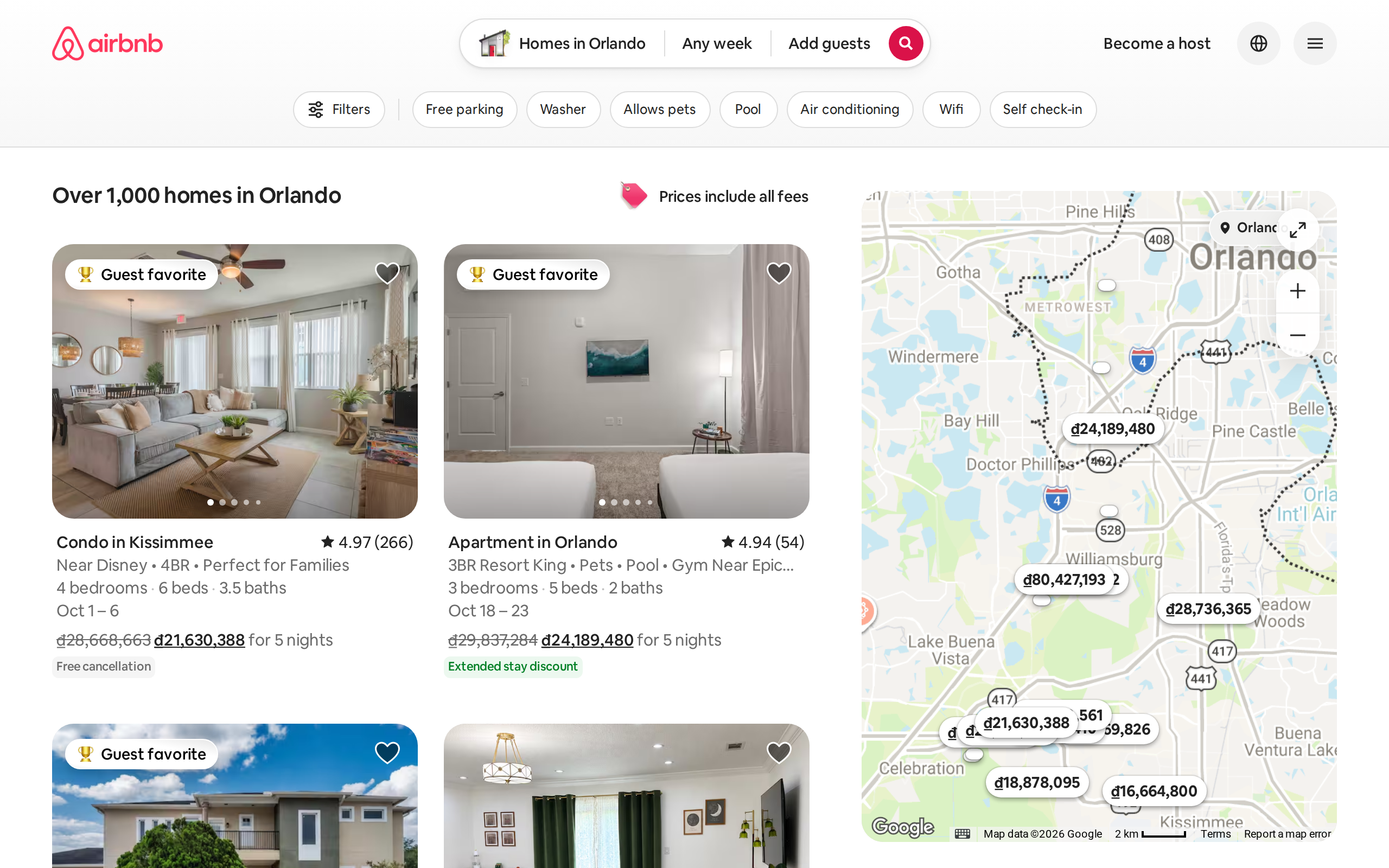
We priced a two-bedroom Orlando listing against two hotel rooms for a five-night family trip, the scenario where Airbnb is supposed to win outright. The Airbnb math: $247 a night for five nights plus a $160 cleaning fee, taxed and fee-loaded to $1,790 total. Two hotel rooms for the same five nights came to $2,239. That is a $449 gap, roughly 20 percent, in Airbnb's favor, and independent market data puts the same Orlando comparison at $713 saved once the trip stretches to seven nights.
Zoom out to a wider study of 28 US markets and the pattern holds direction if not always this margin: Airbnb wins in 22 of those 28 markets at seven nights, up from 19 of 28 at three nights. The trend line only moves one way as the stay gets longer.
What the extra money buys, beyond the room
A kitchen changes trip economics in a way a mini fridge and a coffee maker cannot. A family that cooks four dinners out of seven cuts a meaningful chunk from what a hotel stay would cost in restaurant bills, and that saving does not show up in the nightly rate comparison at all. Laundry in the unit matters just as much on a trip longer than five days, since it means packing lighter and skipping a hotel's per-load laundry fee entirely.
None of that shows up if the listing is a studio with a hot plate. The math in this review assumes a real kitchen and at least one separate bedroom, which is the segment where Airbnb actually beats a hotel room for room. A studio competing against a single hotel room on a short trip is a much closer, and often losing, comparison.
Where it still goes wrong
Host cancellations remain the platform's weakest point. A hotel chain absorbs a no-show or an overbooking internally and rebooks you into an equivalent room, often within the same building. An Airbnb host who cancels leaves you searching a different platform from scratch, sometimes with less than 48 hours' notice.
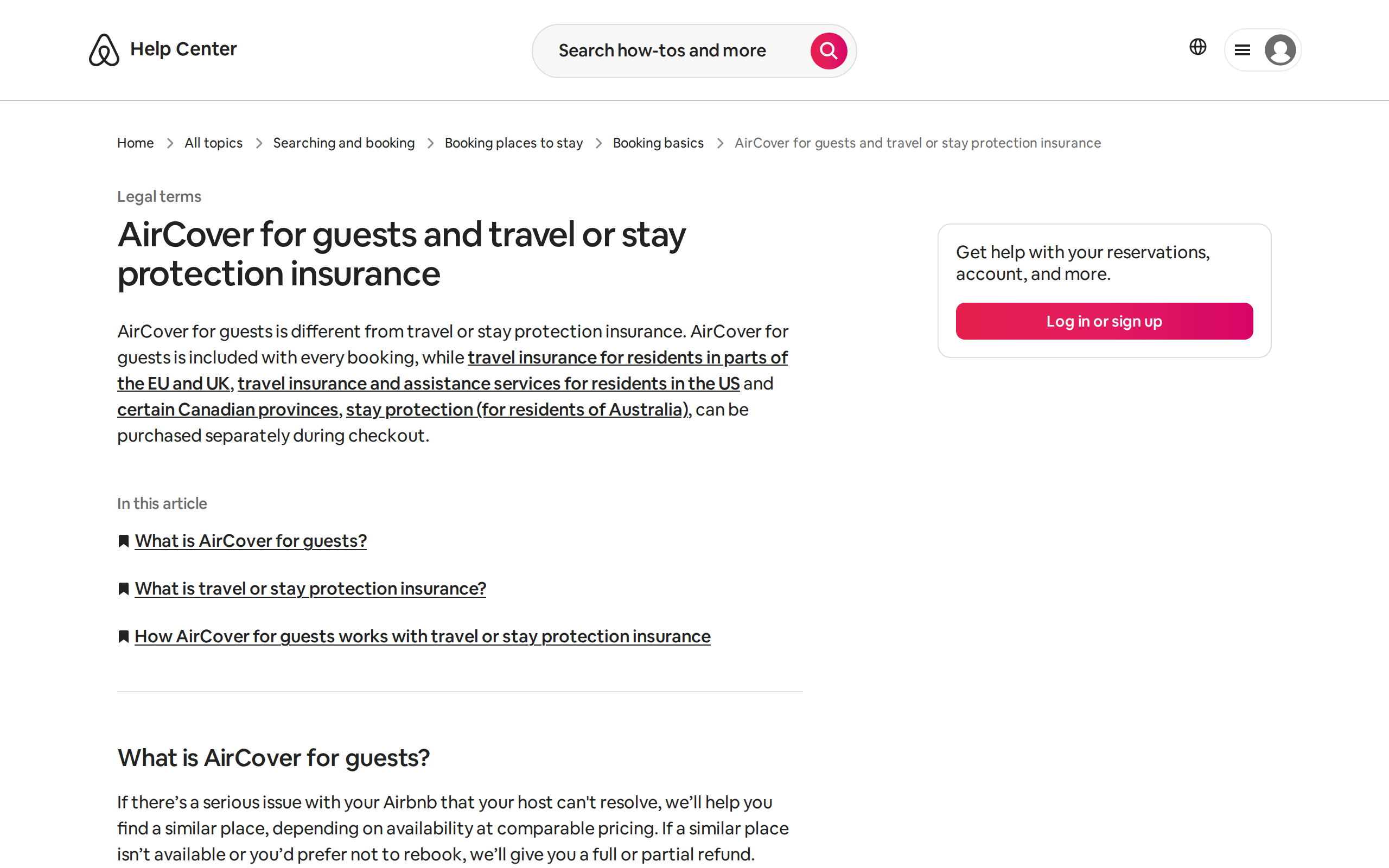
Airbnb's answer is AirCover, included free on every booking, which promises help finding a similar place at comparable pricing if a host cancels or the listing turns out to be seriously misrepresented, with a refund if no match is available. It has worked when we needed it, but it is a rebooking service, not a same-day fix. There is no front desk to walk up to when a host cancels the morning of check-in.
Listing quality also varies more than a hotel brand ever would. Two five-star listings on the same street can differ wildly in how accurately the photos match reality, and there is no chain standard holding either one to a baseline. Reading the most recent reviews, not just the overall score, catches most of this before you book.
The verdict
Airbnb's fee structure punishes short trips and rewards long ones, plainly enough that the length of your stay should decide whether you open the app at all. Under four nights, book a hotel and skip the math. Five nights or more with a group that needs real space, and the platform pulls ahead by a margin worth chasing, cleaning fee and all.
The specifications
- Guest service fee
- 14.1% to 16.5% of booking subtotal
- Cleaning fee range
- $75 to $200, set by host
- Average nightly rate (2026)
- $156, versus $208 for a hotel
- Break-even point
- Airbnb wins in 22 of 28 tested markets at 7 nights, versus 19 of 28 at 3 nights
- Example saving
- Orlando 2BR, 5 nights: $1,790 all-in versus $2,239 for two hotel rooms
- Cancellation policy
- Set per host: flexible, moderate, or strict
- Platforms
- Web, iOS, Android
More in Vacation Rental Platforms
Browse the category
Vrbo Review: Is the Whole Home Guarantee Worth It for Families?
We read Vrbo's Book with Confidence guarantee against its actual cancellation policy, compared its whole-home-only listings to Airbnb's mixed shared room inventory, and checked what a family gets if a host cancels close to a trip.

Plum Guide Review: Does the Vetting Justify the Premium?
Plum Guide rejects 97 percent of the homes that apply to list, then charges more than Airbnb for the ones that pass. We checked what its 500-point Plum Test actually screens for and whether the smaller, pricier inventory beats scrolling Airbnb yourself.