The verdict
A properly serious professional haircare brand whose bonding and colour-protection lines hold up against much more expensive specialists. The range is too large and the retail versions are not always the salon versions, but the good lines are genuinely good.
What works
- Acidic Bonding Concentrate is a real bond-care system at a fraction of specialist pricing
- Sixty years of protein/moisture balance work shows in formulas that do not over-protein
- All Soft is one of the better mass moisturising lines for coarse hair
- Wide stylist training network means informed recommendation is actually available
What does not
- The catalogue runs to dozens of lines with overlapping purposes
- Retail and salon formulations are not always identical under the same name
- Ingredient transparency is minimal even for a professional brand
- Not cruelty-free; sells in markets requiring animal testing
Redken was founded in 1960 by the actor Paula Kent and the hairdresser Jheri Redding, and its whole intellectual contribution is a single idea: hair needs protein and moisture in balance, and most hair problems are a failure of one or the other. Too much protein and hair goes brittle and snaps. Too much moisture and it goes limp and mushy.
That sounds like marketing. It is actually a useful diagnostic framework, and it is the reason Redken's formulas tend not to make the classic mistake of a repair product — loading protein into hair that is already protein-saturated and making it worse.
Acidic Bonding Concentrate
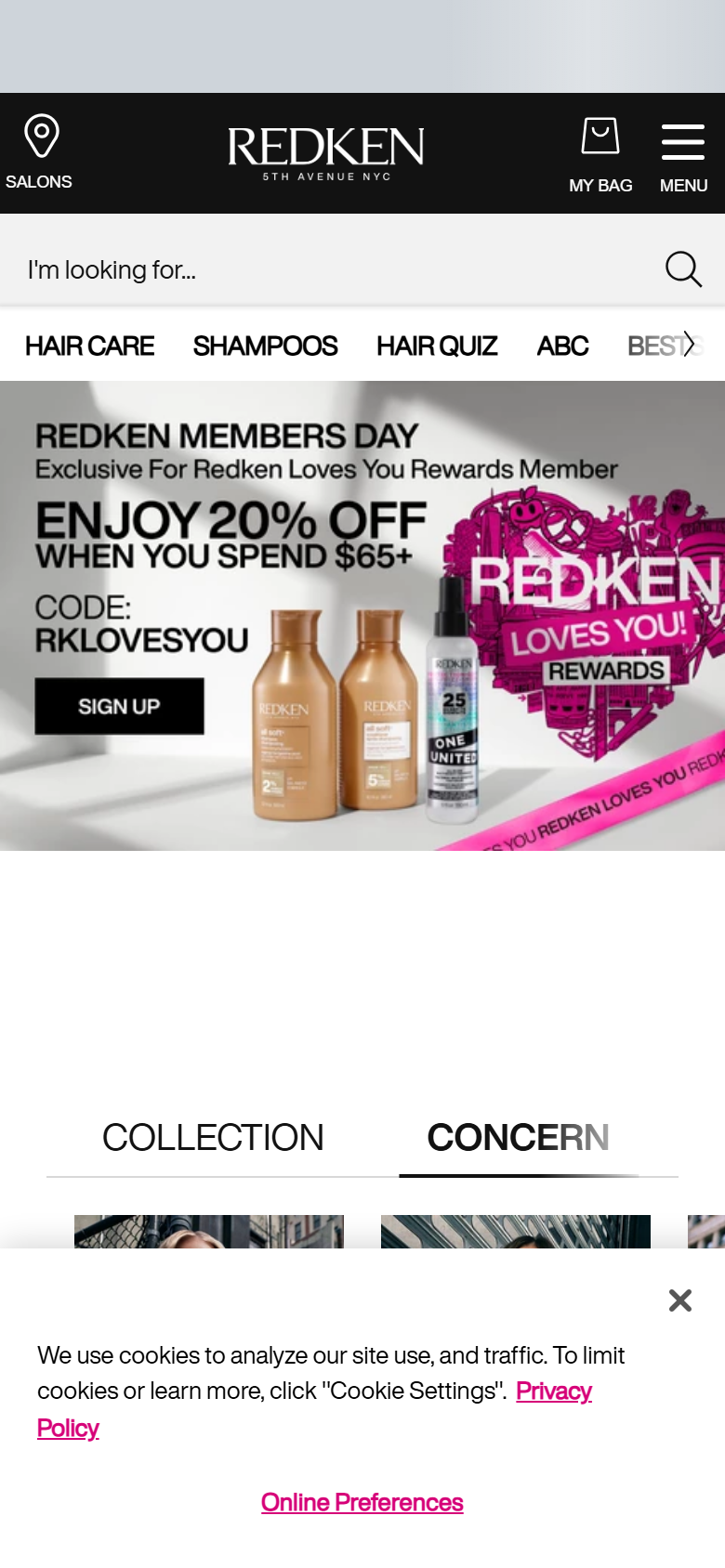
This is the line to buy. ABC is Redken's bond-care system, built around citric acid at a low pH that helps re-form hydrogen and salt bonds and flattens the cuticle. It also uses a bonding care complex the brand markets under its own name.
It is not the same chemistry as Olaplex — it is not reforming disulphide bonds — but for the everyday problem of colour-treated hair that is fading, rough and losing strength, it does the job, and it does it at roughly $28 for the shampoo rather than the $75 a specialist charges for a mask. The Intensive Treatment and the Leave-In Treatment are the two most worth having.
For most people with coloured hair, this is the more sensible purchase than a bond specialist. For genuinely bleached, breaking hair, it is not enough on its own.
The other lines worth knowing
All Soft is the moisturising line, built on argan oil, and it is one of very few mass-available lines that genuinely handles coarse, dry hair rather than just perfuming it. All Soft Heavy Cream is a properly rich mask.
Extreme is the protein line for damaged hair. It works and it is the line most easily over-used: Redken's own framework tells you that too much protein is a problem, and Extreme used every wash on hair that does not need it will produce exactly that. Alternate it with All Soft.
Color Extend Magnetics and Blondage cover colour maintenance, with Blondage being a purple-toning line that is more effective than most at neutralising brass without turning hair lilac.
Brews is the men's line and is essentially the same chemistry in different bottles.
The catalogue problem
There are a great many Redken lines, and the boundaries between them are not always meaningful. Acidic Bonding Concentrate, Extreme, Extreme Length, Extreme Bleach Recovery, All Soft, All Soft Mega — a stylist can navigate this; a shopper in a supermarket aisle cannot. The brand's own good idea, protein/moisture balance, would be better served by five lines than by twenty.
Salon versus retail
This is worth flagging because it affects what you are buying. Professional haircare brands frequently sell different formulations through salon and mass channels under the same line names, with the mass version using cheaper surfactants or lower active levels. Redken does not publish a clear statement about this. Buying from a salon or an authorised professional retailer is the safer route if you want the formula a stylist recommended.
Protein and moisture, in practice
Redken's founding idea is genuinely useful once you know how to apply it, and almost nobody explains how, so:
Signs of too much protein: hair feels rough, straw-like and stiff when dry; it snaps rather than stretches when you pull a strand; styling products stop absorbing. The fix is to stop using repair and bond products for two or three washes and use a moisturising mask instead.
Signs of too much moisture: hair feels spongy and limp, takes forever to dry, stretches a long way when wet and does not spring back, loses curl definition. The fix is a protein treatment, then back off.
A simple test: take a wet strand and pull gently. Healthy hair stretches a little and returns. Hair that snaps immediately needs moisture. Hair that keeps stretching and stays stretched needs protein.
This is the diagnostic Redken has been teaching stylists for six decades, and it is worth more than any individual product in the catalogue. It also explains why alternating between Extreme and All Soft works better than committing to either.
Transparency and ethics
Transparency is weak: INCI lists only, no concentrations, no discussion of formulation trade-offs despite a brand identity built on a formulation idea.
On ethics, Redken is not cruelty-free and sells in markets that require animal testing. It is a L'Oréal brand and has been since 1993. Both facts are available rather than hidden, which is why the score is 7.0 rather than lower.
Price
$24 to $46. Acidic Bonding Concentrate in particular is strong value against specialist bond brands, and the large 1-litre salon sizes bring the per-wash cost down substantially if you find a line that works.
The verdict
Buy Acidic Bonding Concentrate if your hair is coloured. Buy All Soft if it is coarse and dry. Use Extreme sparingly and alternate it. Ignore about two-thirds of the catalogue.
It is not a glamorous brand. It is a competent one, and in haircare that is rarer.
Prices, formulas and ownership were checked against the brand's own site on April 9, 2026 and change without notice. Screenshots in this review were captured by Shelfproof from public pages. Cosmetic ingredients affect people differently — this is consumer research, not medical, dermatological or legal advice.