The verdict
A competent heavy occlusive moisturiser wrapped in the most expensive story in beauty. The Miracle Broth narrative is unfalsifiable, the ingredient list is unremarkable, and the price is the highest-per-benefit ratio in this entire review.
What works
- It is a genuinely effective occlusive for very dry, compromised skin
- The texture, once warmed, is distinctive and pleasant to apply
- Formulation is stable and the products are consistently made
- The Blue Heart ocean conservation fund supports real marine research
What does not
- Around $380 for 60 ml of what is fundamentally petrolatum, mineral oil and kelp ferment
- The Miracle Broth origin story cannot be independently verified in any respect
- Fragrance in a product marketed for compromised and post-procedure skin
- Nothing in the ingredient list supports the efficacy claims made for the price
The story
Max Huber, an aerospace physicist, was burned in a laboratory accident. Over twelve years and six thousand experiments he developed a cream from fermented sea kelp that healed his scars. The fermentation process — the Miracle Broth — takes three to four months, uses sound and light energy, and cannot be rushed.
That is the story La Mer tells. Almost none of it is independently verifiable. Huber's credentials, the accident, the six thousand experiments and the healing all rest on the company's own account. There is no published research, no clinical trial, no third-party corroboration of any element.
We are not saying it did not happen. We are saying that the entire price premium of the most expensive mass-luxury skincare brand in the world rests on an unsourced anecdote, and that is worth knowing before you spend $380.
What is actually in it
The ingredient list for Crème de la Mer is public. The top of it, in order, is broadly: seaweed extract, mineral oil, petrolatum, glycerin, isohexadecane, microcrystalline wax, lanolin alcohol, and then a range of oils and extracts.
Mineral oil and petrolatum are excellent occlusives. They are also the primary ingredients in Vaseline, in Aquaphor, and in a great many moisturisers costing under $15. They work by forming a barrier that prevents transepidermal water loss, and for very dry or compromised skin that is genuinely the right intervention.
The seaweed ferment at the top of the list is the Miracle Broth. Fermented algae extracts have some antioxidant and humectant activity. There is no published evidence that this particular ferment does anything a well-formulated ceramide or humectant complex does not.
The cream also contains fragrance, in a product routinely recommended for post-procedure and sensitive skin.
The application ritual
La Mer instructs you to warm the cream between your fingertips until it becomes translucent, then press it into the skin. This is presented as activating the Miracle Broth.
It is not. It is what you do with any stiff, wax-containing balm to make it spreadable. The ritual is real in the sense that it genuinely improves how the product applies; the explanation attached to it is not.
The rest of the range
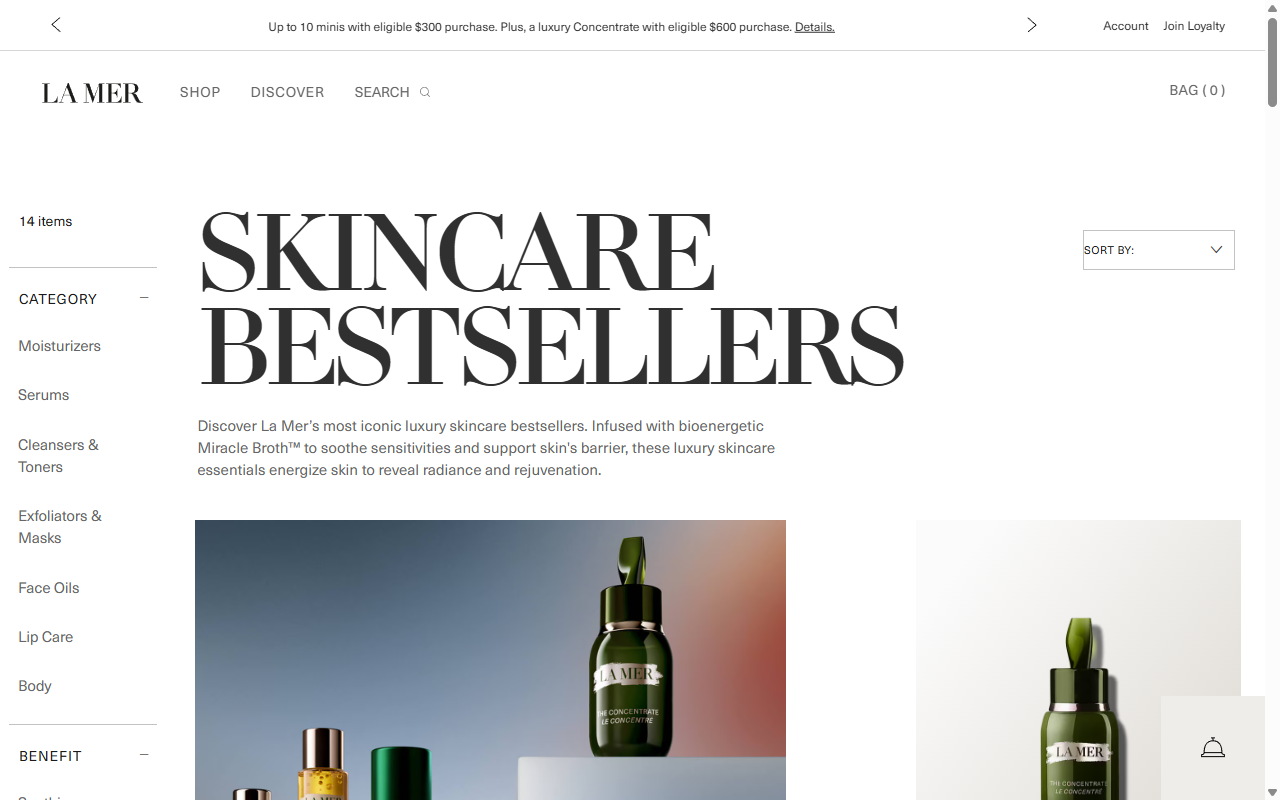
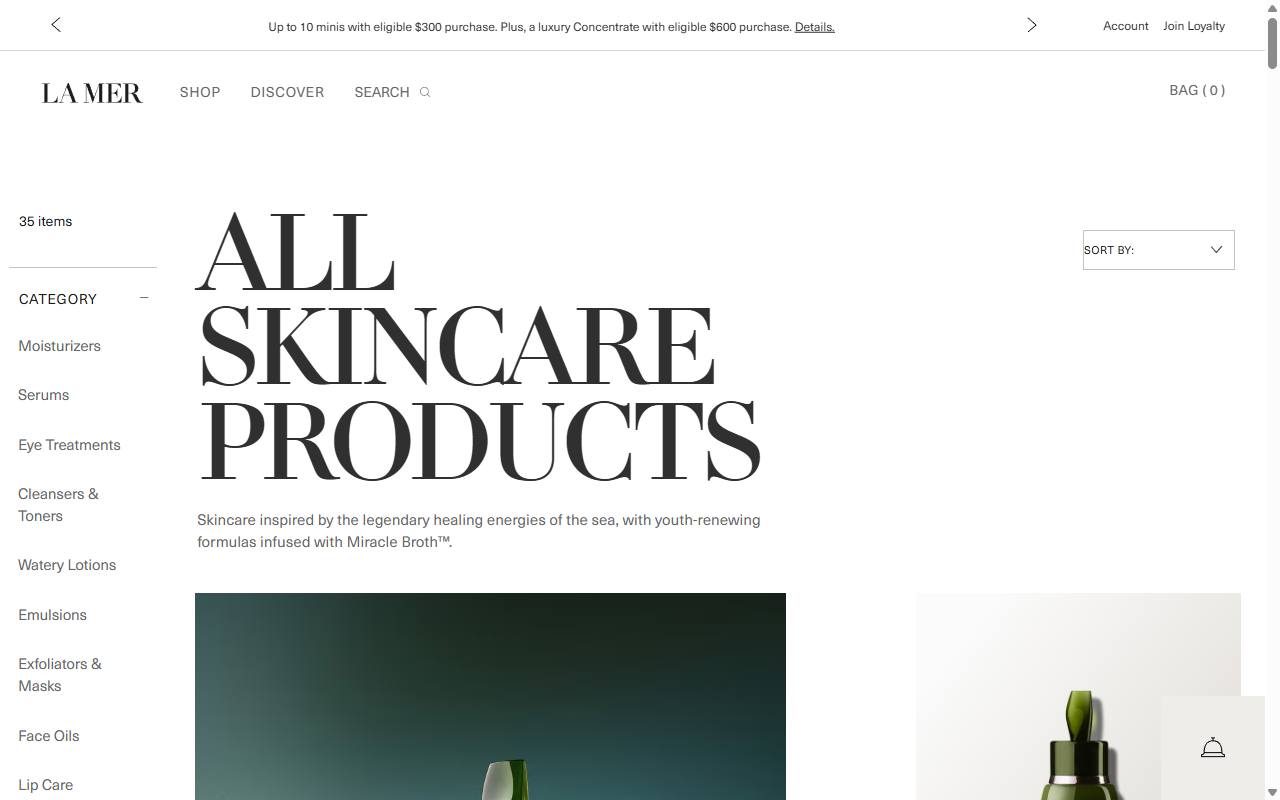
The Treatment Lotion is a hydrating essence at $205 for 150 ml. The Concentrate is a serum at $470 for 50 ml. The Eye Concentrate is $290. Genaissance de la Mer The Serum Essence reaches $2,300.
The pattern holds throughout: competent formulations, priced by a multiple that no ingredient analysis supports.
The Cleansing Foam is, for what it is worth, a perfectly nice cleanser at $95 that does exactly what a $12 cleanser does.
Transparency
The lowest score in this review at 5.5, and deliberately so. Ingredient lists are published because the law requires it. Everything else — the efficacy claims, the fermentation process, the founder's history — is asserted and unsupported. The brand publishes no concentrations, no clinical data and no third-party research.
A company charging these prices has both the resources and the obligation to substantiate its claims, and chooses not to.
Why occlusives work, and what they cost
The underlying mechanism here is worth understanding, because it explains both why La Mer has genuinely satisfied customers and why it does not need to cost $380.
Skin loses water continuously through the stratum corneum. An occlusive is any substance that forms a physical barrier slowing that loss. Petrolatum is the most effective occlusive known — it reduces transepidermal water loss by around 98%, which no plant oil or silicone approaches.
For very dry, cracked or barrier-compromised skin, an occlusive applied over a humectant is the single most effective intervention available, and people who switch to one from a light gel-cream often report the best result they have had from any product. That experience is real and it is what drives a lot of La Mer loyalty.
It is also available from a $6 tub of petrolatum, a $15 tube of Aquaphor, or any well-made barrier balm. What La Mer adds is texture, scent, a jar and a story. Those have value; they do not have $360 of value over the alternative.
What is genuinely good
Two things. The Blue Heart Oceans Fund supports marine conservation and research with real money and published grantees. And the products, judged simply as occlusive moisturisers, do work — if your skin is very dry and nothing else has helped, an occlusive is the correct answer.
The verdict
If you have money and you enjoy this, enjoy it. Luxury does not have to justify itself on utility and pretending otherwise is dishonest.
But if you are buying Crème de la Mer because you believe it will do something a $20 ceramide-and-petrolatum cream will not, the ingredient list does not support that belief. Try Aquaphor, CeraVe Healing Ointment or a Vanicream occlusive first, and spend the difference on a dermatologist appointment.
Prices, formulas and ownership were checked against the brand's own site on May 11, 2026 and change without notice. Screenshots in this review were captured by Shelfproof from public pages. Cosmetic ingredients affect people differently — this is consumer research, not medical, dermatological or legal advice.