The verdict
Reliable, well-priced skincare that used to have a clearer identity. The green tea and volcanic clay lines are still good and still cheap. The rebrand and the expansion into actives have made the range harder to read without making it better.
What works
- Green Tea Seed Hyaluronic Serum is a genuinely good hydrator at around $32
- Super Volcanic Clay Masks are effective and cost a fraction of Western equivalents
- Jeju sourcing is specific and traceable rather than a generic natural claim
- Wide range of sizes and frequent sachet formats make trialling cheap
What does not
- The 2021–2023 rebrand stripped a lot of the brand's visual personality
- Retinol and Vitamin C lines are late entries and not competitive with specialists
- Green tea 'antioxidant' claims outrun what the evidence supports at these levels
- Western distribution is patchy and pricing is inconsistent between markets
Innisfree launched in 2000 as Amorepacific's natural-ingredient brand, built around botanicals grown on Jeju, the volcanic island off South Korea's south coast. The sourcing story is more specific than most: named farms, named ingredients, actual geography rather than a generic "natural" claim.
For most of the 2010s it was the brand that introduced Western shoppers to K-beauty — cheap, cheerful, effective, with green packaging and a strong point of view. What it is now is less clear.
The green tea line
Green Tea Seed Hyaluronic Serum is the product to buy. It is a lightweight hydrating serum with a blend of hyaluronic acid molecular weights, green tea extract and green tea seed oil, and it does the difficult thing of hydrating oily skin without leaving a tacky film. At around $32 for 80 ml it is good value for the volume.
The green tea claims should be treated carefully. Green tea polyphenols, principally EGCG, are genuinely interesting antioxidants and there is real research behind topical application. Whether the levels present in a cosmetic serum deliver a meaningful antioxidant effect is much less established, and the brand's marketing does not make that distinction. Buy this as a hydrator, which it certainly is, rather than as an antioxidant treatment.
The Green Tea Seed Cream and the Green Tea Amino Cleansing Foam round the line out sensibly.
Volcanic clay
Super Volcanic Pore Clay Mask 2X is the other reason to shop here. It uses Jeju volcanic ash — genuinely absorbent clay — with AHA, and it is an effective decongesting mask for oily and congested skin at around $18 for 100 ml.
The Volcanic Pore Cleansing Foam and the Pore Clay Stick extend the same idea. These are simple, effective, cheap products and they are exactly what this brand is good at.
Where the focus went
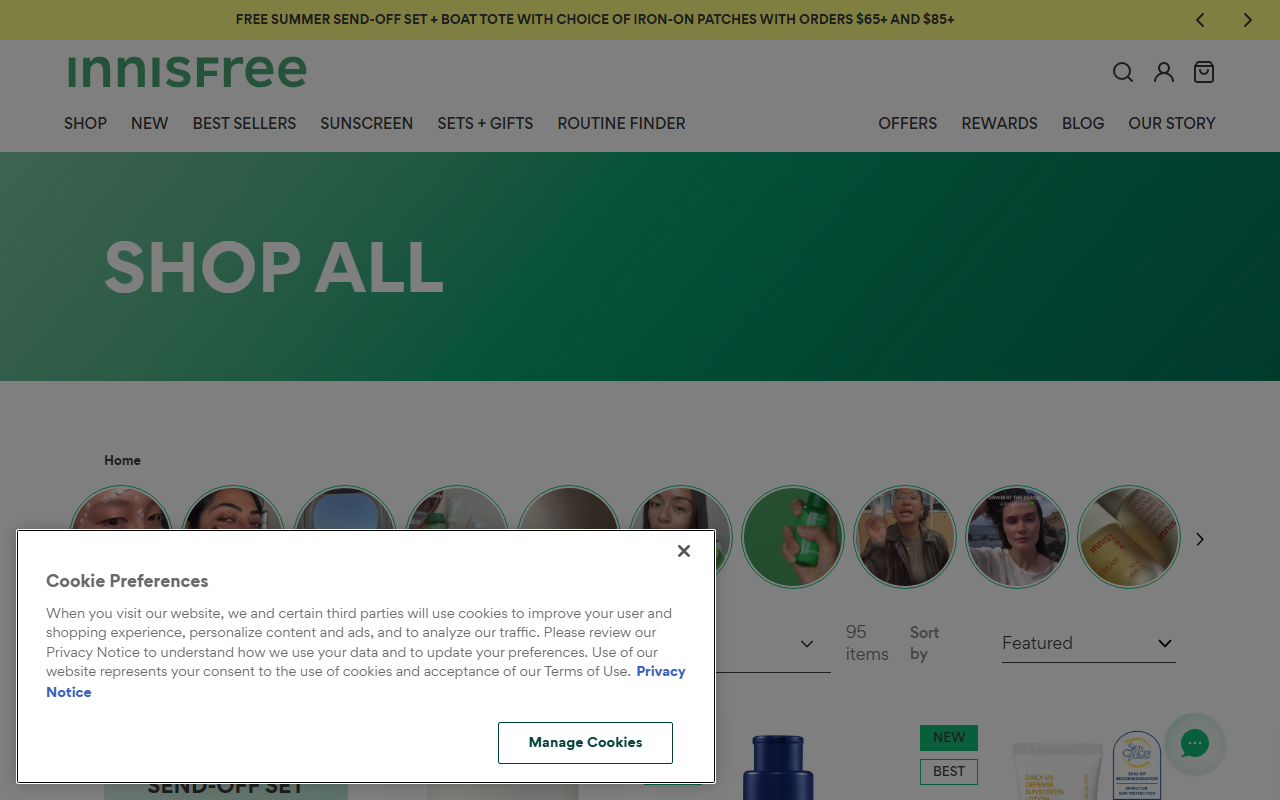
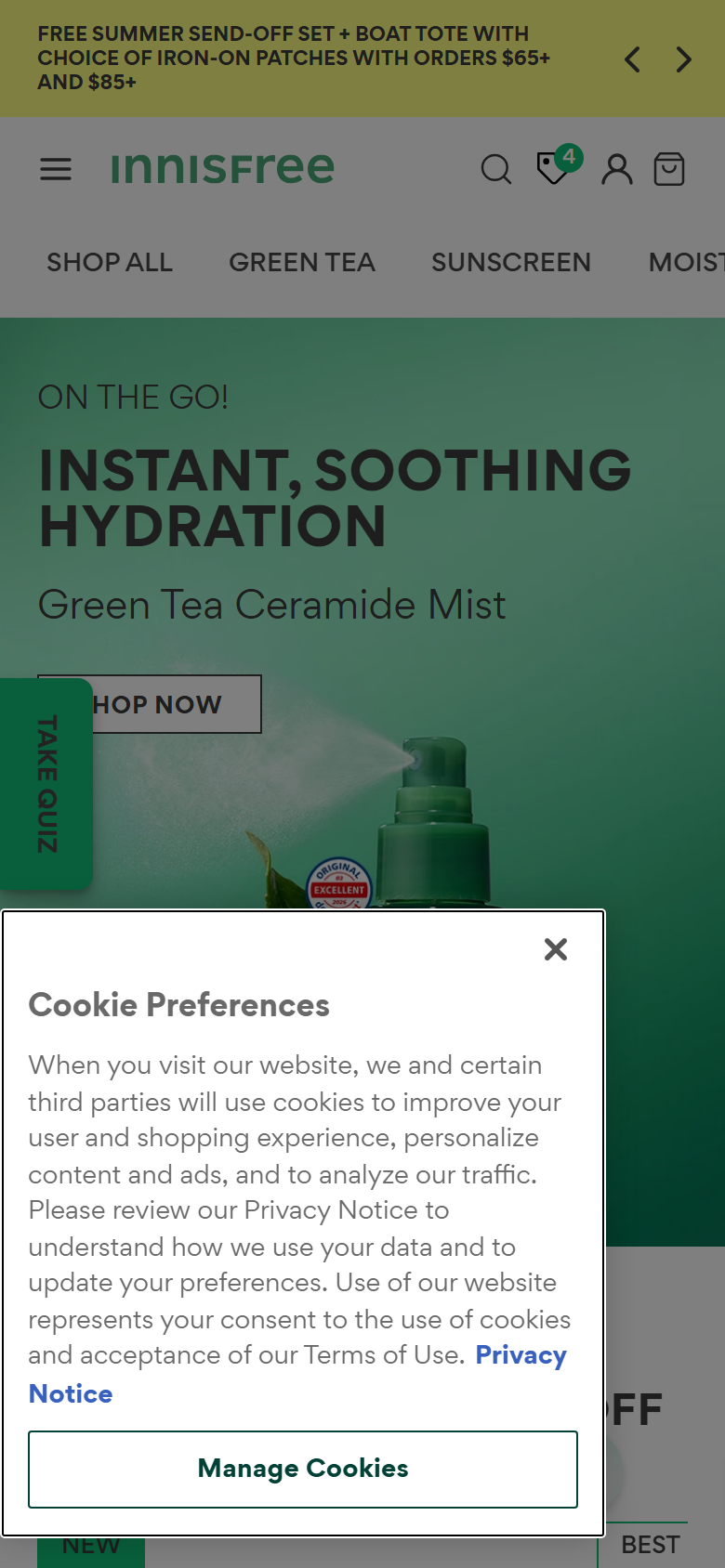
Between 2021 and 2023 Innisfree rebranded globally — new logo, simplified packaging, a more minimal visual identity. Commercially it was a response to a crowded market. The effect was to strip out most of what made the brand recognisable, replacing a distinctive green-and-botanical identity with something that looks like everyone else.
At the same time the range expanded into retinol, vitamin C and peptide lines. These are competent products and they are late to a category where COSRX, Beauty of Joseon and The Ordinary got there first with better formulas and clearer labelling. Innisfree does not publish concentrations for any of them, which in this company is a real disadvantage.
Transparency
Reasonable. Ingredient lists are complete, the sourcing claims are specific enough to be checkable, and the brand does not lean on undefined clean language. The gap is concentrations, particularly on the actives lines where it matters most.
Innisfree runs an in-store empty-bottle return programme in Korea with genuine uptake, and Amorepacific publishes group-level packaging targets. That is a better record than most brands at this price.
The Jeju question
The island sourcing is the brand's oldest claim and it holds up better than most natural-ingredient marketing, which is why we are giving it a section rather than a sentence.
Jeju is volcanic, subtropical and agriculturally distinct from mainland Korea, and Innisfree does source green tea, camellia, volcanic ash and canola honey from named producers there. The company has run a green tea farm on the island for years and the supply relationships are documented rather than implied. That is more than "natural ingredients" on a box.
What the sourcing does not establish is efficacy. Where a plant was grown affects the raw material's profile at the margins; it does not determine whether a cosmetic concentration of its extract does anything to your skin. Innisfree's marketing regularly slides from the first claim, which is verifiable, into the second, which is not.
Treat Jeju as a sourcing and sustainability story — a good one — rather than as a reason to expect more from the formula.
What to skip
The sheet masks. Innisfree's My Real Squeeze masks are cheap enough that people buy them by the dozen, and they are ordinary: a cellulose sheet, a humectant essence, a botanical extract at cosmetic levels. They hydrate for an hour. Nothing wrong with them, nothing you could not get from patting on an essence.
Price and availability
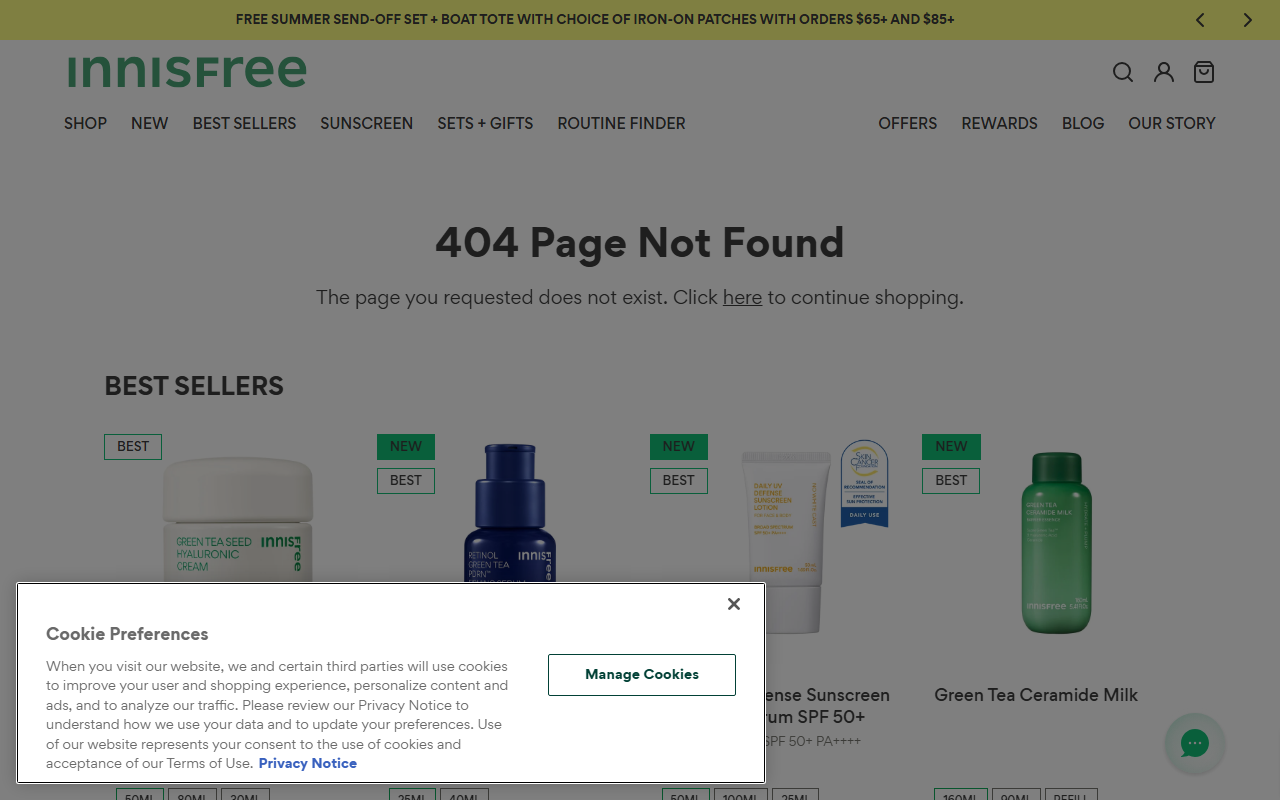
$10 to $40, which is genuinely affordable. The practical difficulty in Western markets is availability: Innisfree closed a number of international stores, distribution runs through a mix of official sites and third-party K-beauty retailers, and prices vary considerably between them. Sachets and mini sizes are widely available and are the cheapest way to test anything.
The verdict
Buy the Green Tea Seed Hyaluronic Serum and the Volcanic Clay Mask. Both are good, both are cheap, and both are what this brand does well.
Buy your retinol and your vitamin C somewhere that will tell you the percentage.
Prices, formulas and ownership were checked against the brand's own site on June 30, 2026 and change without notice. Screenshots in this review were captured by Shelfproof from public pages. Cosmetic ingredients affect people differently — this is consumer research, not medical, dermatological or legal advice.