The verdict
Two genuinely great products, a decent complexion range, and a skincare line that has never been better than average while being priced as though it were. Glossier's influence on beauty was enormous; its formulation record is not.
What works
- Boy Brow is still the best brow product for a soft, natural, un-drawn look
- Cloud Paint is a well-made gel-cream blush that is very hard to over-apply
- Perfecting Skin Tint has a properly wide shade range for a sheer product
- Prices are genuinely accessible by prestige standards
What does not
- Milky Jelly Cleanser and Priming Moisturizer are ordinary formulas at above-ordinary prices
- Solution, the brand's acid treatment, has been outclassed by cheaper alternatives for years
- Heavy fragrance across the skincare with no front-of-pack indication
- No published concentrations anywhere in the range
It is difficult now to explain how completely Glossier owned the mid-2010s. The pink pouches, the "skin first, makeup second" line, the dewy undone face that every other brand spent five years chasing — that was all this company, run out of a beauty blog by Emily Weiss, and it changed what a beauty brand was allowed to look like.
None of that is a formulation achievement, which is the problem with reviewing Glossier eleven years on.
The two that are genuinely good
Boy Brow is the reason the brand survived its difficult years. It is a tinted brow pomade in a mascara-style tube that fills, fluffs and holds without ever looking drawn on. Nothing else quite replicates it — the competitors are either too waxy, too wet or too pigmented. At around $19 it is fairly priced and it is the single product we would tell someone to buy here.
Cloud Paint is the other. A gel-cream blush in a squeeze tube with a soft, diffuse pigment load that is very difficult to overdo — the opposite design philosophy to Rare Beauty's blush and better suited to anyone nervous about cream products. Puff, Beam and Dusk are the versatile three.
Lidstar and Stretch Concealer are fine. Perfecting Skin Tint is a sheer, comfortable base with a shade range that was expanded substantially after early criticism and is now genuinely broad for a product this light in coverage.
The skincare, which never worked
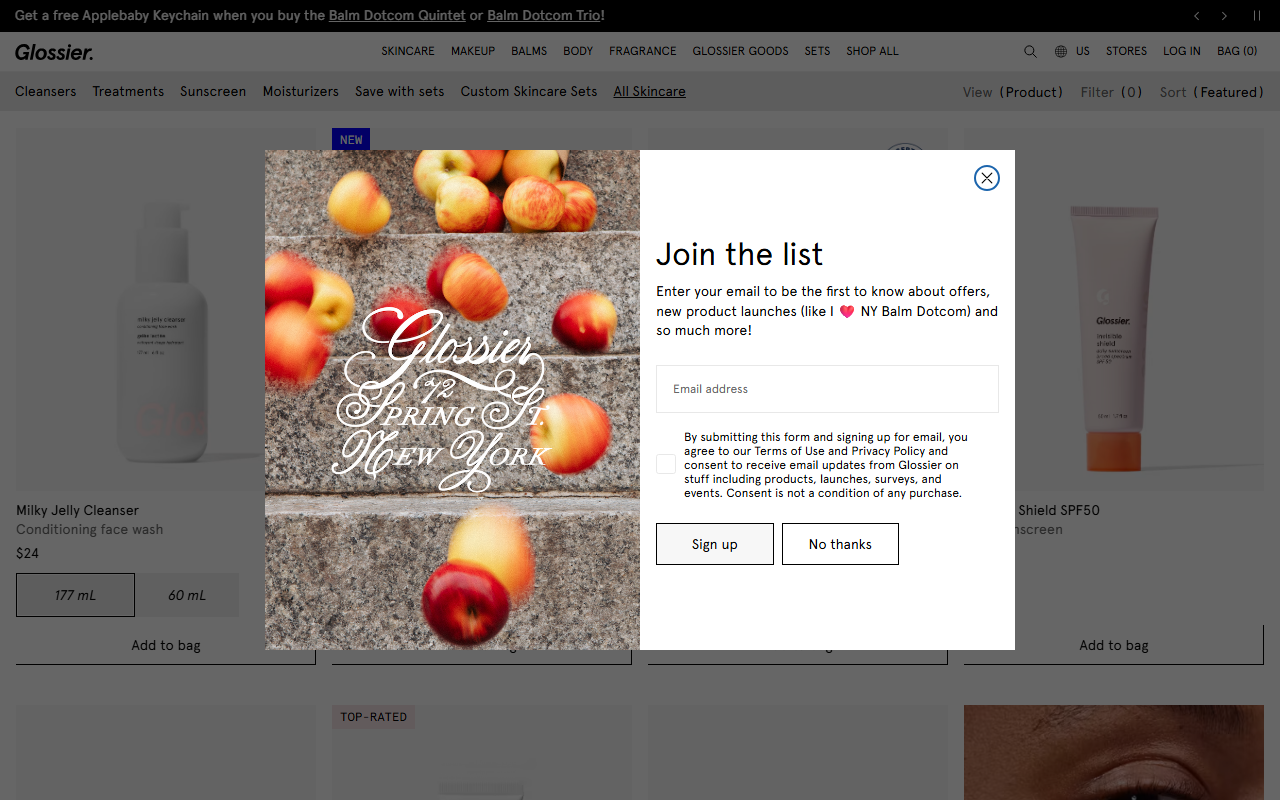
Milky Jelly Cleanser is a gentle, fragranced, low-foaming cleanser at around $20 for 177 ml. It is pleasant. It is not better than a $12 cleanser and it is fragranced, which for a brand whose whole identity is gentle skin-first care is an odd choice to have never revisited.
Priming Moisturizer is a lightweight gel-cream with no distinguishing feature except the smell. Super Pure, Super Glow and Super Bounce — the niacinamide, vitamin C and hyaluronic serums — have never published a concentration for anything, which in a market where The Ordinary and Paula's Choice print percentages on the bottle now reads as evasive rather than minimalist.
Solution is the clearest case. Launched in 2018 as an exfoliating acid treatment at around $24 for 4.4 oz, it has been comprehensively outperformed by cheaper products for most of its life and has not been meaningfully improved.
What happened commercially
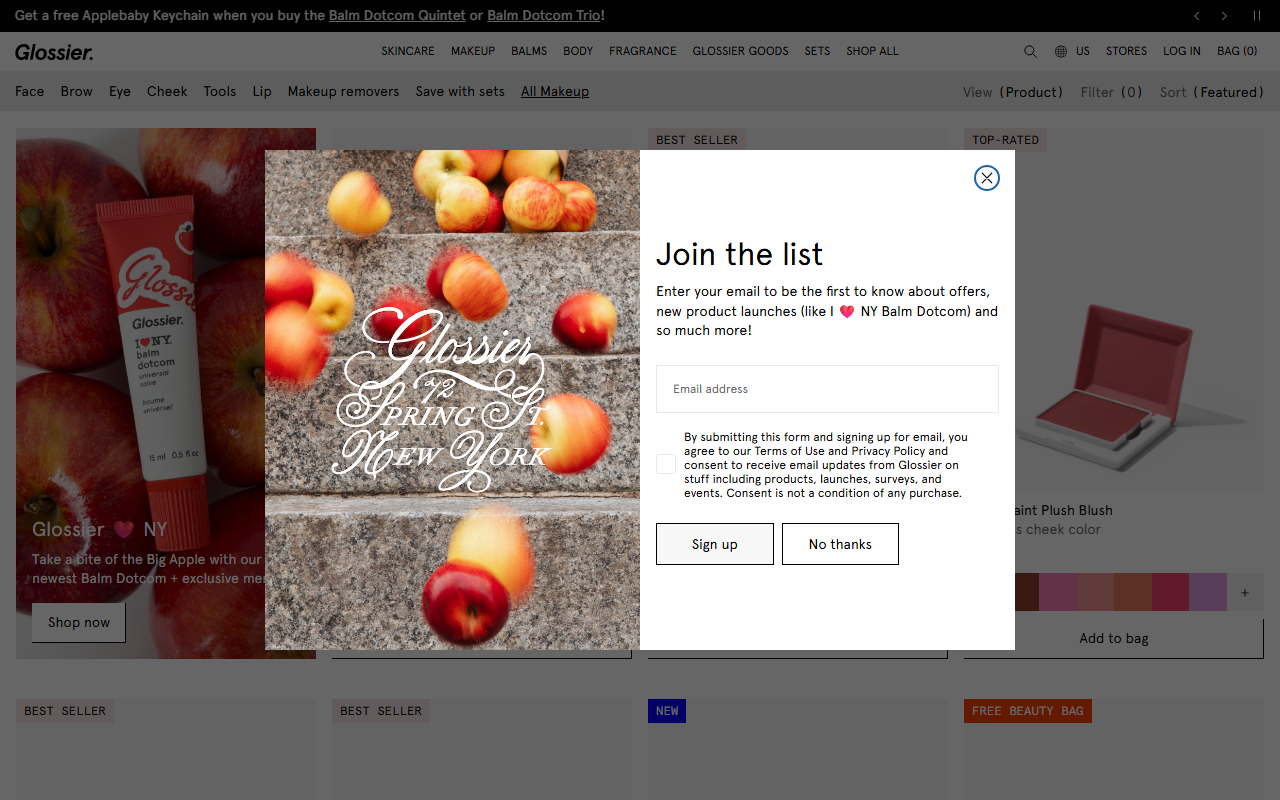
Glossier grew enormously on direct-to-consumer sales, then hit the ceiling that model has: customer acquisition costs rose, the brand had no third-party shelf presence, and growth stalled. Layoffs followed in 2022. The subsequent pivot into Sephora was treated as a betrayal by the original community and was almost certainly the right commercial decision — the products now sit where people actually shop and can be swatched before purchase, which a sheer-coverage brand badly needed.
The influence, which is the real legacy
It is worth separating what Glossier did badly from what it did that changed everything, because the second list is longer.
Before Glossier, beauty advertising showed a finished face under studio lighting. Glossier showed visible pores, freckles, uneven skin and a lot of people who were not models, and it did so consistently enough that the rest of the industry followed. The dewy, barely-there look that dominated the late 2010s came from here. So did the direct-to-consumer playbook, the community-as-marketing model built out of Into The Gloss, and the shade-inclusive casting that predated Fenty by a couple of years in editorial if not in product.
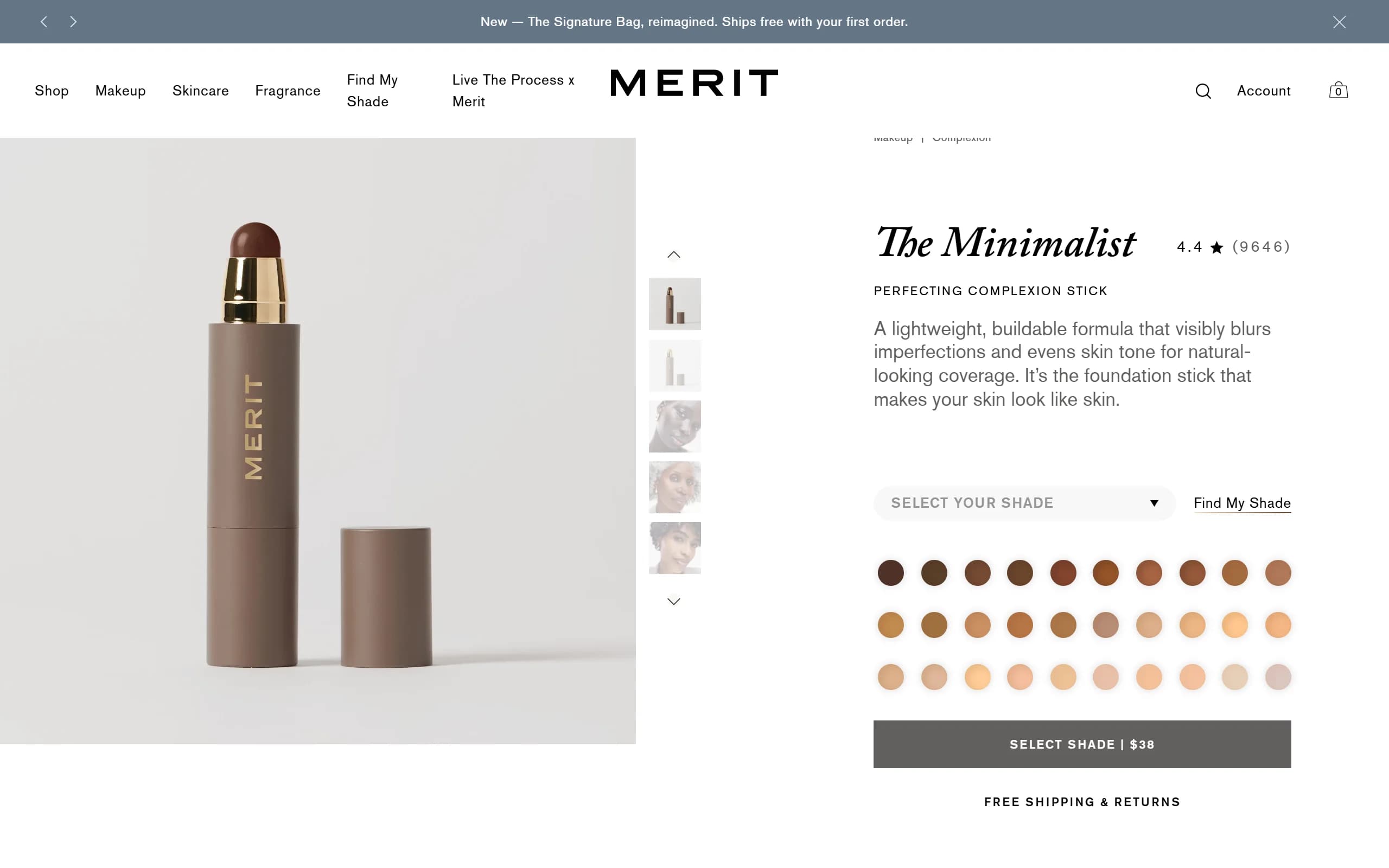
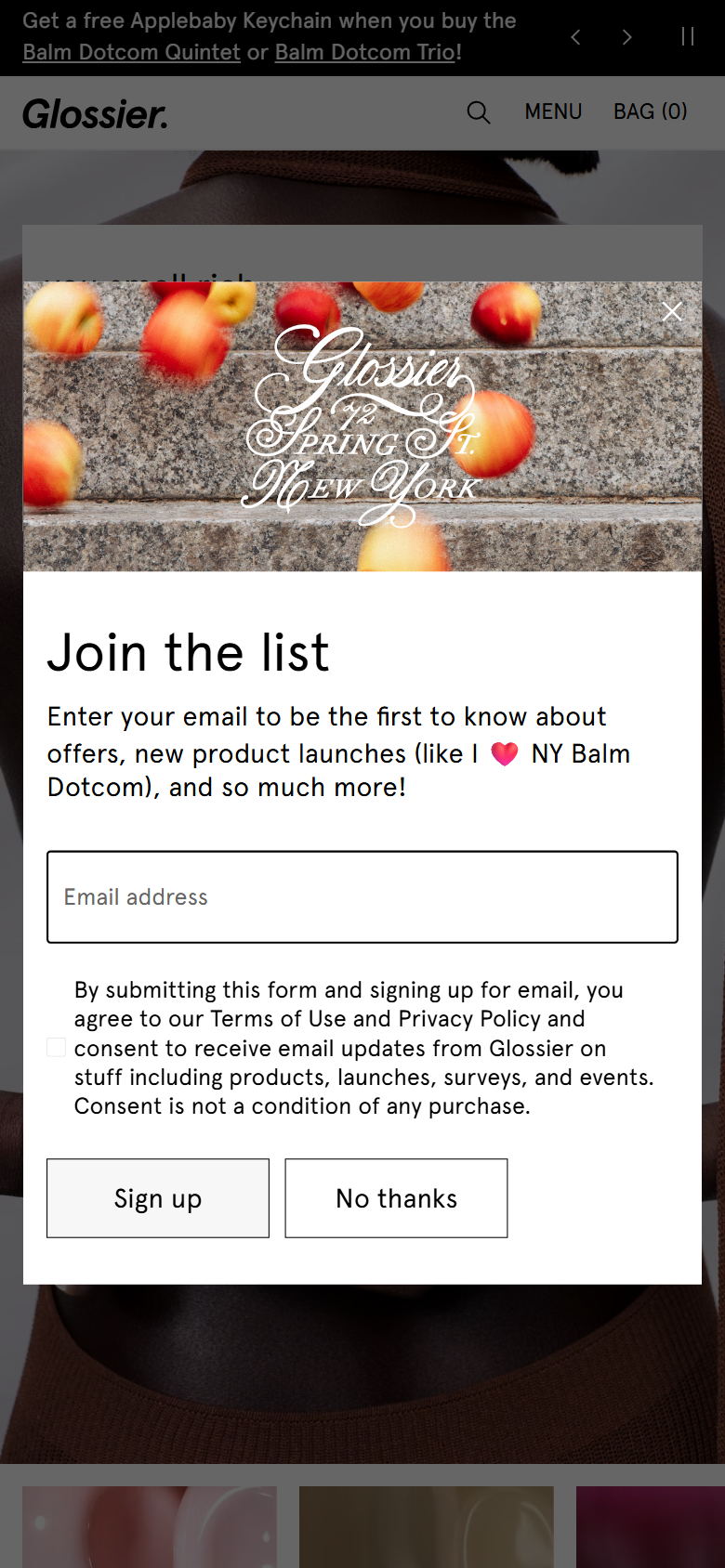
You can see the influence most clearly in what a beauty brand's website looks like now. The soft serif type, the flat pastel product photography, the conversational copy — every one of those is a Glossier borrowing, and many brands doing it have better formulas underneath.
That is an unusual legacy: enormous aesthetic influence, modest product achievement. It is also why the brand is difficult to score. On the rubric we apply, Glossier lands at 6.9. On its effect on the industry it would score considerably higher, and that is not what this site is measuring.
Transparency
Weak. No concentrations, fragrance used liberally with no front-of-pack flag, and marketing copy that describes how products feel rather than what is in them. For a colour brand that would be acceptable; for a brand that sells serums it is not.
Price
$16 to $42, which is genuinely accessible. The value problem is not that Glossier is expensive; it is that several products are priced slightly above what an equivalent costs while performing slightly below.
The verdict
Buy Boy Brow. Buy a Cloud Paint. Try the Skin Tint if you want almost no coverage with a good shade match.
Skip the skincare entirely. Glossier's contribution to beauty was aesthetic and cultural, and it was a large one. It was never a formulation contribution, and eleven years is long enough to stop expecting it to become one.
Prices, formulas and ownership were checked against the brand's own site on April 16, 2026 and change without notice. Screenshots in this review were captured by Shelfproof from public pages. Cosmetic ingredients affect people differently — this is consumer research, not medical, dermatological or legal advice.