The verdict
Genuine, effective advocacy for cosmetics regulation attached to an ordinary product range at above-ordinary prices, sold for most of its life through a multi-level model. The advocacy deserves credit. The formulas do not justify the receipt.
What works
- The Never List is a specific, published exclusion list of around 2,800 ingredients
- Real lobbying work behind the Modernization of Cosmetics Regulation Act
- Countersun Mineral Sunscreen Mist is a genuinely usable mineral SPF
- Ingredient sourcing and supplier screening are documented in more detail than most
What does not
- Formulas are competent mid-market at prestige prices across the range
- The multi-level consultant model put sales incentives ahead of product advice
- Business collapsed in 2024 and relaunched, leaving customers and consultants stranded
- Safety framing implies risk from ingredients the evidence does not support at cosmetic levels
Beautycounter is the hardest brand in this review to score, because the best thing about it is not a product.
Gregg Renfrew founded it in 2013 with an explicit political goal: to change American cosmetics regulation, which had not been meaningfully updated since 1938. The company lobbied, funded advocacy, sent consultants to Congress, and was part of the coalition behind the Modernization of Cosmetics Regulation Act that finally passed in 2022. That is a real achievement and very few beauty companies have one like it.
The products are a different conversation.
The Never List
Beautycounter's central proposition is the Never List — around 2,800 ingredients the company will not use, published and specific. As a transparency mechanism it is better than the vague "clean" language most competitors use, because you can read it and check it.
As a safety argument it overreaches. The list bundles genuinely questionable materials with ingredients that are safe at cosmetic concentrations and are excluded for positioning rather than for evidence — a large number of the entries are already banned in the EU, several are not used in cosmetics anyway, and some are included on precautionary rather than demonstrated grounds.
The practical effect is to imply that competitors' products are unsafe. They are, overwhelmingly, not. A brand can legitimately choose a stricter standard than the law requires; framing that choice as a safety warning about everyone else is where the line gets crossed.
The products
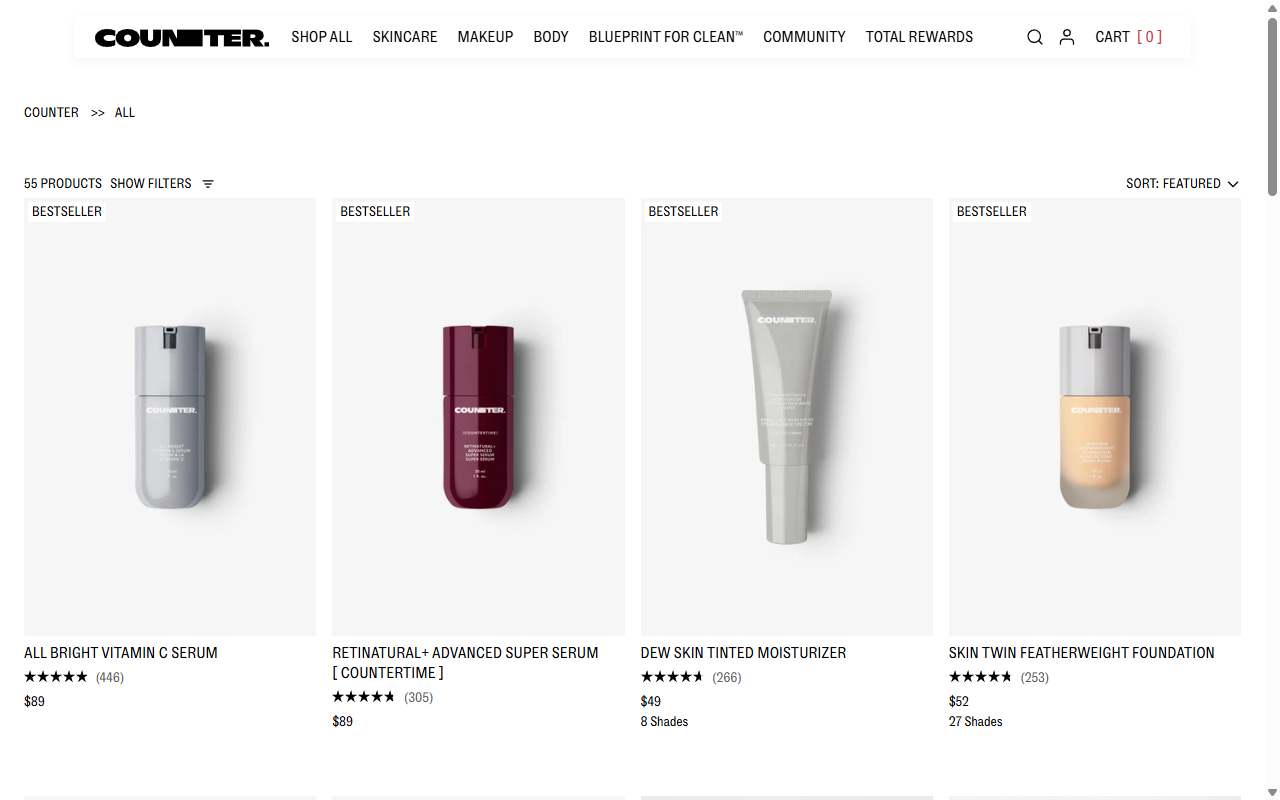
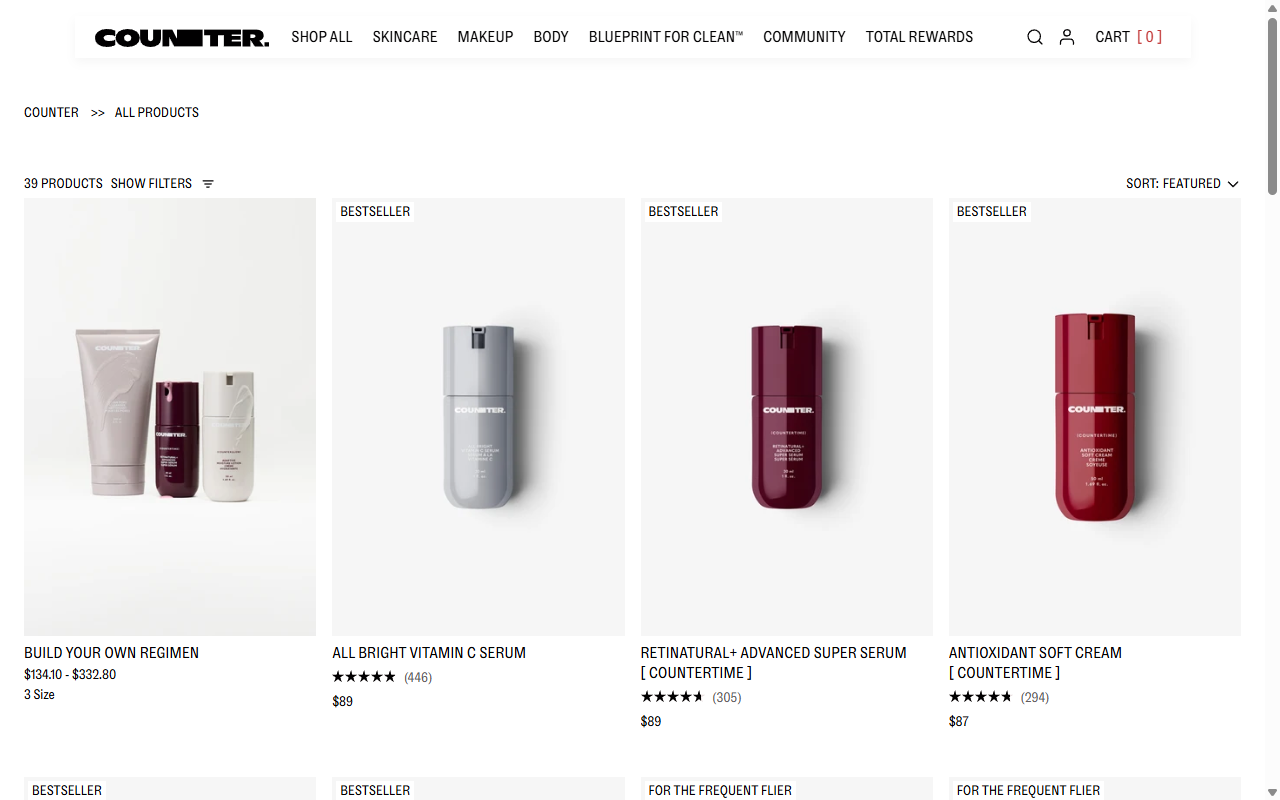
Countersun Mineral Sunscreen Mist SPF 30 is the best thing here. Mineral sunscreen in a spray format is difficult — zinc oxide does not atomise easily — and this one works reasonably well, with less cast than most. Around $45.
Counter+ All Bright C Serum is a vitamin C serum using ascorbyl glucoside and THD ascorbate rather than L-ascorbic acid. That is a defensible stability choice and it delivers less than a well-made L-ascorbic formula. At $79 it is competing with SkinCeuticals and losing on evidence.
Sheer Lipstick and Skin Twin Featherweight Foundation are perfectly decent colour products. The foundation has a reasonable shade range. Neither is distinctive.
Counter+ Overnight Resurfacing Peel is a good AHA treatment and the product we would rank second here.
The consistent picture: nothing bad, nothing exceptional, priced as though it were exceptional.
The business model, which matters
For most of its life Beautycounter sold through independent consultants on a multi-level compensation structure. That model has a specific consequence for a beauty brand: the person advising you on what to buy is paid on what you buy, and on recruiting other sellers.
It also had a specific consequence for the sellers. In 2024 the company shut down, wiped out consultant businesses and customer accounts, and subsequently relaunched under new ownership after Renfrew reacquired it. People who had built income around the brand lost it with very little notice.
The relaunched company has moved toward direct retail. That is an improvement and the history is part of the record.
Transparency
Mixed, at 7.0. The exclusion list is published. Sourcing and supplier screening are documented in more detail than almost any competitor — the mica sourcing programme, which addresses child labour in Indian mica mining, is genuinely substantive work.
Against that: no concentrations are published, and the safety framing consistently implies hazard where the science shows none at the exposures involved.
What the regulation actually changed
Since the advocacy is the strongest part of this brand, it is worth being specific about what was achieved, because the framing around it is often loose.
Before 2022, US cosmetics regulation ran on a 1938 statute. The FDA could not require manufacturers to register facilities, could not demand safety records, and could not order a recall — it could only ask. That is a genuinely weak regime by international standards and it had gone unreformed for eight decades.
The Modernization of Cosmetics Regulation Act changed several of those things: mandatory facility registration, product listing, adverse event reporting, safety substantiation records, and — most importantly — mandatory recall authority.
What it did not do is create an EU-style banned-ingredient list. The EU restricts over 1,600 substances in cosmetics; the US list remains very short. That gap is the one Beautycounter's Never List is implicitly filling, and it is a fair criticism of American regulation even where the specific ingredient choices are arguable.
Price
$29 to $98. The value score is low and it is the crux of the review: you are paying a premium for a standard rather than for a formula, and the standard is a marketing position as much as a safety one.
The verdict
If the advocacy matters to you and you want to fund it, that is a legitimate reason to buy here, and the Countersun mist is a good product.
If you are buying on formulation quality, almost everything in this range is beaten on performance or on price by something else in this review.
Prices, formulas and ownership were checked against the brand's own site on March 31, 2026 and change without notice. Screenshots in this review were captured by Shelfproof from public pages. Cosmetic ingredients affect people differently — this is consumer research, not medical, dermatological or legal advice.