The verdict
A well-made moisturiser with a genuinely distinguished scientist attached and a proprietary complex whose composition is not disclosed. The burn-wound research is real; its relevance to a cosmetic face cream is asserted rather than demonstrated.
What works
- Professor Bader's regenerative medicine work on burn wounds is real, published and significant
- The Rich Cream is a well-formulated, pleasant, effective moisturiser
- A published consumer study exists, which is more than most luxury brands offer
- The Body Cream and Cleansing Balm are good products at slightly less absurd prices
What does not
- TFC8's composition is not disclosed, which makes the central claim unverifiable
- $290 for 50 ml of The Rich Cream; $490 for the largest format
- The burn-gel research does not translate to a leave-on cosmetic in any demonstrated way
- Extremely narrow range with almost no options for different skin types
Professor Augustinus Bader is a real biomedical scientist. He held the chair of Applied Stem Cell Biology at the University of Leipzig, and his research into hydrogels that support the body's own regenerative processes in severe burn wounds is published, peer-reviewed and clinically significant. Burn patients treated with the gel have, in trials, healed without skin grafts.
That is genuinely impressive work. The question this review has to answer is what it has to do with a face cream.
TFC8
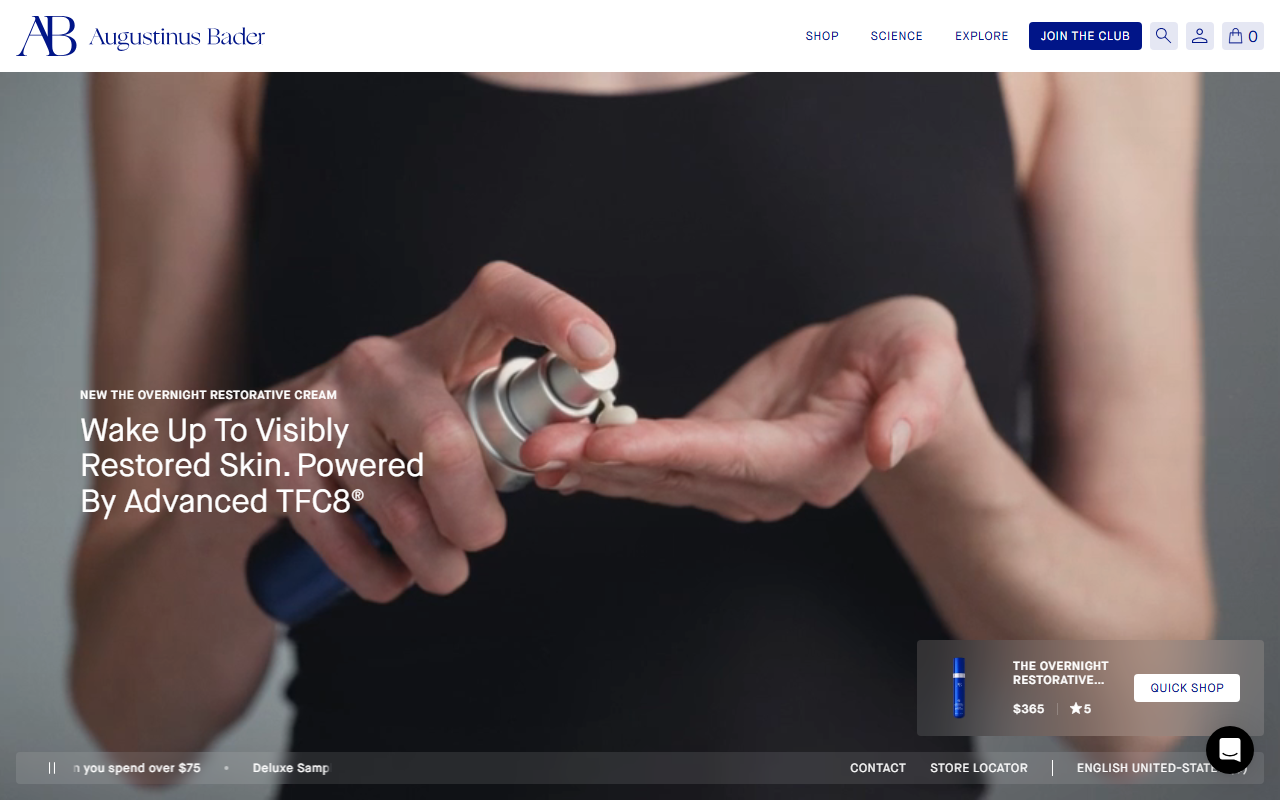
The cosmetic range is built around TFC8 — Trigger Factor Complex 8 — described as a blend of amino acids, vitamins and synthesised molecules that create an environment in which the skin's own repair processes work better.
The composition is not disclosed. We know from the ingredient list that the products contain a familiar cast of cosmetic actives — glycerin, various amino acids, vitamin E, niacinamide, oils and emulsifiers — but which of these constitute TFC8, and at what levels, is proprietary.
This is the crux. The claim is that a specific complex does something distinctive. The complex is secret. That makes the claim unfalsifiable, and unfalsifiable claims are what this site exists to flag regardless of who is making them.
To be fair to the brand: it does publish a consumer study, and the hydrogel research is genuinely in the literature. That is a better evidence posture than La Mer's. It is still a long way short of "here is a trial showing this cream does what we say".
The products
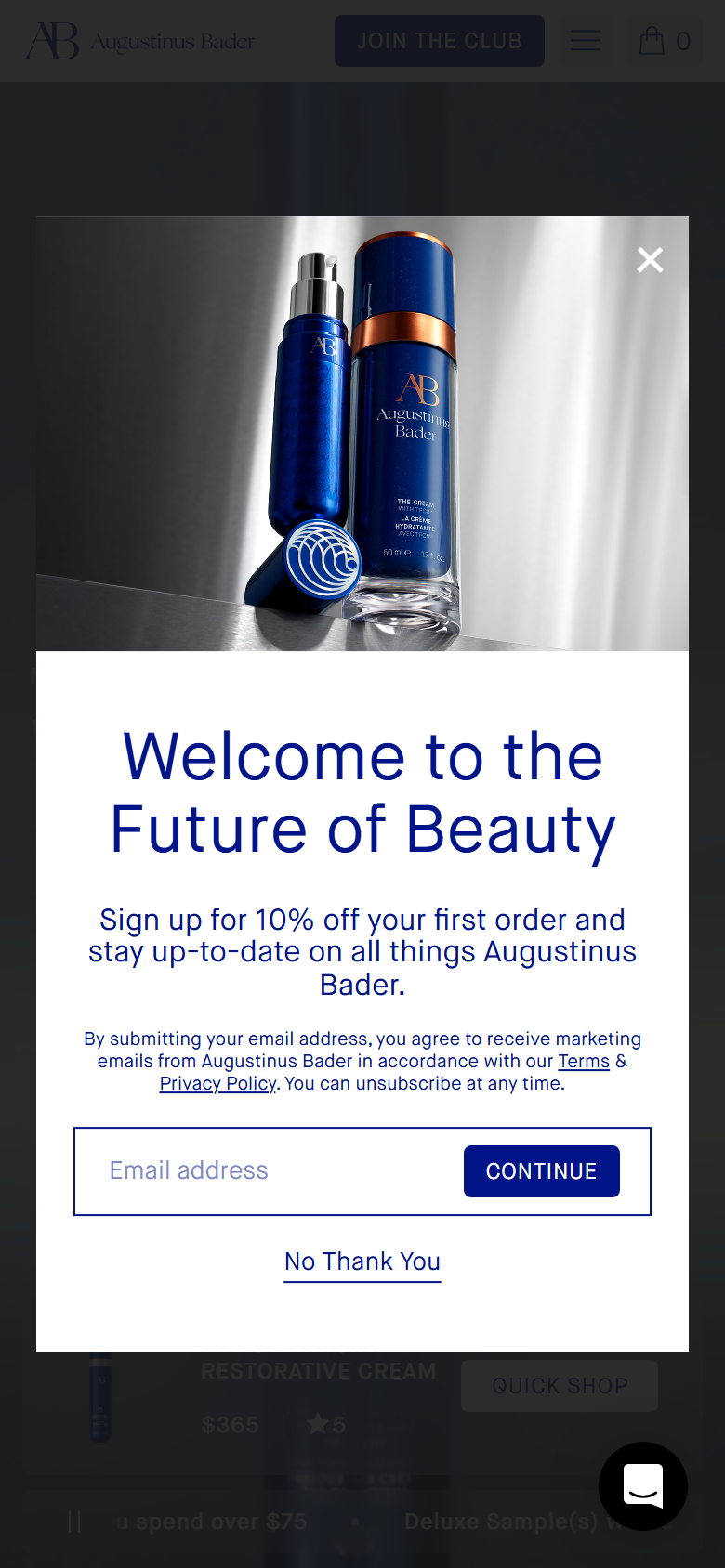
The Cream and The Rich Cream are the range. The Cream is lighter, for normal to combination skin; The Rich Cream is heavier, for dry and mature skin. Both are, judged simply as moisturisers, very good — well emulsified, comfortable, absorbing cleanly, with a texture that feels considered.
They are $290 for 50 ml.
The Essence is a hydrating toner at $150. The Serum is $290. The Retinol Serum is $290 and is the one product where a specific, evidenced active is present — and the brand does not publish the concentration.
The Body Cream at $135 and The Cleansing Balm at $85 are the two products where the price is merely high rather than extraordinary, and both are good.
The narrow range problem
Six or seven products, essentially two skin types, no sun care, no acne provision, no options for sensitivity beyond "it is gentle". For a brand built by a scientist, the absence of any differentiation by skin condition is striking. Range-and-fit scores 6.0 for that reason.

Transparency
6.0. The brand publishes more than most of its luxury peers — the underlying research is citable, a consumer study exists, ingredient lists are complete. But the central active is undisclosed, no concentrations appear anywhere, and the marketing consistently borrows credibility from clinical burn research that has no demonstrated relationship to the cosmetic products.
That last point is the one we would press hardest. Citing serious medical research in the marketing of a cosmetic, without showing that the cosmetic does the same thing, is a rhetorical move rather than a scientific one.
On stem cells in skincare
The brand does not use the phrase heavily, but its association with Bader's stem cell research invites an assumption that needs correcting, because the wider category leans on it constantly.
Living stem cells cannot survive in a cosmetic product. They require specific temperature, nutrient and pH conditions, and a jar on a bathroom shelf provides none of them. Any product marketed as containing stem cells contains either plant cell extracts, which are not human stem cells and do not behave like them, or the growth factors and signalling molecules that cultured cells produce.
Growth factors are a more interesting proposition and there is some research behind topical application. They are also large molecules with limited penetration through intact skin, and the evidence remains contested.
Augustinus Bader's products do not claim to contain stem cells and the brand is careful about this. What it does do is place a stem cell biologist's name and burn research at the centre of the marketing, and let the association do work the products themselves do not claim. That is the distinction we are scoring.
Price
$85 to $490. The value score of 4.5 is among the lowest here. The Rich Cream is a good moisturiser at roughly ten times what a good moisturiser costs.
The verdict
If you find the science persuasive and the price is comfortable, The Rich Cream is a genuinely pleasant, well-made product and you will not be disappointed by it as a moisturiser.
If you want evidence, ask for the composition of TFC8 and a trial showing the cream does what the burn gel does. Until those exist, you are buying a very good emulsion and a very good reputation, and the second one costs considerably more than the first.
Prices, formulas and ownership were checked against the brand's own site on July 15, 2026 and change without notice. Screenshots in this review were captured by Shelfproof from public pages. Cosmetic ingredients affect people differently — this is consumer research, not medical, dermatological or legal advice.