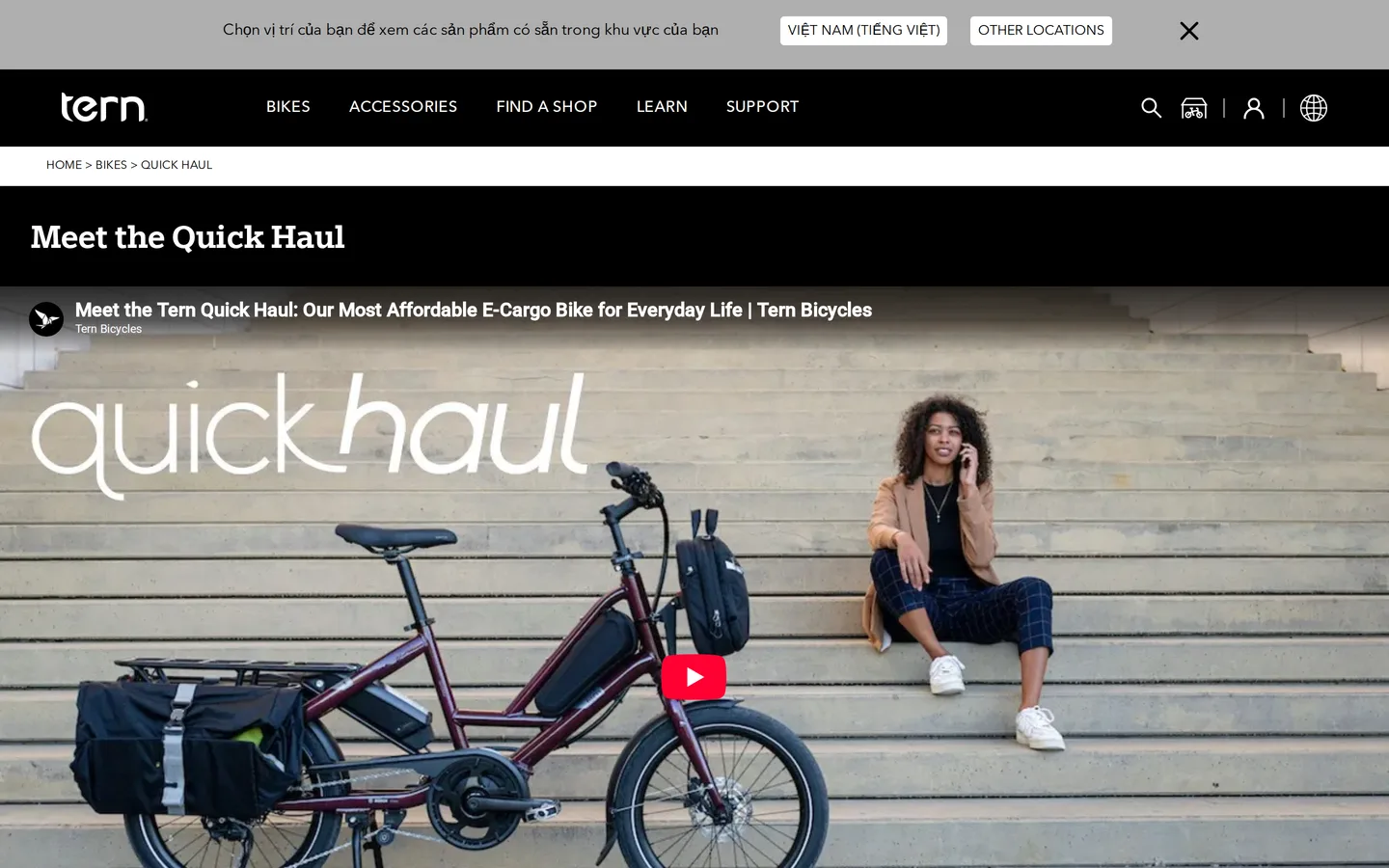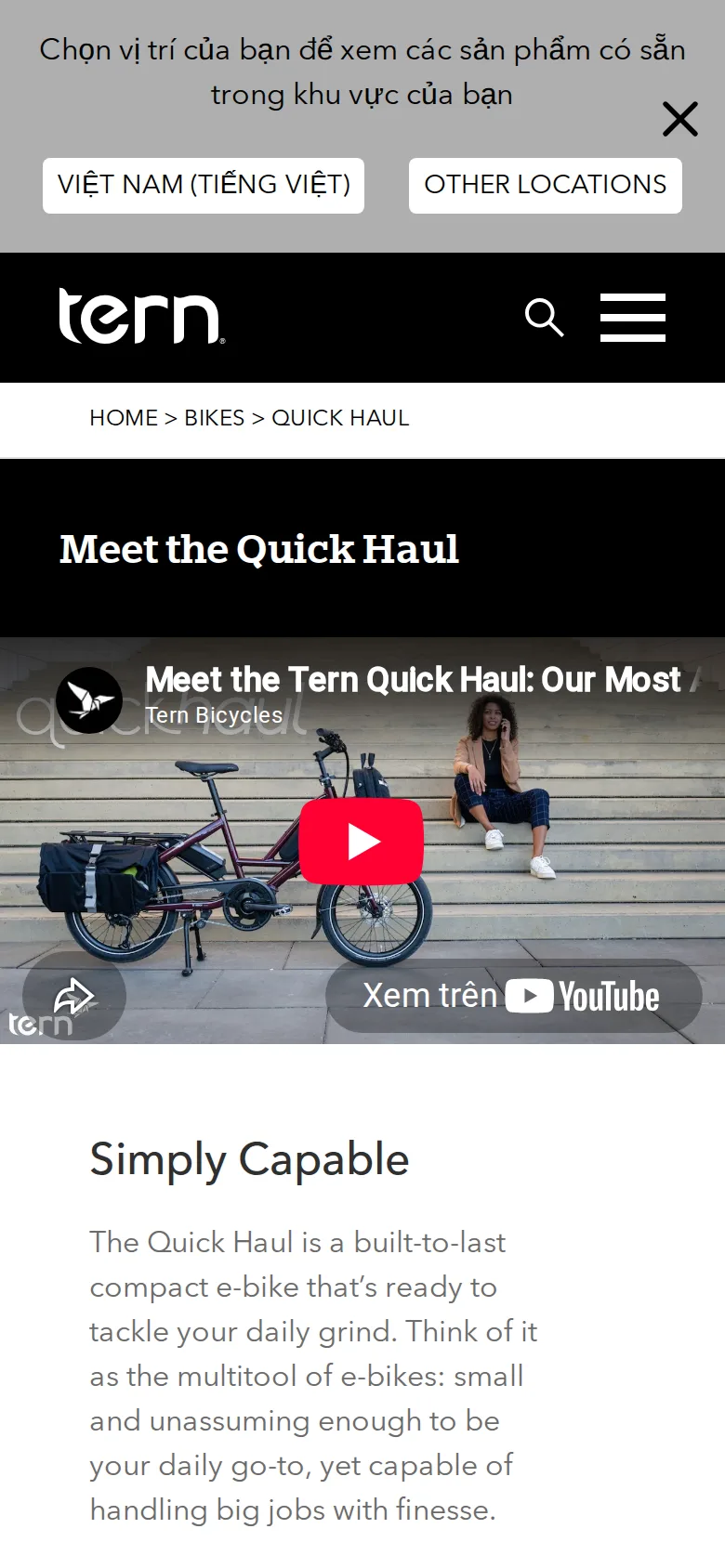
Tern describes the Quick Haul with one image: the Swiss army knife of e-bikes — small and discreet enough to be your everyday bike, but strong enough for the big job when it comes.
That description is accurate, and it contains the main argument for buying this bike.
The problem with big cargo bikes
A full-size cargo bike solves the carrying problem very well. But you are not carrying things all day.
Most trips are one person with nothing: to the coffee shop, to the corner shop, to meet a friend. On a big cargo bike, every one of those is a small wrestling match with size — hard to turn around, hard to park, hard to find somewhere to lock it.
The result is predictable: people start walking or driving for the short trips, and the cargo bike only leaves the house at weekends.
The best cargo bike is not the one that carries the most. It is the one you are happy to ride when you are carrying nothing.
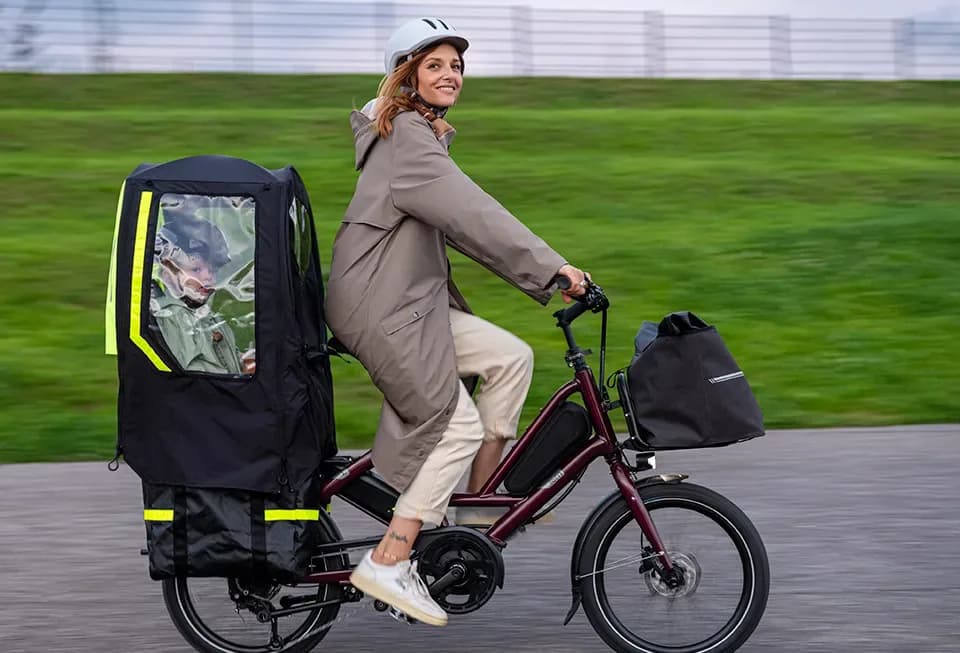
The Quick Haul is designed around that observation. It is small enough not to get in the way of an ordinary trip, but its rack and frame are engineered for real loads.
One passenger: the limit to know up front
On Tern's own filter, the Quick Haul sits in the +1 passengergroup, while the GSD and Orox sit in the +2 passengergroup.
It is a clear line, and Tern puts it in the filter interface rather than burying it in a spec table. For a family with two children the question ends here — you need the GSD.
For a one-child family, or for someone mostly carrying things, the Quick Haul does the job for less money and takes up less space.
Quick Haul Long: the step in between
Tern also makes a Quick Haul Long, and on the filter it appears in the +2 passenger group.
That is sensible range planning: rather than forcing you straight from the Quick Haul up to the much dearer GSD, Tern offers a middle step with a longer tail.
If you are torn between a Quick Haul and a GSD, ask the dealer about the Long first.
A simple test before you buy any cargo bike
A cargo bike is the kind of product a lap of the showroom car park tells you almost nothing about. Here are three things worth asking for.
One: load it properly, then ride it. Ask the shop to strap two 25 kg sacks onto the rear rack. An unloaded cargo bike feels nothing like a loaded one — and you are buying it to carry things, not to ride empty.
Two: put it on the stand with the load on board. This is something you do many times a day, and it is where plenty of people discover the bike is too heavy for them.
Three: turn it around in a three-metre space. Your side alley, the entrance to the bike store, the corridor of a block of flats — all of them are narrower than a dealer's forecourt. Turning circle is the specification nobody publishes and everybody lives with.
If the shop refuses all three, that is information about the shop rather than about the bike.
What Tern does well that many brands do not
Tern publishes load limits plainly and classifies bikes by passenger count. It sounds simple, but try finding a payload figure on the product page of a random e-bike — most brands print it faintly, or not at all.
On a bike carrying children, that clarity is not a courtesy but a safety matter. An overloaded bike has a longer stopping distance, its frame carries stress it was not designed for, and the wheels take loads beyond what the rims allow.
The verdict
We score it 8.4. The Quick Haul is not the most impressive cargo bike, and that is deliberate. It is the easiest one to fit into a life, and for most buyers that is what the money is actually for.
Availability is through Tern dealers, and the network is thin in some markets. Find the dealer before you get deep into the product.
Nhìn tận mắt