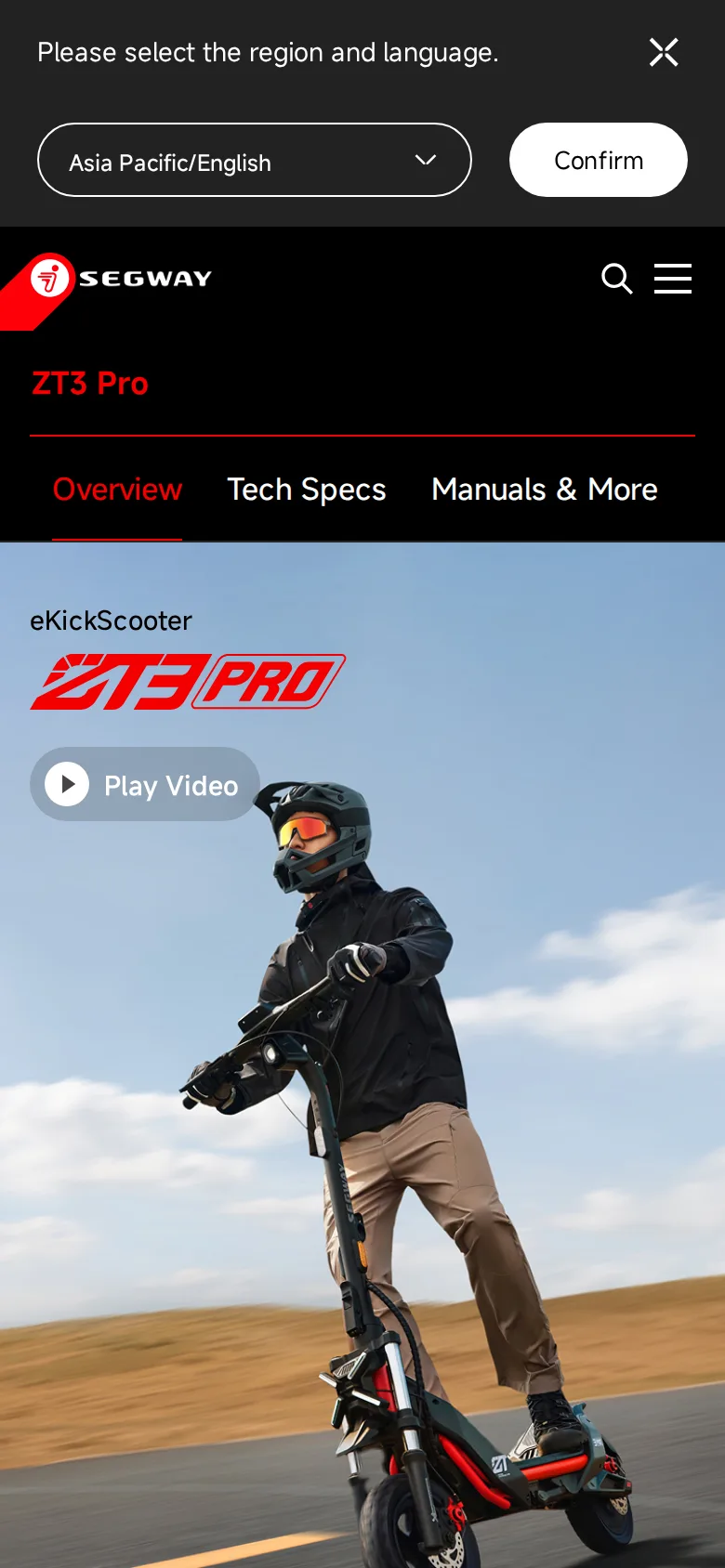
Segway describes the ZT3 Pro in very specific terms: twin telescopic front forks combined with a rear spring, designed to reduce the impact of obstacles such as cobbles, potholes and gravel roads.
That is not how a brand describes a commuting scooter. That is how you describe a light off-road machine.
The four numbers that make this machine
Tyres: 11-inch tubeless. Suspension: at both ends. Ground clearance: 152 mm. Peak power: 1600 W.
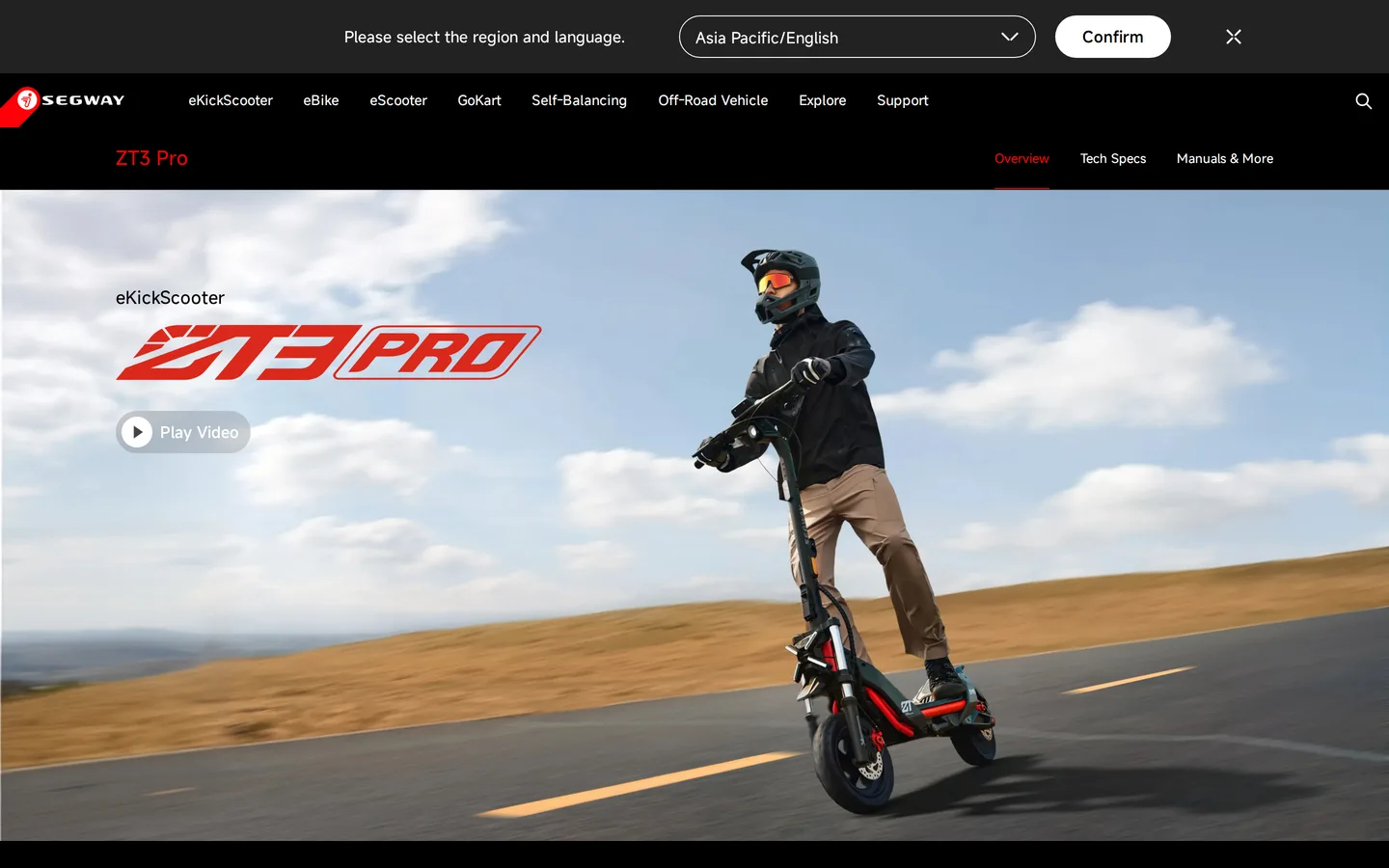
One at a time, and why they belong together:
11-inch tyres
Mass-market scooters run 8.5 to 10-inch tyres. Every extra inch of diameter means the wheel rolls across a crack instead of dropping into it. 11 inches is the largest you will find on a scooter that still folds.
And tubeless — no inner tube. When punctured, a tubeless tyre deflates slowly instead of blowing out, and at this size that leaves you enough time to stop safely.
152 mm of ground clearance
This figure is rarely published for scooters, and it matters. A scooter deck usually sits 10–12 cm off the ground. On a kerb ramp or a speed bump, that deck grounds out.
152 mm gives you real margin. For comparison: plenty of 125-class commuter scooters sit at around 130 mm — lower than this kick scooter.
1600 W, but still 25 km/h
This is the easiest thing to misread. 1600 W peak with a 25 km/h top speed sounds wasteful.
But power on an off-road machine is not there for speed. It is there for climbing — holding speed up a gradient, and pulling out of a patch of sand or gravel without stalling halfway through.
Power is what keeps you moving when the surface refuses to cooperate. Top speed only matters on good tarmac.
TCS and stability enhancement
The ZT3 Pro has traction control and what Segway calls stability enhancement.
On loose surfaces — gravel, sand, wet cobbles — a scooter's rear wheel breaks traction very easily under throttle. TCS cuts power for a fraction of a second so the tyre grips again. On a 1600 W machine this is not a luxury feature but a necessary one.
50 km at top speed: an honest way to state it
Segway states 50 km at 25 km/h — the test condition is inside the number itself.
Against publishing “50 km” with a footnote at the bottom of the page, this is far more honest. The reader knows immediately that this is the range at the highest speed, which is the lowest figure — ride slower and you go further.
Tubeless tyres on a scooter: how much is the trade worth
The ZT3 Pro runs 11-inch tubeless tyres. Against the two other options on the market, that is a notable middle ground.
Tubed tyres
Cheap, replaceable at any shop, and a spare tube weighs a few dozen grams. The downside: when punctured they deflate in seconds, and at speed that is dangerous.
Self-sealing tyres
As on the Segway F2 II. Sealant inside closes small holes. Good for most real-world punctures, but heavier, and useless against a long cut.
Tubeless tyres
An air seal between tyre and rim, with no tube inside. When punctured, air escapes slowly — you have time to stop safely. The downside: changing one is harder and needs tools, and not every shop can do it.
On a machine ridden over gravel and building sites — where the puncture risk is highest — tubeless is the right choice. But find somewhere that can fit a tubeless tyre before you need it.
Who should buy it
Anyone whose regular route includes cobbles, roadworks, or unsurfaced lanes. In those places an ordinary scooter is not merely uncomfortable, it is unusable.
Anyone riding entirely on smooth tarmac is paying for the weight and cost of chassis hardware they never use. Segway's own F2 II is lighter, cheaper and does that job well.
We score it 8.3.
Nhìn tận mắt