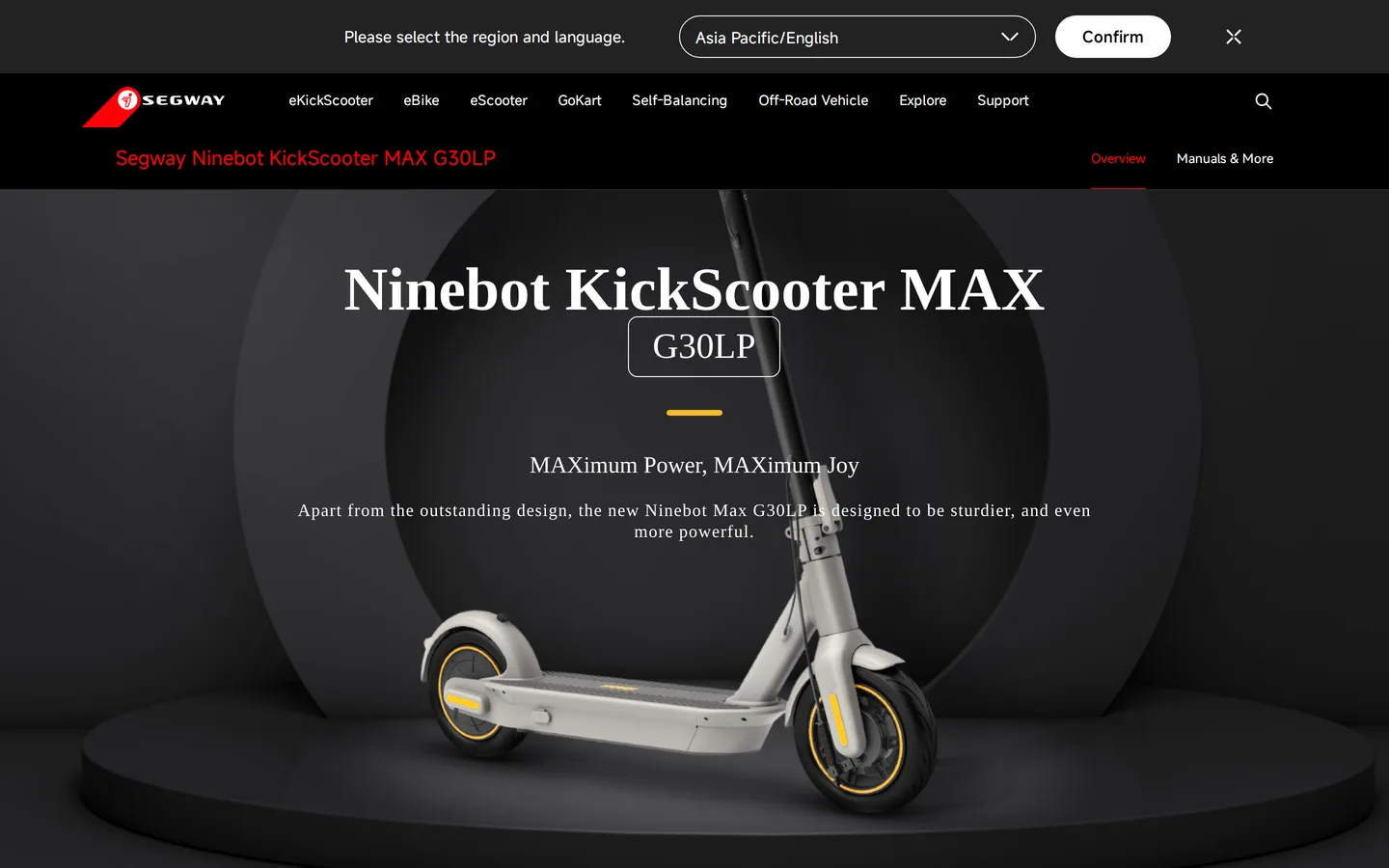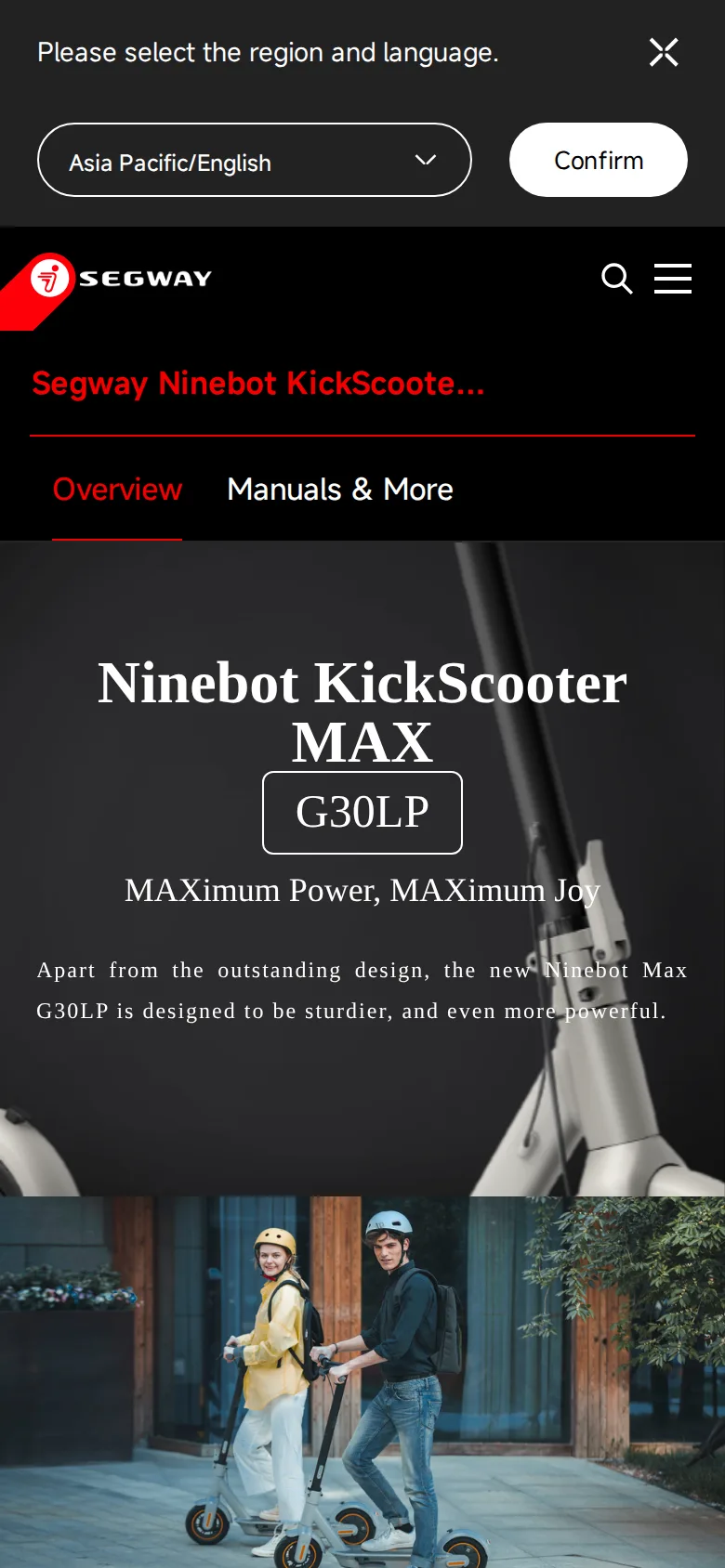
On the MAX G30LP product page, Segway prints a list most scooter brands do not:
Short-circuit protection
Over-current protection
Two-way charge protection
Two-way discharge protection
Temperature protection
Automatic sleep at low voltage
Six lines, no illustration, no marketing adjectives. And it is the most important part of the page.
Why this list is worth reading
The e-mobility fires in New York, London and Sydney over the past few years almost all began in a battery pack or a charger, and almost all happened while charging.
Every item on that list corresponds to a real failure scenario:
Short circuit: a wire wears through its insulation and touches the frame.
Over-current: the motor jams and draws more current than it was designed for.
Charge protection: the wrong charger pushes the wrong voltage.
Thermal protection: charging on a balcony on a 38-degree afternoon.
Low-voltage sleep: running a lithium pack completely flat damages cells permanently.
A battery management system that handles all six is what separates a properly engineered product from something assembled out of the cheapest parts available.
When you read a scooter product page, look for the section about battery protection. If there is not one, ask the seller. If they cannot answer, treat the answer as no.
Cruise control: a small feature with a real effect
On an electric scooter you hold the throttle with a thumb or a finger, continuously, for the whole ride. After fifteen minutes that finger aches and starts to tremble slightly — and a trembling finger does not modulate a throttle smoothly.
Cruise control holds your speed when you let go. It sounds like a luxury, but on a long straight it is what keeps you in better control of the machine.
Buying an older model: the pros and cons
The G30LP belongs to Segway's previous generation. In consumer technology, buying last year's model is usually a bad decision. With electric scooters it is not so clear-cut.
Pros
Parts are everywhere. The MAX line sold in the millions worldwide and was used in rental fleets, so replacement tyres, pads, displays and controllers are available anywhere, including aftermarket.
The design flaws have all surfaced. A product that has been through several years and millions of users has had its weak points identified and patched through software updates.
A lower price, sometimes much lower.
Cons
None of the later generation's improvements: suspension, traction control, self-sealing tyres.
Software support will end before it does on the newer models.
Size and weight are usually less well optimised.
The real calculation: if you ride on good surfaces and the price gap is substantial, the G30LP is a sensible buy. If the gap is only ten or fifteen percent, take the F2 II for the suspension and the self-sealing tyres.
Where the G30LP shows its age
Unfolded dimensions: 1109 × 472 × 1146 mm. This is a long scooter, and folded it still takes up a serious amount of a car boot or the space under a desk.
Segway also lists no suspension system for this model. Against its own F2 II with twin front springs, or the NIU KQi 300 with twin hydraulic forks, that is a clear omission.
The G30LP is the previous generation, and Segway now has the newer F, E and ZT lines. Buying it means choosing a mature platform with easy parts over the latest specification.
Who should buy it
People who value durability and peace of mind over speed. The MAX line is the most widely used model in rental fleets around the world, and those fleets choose machines on operating hours before a repair.
If you find a G30LP at a good price and your route is reasonably flat, this is a very sensible decision. We score it 8.0.
Nhìn tận mắt