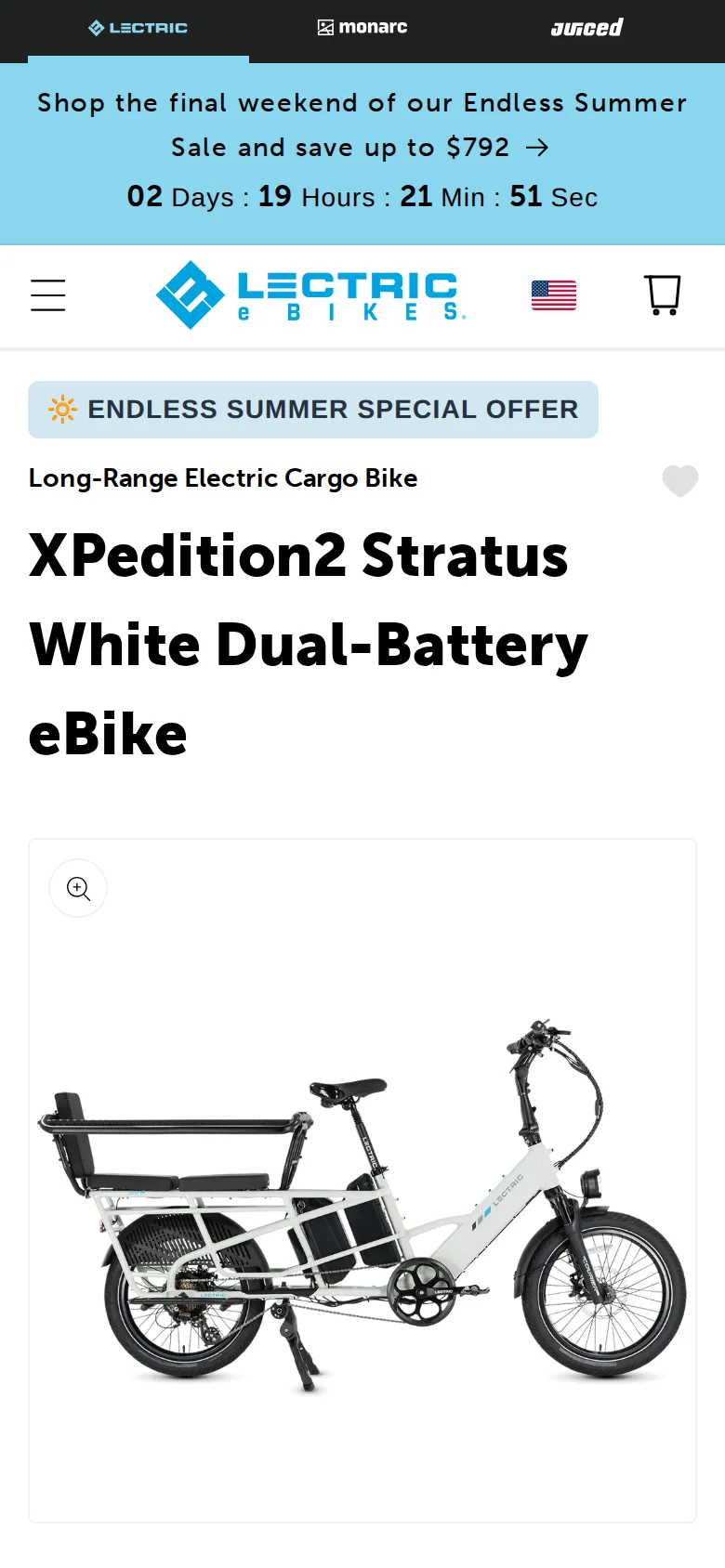
Lectric sells more electric bikes than any other brand in the US, and it does it with one simple approach: sell straight to the rider and skip the retail layer entirely.
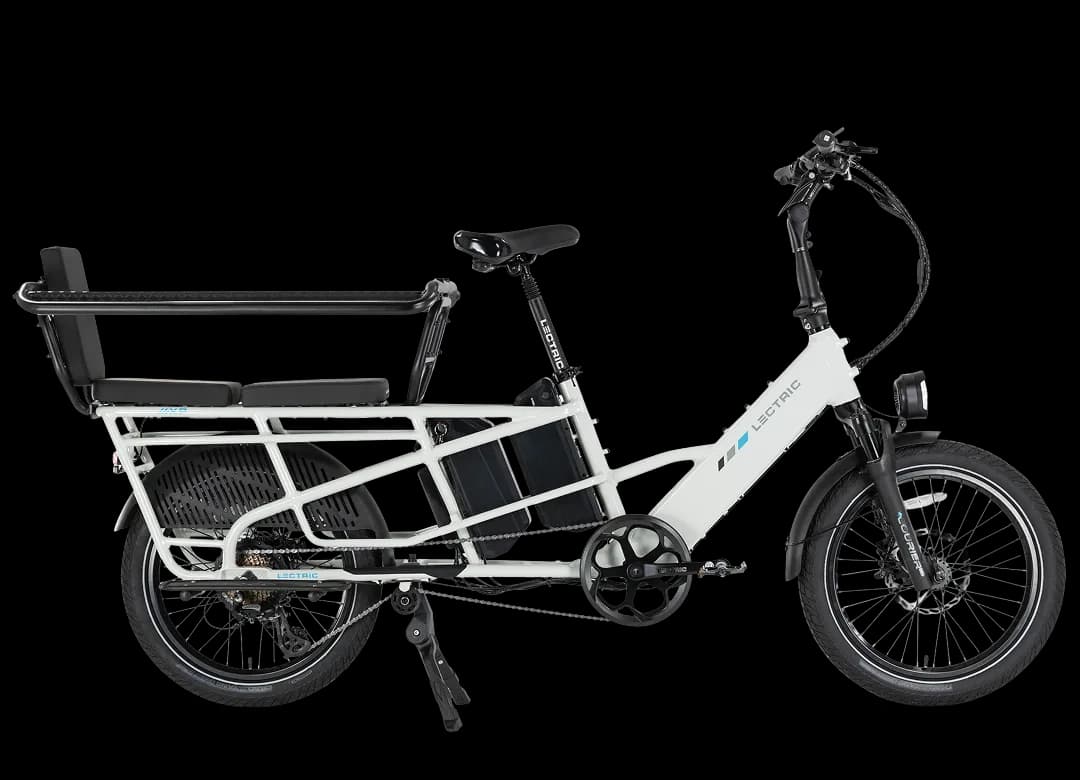
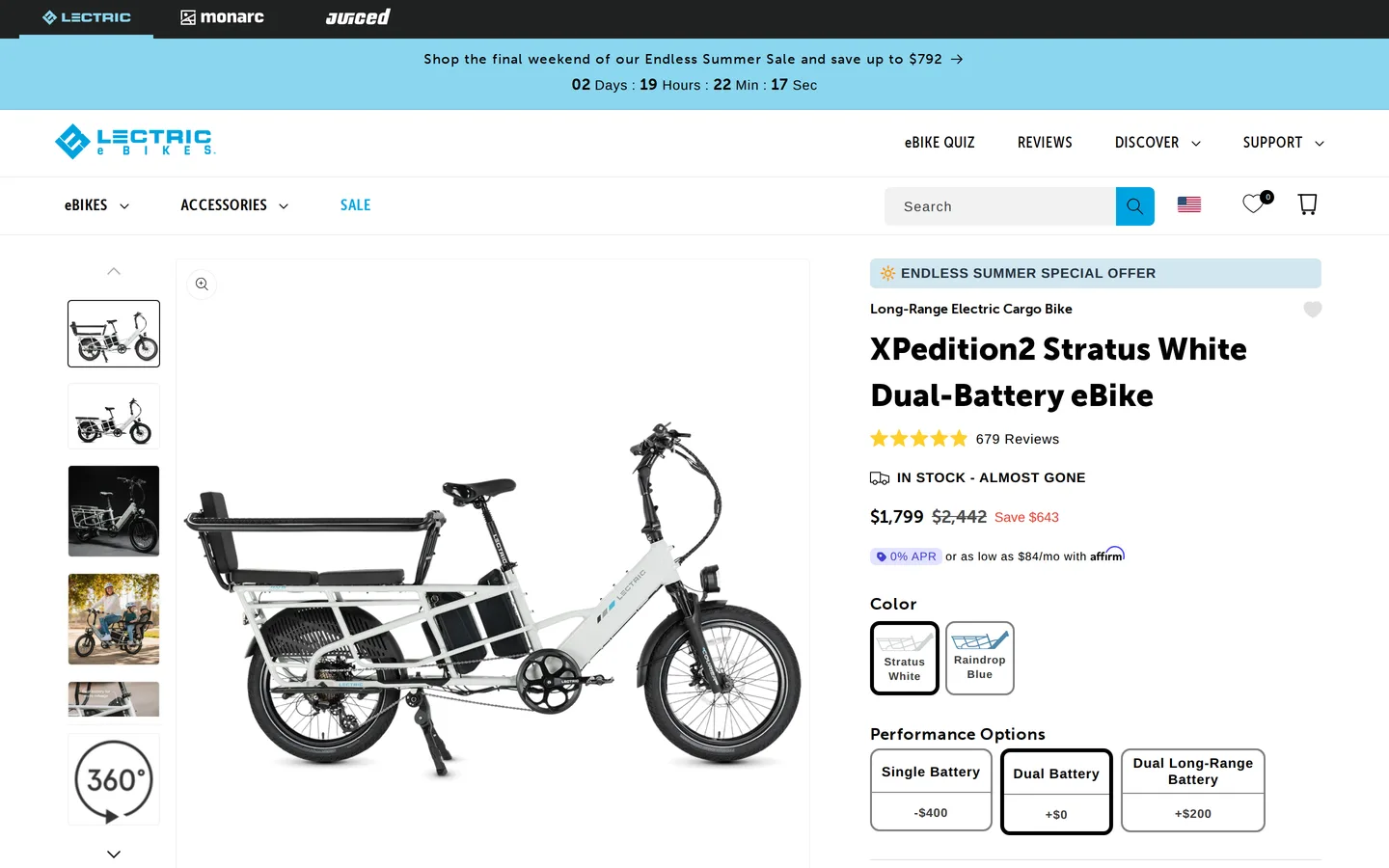
The XPedition is its cargo model, and the specification is hard to beat.
Two numbers that lead the group
A payload of 450 pounds, about 204 kg. A range of up to 120 miles, about 193 km in the twin-battery configuration.
Within the same group:
Tern GSD Gen 3: 210 kg gross vehicle weight.
Aventon Abound SR: 440 lb (~200 kg) total.
Rad Power RadRunner Plus: 350 lb (~159 kg).
Read the wording carefully: Tern quotes gross vehicle weight , which includes the bike itself; Lectric and Aventon quote payload. The two are not directly comparable, and the gap between them is exactly the weight of the bike.
When one brand says “payload” and another says “gross vehicle weight”, do not put the numbers side by side. Ask both the same question: how many kilograms can I add?
193 km: how to read it properly
The 120-mile figure comes with two batteries and almost certainly at the lowest assist level, a light rider and flat roads.
For a cargo bike doing real work — two children, a bag of shopping, high assist because it is heavy — plan for about half. 95 to 100 km is still a very good number for a bicycle.
The real point of the twin-battery setup is not range so much as peace of mind. With children aboard, running flat mid-journey is not an inconvenience but a problem — you cannot pedal a 40 kg bike plus two children home.
1310 W peak, and why a cargo bike needs the power
A peak output of 1310 W sounds excessive for a bicycle. On a cargo bike it is not.
A bike carrying 200 kg uphill needs several times the tractive effort of one carrying 80 kg. And the hardest case is not a long climb but pulling away from a stop line on a hill — a red light halfway up a gradient, with two children on the back.
In that situation an underpowered bike leaves you pushing. With 1310 W, you twist the throttle and go.
50 mm of travel: where we wanted more
Lectric fits a fork with 50 mmof travel. That is modest — its own XPeak gets 80 mm.
On a cargo bike, all that mass means every bump feeds more energy into the frame and into whoever is sitting on the back. 50 mm is better than nothing, but on a bike carrying children over broken city surfaces this is where we would want Lectric to spend more.
Two batteries: the real benefit is somewhere else
The XPedition's twin-battery option is marketed on range. But on a cargo bike, the biggest benefit is not going further.
Benefit one: charging in rotation. You leave one pack on the bike and carry the other upstairs to charge. For anyone in a flat, that is the difference between a usable bike and an unusable one.
Benefit two: headroom under load. Range falls sharply with weight aboard. With two packs you still have a margin even on the heaviest trip.
Benefit three: one dead pack does not make the bike useless. You pull the bad one, ride on with the other at half the range, and order a replacement without losing a single day.
That third point matters especially on a bike bought by mail order from another continent, where a replacement pack can take weeks to arrive.
Selling direct: a trade-off worth understanding
Lectric advertises tool-free assembly — the bike arrives all but built, you open the box, unfold the frame and ride.
That solves the assembly problem. It does not solve the maintenance problem three years later, when the pads are worn, the chain has stretched, and the rear rim has gone out of true from carrying weight.
On a bike that regularly carries 150 kg, brake maintenance is not something to postpone. If you cannot do it yourself, find a bike shop willing to take it on before you buy.
We score it 8.6. The best numbers in the group at the lowest price in the group, traded against having to handle the after-sales side yourself.
Nhìn tận mắt