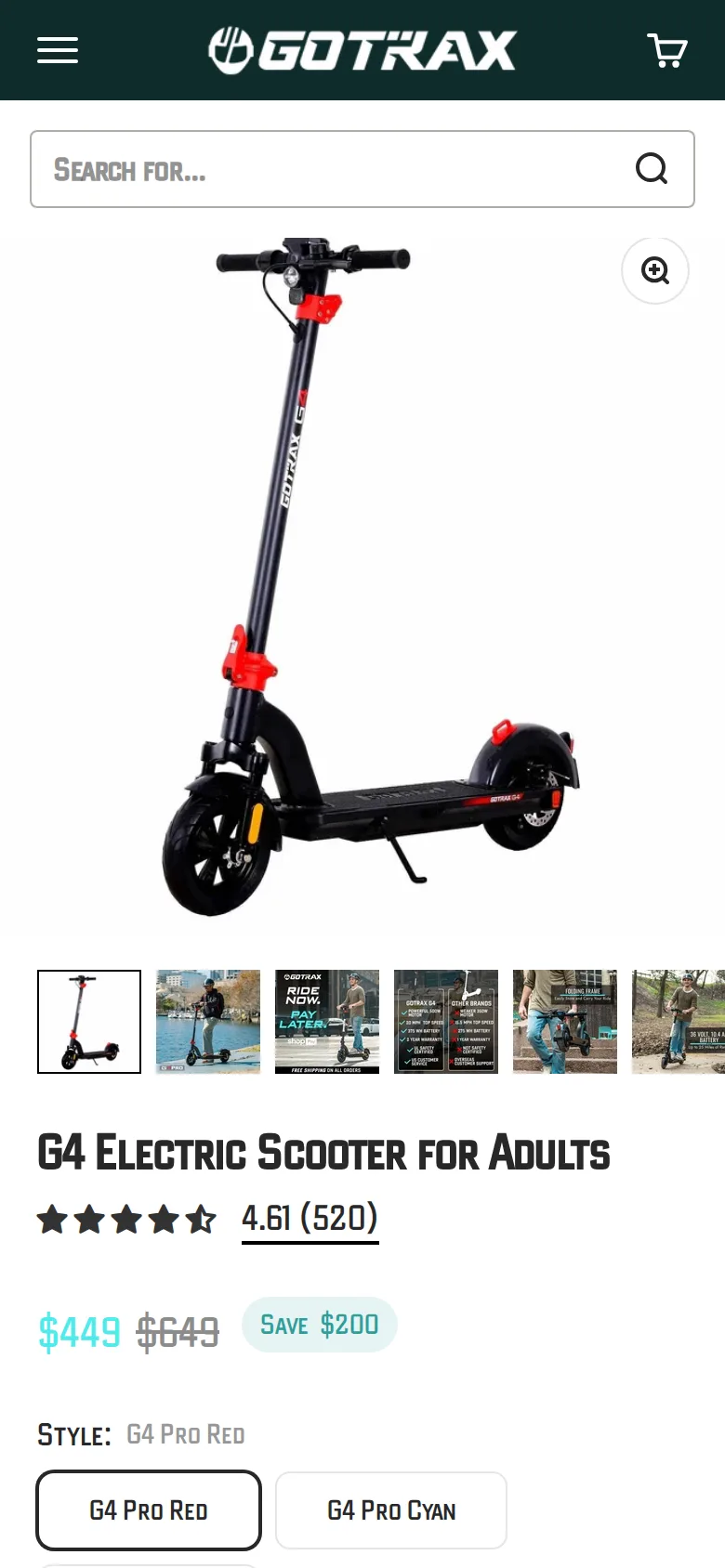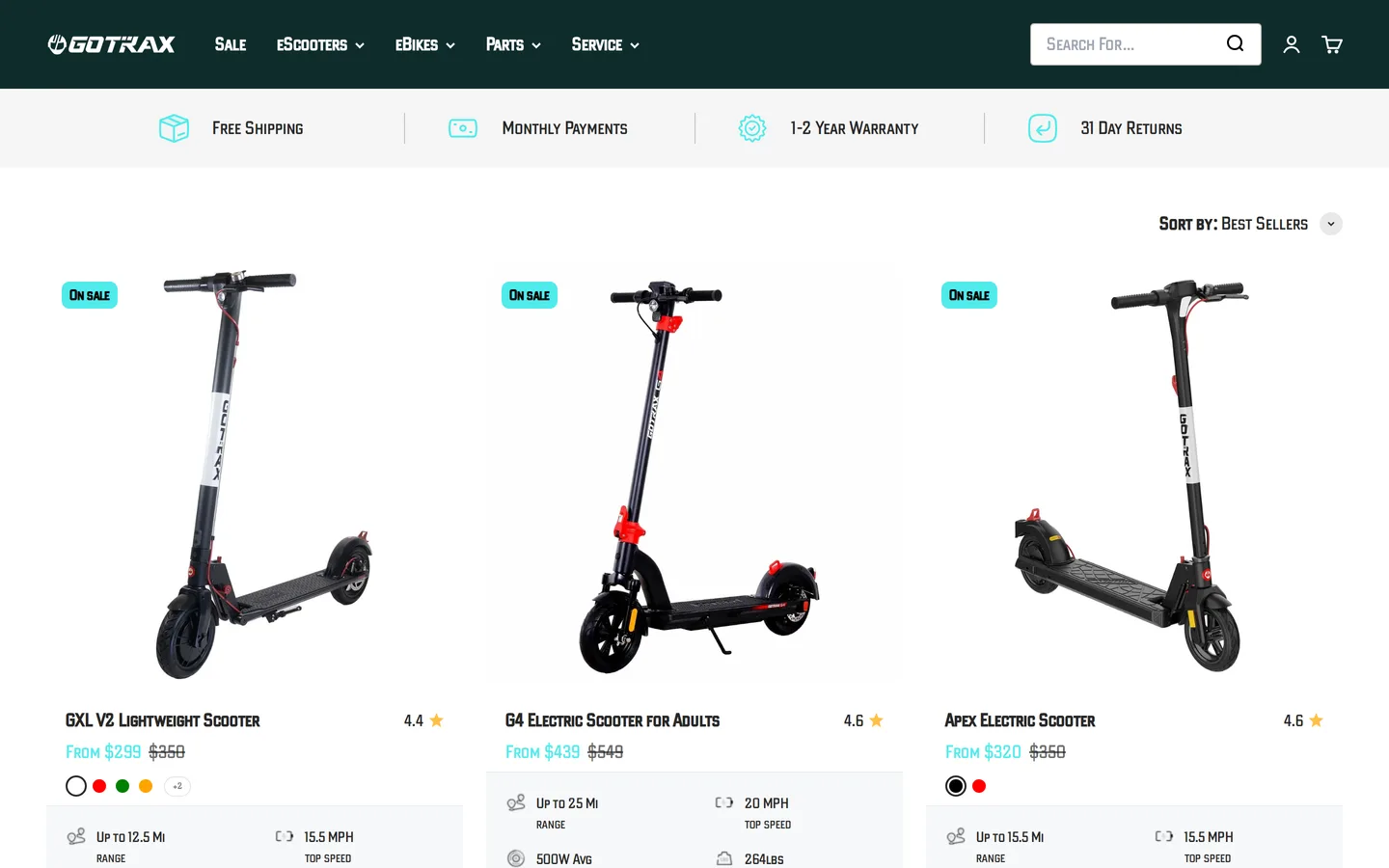
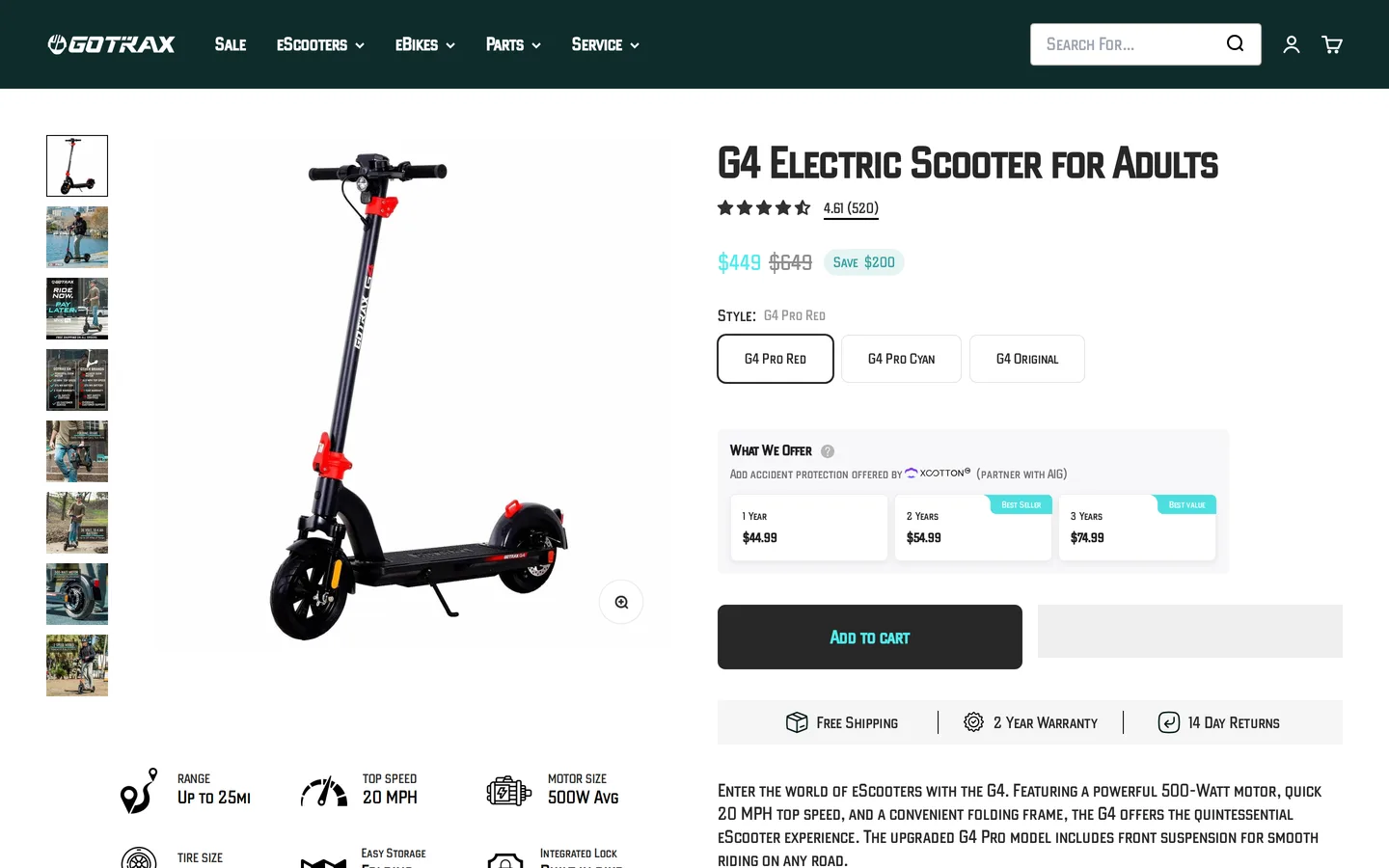
The cheapest scooter in this series costs $449. It is not the fastest, does not go the furthest, is not the lightest.
But in the spec block at the top of the product page, Gotrax lists two lines its dearer rivals usually skip: an integrated lock and UL 2272 certification.
UL 2272: why a $449 scooter needs it most
UL 2272 is the UL Solutions safety standard for the electrical systems of personal electric vehicles. It tests the pack, the charger and the control circuitry under overheating, overcharge, short circuit, vibration and impact.
The standard came out of the wave of hoverboard fires in 2016 — devices built by hundreds of different workshops using the cheapest cells they could find.
And here is the crux: battery risk is highest in the cheapest segment, because that is where the pressure to cut cost is greatest. A $449 scooter with UL 2272 is a far better signal than a $2,000 one without it.
If you can check only one thing before buying a cheap scooter, check the battery's safety certification.
A lock built into the frame: a small detail that solves a big problem
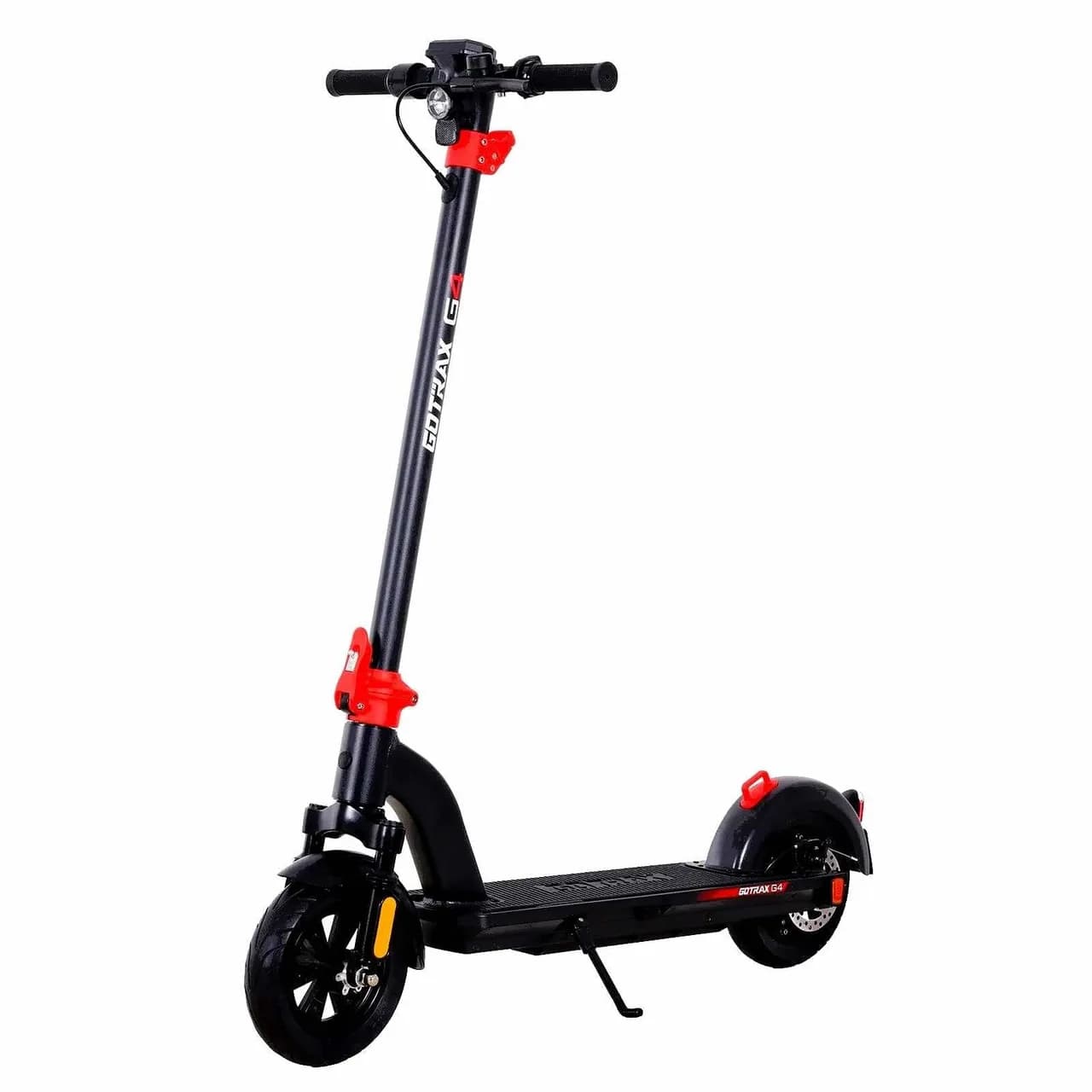
The G4 has an anti-theft lock integrated into the frame.
People tend to dismiss this, but think about the reality: a decent separate lock weighs 1 to 1.5 kg. You either carry it, or you do not lock the scooter. And when a 14 kg scooter can be picked up and carried away in three seconds, not locking it is a bad decision.
An integrated lock means you always have it, you always use it, and you carry no extra weight.
A built-in scooter lock is usually only opportunistic-theft protection — it stops the passer-by, not someone with tools. But most stolen scooters are taken by passers-by.
A two-year warranty at $449
Gotrax states a two-year warranty right in the spec block. Kaabo gives 18 months at nearly twice the price.
On a cheap product, a long warranty is the manufacturer saying it trusts its own failure rate. It is also the only thing protecting you when you buy something whose internal component quality you cannot assess yourself.
“500 W continuous”: a rare piece of honest wording
Gotrax states the power as 500 W continuous — not 500 W peak, not simply “500 W”.
That distinction matters and is regularly exploited.
Peak power is what a motor reaches for a few seconds under acceleration. Continuous — or nominal — power is what it can sustain. A motor's peak can be double or triple its nominal rating.
Plenty of brands publish the peak figure without saying so, because it is bigger and sounds better. A scooter advertised as “1000 W” may have a 350 W nominal motor.
Gotrax writing “continuous” means its 500 W is comparable with another brand's nominal figure, and that the real peak is higher still. It is a small piece of transparency that says a lot about how a company works.
When comparing the power of two scooters, make sure you are comparing the same kind of number. Nominal against nominal, peak against peak.
Where this machine is ordinary
No suspension. Power of 500 W continuous — Gotrax is straight that this is continuous rather than peak, honest wording that also tells you this is entry level. 32 km/h and 40 km of range both sit in the bottom half of the group.
The 10-inch tyres are a small bright spot: plenty of budget scooters use 8 or 8.5-inch tyres, and those smaller sizes drop deeper into every crack in the road.
The verdict
We score it 7.7. That is the score of a product that stands out nowhere but cuts no corners where it counts. For someone buying a first scooter and not yet sure they will enjoy riding one, this is the least money you can spend without having to worry about the battery.
The product page publishes more than 500 reviews averaging 4.61 out of 5 — a figure worth noting, though reviews on a manufacturer's own site should always be read with some caution.
Nhìn tận mắt