Every chain-driven bicycle needs three regular jobs: oiling, cleaning, and adjusting the derailleur when the shifting starts skipping. Sporting riders treat that as part of the pleasure. Commuters treat it as the reason the bike lives in the shed.
The Soltera 3 removes all three.
The Gates Carbon belt
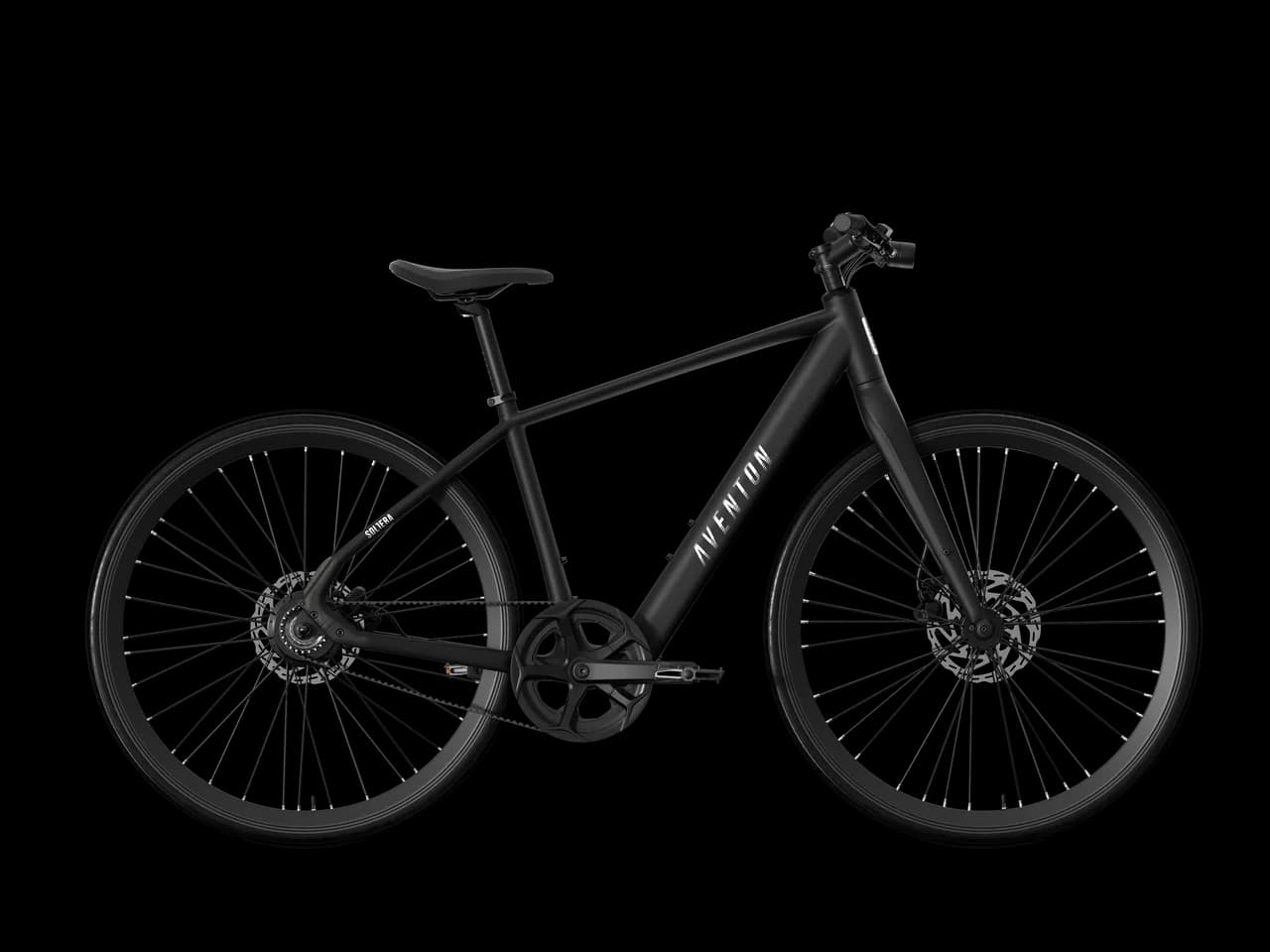
In place of a chain, the Soltera 3 runs a Gates Carbon 122T CDN belt. It is carbon-fibre reinforced, and it has three properties a chain does not:
It never needs oil. No oil means no grit sticking to it and no black marks on your trousers.
It does not rust. That matters in humid climates, where a chain left outside rusts within weeks.
It runs quietly. None of the chain's characteristic clatter.
The drawbacks of a belt: it needs a frame with a split in the rear triangle to fit it, it cannot be joined at the roadside the way a chain can, and replacing it costs more. Given a service life several times longer than a chain's, the trade favours a commuter.
The real cost of a bicycle is not the purchase price but the number of times you have to put your hands on it. A belt drive takes that number close to zero.
Single speed: the bike's biggest decision
The Soltera 3 is a single-speed. No cassette, no derailleur, no shifter.
That makes sense in context: on a pedal-assist bike ridden through a flat city, the motor handles the changes in required effort, and gears become surplus. Fewer parts means fewer things to break, and less weight.
But it also means this: when the battery runs out on a hill, you have no low gear to drop into. You walk. That is a direct contrast with a geared e-bike such as the Gazelle Ultimate C380, with its stepless hub, elsewhere in this series.
If your route is flat — most of any river-delta city — that never happens. If you live somewhere with real hills, this is a disqualification.
17 kg opens up a different way of living with a bike
37 pounds, about 17 kg. That is the weight of an ordinary bicycle with a battery added, not the weight of an electric bike.
At 17 kg you carry it up two flights of stairs. You hang it on a wall inside a flat. You fit it into the boot of an SUV. Aventon's own Level 4 weighs 31 kg and does none of those three things.
The price is the battery: 367 Wh, exactly half the Level 4's. But because the motor is 250 W rather than 750 W, the claimed range still reaches 113 km. Less power, less battery, the same distance — that is physics, not magic.
367 Wh and 113 km: the arithmetic behind it
The number invites suspicion on first reading, so it deserves checking.
366.8 Wh over 113 km is about 3.2 Wh per kilometre. For comparison, the Segway F2 II — a standing scooter — uses about 6.7 Wh per km.
Three reasons the Soltera 3's figure is plausible:
The bike weighs 17 kg, a third of what some machines in this series weigh.
A 250 W motor never draws large current, so it works close to its efficiency peak.
Most importantly: you are pedalling. A person pedalling steadily contributes about 100 to 150 W, more than half the total.
That third point is the crux. The 113 km range of a 250 W pedal-assist bike is not the distance the bike travels on its own — it is the distance the two of you travel together. Pedal half-heartedly and plan for about half.
On a pedal-assist bike, the published range is a conditional promise: the maker does its part if you do yours.
Brakes: where Aventon did not economise
Hydraulic disc brakes, Tektro HD-T3020 , with 180 mm rotors at both ends. That is above expectations on a 250 W bike.
Hydraulics give a lighter lever and more consistency than cable brakes, particularly in rain and when your hands are tired. On a bike rated to 136 kg, it is the right choice.
The Kenda 700x38C tyres are a sensible size too: wide enough to swallow surface cracks, narrow enough to roll quickly.
The verdict
We score it 8.3. The Soltera 3 does one narrow job very well: moving one commuter across a flat city while asking nothing in return. If your route has hills, or if you need to carry things, this is not the bike — but if it does not, it is hard to find one easier to live with.
Nhìn tận mắt