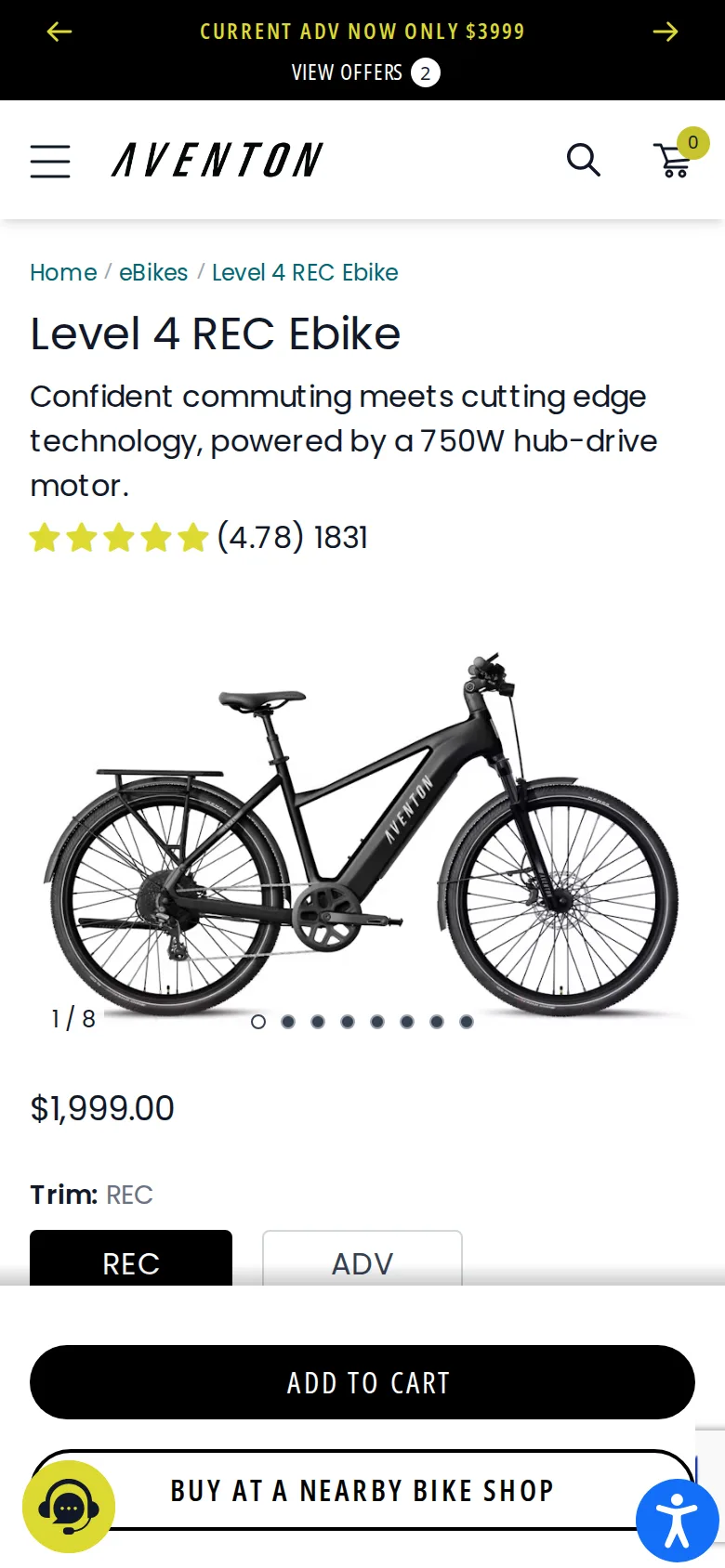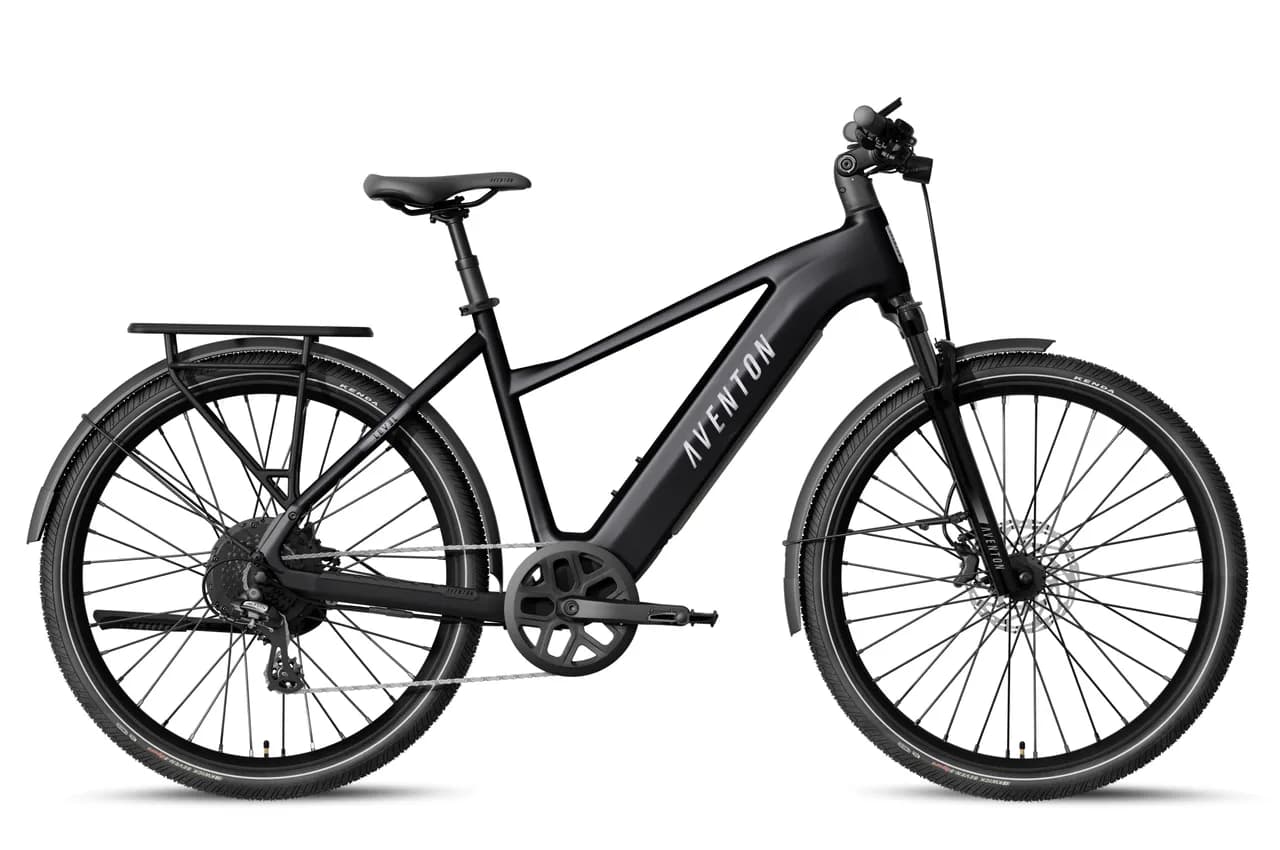
There is a figure on the Level 4 page you will not find on almost any other e-bike at this price: regenerative braking, adding about 16 km.
Regenerative braking on a bicycle: is it actually useful?
On an electric car, regenerative braking is standard and contributes substantially to efficiency. On an electric bicycle it has long been treated as a showpiece — the combined mass of bike and rider is too small to recover much energy.
Aventon publishes a specific figure: about 10 miles, roughly 16 km, out of a total of up to 75 miles. That is around 13%.
The number is physically plausible if you ride in a city with frequent slowing, and it will be close to nothing on an open road where you never brake. The right reading: on a commute full of traffic lights this is free distance. On a highway, forget it.
A side benefit that gets little attention: regenerative braking takes load off the mechanical pads, so you replace pads less often.
733 Wh: the most important number on this bike
A battery capacity of 733 Wh is where the Level 4 genuinely separates itself from the segment. Aventon's own Soltera 3 has 367 Wh — exactly half. Most mainstream e-bikes sit between 350 and 450 Wh.
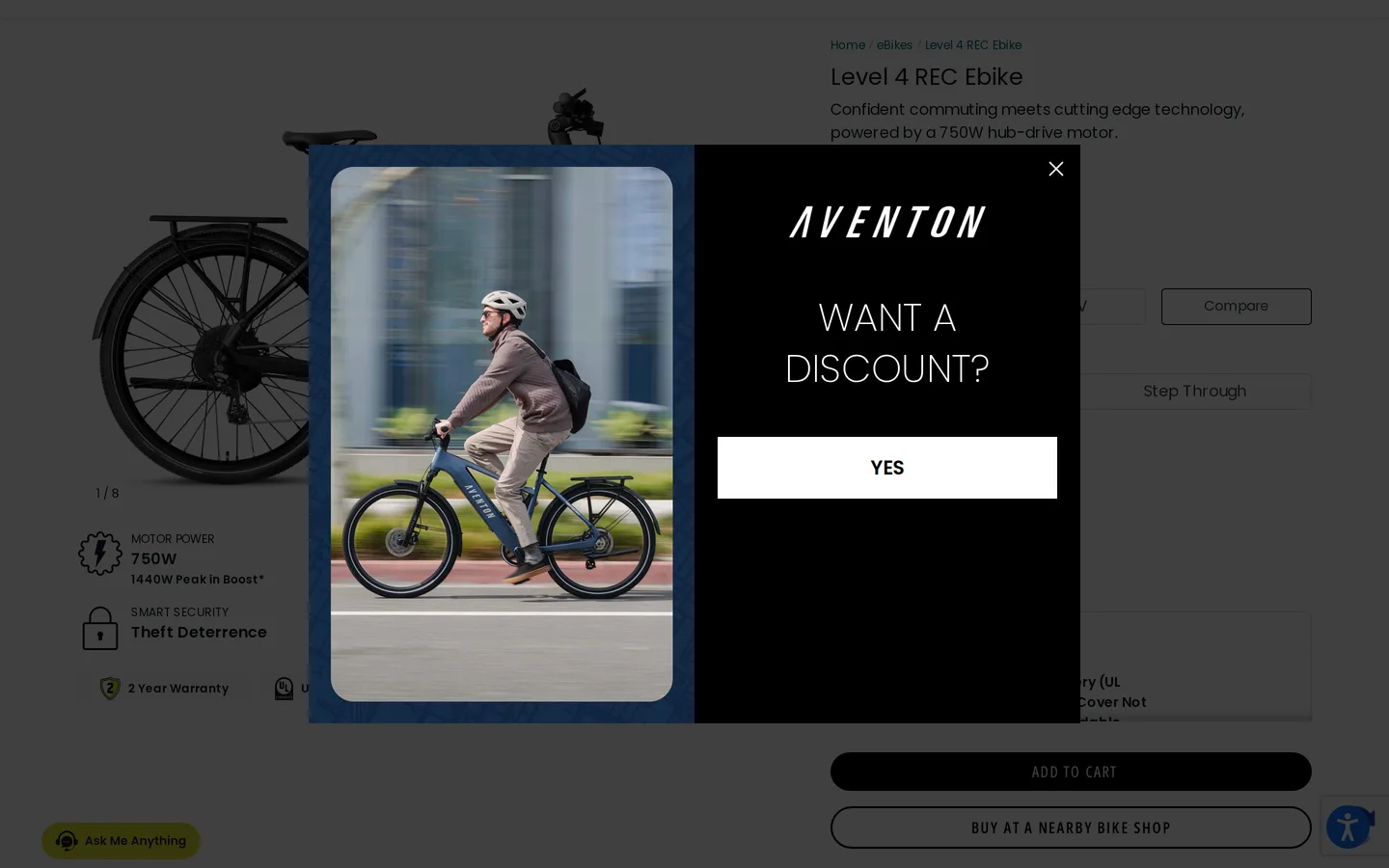
A big pack solves range anxiety crudely but effectively: you stop doing the arithmetic. It also has a good side effect — for the same annual distance, a larger pack cycles less deeply, and shallow cycling means a longer life in years.
The battery is removable, which is essential for anyone in a flat. You pull the pack, carry it upstairs to charge, and leave the 31 kg bike in the basement.
80 Nm and 1440 W of Boost
Torque of 80 Nm is double the 40 Nm of the 250 W bikes in this series. In practice, that is the difference between staying seated up a bridge ramp and having to get out of the saddle.
Boost mode pushes output to 1440 W briefly. Useful when merging into traffic from a standstill, or clearing a steep pitch.
A practical note: power and range share one battery. If you use Boost often, the 120 km figure shrinks fast. Aventon is not lying — they simply measure those two things under two different conditions, as every brand does.
31 kg is a lot
68.5 pounds, about 31 kg. That is the direct consequence of the big pack and the strong motor.
Which means:
You cannot carry it up stairs, not even one flight.
You need a sturdy rack to take it on a car.
If it goes over, picking it up takes real effort.
If you live on the ground floor or have a bike store in the basement, none of that matters. If you do not, look at Aventon's own Soltera 3 — 17 kg, half the range, and an entirely different life.
733 Wh means how long to charge
A large pack has a downside few people think about until they live with it: charge time.
With a standard e-bike charger — usually 2 to 3 amps at 48 volts — a 733 Wh pack needs roughly five to seven hours from empty. That is overnight, not an afternoon.
Not a problem if you charge overnight by habit. It becomes one if you get home at six and need to go out again at eight.
Two answers: buy a faster charger if the maker sells one and the warranty permits it, or — our recommendation — simply never let the pack drop below half. With 120 km of range you have plenty of room to do that.
The sales model, and what Aventon gets right
Aventon sells both online and through partner bike shops — there is a dealer locator on its site.
That model sits between the two extremes in this series: Lectric sells purely online and cheaper, Trek and Brompton sell through shops and dearer.
The hybrid has real benefits on a 31 kg bike with hydraulic brakes and its own controller: you buy online at a good price, but you still have somewhere to take it when the brakes need bleeding or a rim goes out of true.
Aventon also prints component part numbers in its spec tables — Tektro brakes, LG cells on its own Abound SR. That is the level of transparency buyers should demand and rarely get.
For buyers outside Aventon's markets
Aventon does not sell everywhere. As a grey import the bike comes without manufacturer warranty, and a replacement pack is very hard to order because lithium batteries are restricted air cargo.
We score it 8.5 — a score for the bike, not for the experience of importing one.
Nhìn tận mắt