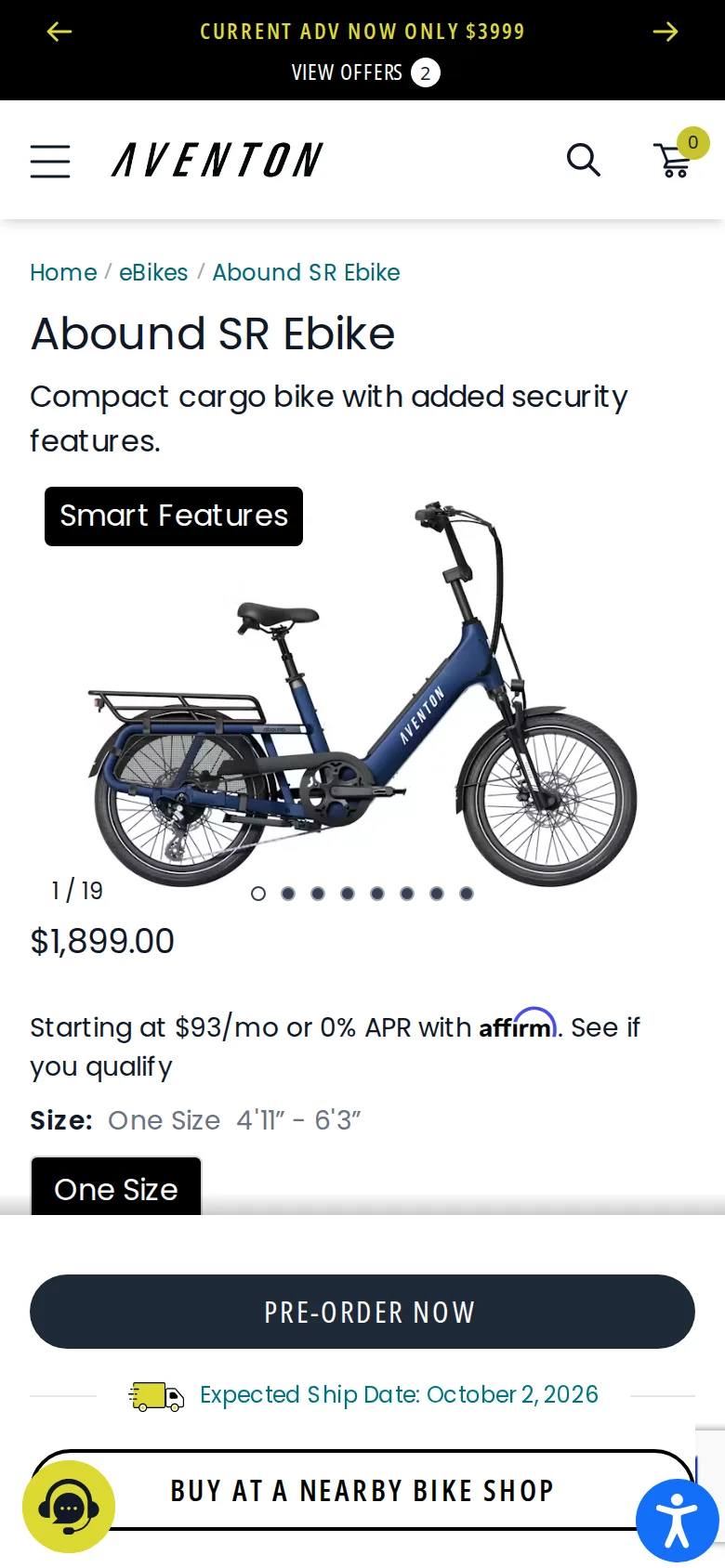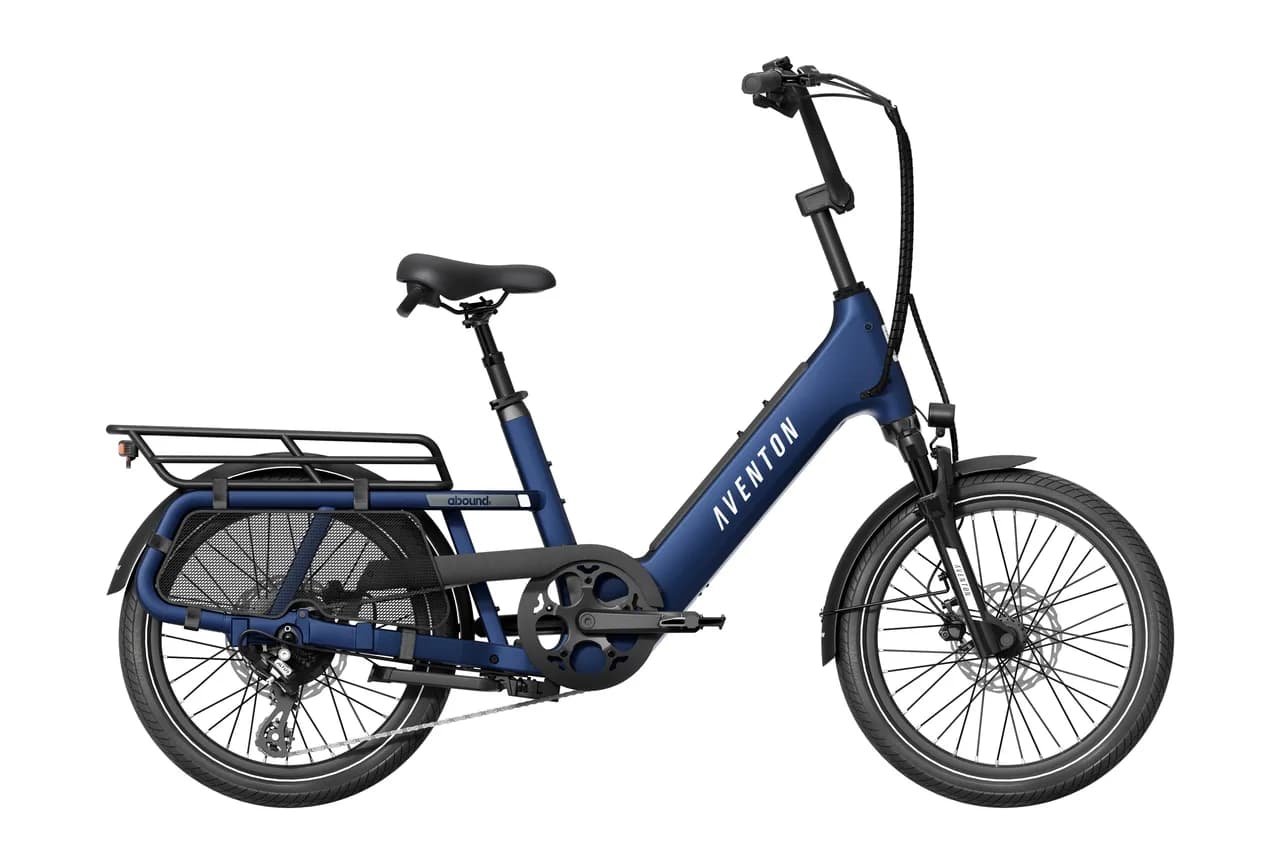
One line in the Abound SR's spec table is written in more detail than almost any other e-bike brand bothers with: Tektro HD-E3520, 203 mm rear rotor, 180 mm front rotor.
A specific brake part number, and two different rotor sizes. This is the sort of detail you only see when a company has actually thought about what the bike will be carrying.
Why the rear rotor is bigger than the front
On an ordinary bicycle the front brake does most of the work, so the front rotor is usually as big as the rear or bigger.
On a longtail cargo bike the weight distribution is reversed. Cargo and passengers all sit at the back, so the rear wheel carries far more load, and the rear brake has to dissipate far more energy.
A bigger rotor gives you two things: more braking torque for the same lever effort, and more surface area to shed heat. The second matters on a long descent with 150 kg aboard — a small rotor gets hot and fades.
When you look at a cargo e-bike, look at the rear rotor size. If it is the same as the front or smaller, that bike is an ordinary bike that was stretched, not a cargo bike designed as one.
A 733 Wh pack, and naming the cells
Aventon states: 36 V, 20 Ah, 733 Wh, LG 21700 cells.
Naming the cell manufacturer is rare. Most brands quote only capacity, and the cells could come from anywhere.
LG is one of the few large lithium cell makers with quality control at automotive-industry level. The 21700 format — 21 mm across, 70 mm tall — gives higher energy density and higher discharge capability than the older 18650.
On a bike that will carry children and be charged indoors, knowing where the cells come from is information with real value.
Two payload figures, and how to read them
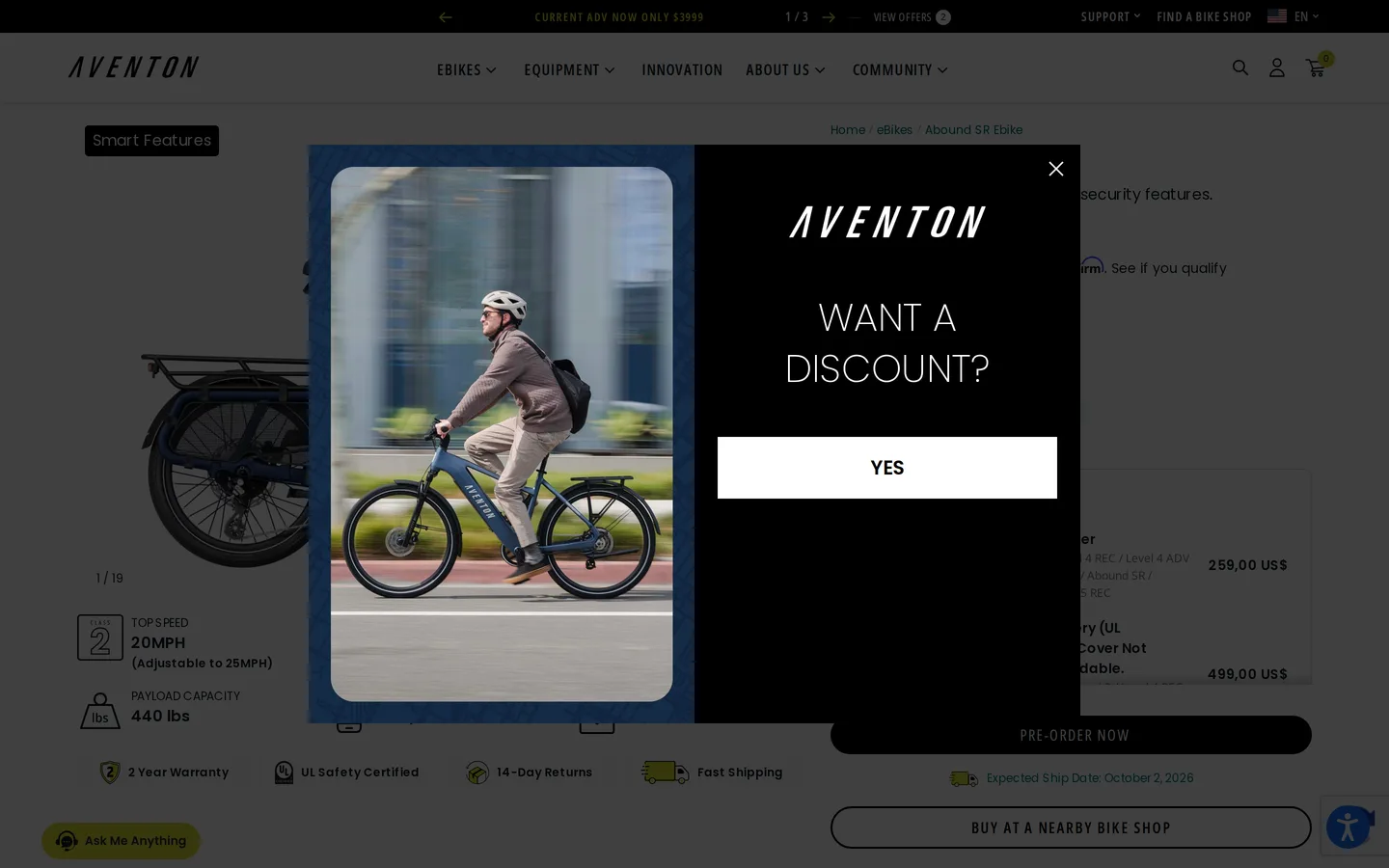
Aventon publishes a 440 lb (~200 kg) total payload and separately a rear rack limit of 143 lb (~65 kg).
Separating the two is genuinely useful:
200 kg is the total: the 36 kg bike + rider + passenger + cargo.
65 kg is the rack's own limit — so two children of about 30 kg fit, and one 70 kg adult does not.
The second figure is the one most people skip and the one that actually limits you. A bike with a high total payload but a weak rack still cannot carry an adult.
80 Nm and 1188 W peak
Torque of 80 Nm with a peak output of 1188 W. A little under the Lectric XPedition (1310 W peak), but with headroom for the hardest case: pulling away from a stop line, uphill, fully loaded.
Range of up to 60 miles, about 97 km, from the 733 Wh pack. Less than the twin-battery XPedition — but the XPedition needs two packs to hit its number.
21700 cells versus 18650: small numbers, real difference
Aventon specifies LG 21700cells. Those four digits are the physical size of the cell: 21 mm diameter, 70 mm tall.
The older and still very common format is the 18650 — 18 mm across, 65 mm tall. This is the cell inside most laptop batteries of the past two decades.
A 21700 cell is roughly 50% larger by volume, and that brings three benefits:
Higher energy density — more Wh per kilogram across the whole pack.
Fewer cells for the same capacity, which means fewer welds and fewer failure points.
Higher current delivery per cell, which matters on a loaded bike climbing.
The second point gets little attention but deserves it on a machine that vibrates its whole life. Every weld in a pack is somewhere a fatigue crack can start, and a pack built from fewer cells has fewer welds.
36 kg: the inevitable consequence
The bike weighs 80 pounds, about 36 kg. This is not a bike you lift up a front step, and you need somewhere at ground level to keep it.
For a cargo bike that weight is normal and even useful: a heavy bike is more stable under an off-centre load.
The verdict
We score it 8.5. The Abound SR leads on no single number, but it is the best-equipped bike here in the places that matter on a machine that carries children: the brakes, the cells, and honesty about the load limits.
Nhìn tận mắt